
Introduction to Effective Bearing Area and the 85% Rule
In structural engineering and construction, the term Effective Bearing Area (EBA) is much more than just a calculation—it’s a fundamental concept that ensures the safety and reliability of foundations, machine bases, and structural supports. When paired with the clear guidelines of the 85% Rule, EBA becomes a practical tool that engineers use to guarantee solid load transfer and minimize failure risks. In this guide, we’ll break down what Effective Bearing Area means, why the 85% Rule matters, and how both protect your projects from costly mistakes.
What Is the Effective Bearing Area (EBA)?
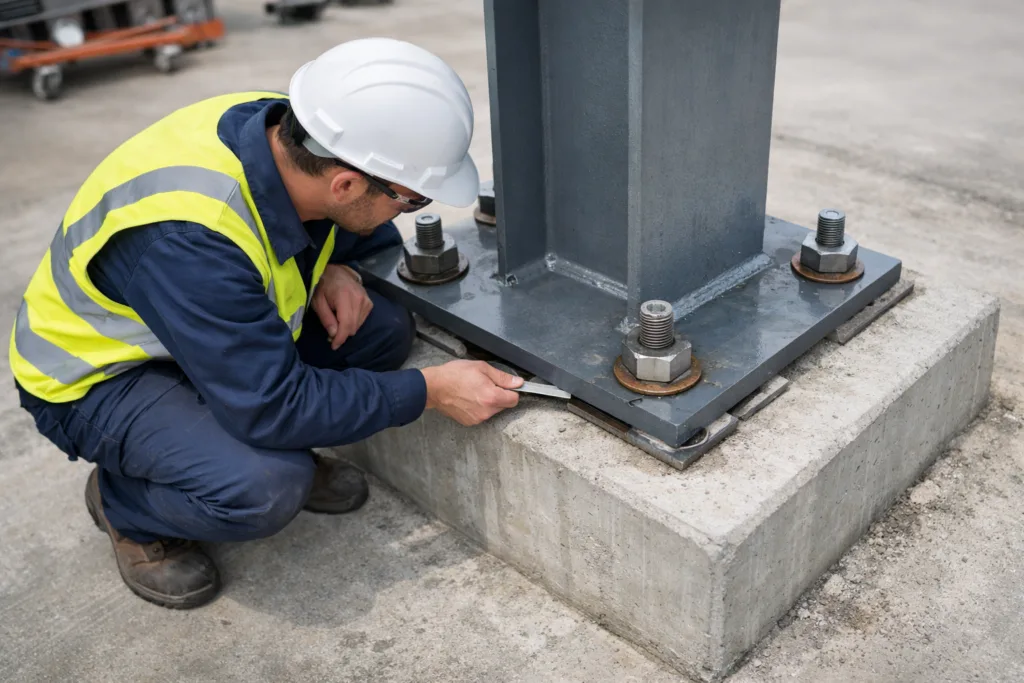
The Effective Bearing Area (EBA) refers to the portion of the foundation or base area that actually transfers load efficiently from a structure or machine to the supporting material beneath it. Unlike the gross area, which includes the entire footprint, EBA considers only the parts that are in solid, effective contact—ignoring gaps, voids, or low-strength zones. This ensures that load isn’t dangerously concentrated on weak spots, which could cause settling or cracking. For critical installations, such as heavy machinery bases or compressor foundations, precise EBA calculation is essential. If you’re preparing for a grouting project and want to estimate your required material, try our Epoxy Grout Volume Calculator Project Quote.
Why Is EBA Important in Engineering Projects?
EBA is crucial because it determines the capacity of a foundation element to safely distribute loads. If the actual bearing area is overestimated, it can lead to overstressed support material, unexpected settlement, or even catastrophic failures. For this reason, codes and standards require a margin of safety—in many cases, that’s achieved through the 85% Rule, which ensures enough effective contact area is present.
The 85% Rule: A Simple Safety Guideline
The 85% Rule suggests that at least 85% of the total contact area between a load (like a column base or machine pad) and its supporting grout or concrete should be in direct, effective contact. This gives engineers a straightforward benchmark: If less than 85% contact is achieved, the risk of localized stress and failure becomes unacceptable. This rule simplifies both design review and field inspection, making it easier to spot potential problems before they escalate. ZDSpoxy engineers often check for air pockets, debris, or uneven surfaces before and after grout application to meet or exceed this rule.
How Is Effective Bearing Area Calculated?
Calculating EBA begins by evaluating the entire potential bearing surface, then subtracting any voids, non-contact regions, or low-strength spots revealed during inspection, measurement, or testing. For a typical baseplate on concrete:
- Measure the total area of the plate.
- Map out gaps or hollow spots (using feeler gauges, non-destructive testing, or grout-filled cores).
- Sum the areas without proper contact and subtract from the total.
- Divide the effective (solid) area by the gross area and multiply by 100 to get the EBA percentage.
Step-by-Step Guide: EBA and the 85% Rule in Practice
Step 1: Prepare the Surface
Clean and level the base, removing dust, oil, grease, or loose debris. For structural repairs or machine bases, consider solutions like Epoxy Concrete Repair to restore bearing surfaces.
Step 2: Position and Test the Plate or Base
Set the plate or equipment in place. Check the contact area using feeler gauges or similar inspection tools. Mark and document regions with insufficient contact.
Step 3: Calculate Void Areas
Map and measure all significant voids or gaps. Use these numbers to determine the “missing” area.
Step 4: Apply Grout Correctly
If you’re installing machinery, proper epoxy grout application can fill voids and expand the effective bearing area substantially. For projects exposed to harsh or wet conditions, specialized solutions like Underwater Epoxy Grout may be needed to maintain full contact under demanding environments.
Step 5: Confirm EBA Meets the 85% Rule
After grouting, re-check the area for solid contact. Make sure the effective area is at least 85% of the total. If not, remedial steps are necessary to avoid risks.
Visual Example: EBA Calculation Table
| Baseplate Size (mm) | Total Area (cm²) | Void Area (cm²) | EBA (cm²) | EBA (%) | Meets 85% Rule? |
|---|---|---|---|---|---|
| 300 x 300 | 900 | 65 | 835 | 92.8 | Yes |
| 250 x 250 | 625 | 105 | 520 | 83.2 | No |
| 200 x 200 | 400 | 24 | 376 | 94.0 | Yes |
This table emphasizes how quickly a few voids can make a base non-compliant with the 85% Rule—even seemingly small gaps can matter.
Common Pitfalls in EBA Assessment
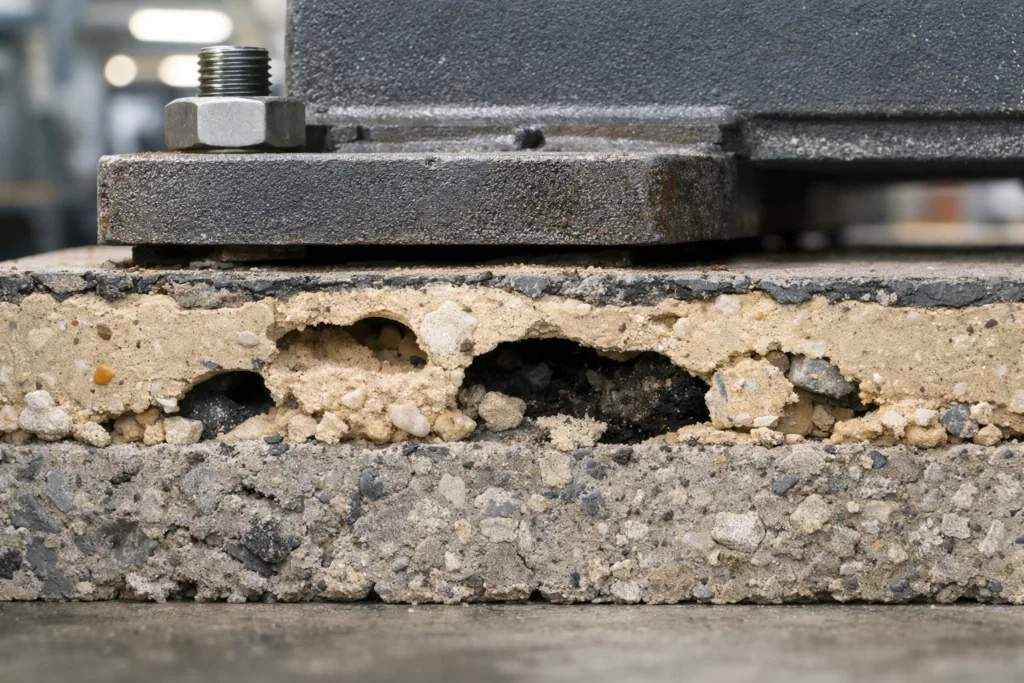
- Assuming the entire baseplate is in contact—surface flatness, debris, or worn spots create hidden voids.
- Missing fine cracks and air pockets, especially when grouting under dynamic machinery or in cold weather.
- Using traditional cement grout for chemically aggressive or wet locations—it may erode or lose bond. In these cases, Epoxy Coating Systems provide added durability and increased reliability.
- Not rechecking EBA after equipment leveling, which can shift load distribution.
The Risks of Ignoring the 85% Rule
Bypassing this safety benchmark can result in stress concentrations that lead to concrete cracking, grout crushing, machine misalignment, or uneven settlement. In critical infrastructure, such as bridges or power plants, failing to check EBA can trigger expensive shutdowns or even structural failure. Experienced ZDSpoxy resin engineers have found that projects skipping this rule routinely face shortened service life and costly repairs.
How the 85% Rule Enhances Site Safety
Applying the 85% Rule doesn’t just improve calculations—it actively reduces the risk of support failure. Site crews find it practical, as it gives a clear, visual benchmark. On-floors and bases, 85%+ solid contact means stress is spread evenly, machines stay aligned, and maintenance intervals are extended. Many clients also find that sticking to this standard gives them peace of mind and smoother compliance with inspection authorities.
Effective Bearing Area (EBA): The 85% Rule Explained
In summary, understanding and applying the concept of Effective Bearing Area and the 85% Rule is essential for engineering safe, reliable structures. From baseplate grouting to bridge bearings, these simple checks provide powerful protection against failures and costly rework.
Tips for Consistently Achieving 85% EBA
- Use precision leveling shims before grouting.
- Work in small batches with consistent mixing technique—ZDSpoxy batches are checked for viscosity and gel time before site delivery.
- Inspect for debris and contamination, especially in busy industrial settings where oil and dust are common.
- Choose the appropriate grout or resin system for expected loads, temperatures, and environmental exposure.
Industry Standards and Code Requirements
Most national and international codes require checking effective bearing area and cite the 85% rule directly or by implication. Standards such as ACI 351, ASTM C109, and local building codes describe the inspection and documentation procedures to prove compliance. Contractors and designers should always check project specs for additional requirements.
Special Considerations: EBA in Harsh Environments
In marine, chemical, or high-temperature settings, traditional concrete grouts often fall short. For underwater bases and foundations, using specialized grouting methods (like Underwater Grouting for Marine Structures) helps maintain high EBA even where curing conditions are tough. Also, selecting products with superior chemical resistance ensures the effective area stays uncompromised through years of service.
Advanced Tools and Technology for EBA Measurement

Modern engineering uses thermal imaging, ultrasonic scanning, and digital mapping to detect and quantify voids with high precision. These approaches complement traditional methods, enabling contractors to certify compliance with the 85% Rule quickly and with greater confidence.
Frequently Asked Questions
What is the effective bearing area in foundation engineering?
The effective bearing area is the portion of the base or foundation in solid contact, capable of transferring load safely to the material beneath—critical for reliable structural support.
Why does the 85% Rule matter for structural safety?
The 85% Rule ensures a minimum standard of contact area, preventing stress concentrations that could lead to settlement, cracking, or catastrophic failure.
How can I check if my project meets the 85% Rule?
Measure the total support area and subtract regions not in firm contact. Ensure the resulting effective area is at least 85% of the whole. Use inspection tools or non-destructive testing to be sure.
What are common causes of low EBA in installations?
Poor surface prep, baseplate warping, debris, air pockets, or using mismatched grout types can all reduce effective bearing contact beneath load points.
When should epoxy grout be chosen for EBA improvement?
Epoxy grout is ideal where aggressive chemicals, high moisture, or precise tolerances demand a higher-strength, non-shrinking support layer that keeps bearing area maximized.
Are there project types where the 85% Rule is especially critical?
Yes—heavy machinery bases, bridges, chemical plant equipment, and marine structures rely on the 85% Rule to prevent failure in challenging load or exposure conditions.
Related Reading
- Crushing the Problem: Step-by-Step Guide to Epoxy Grout for Crusher Foundations
- The Science Behind How Epoxy Grout Handles Dynamic Loads
- Unlocking the Engineering Power of Precision Epoxy Grout
- How to Master Overhead and Vertical Concrete Repairs
- Building Safer Equipment Foundations for Extreme Temperatures