
Understanding Aggregate Loading Ratios: The Foundation of Performance
Aggregate loading ratios and filler content decisions are some of the most critical choices in industrial construction, grouting, and resin formulation. These ratios refer to the precise proportion of aggregate or filler (such as sand, silica powder, or industrial minerals) blended with a binder, like epoxy resin or cement. Getting the aggregate loading right is essential—change this single detail, and you could dramatically impact strength, durability, bond quality, and application reality.
But what makes the right aggregate loading ratio? “Too little” filler can yield weak, expensive mixes. “Too much” risks unworkable pastes, lack of bond, or brittle finishes. Let’s break down how filler content, aggregate type, and loading ratios influence every stage of performance—whether you’re grouting heavy machinery, repairing concrete, or covering a high-traffic floor.
Aggregate Loading Ratios: How Filler Content Affects Performance

The interplay between aggregate loading ratios and filler content shapes nearly every aspect of a resin or grout system. These parameters determine not just compressive strength or flow characteristics, but also how the system manages shrinkage, exotherm (heat generation during cure), bond to substrate, and ultimate durability under chemical or physical stress.
In fact, aggregate loading is a major reason why ZDS-1410AB and similar engineered grouts can safely support crushers and compressors, while lower-ratio mixes may struggle under dynamic load.
Types of Filler Materials: Comparing Their Roles
The industry draws a clear distinction between “aggregates” (coarse: sand, gravel, stones) and “fillers” (fine: silica fume, talc, fly ash). Each brings different packing density, strength impact, and cost. Common types include:
- Quartz sand (wear resistance)
- Silica powder (dense packing, minimal shrinkage)
- Alumina or feldspar (for high-heat service)
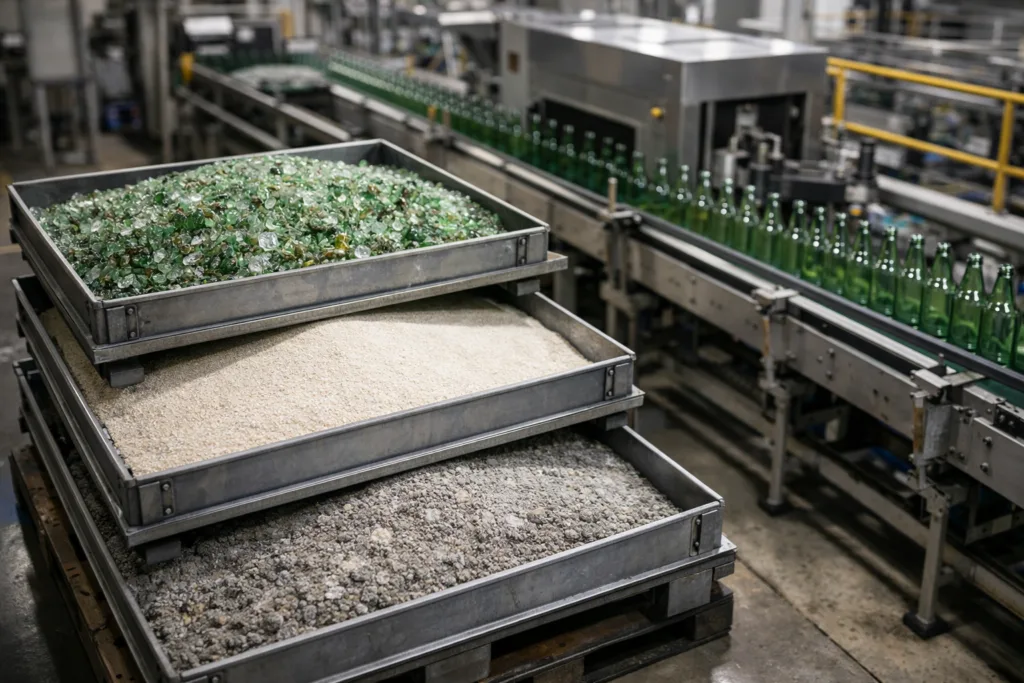
- Recycled glass or industrial byproducts (cost-conscious, sometimes eco-friendly)
Selection depends on the mechanical targets, service environment, and even how the product is installed.
Why the Right Ratio Matters: Balancing Act
Raise aggregate content, and you often gain compressive strength and reduce cost per unit. But excessive loadings can choke off the binder—leading to poor flow, brittle texture, or lack of adhesion. Job-tested formulas usually sit near an optimum “packing fraction.” For epoxy grouts, loading ratios of 70–85% by weight are common, with adjustments for sand gradation, particle shape, and surface cleanliness.
How Filler Content Changes Mechanical Properties
The performance of a grout system is not just about the binder’s chemistry. For example, increasing well-graded aggregate can:
- Boost compressive strength by allowing for efficient load transfer
- Control shrinkage (reducing cracking risk)
- Improve thermal expansion match to concrete/steel
However, overloading with filler may compromise flexural strength and introduce air voids. In engineered projects like epoxy coating systems, these trade-offs are evaluated using real-world site trials, not just lab tests.
Aggregate Loading Ratios in Epoxy Grout vs. Cement Grout
Epoxy resins allow higher aggregate loadings compared to classic cementitious grouts thanks to superior wetting and bonding. This results in materials that can bear heavier, vibrating machinery, with less risk of shrinkage or chemical attack. Cement grouts, by comparison, must stick to lower aggregate content for workable flow and reasonable cure, trading off ultimate strength for easier pumping and placement.
The Influence of Aggregate Gradation and Shape
Aggregate gradation—the range and mix of particle sizes—controls how efficiently voids are filled. Well-graded mixes (from coarse down to fines) approach “maximum density” at lower binder usage. Angular aggregates improve mechanical lock-up but require more binder for full coating than rounded silica sand. Getting both shape and gradation right can boost compressive strength by 20% or more.
Packing Density: Maximizing Strength and Reducing Cost
Packing density measures how efficiently particles fill space. Higher packing equals lower binder need, less shrinkage, and better resistance to washout or debonding. Modern grout and flooring designers often borrow principles from concrete technology, blending several aggregate sizes to approach the theoretical maximum density—with strategic use of ultrafine fillers or powder blends (like those used in Epoxy Grout Volume Calculator Project Quote).
Filler Content and Durability: What History Shows
Over decades, field studies show grouts with optimal aggregate loading ratios outperform those that rely heavily on binder. Reduced shrinkage, tighter microstructure, and improved bearing area translate to longer life under cyclic or static loads. Conversely, under-filled mixes (too much resin, not enough aggregate) may look strong but age poorly—especially in temperature extremes or chemical exposure.
How Filler Content Affects Chemical Resistance
Grouts and resin floors with high-quality, inert aggregate fill have less exposed binder and are less susceptible to attack by solvents, oils, or water. Specialized fillers (for instance, fused silica or ceramics) increase resistance in aggressive chemical environments. Proper selection and proportioning are essential for critical containment or secondary bunding applications.
Impact on Shrinkage and Thermal Expansion
Aggregate restrains shrinkage during cure by acting as a “skeletal” framework. Higher ratios also bring the coefficient of thermal expansion closer to concrete or steel, helping prevent bond-line cracking from temperature cycling. This is especially crucial in foundations for compressors or turbines, where temperature changes are routine.
Case Study: Machinery Grouting Success with High Aggregate Loading
A major cement plant in Southeast Asia retrofitted its crusher foundations using a high-strength epoxy grout featuring an 82% aggregate loading ratio. The outcome: vibration-induced cracking stopped, alignment was maintained over years, and maintenance intervals lengthened—a clear demonstration of how filler content shaped reliable performance compared to previous “resin-rich” failures.
Trade-Offs: Workability vs. Strength in High-Fill Mixes
Maximum-performing grouts are often thick, non-slump mixes that can be hard to pump or pour. Reducing filler increases flow (workability), but may sacrifice compressive strength or increase costs. On difficult jobsites, batching discipline and consistent aggregate moisture are as critical as resin quality for repeatable results.
Role of Particle Size Distribution in Performance
Wide PSD (particle size distribution) packs more efficiently. Ultrafine fillers (such as fumed silica or microballoons) can fill tiny spaces between larger grains, cutting resin use further and boosting E-modulus. Designers often model these blends using particle packing theory to target both flow and ultimate performance.
Epoxy Systems: Special Cases and ZDSpoxy Insights
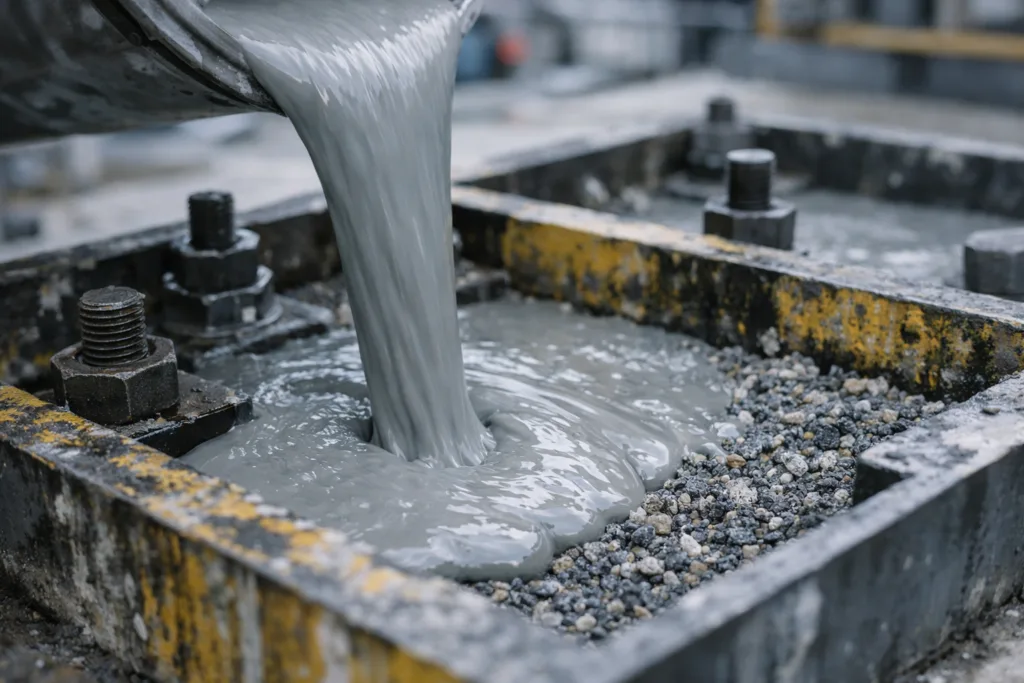
From an engineering-first view, systems like ZDSpoxy must balance aggregate loading with requirements for pot life, ease of mixing, and real jobsite variability. Staff often field-test blends with environmental swings (hot/cold, wet/dry substrates) to ensure application is as reliable as lab data. For projects demanding low exotherm, a slightly reduced filler content might be specified—even if it lowers raw strength—to prevent overheating or flash set.
Aggregate Loading Ratios in Underwater Epoxy Applications
Underwater grouting and repairs present unique challenges. Filler selection prioritizes non-reactivity with water and sink-resistant, high-density blends. Here, aggregate loading ratios must be carefully tuned to maintain flow and prevent washout, especially for products targeting subsea or bridge pile encapsulation.
Filler Content Impact on Mixing and Placement
High aggregate content increases mix viscosity, demanding thorough blending (often with high-torque mixers) to avoid clumps or air entrapment. Smaller batch sizes, precise dosing, and controlled mixer speeds help keep the system homogeneous and ensure strong, void-free placement in forms or foundations.
Volume Stability: The “85% Rule” and Bearing Area
Epoxy grout design often follows the 85% contact rule—the goal is for at least 85% of the load-transfer interface to be solid contact (via aggregate), not just resin. Proper aggregate ratio makes this possible, optimizing both effective bearing area and long-term stability.
Testing and Quality Control for Aggregate Loading Ratios
Industry QC protocols include aggregate sieve analysis, moisture checks, and mix flow/slump testing. Field samples are regularly cured and crush-tested to validate each batch against specifications for compressive strength, chemical resistance, and volume consistency.
Economic Implications: Optimizing for Cost without Sacrifice
A well-optimized aggregate loading lowers cost by minimizing resin use—the most expensive component. On large-scale projects, this can mean significant materials savings while still boosting mechanical performance and service life.
Common Pitfalls: Over or Under-Filling Aggregate
Excess filler can starve the system of binder, risking honeycombing, segregation, or weak bond lines. Too little filler causes shrinkage, excessive heat, and cracks. Real-world batching—especially with jobsite sand—demands strict material control and well-written installation protocols.
Application-Specific Examples: Heavy-Duty vs. Decorative Uses
High aggregate loadings dominate in heavy-duty machinery, crane rails, and vibration isolation pads, where performance matters more than surface finish. Decorative or thin-coat systems use lower filler ratios for better flow and gloss, trading off ultimate strength for appearance or ease of install.
Role of Specialized Fillers: Heat, Chemical, and Abrasion Resistance
For high-temperature grouting (ZDS-4120AB), specialized mineral fillers like fused alumina are critical. In chemical plants or battery storage, inert blends may feature ceramic or glass to survive acid/alkali exposure. Formulation teams must select and dose these materials precisely to deliver proven performance under stress.
Aggregate Loading and Sustainability Factors
Optimizing filler content is also a sustainability strategy. Leaner resin content saves on petrochemicals, while recycled filler reduces demand on virgin resources. The push for green construction increasingly favors mixes containing fly ash, recycled glass, or other upcycled aggregates—so long as performance targets are verified via testing.
Safety and Regulatory Considerations When Handling Filler Materials
Fillers can raise dust, create slip hazards, or contain crystalline silica (a known health risk). Handling requires PPE, ventilation, and sometimes dust suppression. Proper storage and batch tracking (with material safety data sheets) ensure both worker safety and regulatory compliance on- and off-site.
Conclusion: Making Smart Choices in Aggregate Loading Ratios and Filler Content
The science of aggregate loading ratios and filler content isn’t just about lab numbers—it’s about smarter, more durable projects in the real world. Proper selection balances strength, workability, durability, cost, and even sustainability. It means fewer surprise failures, longer service intervals, and superior value for clients ranging from contractors to asset managers. Whether the mix contains classic silica sand or next-generation recycled filler, pay attention to aggregate content and let proven ratios guide every batch for consistent, measurable results.
Frequently Asked Questions
What is an aggregate loading ratio?
Aggregate loading ratio expresses how much aggregate (by mass or volume) is used compared to the binder in a formulation. It directly affects performance, flow, and cost in grouting or resin systems.
How does filler content impact compressive strength?
Optimized filler content increases compressive strength by enabling better particle packing and load transfer but too much can create voids or brittle mixes if not balanced with sufficient binder.
What happens if you use too much filler in epoxy grout?
Excess filler starves the binder, risking poor adhesion, segregation, honeycombing, and reduced overall strength. Always follow tested batch recipes and perform sample testing when adjusting ratios.
Which fillers should I choose for chemical resistance?
Select chemically inert fillers like fused silica, alumina, or specialized ceramics when facing aggressive chemical exposure. These extend service life and protect embedded steel or concrete.
Can aggregate type and gradation affect shrinkage?
Yes—well-graded, dense aggregates effectively restrain shrinkage and reduce cracking risks. Fine powders can help, but coarse, angular fillers are most effective for volume stability.
Are higher aggregate loadings more sustainable?
They can be—when paired with recycled or regionally sourced fillers, high loadings use less resin, reduce embodied energy, and often minimize transport emissions and overall costs.