
Introduction: ESD Epoxy Flooring and Cleanroom Safety
In pharmaceutical cleanrooms, the risk of static electricity poses more than a slight inconvenience—it can threaten product integrity, compliance, and even worker safety. This is why the necessity of using Electrostatic Dissipative (ESD) epoxy flooring in pharmaceutical cleanrooms goes far beyond industry trends. With regulatory standards tightening, ESD epoxy flooring is fast becoming a critical baseline for manufacturing operations that require the highest level of environmental control.
What Is ESD Epoxy Flooring?

ESD epoxy flooring is a specially engineered flooring system designed to safely dissipate static electricity. It is a type of anti-static resin that creates a path for electrical charges to move safely to ground, protecting sensitive equipment and products from electrostatic discharge risks.
Why Static Control Is Non-Negotiable in Pharma Cleanrooms
Cleanrooms are controlled environments where dust, airborne microbes, and static electricity can all ruin batches or interfere with critical research and production. Static is especially dangerous in facilities handling powders, solvents, or active pharmaceutical ingredients, as it can trigger contamination, combustion, or equipment damage.
The Science Behind Static Electricity and ESD Flooring
Static electricity builds up when different surfaces come into contact and then separate—like people walking on regular floor surfaces. Without an ESD-friendly finish, charges accumulate until they’re suddenly released, causing hazardous discharges. ESD epoxy floors incorporate conductive and dissipative elements to control electrical resistance, making dangerous build-up all but impossible.
Defining Cleanroom Standards for Flooring
International standards—like ISO 14644 and GMP (Good Manufacturing Practice) regulations—demand that pharmaceutical cleanrooms maintain not only particle and microbial control, but also static control. The easiest way to comply with these regulations is by integrating ESD epoxy flooring that meets strict electrical resistance and cleanliness requirements.
Electrical Resistance Ranges: What Works, What Doesn’t
For flooring to qualify as Electrostatic Dissipative, the surface resistance should sit between 1.0 x 10⁶ and 1.0 x 10⁹ ohms. Conductive floors, in contrast, measure even lower. Anti-static resin coatings (like the ZDS-5503ab ESD colored epoxy topcoat) are formulated to maintain these values over time, ensuring a safe, compliant finish.
Risk of Non-ESD Flooring: Product & Process Failures
Pharmaceuticals, biologics, and even packaging materials are highly sensitive to electrostatic discharge. A single spark can ruin expensive lots or data, or even start a fire where flammable materials are present. This danger extends to electronics, sensors, and robotics used in modern pharma manufacturing.
Cleanroom Classifications and Flooring Requirements
As cleanroom classification numbers go down, the requirements for low particle emission and static control increase. Floors rated for ISO Class 5 or 6 environments (the most critical) must provide continuous, reliable ESD protection in addition to easy-to-clean, low-porosity finishes.
How ESD Epoxy Floors Manage Contamination
Beyond eliminating static, ESD epoxy floors are seamless and non-porous, making them easy to sanitize and resistant to chemicals, which is crucial for GMP zones. Unlike tile or painted concrete, there’s no place for contaminants to hide or grow.
Anti-Static Resin vs Standard Epoxy Flooring
| Property | ESD Anti-Static Resin | Standard Epoxy |
|---|---|---|
| Surface Resistance | 106-109 Ω | 1012 Ω or higher |
| Static Dissipation | Yes | No |
| Cleanroom Suitability | Pharma certified | Dust/contaminant risk |
| Durability | High | High |
| Chemical Resistance | Excellent | Good |
Primary Benefits of ESD Epoxy Flooring in Pharmaceutical Cleanrooms
- Safety from static-ignited explosions (especially with solvents/powders)
- Product and data security
- Regulatory peace of mind (ISO/GMP compliance)
- Fast, repeatable cleaning protocols
- Long life with minimal maintenance
ESD Floor Maintenance: Keeping Standards High
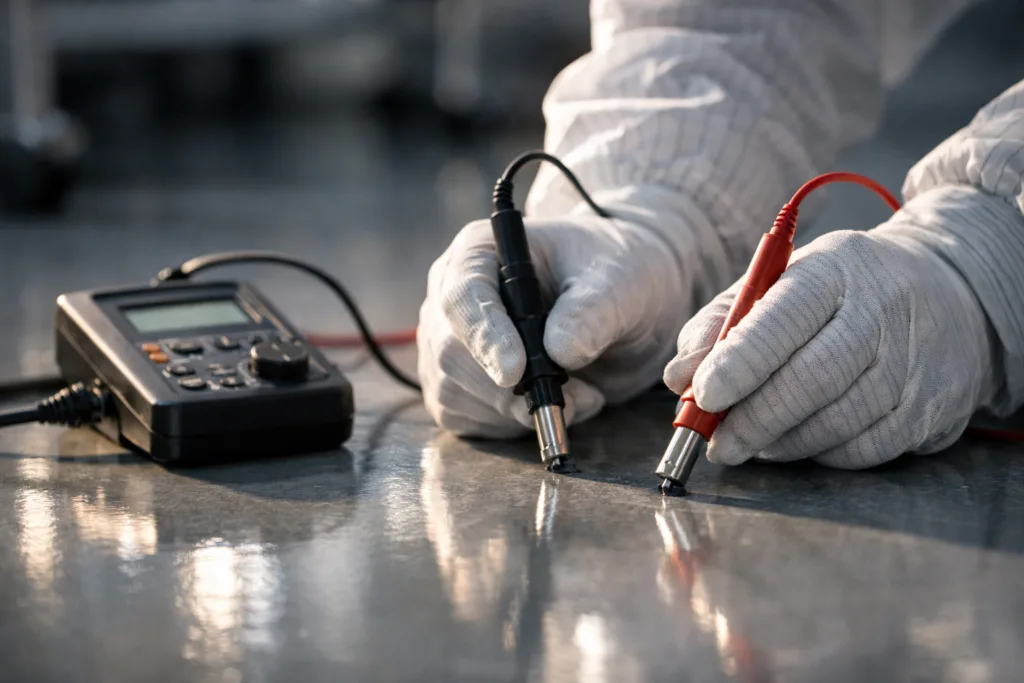
Routine cleaning and occasional surface testing ensure that electrical resistance values remain within safe limits. Integrated anti-static resin systems are robust but should be checked on a regular schedule.
Zoning and Segmentation in Modern Pharma Facilities
Many facilities segment their spaces by risk/sensitivity. Even if some areas don’t require ESD flooring, critical zones (packing, sampling, formulation) absolutely do. ZDSpoxy experts recommend mapping ESD floor systems to the highest requirement zone in any workflow chain.
Installation Considerations for ESD Epoxy Flooring
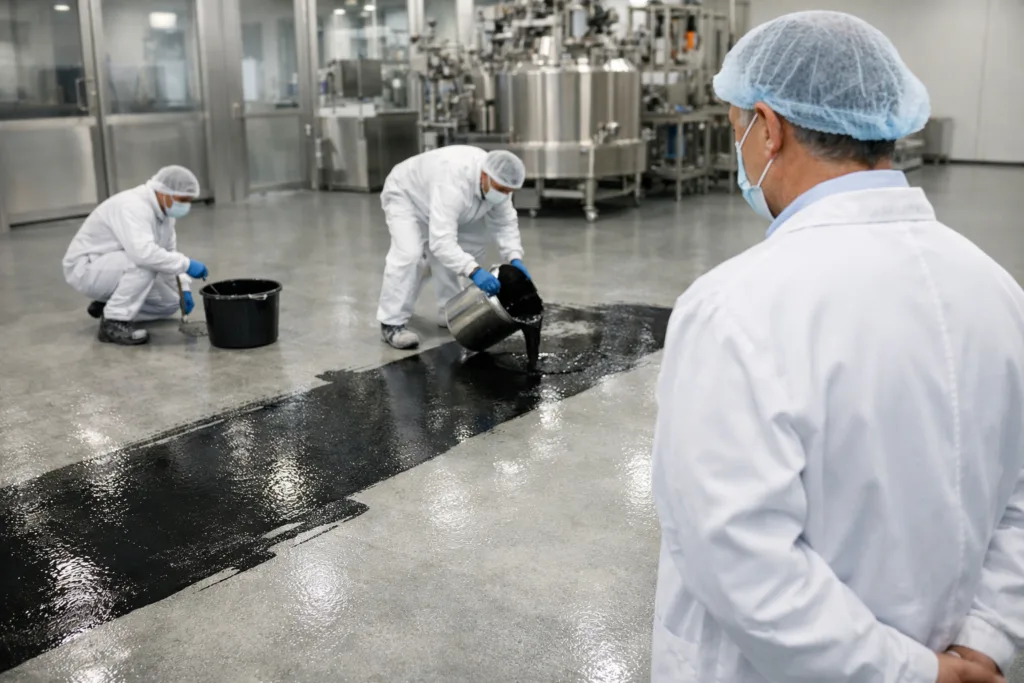
Proper installation is vital for ensuring consistent ESD performance. Factors like substrate moisture, temperature, and surface preparation have a direct impact on the conductivity and adhesion of the ESD resin. ZDSpoxy highlights rigorous site checks, primer compatibility (such as ZDS-2103ab conductive colored epoxy primer for ESD flooring), and batch size discipline. This helps prevent future static failures or delamination.
Failure Prevention and Site Realities
Overlooking contamination (from oil, dust, or moisture) before application can cause pinholing or static “dead zones.” Frequent checks of resistance during application, and careful air release management, ensure a seamless, static-safe result.
Longevity and Life-Cycle Cost Advantages
While ESD flooring systems require greater upfront investment compared to standard resin finishes, their ultra-long durability and reduced risk of damage or lost product lots yield lower total operational costs.
Compliance with International and Local Standards
ESD epoxy floors help facilities meet not only ISO and GMP requirements but also specialized standards like ANSI/ESD S20.20 and IEC 61340. Proper records, surface testing logs, and certification by reputable manufacturers add security during audits.
Physical Performance: Abrasion, Chemicals, Cleaning
Pharmaceutical cleanrooms require floors that can withstand heavy wheels, spills, and aggressive disinfectants—demands that only high-spec ESD epoxy solutions can meet. Products like the ZDS-5501AB high gloss waterborne polyurethane varnish or dedicated ESD topcoats offer both chemical resilience and ESD safety.
Practical Insights from ZDSpoxy Experts
Veteran site supervisors at ZDSpoxy suggest monitoring ambient humidity, choosing the right conductive aggregates, and documenting every batch’s resistance values. This minimizes variation and ensures compliance during real-world operations, not just at handover.
How ESD Epoxy Systems Improve Operational Efficiency
Static-safe environments reduce unscheduled downtime, equipment wear, and scrap rates. Routine ESD testing—coupled with proper training—streamlines audit preparation and performance monitoring for busy pharma teams.
Application Methods: Brush, Roller, or Trowel Systems
Different zones may suit different methods: trowel-down epoxy for high-wear corridors, self-leveling resin in packaging or blending rooms, and roller-applied conductive finishes for complex tight spaces. The correct primer, like a conductive basecoat, ensures proper bonding and ESD continuity.
Common Missteps and How to Avoid Them
Even the best anti-static resin can fail if mix ratios aren’t controlled or surface prep is incomplete. Training, supervision, and manufacturer support are crucial from the first step to final testing.
Case Example: Handling API Powders in ISO Class 5 Zones
Handling active pharmaceutical ingredients (APIs) in ISO Class 5 cleanrooms without ESD protection could result in devastating product loss or even worker injury. Specialized ESD primer-to-topcoat resin systems—with continuous surface resistance monitoring—are now the accepted minimum worldwide for this risk profile.
The Necessity of Using Electrostatic Dissipative (ESD) Epoxy Flooring in Pharmaceutical Cleanrooms
To sum up, ESD epoxy flooring isn’t just a “nice to have” in today’s pharmaceutical manufacturing—the stakes are too high for compromise. Static protection is a fundamental requirement, with anti-static resin systems delivering compliance, safety, and long-term value. Investing in the correct flooring solution is a direct investment in product quality, audit success, and operational peace of mind.
Conclusion: Secure, Compliant, Future-Ready Cleanrooms
High-performance ESD epoxy flooring stands at the intersection of compliance, innovation, and real-world reliability for pharmaceutical cleanrooms. As manufacturing grows more complex, attention to electrical safety, chemical resistance, and flawless finish quality must be built into every project from the ground up. By meeting or exceeding modern cleanroom standards with advanced electrostatic dissipative systems, facilities protect their processes, teams, and reputations—now and into the future.
Frequently Asked Questions
What are the main standards for ESD epoxy flooring in pharmaceutical cleanrooms?
Most facilities follow ISO 14644, GMP requirements, and sometimes ANSI/ESD S20.20 or IEC 61340 for additional ESD-specific control.
Is ESD flooring required for all cleanroom areas?
It is essential for zones where sensitive electronics, powders, or volatile solvents are present, but less critical in general support spaces.
How often should ESD floor resistance be tested?
Best practice is to test at least annually, or more often in high-risk zones, to ensure compliance with all standards over time.
Can old resin floors be upgraded for ESD performance?
In most cases, yes. Specialized primers and anti-static topcoats can convert some standard resin floors, but careful prep and system selection are crucial.
Are ESD epoxy floors slippery when wet?
Quality ESD systems can be finished with anti-slip textures, ensuring safe working conditions even under cleaning or spill scenarios.
Do ESD floors need special cleaning protocols?
Routine cleaning with approved detergents is needed, but aggressive scrubbing with harsh abrasives should be avoided to protect conductive layers.
Related Reading
- Epoxy Resin Flooring: The Complete Guide for Facilities
- How Long Does Epoxy Flooring Really Last? A Lifespan Breakdown
- Discover the Transformative Benefits of Industrial Epoxy Coatings
- Choosing the Right Resin Flooring System for Your Industry
- Why Chemical Resistant Resin Flooring Is Vital for Manufacturing