
Introduction: Making Sense of 100% Solids vs. Water-Based Epoxy
When choosing a new floor coating, you’ll likely face a big decision: 100% solids epoxy or water-based epoxy resin. If you’re feeling uncertain, you’re not alone. Each system brings distinct advantages—and potential drawbacks—depending on your floor’s usage, air flow, and the thickness you require. This article demystifies the major industry terms, explains the impact of VOC content, and guides you step-by-step to the best epoxy solution for your needs. Whether you care most about durability, indoor air safety, or application ease, we’ll break down the science and practical tips so you can choose confidently.
Before diving into the details, let’s clarify what each option means—and how it affects your project.
What is 100% Solids Epoxy?
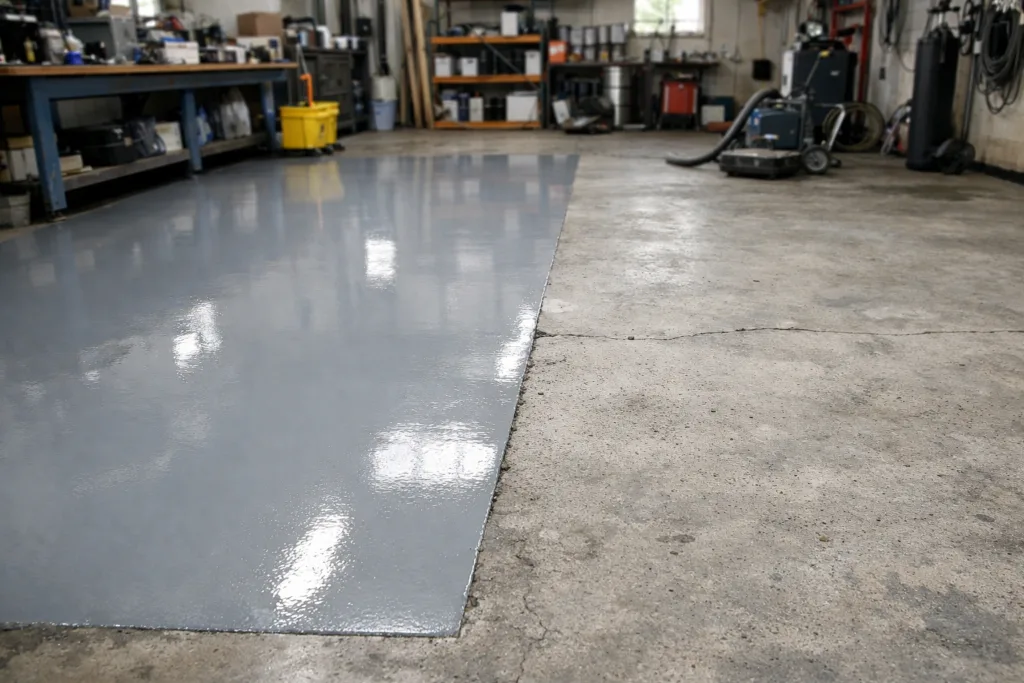
100% solids epoxy flooring is formulated without water or solvents. This means all material applied remains as part of the hardened floor—there’s virtually zero shrinkage. These products offer outstanding chemical resistance, abrasion strength, and thickness control. They are preferred for industrial use, high-traffic spaces, and settings where longevity is critical.
Explaining Water-Based Epoxy Resin Options
Water-based epoxy resins use water as a carrier, enabling thinner application and gentler VOC profiles. As the water evaporates, the coating cures. Water-based systems are easier to apply for beginners but may not achieve the same depth or heavy-duty durability as 100% solids options.
If you need an eco-friendlier system or have trouble ventilating your workspace, water-based resins may be ideal. For example, the ZDS-105 water-based acrylic epoxy primer delivers strong bonding and low-emission benefits for concrete floors.
Industry Terms: VOC Content Demystified
VOC content (Volatile Organic Compounds) is a major concern for health, safety, and environmental compliance. High-VOC formulas release more airborne gases during application and curing, requiring careful ventilation. Water-based epoxy options typically have far lower VOC content, while 100% solids epoxies are often nearly VOC-free since they contain no solvents and little to no evaporation occurs.
Application Methods: Mixing, Pouring, and Curing
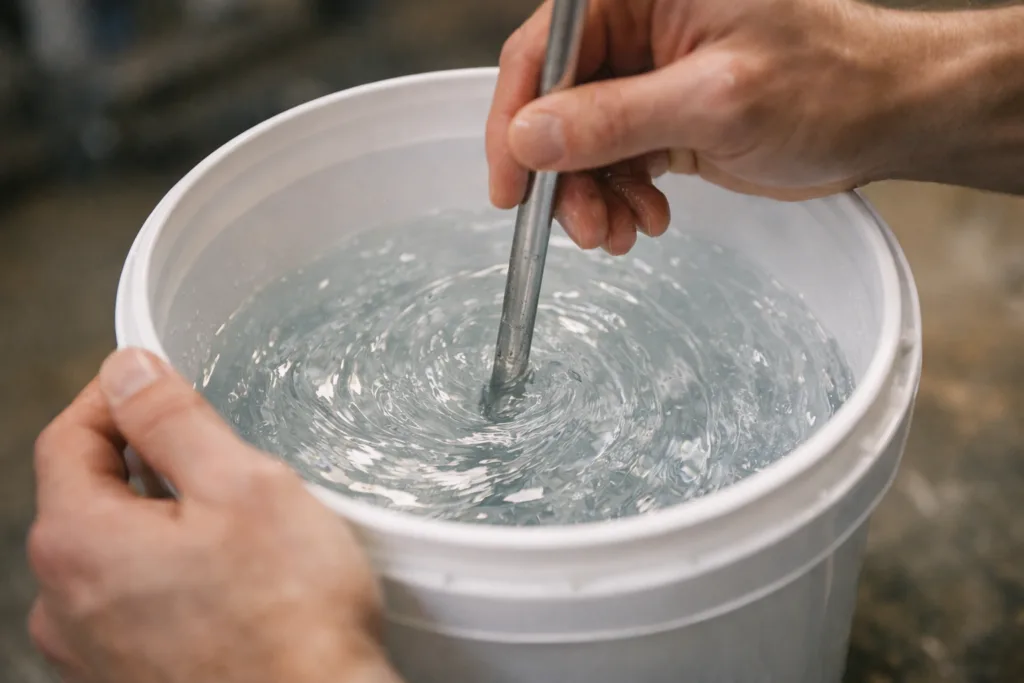
With 100% solids epoxy, mixing accuracy is critical—especially with two-part systems. For optimal results, thorough blending and timely application prevents air bubbles and uneven curing. Water-based epoxies are generally easier to mix and apply, suiting DIY use and fast commercial renovations. ZDSpoxy engineers emphasize mixing ratio discipline and proper surface preparation to ensure strong adhesion and minimize failures, regardless of resin type.
Durability: How Tough Are These Floors?
100% solids epoxies form thick, hard-wearing surfaces that can resist forklift traffic, chemical spills, and regular abrasion. Water-based versions are better suited for light-duty commercial spaces and decorative projects where maximum strength isn’t required. If your space requires heavy-duty performance, 100% solids formulations—like ZDS-1012ab epoxy primer—offer unmatched durability.
Comparing Installation: Ease vs. Expertise
Water-based epoxy systems are more forgiving in terms of ventilation, substrate moisture, and application conditions. They can be applied with basic tools and generally have longer working times. In contrast, 100% solids epoxies require expert handling to avoid runaway exotherm (heat buildup) and to maintain proper thickness.
Thickness, Coverage, and Shrinkage
100% solids epoxies cure at the exact thickness applied. Nothing evaporates, so what you spread is what you get. Water-based systems will lose volume as water leaves—expect thinner final coatings. For coverage comparisons, always check manufacturer datasheets and site-specific recommendations.
Ventilation Needs: Safety Comes First
When working with high-VOC products, mechanical ventilation and PPE are non-negotiable. Water-based systems, with their low VOC emissions, are much safer for indoor applications and sensitive environments.
Cost Comparison: Upfront vs. Lifecycle Expense
While water-based epoxies tend to cost less initially and save on safety controls, they might require recoating earlier. 100% solids options involve higher upfront pricing—but lower maintenance costs over time, especially in demanding industries.
Environmental Impact and Compliance
Water-based solutions cater to LEED projects and regions with strict emission laws. Many 100% solids epoxies also comply with VOC regulations, but always check the technical label for local standards.
Choosing Based on Substrate and Room Usage
Assess your space: chemical resistance, expected foot/vehicle traffic, and downtime tolerance. Facilities seeking corrosion-resistant systems might look into specialized corrosion-resistant resin flooring for aggressive environments.
Health & Safety: VOCs, PPE, and Air Quality
Proper PPE—respirators, gloves, and coveralls—is essential when handling most epoxy systems. Water-based resins reduce exposure risk, but adequate airflow remains important.
Typical Applications: From Homes to Industry
Industrial plants, warehouses, and garages frequently demand 100% solids epoxy for wear and chemical resistance. Hospitals, offices, and classrooms may prefer water-based systems for improved air quality and practicality.
Decorative and Antimicrobial Flooring Choices
Beyond basic performance, water-based and 100% solids epoxies offer multiple aesthetic and safety features. Decorative finishes, colored topcoats, and antimicrobial additives are available for specialized needs. Explore options like antimicrobial resin flooring to raise hygiene standards.
How to Decide: Key Questions Before You Buy
- Do you need chemical resistance or abrasion strength?
- Is your workspace well-ventilated?
- How important is easy application vs. long-term performance?
- What’s your budget for both installation and lifecycle maintenance?
- Are you subject to VOC regulations?
ZDSpoxy Insights: The Reality of Epoxy Application
On actual job sites, ZDSpoxy engineers have observed that many failures stem from incorrect mixing, poor batch-size control, and inadequate substrate preparation. Choosing the right primer—water-based or 100% solids—and using high-quality products with verified performance data ensure your resin floor bonds reliably and cures safely, even under non-ideal conditions. It’s better to choose a slightly thicker system and give yourself buffer for working time, rather than risk surface defects or incomplete curing.
Comparing Side by Side: 100% Solids vs. Water-Based Epoxy
| Feature | 100% Solids Epoxy | Water-Based Epoxy |
|---|---|---|
| VOC Content | Very low/None | Low (but not zero) |
| Coverage | No shrinkage | Some shrinkage |
| Durability | High (heavy traffic) | Medium (light duty) |
| Application Ease | Requires expertise | DIY-friendly |
| Cost | Higher upfront | Lower upfront |
| Environmental Impact | Compliant (check VOC) | Excellent |
| Ventilation Needed | Depends on additives | Minimal |
Common Mistakes When Picking or Installing Epoxy Systems
- Ignoring substrate moisture—leading to delamination
- Poor mixing—causing inconsistent curing or bubbling
- Failing to account for working time
- Underestimating VOC risk in confined spaces
- Choosing thickness too thin for traffic/use
Troubleshooting: If Your Epoxy Floor Fails
If trouble strikes—blistering, peeling, or odor complaints—assess your mix ratio, review ventilation, and verify substrate prep. ZDSpoxy recommends a thorough review before recoating or patching to avoid repeat issues.
Expert Tips for Long-Lasting Epoxy Floors
- Choose the system that matches real site conditions
- Verify datasheets for VOC specs and cure timelines
- Keep mixing tools clean; measure meticulously
- Allow proper time for drying/curing between layers
- Don’t rush—get the primer and base coat right
100% Solids vs. Water-Based Epoxy: Which is Right for Your Floor?
If your floor must handle high wear, chemical spills, or heavy machinery, 100% solids epoxy usually stands out. For home renovations, offices, and low-traffic spaces—especially where VOC sensitivity is top priority—water-based epoxy resin is wise. Always consider your ventilation, compliance needs, and future maintenance to avoid surprises.
Conclusion: Takeaways for Confident Floor Choices
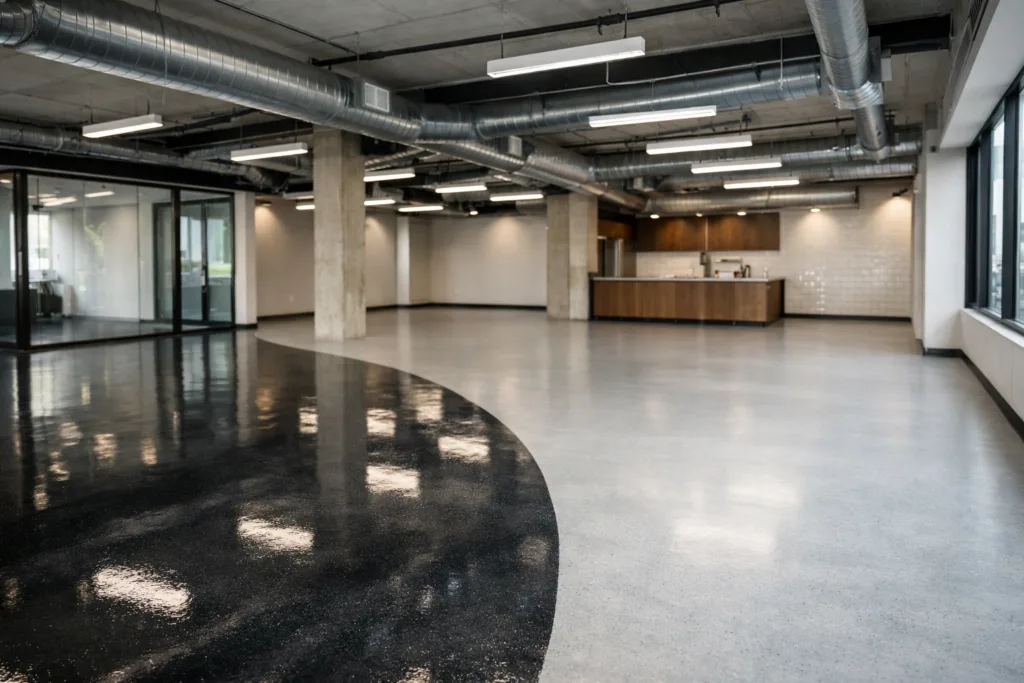
Both 100% solids and water-based epoxy systems offer valuable performance in the right situation. Understand your usage, thickness needs, and local VOC regulations to decide wisely. Proper prep, informed selection, and disciplined application deliver floors that last and keep workspaces safe.
Frequently Asked Questions
Can I use 100% solids epoxy in my home?
Yes, but you’ll need strong ventilation and careful mixing. These systems are ideal for garages and workshops where durability matters most.
Does water-based epoxy last as long as 100% solids?
Water-based epoxies are durable for light to moderate traffic but may need recoating sooner compared to 100% solids options in heavy-use areas.
Will VOC content in epoxy affect indoor air quality?
Epoxy with high VOCs can lower air quality; water-based and 100% solids epoxies minimize emissions and are safer for enclosed spaces when installed correctly.
How thick should I apply epoxy on a concrete floor?
For heavy traffic, 100% solids epoxy is usually laid at 2–3 mm or thicker; water-based systems are applied thinner, around 0.5–1 mm. Check manufacturer specs.
Is water-based resin easier to clean up?
Yes, water-based epoxy cleans up with soap and water before curing. 100% solids require solvent or mechanical removal once set.
Do I need a primer under my epoxy floor?
Using the right primer improves bond and prevents delamination. Select water-based or 100% solids primers suited for your substrate and conditions.