
Introduction: Setting the Scene for Marine Epoxy vs Regular Epoxy
If you’re working on boats, piers, or any surface that regularly faces water, the choice between marine epoxy vs regular epoxy becomes more than a technicality—it’s the deciding factor between repairs that last and projects that fail. With factors like water absorption, adhesion strength, UV resistance, pot life, and long-term durability, understanding which epoxy system works best is crucial. In this article, we’ll break down each attribute, explain the real meaning of “marine grade,” and help you select the right solution based on real-world marine demands. If you’re looking for more technical details about marine-grade formulations, see our in-depth tool on Marine Epoxy Resin Manufacturer.
Why the Epoxy Type Truly Matters in Marine Applications
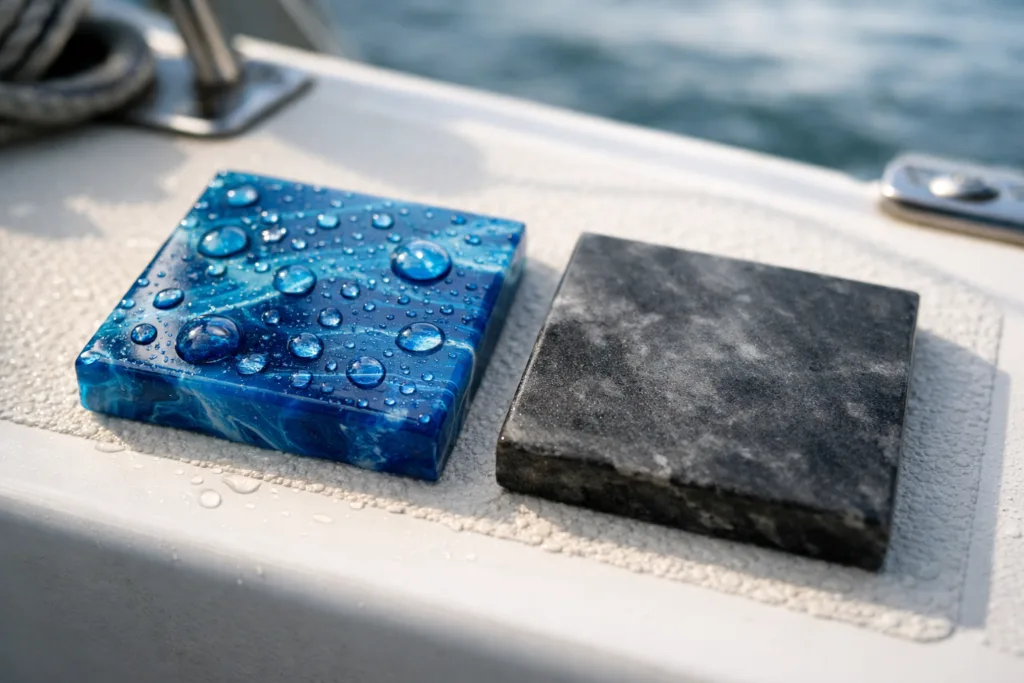
While regular epoxy is designed for a variety of environments, marine epoxy specifically targets high-moisture and submerged scenarios. Water resistance, bond maintenance under cyclic load, and UV resilience are essential when you’re dealing with boats or docks.
Defining Marine Epoxy: What Makes It Marine Grade?
Not every epoxy labeled for boats passes as truly “marine grade.” What sets marine epoxy apart is its precise formulation—a system designed to resist water absorption, maintain adhesion in wet environments, and endure cycles of flexing and stress unique to marine conditions. For example, ZDSpoxy engineers focus on balancing low mix viscosity with ultra-low water uptake, so the cured system remains robust even when exposed to salt water daily.
Practical Comparison Table: Marine Epoxy vs Regular Epoxy
| Performance Factor | Marine Epoxy | Regular Epoxy |
|---|---|---|
| Water Absorption | Very low (<0.4% at 24h) | Moderate (up to 2% at 24h) |
| Adhesion Strength (Wet) | Excellent | Variable, often reduced |
| UV Resistance | Enhanced, with stabilizers | Standard, may yellow/crack |
| Pot Life | Tailored (~45-90 mins) | Shorter/longer depending on formula |
| Durability | High, with fatigue resistance | Medium, less suited to flex |
Water Absorption Resistance: The Deciding Factor
Most failures on boats—like osmotic blistering or bond loss—trace back to water penetration. Marine epoxies undergo rigorous moisture resistance testing, often far exceeding ordinary home improvement standards. For a deeper dive into waterproofing science and why area and maintenance matter, check How Waterproofing Lifespan Is Determined.
Adhesion Strength Under Wet and Fatigued Conditions
Not all adhesives stick well underwater. Marine epoxies are blended with modifiers and curing agents that preserve bond strength when exposed to constant wetting, drying, and movement. If you’re repairing a hull or swim platform, this property alone keeps your project intact season after season.
UV Resistance for Outdoor & Exposed Parts
Boat decks and gunwales face relentless sunlight, which can yellow or crack standard epoxies. Marine grades add UV stabilizers and anti-yellowing agents, increasing their longevity outside. If you’re dealing with potential UV challenges, review our article How Outdoor Polyaspartic Coating Resists UV.
Managing Pot Life for Scale and Weather
The working time, or “pot life,” of your epoxy decides how much area you can cover before it sets. Marine epoxies strike a careful balance: long enough for major repairs, but with a cure profile that won’t be wrecked by ambient humidity or temperature swings. On a hot deck or in a cool boathouse, this matters more than you might expect.
Durability and Fatigue Resistance: Endurance on Water
Shocks, vibration, and flexing are everyday realities for boat structures. Marine epoxies are specifically engineered to withstand ongoing dynamic stress—think of engine vibrations or pounding waves. The right durability means fewer maintenance cycles and higher overall confidence.
System Selection: Matching Formulation to Application
Choosing between marine and regular epoxy isn’t just about the label—it’s about matching technical properties to the severity of the environment. For submerged repairs, like fixing a hull breach, marine epoxy is mandatory. For interior cabinetry or dry spaces, regular epoxies can do the job. For ultra-fast underwater repairs, the ZDS-1002AB rapid underwater repair putty demonstrates the kind of property specialization marine systems offer.
How “Marine Grade” Is Actually Engineered
The term “marine grade” isn’t just marketing. It represents R&D decisions about resin backbone, cross-link density, and filler selection. At ZDSpoxy, experienced manufacturing engineers routinely test systems for viscosity control, gel time, and batch consistency—all crucial when bridge decks or hulls are on the line.
Real-World Constraints: Environment, Materials, and Safety
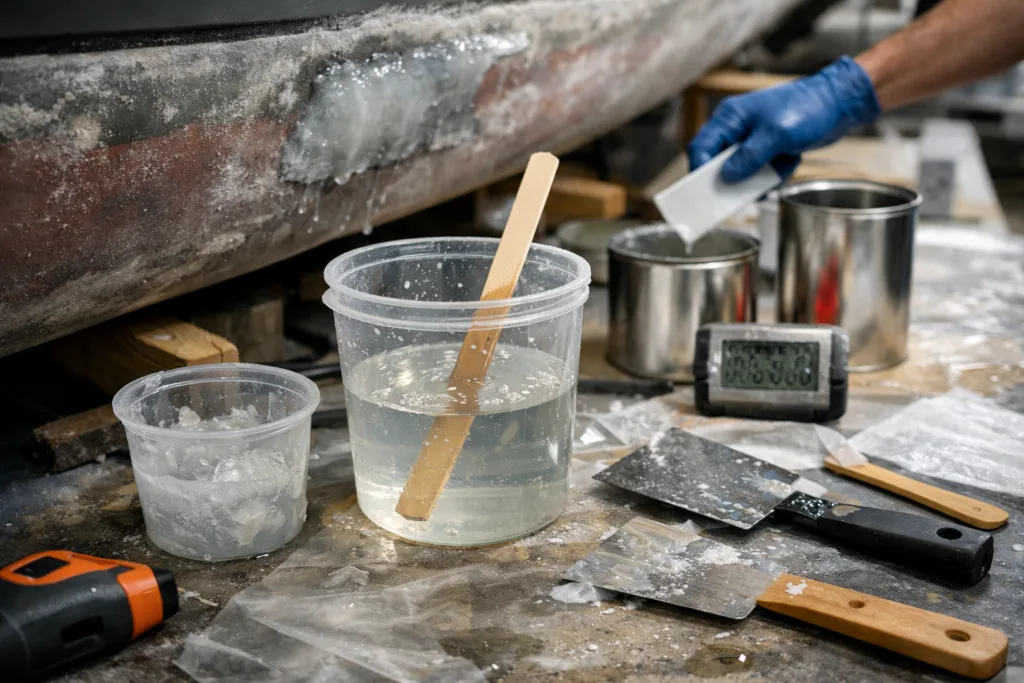
Moisture, temperature, and substrate cleanliness can make or break any marine epoxy application. Epoxies react with ambient water, dust, and contaminants—so prepping the surface and respecting mix ratios is vital. Technicians from ZDSpoxy recommend always carrying fresh gloves, measuring tools, and using dedicated mixing buckets for repeatable site results.
Common Missteps: Why Ordinary Epoxy Fails in Marine Use
Using regular epoxy for hull repairs or exposed areas often leads to bond failures, yellowing, or softening under cyclic load. These failures aren’t always obvious at first but can become catastrophic during the boating season.
Best Practice Prep: Ensuring Epoxy Success on Boats
Even the best product can fail if the prep is poor. Here’s what industry veterans do before mixing:
- Dry and degrease the surface completely
- Check for salt or mineral contamination
- Scuff slick surfaces for mechanical grip
- Mix in small batches and watch the pot life closely
Fatigue Performance and Long-Term Adhesion
Epoxies are not just adhesives; their fatigue resistance directly impacts the lifespan of joints and repairs. Marine systems utilize flexible modifiers to maintain bond integrity through repeated flexing and pounding.
Moisture Vapor Transmission: Hidden Threats Below Deck
Water moves in more ways than you’d expect—even through “dry” substrates. Marine epoxies include vapor barriers so moisture doesn’t migrate and break bonds over time.
Comparing Cure Profiles: How Weather Influences Epoxy Choice
Many regular epoxies set too fast, trapping bubbles or causing uneven cure if humidity is high. Marine systems are built to cure evenly in damp and changing environments—a vital difference for boatyards and outdoor repairs.
Examining Chemical Resistance: Salt, Oil, and Fuel
Salt water, fuel spills, and cleaning agents are common on boats. Marine epoxy formulations are developed to survive these threats, maintaining both surface finish and adhesive strength.
What the Lab Doesn’t Tell You: Field-Tested Insights
Lab values matter, but so does historical field experience. Boat builders often choose marine epoxy because, despite numbers on a datasheet, regular epoxy struggles over time with softening, warping, or bond failures in actual marine life.
Evaluating Cost vs Performance
Marine grades command a premium—because they offer extended durability and fewer repairs. For large-scale rebuilds or exposed parts, this small upfront cost pays off fast.
Choosing the Right Epoxy System for Your Boat: Decision Guide
Use this summary to guide your next pick:
- Wet, submerged, or outdoor: Go marine grade
- Interior and dry: Regular epoxy is sufficient if you prep carefully
- Fast underwater patch: Specialized putties like ZDS-1002AB
For backbone planning, 10 Vital Marine Epoxy Resin Facts offers key system selection guidance.
Summary Table: When to Use Marine Epoxy
| Scenario | Epoxy Type | Reason |
|---|---|---|
| Battening a hull | Marine Epoxy | Requires water resistance |
| Deck or superstructure | Marine Epoxy | Exposed to UV and vibration |
| Cabinet installation | Regular Epoxy | Dry indoor space |
| Patching underwater | Rapid Marine Putty | Immediate cure in wet conditions |
Conclusion: Takeaways for Selecting Marine Epoxy vs Regular Epoxy
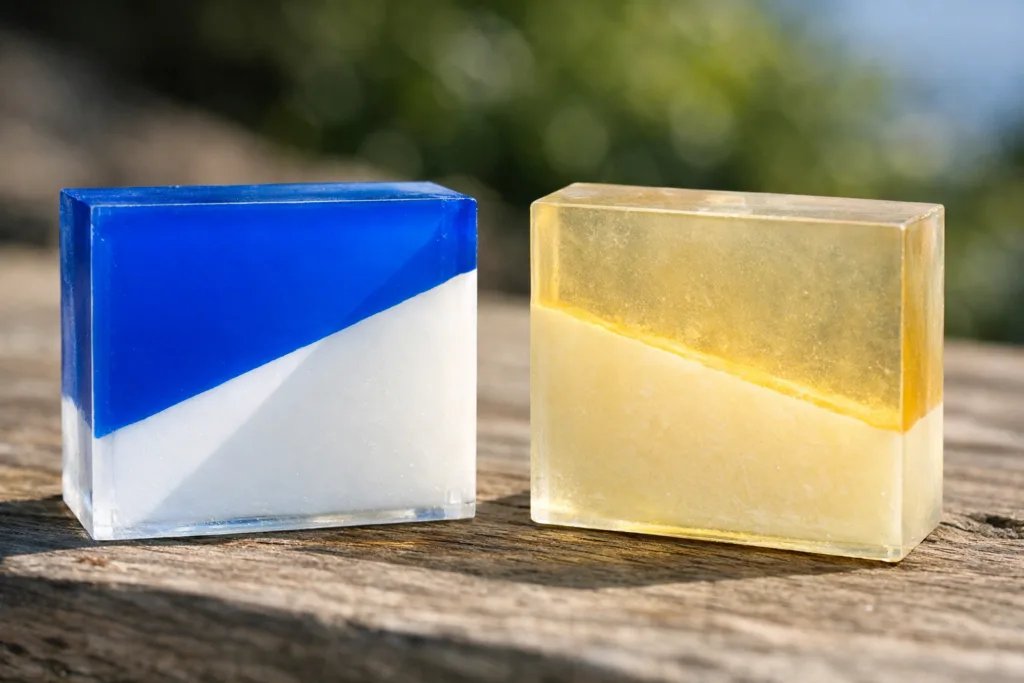
The difference between marine epoxy and regular epoxy is serious business for boat repairs, builds, and renovations. Marine epoxy offers superior resistance to water absorption, stable adhesion under fatigue, and robust UV protection—attributes that regular epoxies rarely deliver. A precise system selection matched to your real marine setting means fewer failures, safer repairs, and confidence as your project faces the elements.
Frequently Asked Questions
What is the main difference between marine epoxy and regular epoxy?
Marine epoxy is formulated for superior water resistance, UV durability, and stable adhesion in wet, moving environments, while regular epoxy serves general repairs.
Can I use regular epoxy on my boat?
In dry, interior areas, regular epoxy can work with careful prep. For hulls, decks, or exposed areas, marine epoxy is mandatory for reliable results.
How does water absorption impact epoxy bonds?
Higher water absorption can weaken bonds over time, causing blisters and delamination—marine epoxy avoids this with a low water uptake profile.
Why does pot life matter for epoxy repairs?
Pot life determines working time before the epoxy sets. For large repairs or complex boat shapes, a tailored marine epoxy pot life prevents rushed or failed applications.
Is marine epoxy more expensive and is it worth it?
Marine epoxies cost more due to specialized ingredients, but offer longer service life and reduced maintenance, making them well worth the investment for water-exposed structures.
Can marine epoxy cure underwater?
Some marine epoxies, especially rapid putties, cure underwater, allowing emergency repairs and patching directly in wet conditions without loss of adhesion.