
Introduction: Why API 686 Chapter 5 Grouting Standards Matter
Grouting, API Standards are essential for industrial equipment installation, shaping the backbone of long-term structural integrity. API 686 Chapter 5 sets mandatory grouting practices that factory managers, installers, and maintenance engineers must follow to ensure that heavy machinery stays aligned, stable, and safe. This article unpacks these requirements, why they matter, the risks of ignoring them, and how expert-driven protocols (backed by manufacturers like ZDSpoxy) safeguard your operation.
What Is Grouting in API Standards?
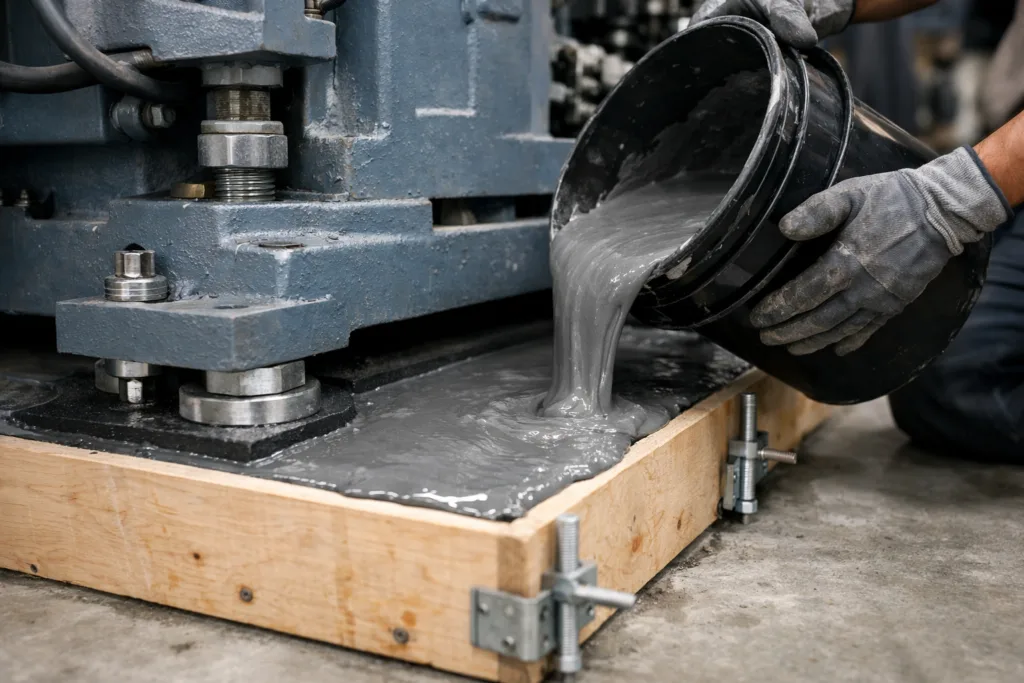
Grouting, API Standards refer to filling the gap between equipment baseplates and concrete foundations with material like epoxy grout. The purpose is twofold: transfer static and dynamic loads efficiently, and provide long-term protection against vibration, movement, and chemical invasion. API 686 Chapter 5 details the requirements for both cementitious and epoxy grouting systems.
Essential Terminology and Definitions in API 686
Understanding grouting, API Standards means grasping key terms:
- Effective Bearing Area: The part of the grout transmitting load.
- Compressive Strength: The maximum load grout can bear before failure.
- Dynamic and Static Loads: Forces exerted by operating or stationary machines.
- Creep Resistance: Grout’s ability to maintain shape under sustained load.
- Bond Line: The interface between grout and baseplate or foundation.
Key Requirements in API 686 Chapter 5 for Grouting
The standard mandates specific procedures for:
- Foundation prep and cleanliness
- Formwork, sealing, and edge protection
- Grout mixing, placement, and curing
- Inspection, testing, and documentation
Skipping any of these steps increases the risk of machinery misalignment, premature failure, and structural breaches.
Types of Grouting Materials Recognized in API Standards
API 686 allows two main material types:
- Cementitious Grout: Traditional, inexpensive, but prone to cracking and shrinkage.
- Epoxy Grout: Engineered for high compressive strength, low shrinkage, and chemical resistance. Ideal for heavy and vibrating machinery. For detailed solutions, see Epoxy Grout Solutions.
Preparation: Foundation and Baseplate Cleanliness
API 686 Chapter 5 stresses site preparation. The foundation must be free from oil, grease, dust, and loose debris. Baseplates require cleaning by shot blasting, grinding, or chemical treatment. ZDSpoxy’s field experience shows that contamination leads to poor adhesion—a major cause of grout failure.
Formwork: Edge Sealing and Leak Prevention
Before grouting, install rigid, sealed formwork to prevent leaks. The standard demands waterproof forms, fixed at the correct height for grout pour. Weak edges allow grout loss and air voids, undermining performance. Pro crews often use epoxy putty for sealing tricky gaps.
Mixing Protocols: Accuracy and Consistency
API 686 requires strict mixing discipline: follow manufacturer’s ratio, mix each batch completely, avoid over- or under-mixing. Batch records—including time, temperature, and lot—are vital for quality assurance. Larger grouting jobs benefit from tools like the Epoxy Grout Volume Calculator Project Quote to estimate material needs.
Placement Techniques: Pouring, Flow, and Air Release
Grout must be placed continuously to minimize air entrapment. API 686 sets minimum thickness specs, restricts cold joints, and insists on pouring from one side to promote flow. For tight gaps, specialized products like ZDS-4131AB Low Viscosity Epoxy Grout enable void-free placement.
Mandatory Curing and Post-Install Care
API 686 directs curing times, temperature controls, and protection from vibration before full hardening. Cold or hot environments affect cure speed—see ZDSpoxy’s own temperature guides for further info. Grout exposed too soon to operational loads risks incomplete strength development.
Inspection, Testing, and Documentation
Inspection after grout pour is non-negotiable. Standard calls for visual checks (voids, cracks), hammer tapping (soundness), and compressive strength tests. Documentation (photos, batch records, field notes) is essential for compliance and audit.
API 686 Acceptance Criteria for Installed Grout
The standard sets pass/fail benchmarks. Common metrics include:
- 85% minimum effective bearing area
- Compressive strength above manufacturer specs (often 70–100 MPa for epoxy)
- No shrinkage cracks, air voids, or debonding
Engineered Solutions: Epoxy Grout Advantages for API Compliance
Epoxy grouts provide high-flow, rapid-cure, and chemical resistance, reducing risk in safety-critical installations. For example, heavy pump bases or compressor skids benefit from epoxy’s dynamic load transfer capability—see ZDSpoxy’s in-depth guidance for Heavy Machinery Epoxy Grout.
Common Grouting Failures: Causes and API Remedies
Failures include grout shrinkage, poor adhesion, air entrapment, and premature deterioration. API 686 prescribes preventive measures: rigorous surface prep, correct mix, steady pour, and cure controls. Non-compliance can result in costly downtime or catastrophic machine misalignment.
Case Studies: API 686 Grouting in Practice
Example 1: A centrifugal pump skid suffered vibration due to air voids under the baseplate. API-compliant regrouting eliminated the problem, restoring alignment.
Example 2: In a compressor installation, cementitious grout shrank, causing bolt tension loss. Switching to API 686-approved epoxy grout delivered long-term reliability.

Static vs Dynamic Loading: Grout Selection Logic
API 686 specifies grout selection based on operational loads. Static loads suit cementitious grout if economics prevail, but dynamic loads (motors, compressors) require creep-resistant, high-strength epoxy grout. For deeper selection steps, reference dedicated guides.
Effective Bearing Area: How API 686 Ensures Safe Loads
A minimum of 85% effective bearing area is the API baseline. Poor coverage means stress concentration, cracking, and premature equipment failure. Engineers measure bearing using templates and non-destructive testing. ZDSpoxy’s team regularly verifies this on job sites.
Thermal Compatibility: Managing Expansion and Contraction
The grout must match the thermal expansion of both steel and concrete. API 686 warns against mismatch—especially with mass pours and hot equipment. Composite grouts and additives help align expansion rates, reducing long-term stresses.
Mix Ratio Discipline: Preventing API 686 Compliance Failures
Strict adherence to mix ratios is vital. Even small deviations cause weak or brittle grouts, jeopardizing safety. API 686 calls for batch control, written verification, and supervisor sign-off. ZDSpoxy’s labs evidence that ratio errors directly lead to failures.
API 686 Chapter 5: Mandatory Grouting Practices Explained
This section summarizes the must-follow grouting rules:
- Clean, dry foundation and baseplate
- Rigid, sealed formwork
- Accurate mix and batch records
- Continuous pour, proper flow
- Inspection and testing post-installation
- Documentation for traceability
- Selection of proper grout based on operational needs
Practical API 686 Checklist for Field Crews
To comply with API 686 Chapter 5, crews and supervisors should:
- Inspect and document foundation prep
- Seal all edges completely
- Mix only what can be placed immediately
- Pour and finish without delay
- Monitor curing temperatures
- Complete inspection before commissioning equipment
Real-World Tips from ZDSpoxy Grouting Engineers
ZDSpoxy engineers recommend trial mixes to verify flowability, temperature, and pot life before full-scale installation. Always check shelf life and storage conditions, and select grouts tolerant to moisture if working on wet foundations. Safety gear, spot ventilation, and spill protection are non-negotiable on epoxy jobs.
Consequences of Non-Compliance with API 686 Grouting Practices
Ignoring API 686 Chapter 5 can cause:
- Machinery misalignment and vibration
- Compressor bolt tension loss
- Premature foundation failure
- Costly downtime and repair expense
- Hazardous work conditions
Compliance prevents these risks with repeatable, tested protocols.
Conclusion: Confidence in API 686 Grouting Standards
Grouting, API Standards—especially those in API 686 Chapter 5—are more than paperwork. They are practical, measurable steps ensuring safety and reliability in industrial installations. Whether you’re dealing with heavy machinery, critical pumps, or compressor bases, following these guidelines gives confidence in performance and longevity. Expert insight, robust materials, and thorough site prep combine to deliver installations built to last.
Frequently Asked Questions
What are the main grouting materials allowed in API 686?
API 686 permits cementitious grout and epoxy grout—epoxy offers higher strength and chemical resistance.
Why is surface preparation so critical for grouting?
Proper cleaning removes contaminants, ensuring strong adhesion and preventing premature failure or cracking.
How does API 686 address grout curing and temperature sensitivity?
The standard defines minimum curing times and stresses temperature control to ensure optimal strength development.
What is the effective bearing area and why is it important?
It’s the contact surface transferring load; API demands 85% minimum to avoid stress problems and equipment failure.
How do I select between cementitious and epoxy grout?
Epoxy is chosen for heavy, dynamic loads and chemical exposure; cementitious may suit light static loads or cost-driven jobs.
What happens if API 686 grouting practices are not followed?
Non-compliance leads to misalignment, vibration, foundation damage, and higher repair or downtime costs.