
Introduction: Why Vacuum Infusion Epoxy Resin Is the Key to Flawless Carbon Fiber Projects
Vacuum infusion epoxy resin is central to modern marine builds and repairs involving carbon fiber, fiberglass, and advanced composites. Getting the resin right means mastering low viscosity, exotherm control, and long pot life—all under real-world temperature changes. If you want to avoid wasted materials, delamination, or catastrophic failures, understanding how to evaluate these properties and prepare your infusion setup is essential.
Understanding Vacuum Infusion Epoxy Resin Performance
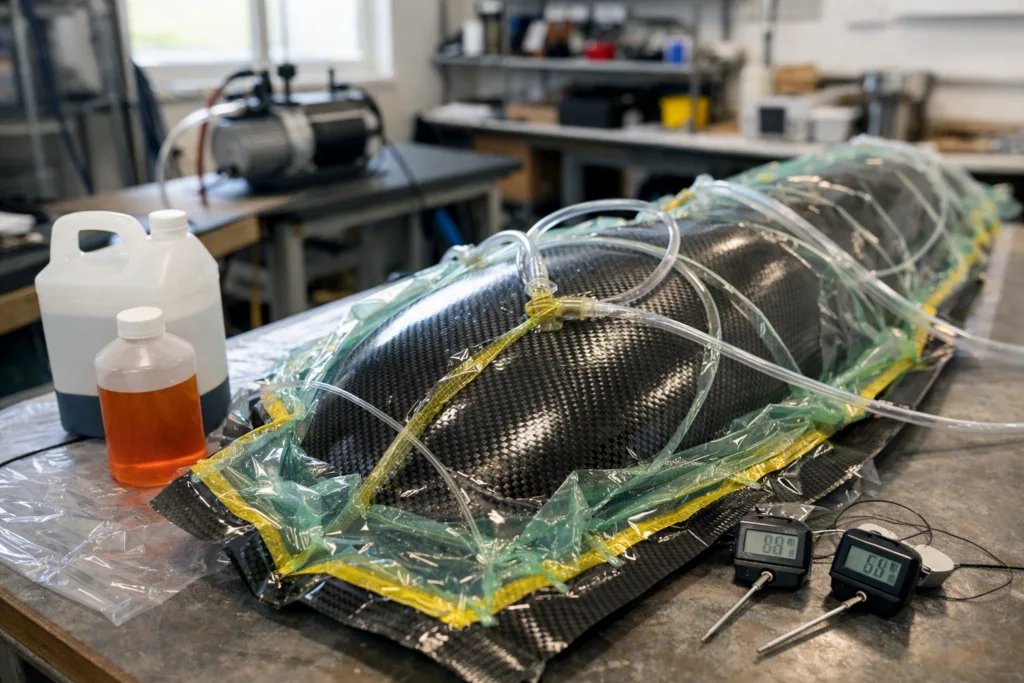
Marine vacuum infusion works because resin is drawn into a fiber pack using pressure differential—not pushed by hand. High-performance vacuum infusion epoxy resin must combine:
- Low viscosity (easy flow through dense fabrics)
- Controlled exotherm (safe temperature rise; no runaway reactions)
- Long pot life (enough working time; avoids premature gelation)
- High flow length (complete wet-out—no dry zones)
How Low Viscosity Enables Efficient Infusion
Resin viscosity is a measurement of how readily it flows. In infusion, lower viscosity means easier movement through carbon fiber layers, less risk of traps or dry spots, and faster wetting. Target values for vacuum infusion often range between 200–400 cP at application temperature.
Pot Life and Working Time in Real Conditions
Pot life indicates time before resin starts to gel after mixing. Working time is actual application window. You must check these values at your local temperature, not just at 25°C. Pot life halves as temperature rises by roughly 10°C. Cold days extend pot life, while warm conditions can cause rapid gelation.
Exotherm Control for Large Marine Laminates
Exothermic reaction occurs as epoxy cures—heat builds up. If unchecked, exotherm can cause structural defects, yellowing, or even melt the vacuum bag. Always check resin’s recommended mass for safe pouring and avoid bulk mixing.
Vacuum Infusion Setup Checklist
- Dry, clean mold surface
- Untouched carbon fiber layup
- Flow media layer (correct type/placement)
- Sealant tapes with no gaps
- Infusion mesh for rapid flow zones
- Strong, reliable vacuum pump (hold 90–95% vacuum)
- Temperature monitoring (ambient + mold temp)
- Precise mixing ratio (follow manufacturer’s instructions)
- Resin degassing (especially for critical surfaces)
- Strategic feed and exit lines (prevents air traps)
Common Causes of Infusion Failure
- Using high-viscosity epoxy (poor flow, dry areas)
- Improper pot life selection (gelation before wet-out)
- Poor vacuum—leaks at seal or hoses
- Insufficient exotherm control (overheated resin mass, bag failure)
- Wrong mixing ratio (weak cure, sticky patches)
- Contaminated carbon fiber (dust, oil—bad bonding)
How to Evaluate Viscosity and Pot Life at Your Work Temperature
Choosing the right vacuum infusion epoxy resin isn’t just about specs on paper. It’s about matching resin properties to your actual jobsite temperature, batch size, and infusion strategy.
| Property | Lab Value (@ 25°C) | Adjusted Value (@ Site Temp) | Why It Matters |
|---|---|---|---|
| Viscosity | 250 cP | 180 cP (@ 30°C), 350 cP (@ 18°C) | Directly affects flow and wet-out |
| Pot Life | 40 min | 25 min (@ 30°C), 55 min (@ 18°C) | Safe working time for large parts |
| Flow Length | ~1.2m for 3-layers carbon fiber | Depends on vacuum, media, resin temp | Uniform lamination, no dry spots |
| Exotherm Peak | 80°C (100g batch) | Higher with larger mass or warmer temp | Keeps vacuum bag and part safe |
Resin Selection Logic: Matching Your Marine Project to the Right Formula
For marine vacuum infusion, select an epoxy formulated for carbon fiber, with ultra-low viscosity and stable pot life at expected ambient temperatures. If you’re working in a shop averaging 28°C, look for extended pot life formulations and verified exotherm control. For yacht or hull repairs in cooler conditions, standard pot life may suffice—but check viscosity carefully.
If you’re unsure, consult the Marine Epoxy Resin Manufacturer page for detailed performance charts.
Real-World Batch Mixing Tips
- Mix by weight—volume errors are common
- Use smaller batches if unsure about pot life
- Consider resin warming/cooling to adjust viscosity
- Degas after mixing when clarity and bond are critical
Consistency is king; even the best vacuum infusion epoxy resin will fail if mixing is sloppy or contaminated. Inexperienced mixing and poor quality control commonly cause failed cures or bonding issues.
The Importance of Exotherm Control for Structural Integrity
Controlled exotherm protects against structural failures, melted vacuum bags, and yellowed laminates. Large-mass pours—like for thick hull sections—are at highest risk. Always stay within the recommended batch size, and spread out pours for massive parts.
ZDSpoxy engineers often recommend spot temperature checks during infusion, especially for multi-layer composites. This helps confirm that the system stays within safe exotherm limits and ensures batch-to-batch performance.
Long Pot Life: Ensuring Consistent Wet-Out Across Large Carbon Fiber Parts
Large marine builds demand extended pot life, so the resin doesn’t gel before full vacuum draw is achieved. For hulls or decks over 2 meters, aim for formulas that guarantee over 35–45 minutes at your local temperature.
Rapid gelation not only risks dry areas but may also trap air or create visible defects. Long pot life combined with low viscosity ensures the resin reaches every fiber before solidifying.

Flow Length Measurement: Mapping Resin Reach and Preventing Dry Spots
Flow length describes how far resin travels horizontally during infusion. For multi-layer carbon fiber jobs, measure actual flow length using sample runs—don’t just rely on datasheets. Consider flow media layout, vacuum strength, and resin viscosity when estimating maximum safe zone coverage.
Quick Flow Length Calculation
- Lay out carbon fiber stack as normal
- Run test infusion with colored resin
- Measure distance from feed to full saturation line
Adjust layup or use multiple feed points if flow length falls short of your full part size.
Carbon Fiber Infusion Setup: Step-by-Step Preparation for Success
- Check mold cleanliness and dry-off
- Confirm fiber orientation and stack height
- Use appropriate flow media and mesh for size
- Seal edges with high-quality tape—no leaks
- Test vacuum pump hold before mixing resin
- Prepare resin batch only after vacuum passes leak check
Consider visiting ZDS-2060AB solvent-free resin pages for additional marine infusion options.
Recognizing and Avoiding Common Failure Points
| Failure Mode | Root Cause | Solution |
|---|---|---|
| Dry zones | High viscosity or low vacuum | Switch to lower viscosity, check seals |
| Bag melting | Excess exotherm/large batches | Use controlled-exotherm resin, smaller pours |
| Poor bond strength | Incorrect mixing/contamination | Strict mixing ratio, clean prep |
| Gelation before completion | Too short pot life, high ambient temp | Choose extended pot life formula |
| Bubbles and voids | Insufficient degassing or rushing | Degas, slower application |
Marine-Grade Resin Choices: How ZDSpoxy Evaluates Infusion Systems
From a manufacturing perspective, ZDSpoxy resin engineers prioritize batch-to-batch repeatability and real-world handling. Every resin is tested for consistent viscosity, stable gel time, and safe exotherm curve—even under variable shop temperatures. For marine vacuum infusion work, this ensures you get predictable flow, build quality, and reliable bond strength.
Vacuum Infusion Epoxy Resin Checklist
- Ultra-low viscosity (200–400 cP)
- Verified pot life (35–45 min at site temp)
- Controlled exotherm (<90°C per batch)
- Carbon fiber compatibility
- Proper mixing instructions (by weight preferred)
- QC documentation (batch number, date)
- Transport and storage standards (shelf life, temperature limits)
If you need fast resin repairs or gap filling during setup, check ZDS-1010AB for rapid bond options compatible with marine substrates.
How to Minimize Risk: Infusion Setup Best Practices
- Pre-plan feed line layout for full coverage
- Test vacuum system before mixing any resin
- Mix only the batch size recommended by resin supplier
- Monitor ambient and mold temperature throughout process
- Label batch numbers for quality tracking
- Dispose of excess or overheated resin safely
Best Practices for Storage and Shelf Life of Infusion Epoxy
Epoxy resins degrade under heat, humidity, or UV exposure. Always store at 10–28°C in dry, dark spaces. Track shelf life and do not use outdated batches, as viscosity and cure profile may drift outside spec. For marine jobs, log batch numbers for warranty and troubleshooting.
Environmental and Safety Considerations for Marine Infusion Epoxy
Proper PPE (gloves, goggles, long-sleeves) is mandatory. Infusion-grade epoxies are often solvent-free but still require good ventilation to avoid inhaling fumes. While most formulas are low-VOC, always refer to supplier’s SDS for safety requirements.
Comparing Vacuum Infusion Epoxy Resin to Hand-Layup Epoxy
| Property | Infusion Epoxy | Hand-Layup Epoxy |
|---|---|---|
| Viscosity | 200–400 cP | 750–1200 cP |
| Pot Life | 35–45 min | 20–60 min |
| Wet-Out | Rapid, uniform | Manual, variable |
| Exotherm | Controlled | May spike |
| Flow Length | Mapped/tested | Not relevant |
Summary: Selecting Your Best Marine Epoxy for Vacuum Infusion

To build marine carbon fiber parts with confidence, you need a vacuum infusion epoxy resin meeting low viscosity, extended pot life, and safe exotherm. Evaluate datasheets at your actual temperature, run flow length tests, and follow a strict setup checklist. Quality mixing, batch control, and site-tested products—like those from ZDSpoxy—can help avoid costly mistakes and assure performance over vessel lifetime.
Frequently Asked Questions
What is the ideal viscosity for vacuum infusion epoxy?
Most jobs require 200–400 cP at the application temperature for quick, thorough wet-out of carbon fiber and glass reinforcements.
How do I control exotherm during marine infusion?
Limit batch size, use extended pot life formulations, monitor temperature, and follow manufacturer recommendations to avoid overheating.
Can I use hand-layup epoxy for vacuum infusion?
Hand-layup epoxies are typically too viscous, risking poor flow and dry zones. Use only designated infusion epoxies with verified viscosity and pot life.
What happens if resin gels too soon?
Premature gelation causes incomplete wet-out, dry spots, and weak bonds. Always match pot life to your part size and working temperature.
How should I store infusion epoxy resin?
Keep in a cool, dry space (10–28°C), out of sunlight. Use before expiry and track batch numbers for safety and quality.
Why does vacuum infusion sometimes result in bubbles?
Bubbles often stem from poor degassing or leaks in the bag setup. Ensure thorough mixing and a leak-free vacuum seal before resin introduction.
Related Reading
- Expert Guide: Choosing the Right Epoxy for Fiberglass Boat Repairs
- Mastering Pot Life vs Working Time in Marine Epoxy Projects
- Achieve Perfect Epoxy Mix Ratios for Marine Infusion Success
- Performance Gaps: Marine Epoxy vs Regular Epoxy Explained
- 10 Facts: Marine Epoxy Resin Benefits for Boat Repairs and Builds