
Marine Epoxy vs Regular Epoxy: What’s the Real Difference? This question is central for engineers, contractors, and boat owners alike. Choosing the right epoxy type can determine the long-term durability and performance of repairs, coatings, and builds—especially in challenging environments like boats, docks, and waterfront structures. So what sets marine epoxy apart from its regular counterpart, and when is a conventional epoxy actually “good enough”? Let’s find out.
Why Are Marine Environments So Demanding?
Marine epoxy versus regular epoxy comes into sharp focus because marine settings are consistently harsh: extended moisture exposure, saltwater corrosion, wide temperature swings, constant vibration, and intense UV radiation all drive up performance requirements. Unlike typical floor or wall applications, marine systems face relentless attack—cracking, yellowing, bond failure, and water ingress are constant threats.
- Long-term exposure to water: Boats, piers, and underwater structures must resist waterlogging and rapid degradation.
- Salt: Salt spray and immersion accelerate corrosion and chemical breakdown.
- Temperature cycling: Marine surfaces endure daily and seasonal heat/cold swings, stressing material bonds.
- UV light: Sunlight causes yellowing and surface chalking if the epoxy isn’t UV-resistant.
- Mechanical stresses: Vibrations, impact loads, and flexure demand toughness and flexibility.
Difference Between Epoxy and Marine Epoxy
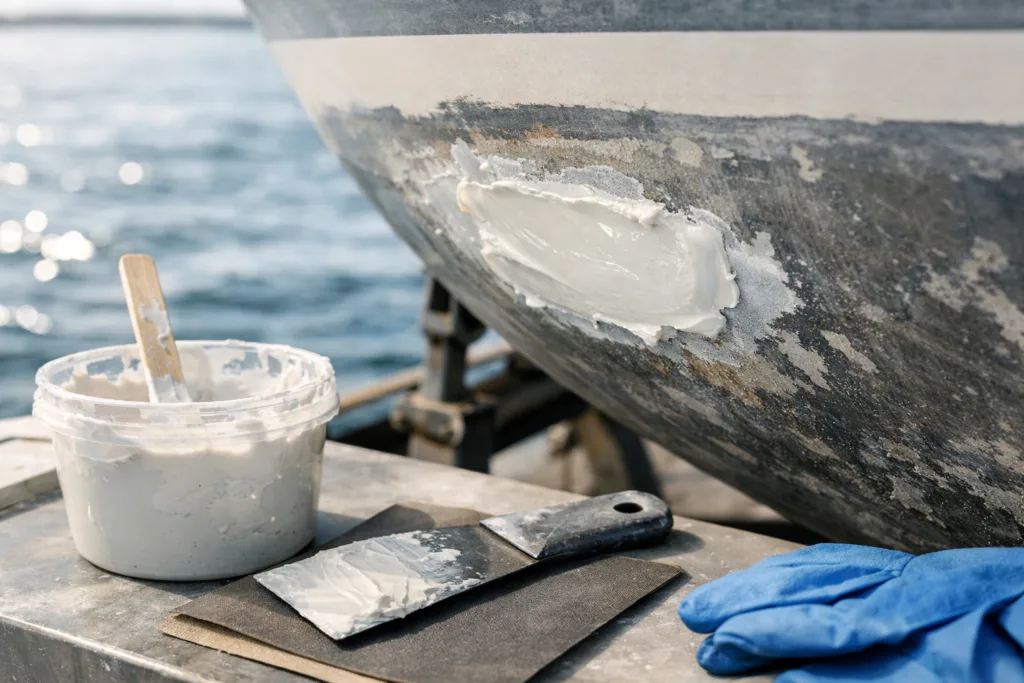
At its core, the difference between epoxy and marine epoxy lies in their formulation and performance profiles. Marine epoxies are engineered for hydrophobicity, UV resistance, chemical stability, and tolerance against movement—all tailored to aquatic, coastal, and vessel conditions.
| Property | Standard Epoxy | Marine Epoxy |
|---|---|---|
| Water Resistance | Moderate, not for submersion | Excellent, long-term submersion |
| UV Resistance | Poor, yellows and chalks | High, resists color change |
| Salt Tolerance | Low, bonds degrade | High, anti-corrosive |
| Flexibility | Brittle, prone to cracking | Flexible, absorbs movement |
| Exotherm Control | Variable, risk of overheating | Controlled for thick pours |
| Adhesion | Good, but surface must be dry | Very good, can bond to moist surfaces |
Marine Epoxy vs Standard Epoxy: Key Performance Criteria
Let’s dive deeper by contrasting marine epoxy vs standard epoxy. Each resin system aims to solve specific challenges—marine epoxies address water uptake, UV clarity, chemical attack, and dynamic loading far more thoroughly.
- Marine Epoxy Waterproof: Designed to keep water out at molecular level; ideal for hull repairs and watertight seals.
- Epoxy Resin for Boat Repair vs General Epoxy: Boat repairs need low water absorption and flexible bond lines; “general” epoxy may crack under movement or moisture shifts.
- Marine Epoxy UV Resistance: Advanced additives prevent yellowing and maintain clarity; standard epoxies tend to turn amber or chalky quickly when exposed.
- Marine Epoxy Flexibility: Formulated to allow “give” during vibration and temperature changes; ordinary epoxies are often brittle after curing.
For real-world marine repairs, ZDSpoxy emphasizes using a precise mixing ratio and quality-assured resin batches to prevent cure failure and yellowing—especially on high-value boat hulls and decks.
Core Formulation Differences
Marine-grade epoxies use advanced resin types, specialty curing agents, and select filler systems. Their chemistry is tweaked for low water uptake, anti-corrosive properties, and stable gel times.
- Hydrophobic resins create a continuous waterproof barrier.
- Flexible curing agents increase impact resistance—helpful for boats and floating docks.
- UV stabilizers minimize color shifts, maintain optical clarity.
- Anti-corrosion additives defend against saltwater, acids, and marine growth.
- Controlled exotherm avoids overheating in mass pours and thick applications.
Industrial manufacturers like ZDSpoxy monitor viscosity, Shore D hardness, and cure consistency to guarantee dependable marine epoxy performance on site.
Standard Epoxy—Where Is It Enough?
Many indoor repairs and dry-area projects simply don’t need marine-grade performance. If your repair is:
- Located above waterline
- No regular water exposure
- No salt spray, splash, or immersion
- Minimal sunlight or UV
- No flexing or vibration loads
Then a high-quality standard epoxy can be sufficient. Its lower cost and easier handling are big advantages for non-marine environments. For instance, filling wood floor cracks or repairing dry concrete can be safely accomplished with standard epoxies—learn more about specialized gap fillers like ZDS-1240.
Marine Epoxy Waterproof Capabilities
The waterproofing ability of marine epoxy is a top differentiator. Designed to block water at the smallest scale, marine epoxies offer:
- Zero water uptake after cure
- Stable bond in both fresh and saltwater
- Seamless barrier against leakage
- Excellent underwater adhesion (even on moist substrates)
This superior waterproofing must be preserved through proper surface preparation, mixing, and application. ZDSpoxy engineers recommend strict surface cleaning and precise resin/hardener ratios to prevent micro-defects and capillary leaks in boat repairs.
UV Resistance and Color Stability
Marine epoxy’s UV resistance helps prevent unsightly yellowing and loss of mechanical properties over prolonged exposure. It’s ideal for exterior boat surfaces, decks, and water-facing coatings. This UV resistance is achieved through:
- Special UV blockers in resin formulation
- Low-yellowing curing agents
- Stringent quality control for pigment/additive dispersion
The result: glass-clear finishes that do not turn amber or chalky, even after months of sun and sea. For deeper exploration, read about long-term clarity in Low Yellowing & UV Resistance in Marine Epoxy: Is Long-Term Clarity Achievable?.
Flexibility vs Brittleness
Brittle epoxies can snap under stress, while marine epoxies are tailored for elongation and flexibility.
- Absorbs vibration, movement, and impact
- Reduces crack formation from repeated loads
- Maintains bond under expansion/contraction
ZDSpoxy’s marine epoxy systems are developed to strike a balance between compressive strength and flexible modulus, proven by field tests on boat hull repairs and resin-infused composites.
Exotherm Control for Thick Marine Repairs
Mass pours and thick repairs need careful exotherm management to prevent overheating (which can induce cracking, yellowing, and structural weakness). Marine epoxies:
- Use slow-cure chemistries for large volumes
- Lower peak temperatures during cure
- Allow safer, void-free repair quality
Learn more about preventing exothermic failures in mass pours with expert guidance from 5 Critical Insights into Exothermic Reaction Curves in Mass Pours.
Marine Epoxy Adhesion and Surface Tolerance
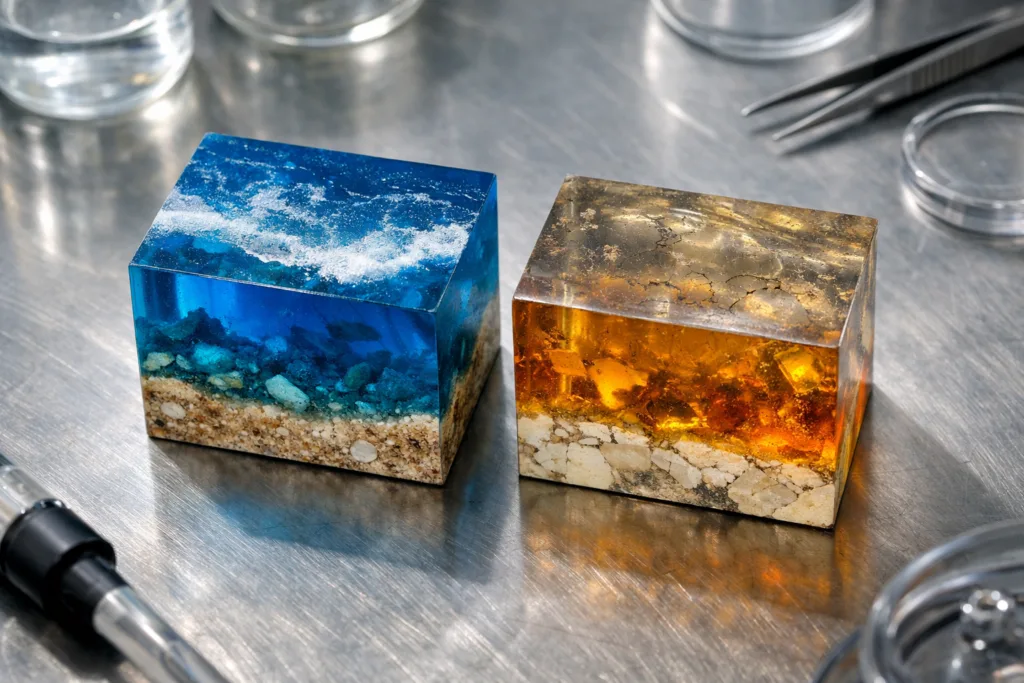
Marine epoxies often tolerate damp or “not perfectly dry” substrates, enabling boat repairs even in unpredictable weather or tight windows. Improved primer systems help achieve reliable bonds on wet wood, aluminum, and fiberglass.
- Works in humid conditions
- Tolerates surface moisture
- Excellent adhesion to wood, metal, fiberglass
To boost results on challenging substrates, try a solvent-free wood rot primer like ZDS-2060AB—engineered for damp wood repair and long-lasting protection.
Mechanical Properties Comparison Table
| Property | Marine Epoxy | Standard Epoxy |
|---|---|---|
| Tensile Strength | High | Moderate |
| Flexural Modulus | Medium-High, flexible | High, brittle |
| Water Uptake | Minimal | Some |
| UV Stability | Excellent | Poor |
| Salt Resistance | High | Low |
| Cure Time (Bulk) | Slower | Quicker |
Typical Use Cases for Marine and Regular Epoxy
- Marine Epoxy: Boat hull repairs, underwater grout, waterproof coatings, composite fabrication, corrosion protection for aluminum and steel.
- Regular Epoxy: Garage floors, indoor wood repair, decorative coatings, bonding dry substrates, crack filling (like ZDS-1010AB for rapid crack repairs).
When Standard Epoxy Is Good Enough
Standard epoxy suffices when:
- Installation is in dry, sheltered locations
- No water submersion or splashback
- No salt, UV, or temperature extremes
- No vibrating loads or structural movement
- Budget constraints favor simpler systems
However, for exterior exposure, water contact, or dynamic environments, marine epoxy offers far more reliability and longevity.
Performance Gaps Explained
The “gap” between marine and regular epoxy is most obvious in long-term performance:
- Regular epoxy can fail silently—yellowing, loss of bond, micro-cracking.
- Marine epoxy is engineered to “last”—waterproof, flexible, and UV stable for years.
- Some manufacturers test for salt spray resistance, flexible modulus, and surface adhesion after accelerated aging.
For deeper details, see Marine Epoxy vs Regular Epoxy: The Top Five Performance Gaps Explained.
Handling the Marine Epoxy Cure Process
Cure time, pot life, and working window are critical—marine epoxies are often slower curing for thorough wetout and safe thick pours. Standard epoxies cure fast and work best for quick repairs in dry settings.
- Marine: Extended working time, low exotherm.
- Regular: Shorter pot life, quick set.
Proper mixing practice and batch size control are vital—mistakes here can cause incomplete cure, poor strength, and water leaks.
Site Insights from ZDSpoxy
From a plant-floor and jobsite perspective, ZDSpoxy recommends monitoring substrate moisture, taking cure temperature readings, and adjusting mix ratios for real-world conditions. Use demo panels and viscosity checks to catch batch inconsistencies before full install. Flawed surface prep or contamination (oil, dust, marine growth) often leads to bond failure—a lesson proven by hundreds of dock and hull repair case studies.
Best Practices for Marine Epoxy Application
- Clean, sand, and dry surfaces before applying
- Use primer for challenging substrates
- Mix resin and hardener precisely and completely
- Apply in thin layers for best adhesion
- Allow proper cure time before loading or submersion
Long-Term Maintenance Considerations
Marine epoxy repairs and coatings last longer with routine checks. Inspect for surface cracks, delamination, yellowing, and water leakage periodically. Small issues spotted early can be resolved before major structural damage occurs.
Environmental Safety and Handling Differences
Marine epoxies often have low VOCs for safe use in enclosed areas, but ppe, ventilation, and storage must be managed carefully. Always read manufacturer safety datasheets; proper labeling, mixing, and disposal prevent environmental hazards.
Summary: Making the Right Choice
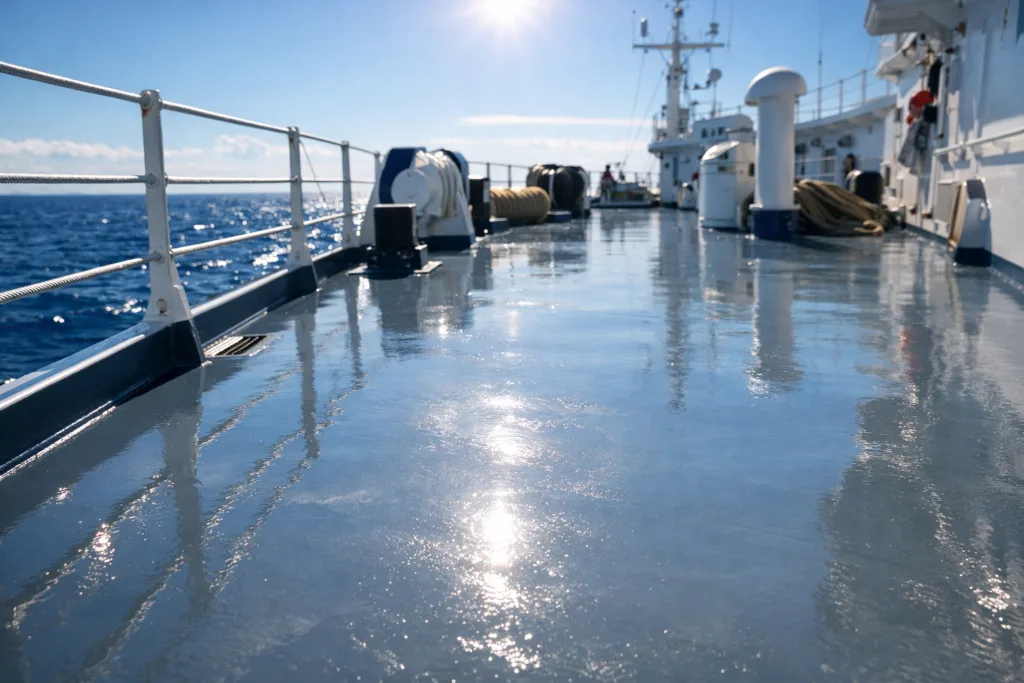
Choosing between marine epoxy and regular epoxy comes down to environment and demands. Marine-grade is a must for any wet, exposed, or vibration-prone repairs, while standard epoxy handles dry, indoor, or low-load repairs with simplicity.
Always assess water exposure, mechanical loads, sunlight, and substrate movement before selecting an epoxy type. For detailed technical advice, manufacturers like ZDSpoxy offer practical guidelines and documented field experience—helping prevent costly failures and ensuring long-term performance in every project.
Frequently Asked Questions
Can I use regular epoxy for boat repairs?
It’s possible if the repair is above waterline and in a dry, sheltered area, but marine epoxy is strongly recommended for anything exposed to water, salt, or vibration.
Is marine epoxy always waterproof?
Yes, marine epoxy is formulated specifically for complete waterproofing, making it ideal for hull, deck, and submerged repairs compared to standard epoxies.
Does marine epoxy resist UV better than standard epoxy?
Absolutely. Marine epoxies contain UV stabilizers, so surfaces stay clear and do not quickly yellow like regular epoxies exposed to sunlight.
Will marine epoxy bond to damp substrates?
Many marine epoxies are engineered to bond well even on slightly moist wood or metal, a distinct advantage in unpredictable waterfront environments.
What is the difference in flexibility?
Marine epoxies are less brittle and more flexible, allowing bonded joints to absorb movement and vibration without cracking—critical in boats and marine structures.
When would standard epoxy be enough?
Standard epoxy is suitable for indoor, dry, low-movement repairs with no water, salt, or UV exposure, where cost and fast cure time are priorities.
Related Reading
- How to Select the Best Marine Epoxy Resin for Durable Repairs and Waterproof Coatings
- Pro Boat Owner’s Guide to Picking the Right Marine Epoxy Resin
- 10 Essential Marine Epoxy Facts for Quality Repairs
- Deep Dive: 7 Performance Fields Every Marine Epoxy Should Excel At
- How Mixing Ratios Prevent Marine Epoxy Cure Failures