
Understanding Marine Epoxy Putty Explained: When to Use Putty vs Liquid Epoxy
In the world of marine repairs, knowing when to use marine epoxy putty explained: when to use putty vs liquid epoxy can save you time, money, and frustration. Whether you’re sealing a pesky leak, rebuilding a gone-soft wood corner, or looking for long-term underwater durability, matching the right product to the job is crucial. But what sets putty and liquid apart, and where does each shine or fall short? This article delivers a clear, practical comparison—breaking down real-world uses, engineering strength, and the trickiest questions like underwater bonding or structural repairs—so that your next repair is as reliable as your vessel itself.
SERP Summary for Marine Epoxy Putty Explained: When to Use Putty vs Liquid Epoxy
- Dominant Content Types: 7 out of 10 results are long-form how-to guides focused on marine epoxy applications, 2 are product comparison pages, 1 is a Q&A forum thread.
- Common Formats: Most include tables or charts comparing putty and liquid epoxy, step-by-step guides, bullet lists of use cases, and some product images. At least three feature FAQ sections. Visual aids and diagrams are popular for clarifying application techniques.
- Observed Angles: The majority target beginners and DIYers needing practical, non-technical guidance. Pages emphasize straightforward problem-solving (“which should I choose?”). A few dig deeper into technical performance (strength, water resistance) and cite hands-on experience from manufacturers or marine contractors.
Marine Epoxy Putty: Composition and Core Benefits
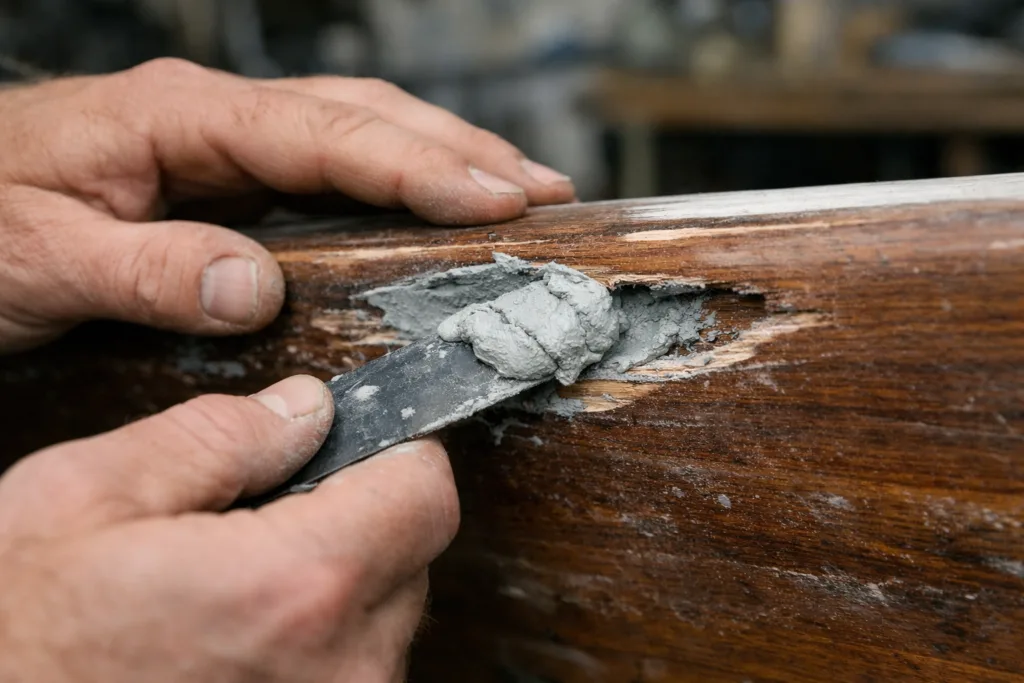
Marine epoxy putty consists of a two-part system—resin and hardener—pre-blended with fillers to create a thick, moldable compound. This dough-like texture is the secret: it stays put instead of dripping, letting you build up shapes or fill holes, even overhead or on vertical surfaces. Once cured, marine epoxy putty forms a dense, waterproof bond that resists saltwater, UV, vibration, and impacts.
Why Not Liquid Epoxy? The Key Differences
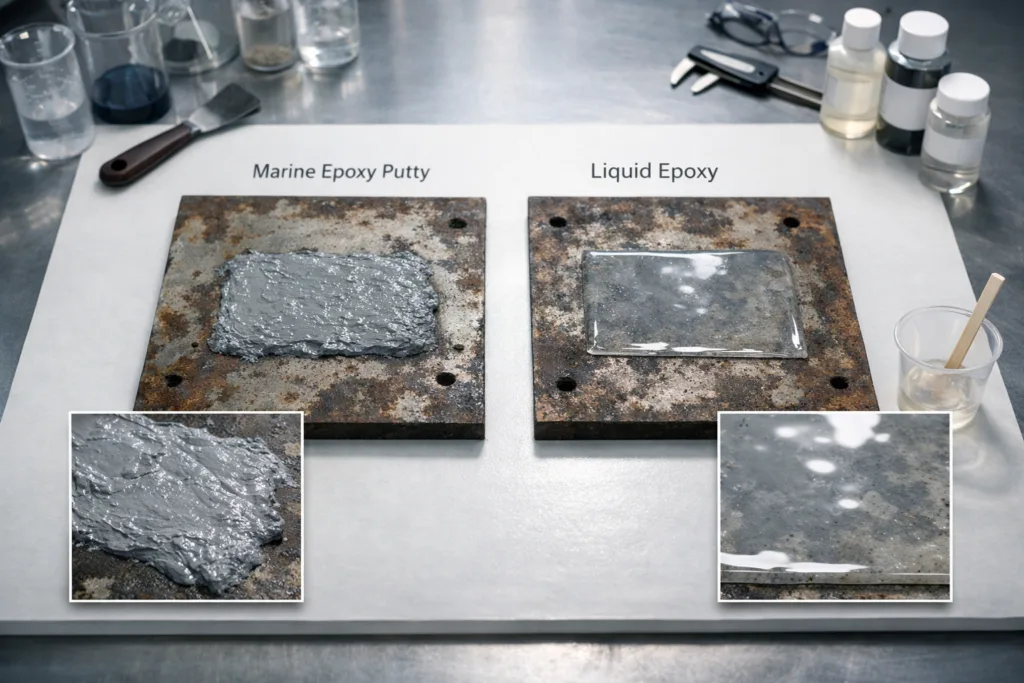
Liquid epoxies are much thinner—think maple syrup, not clay. They flow and penetrate porous surfaces deeply, locking in structural fibers and sealing wood grain or corroded metals. Liquid epoxies are ideal for flood-coating, laminating, and waterproof sealing, creating bonds throughout the internal structure, not just on the surface.
| Feature | Marine Epoxy Putty | Liquid Marine Epoxy |
|---|---|---|
| Viscosity | Very thick, non-sagging | Thin, runs off verticals |
| Gap-Filling | Excellent—fills voids, holes | Poor—flows through cracks |
| Shaping | Moldable, can sculpt details | Not shapeable—pools and self-levels |
| Penetration | Minimal—stays on surface | Excellent—soaks into porous materials |
| Waterproof Bond | Very strong and durable | Also very strong, best as a sealant |
| Typical Use | Spot repairs, filling, quick fixes | Laminating, fiberglass, sealing |
Top Use Cases for Marine Epoxy Putty
Here’s where putty excels:
- Filling deep holes or rotten areas in wood, fiberglass, or even metal hulls
- Molding edge repairs—rebuilding corners or lost material
- Quick above/below-water fixes for stripped bolt holes or gouges
- Setting hardware where a thick non-sag bed is needed
- Vertical or overhead applications (won’t drip)
Product example: ZDS-189 wood repair putty offers simple application—just knead, press in, and shape for boat or dock repairs.
Putty’s Unique Bonding Ability for Fast Repairs
The biggest strength? Marine putty lets you patch, shape, and sand—fast. Many types, including rapid formulas like ZDS-1002AB, can be sanded or painted within an hour, so you’re not left waiting for overnight cures. This fast set is prized for emergency hull leaks or quick docking fixes.
When to Pick Liquid Epoxy Over Putty?
Despite the undeniable convenience of marine epoxy putty, there are times when liquid epoxy is the superior option. Liquid epoxies excel at:
- Deep penetration and surface sealing on wood, concrete, or porous fiberglass (think: stabilizing punky deck boards or reinforcing rotten support beams)
- Structural lamination—layering glass cloth or mat for hull repairs
- Encapsulation to seal out moisture and block rot long-term
- Priming surfaces before putty application to maximize adhesion
Example: ZDS-2060AB solvent-free wood rot repair primer ensures liquid epoxy soaks in, forming robust substrate bonds before adding filler.
Case Study: Layering for Maximum Strength
For critical repairs, a layered approach is smart—liquid epoxy as a primer, then marine putty to fill or shape. This is standard best practice for hull patches, mast step repairs, or engine mounting beds where both penetration and bulk are needed.
Can Marine Epoxy Putty Be Used Underwater?
This is a persistent question: Does marine epoxy putty explained: when to use putty vs liquid epoxy mean you can dive in and patch underwater? Many products are promoted as “underwater epoxies,” but performance varies:
- Marine putty can cure and bond underwater, but application skill is vital—surfaces must be scrubbed and as clean as possible. Putty may not cure fully if water dilution is excessive or if compressed air escapes.
- Rapid underwater putties like ZDS-1002AB are specially designed with hydrophobic fillers and a fast-setting formula—these are best for pool or emergency hull repairs.
- Liquid epoxies generally struggle underwater, especially if they need to penetrate or soak in. Water can prevent a proper bond and dilute the cure.
Best practice: Use dedicated underwater putty only when you can’t dewater or dry the area, and always prioritize proper surface prep—scouring with a wire brush, even below the water’s surface, makes the difference.
Is Marine Epoxy Putty Structural? Can It Handle Heavy Loads?
Many DIYers and professionals ask if putty is strong enough for weight-bearing or structural repairs. The answer is: it depends on the product, thickness, and application. High-quality marine epoxy putties can handle moderate compressive and tensile loads, especially in bulk fills (plugging a lost corner or holding a screw).
But: For serious structural work (critical hull, mast steps, bulkhead repairs), putty alone is not enough. Liquid epoxy, especially when layered with glass cloth, creates much greater strength through internal reinforcement and deeper substrate penetration.
Shaping and Sanding: Achieving a Professional Finish
Once cured, marine epoxy putty is hard but surprisingly workable. Most putties are formulated for easy sanding and can be drilled, tapped, or even carved with woodworking tools. This is vital for seamless deck, rail, or fitting repairs.
Color options are also growing; ZDSpoxy, for instance, offers putties in several color shades for easier matching. For a truly invisible patch, many users topcoat with marine paint or varnish after sanding.
Working With Gravity: Success on Vertical and Overhead Surfaces
Unlike liquid epoxy, which can drip and form unsightly runs, marine epoxy putty is specifically engineered to cling—no matter the surface orientation. This allows for repairs right above your head, along hull sides, or even upside-down beneath a swim platform. It’s a unique mechanical advantage that makes putty indispensable in awkward spots.
Mixing, Application, and Pot Life Reality
Mixing ratio discipline is core to reliable epoxy repairs. With marine epoxy putty, knead equal parts resin and hardener until a uniform color appears—no streaks should remain. It’s wise to mix only small, usable batches (a golf ball size is often enough for a single patch) because pot life can be short, especially in warm weather.
Application tip: Wetting your gloves can prevent sticking, and using a putty knife ensures clean shaping. Always check the technical data sheet for temperature range and expected cure times.
Optimizing Repairs: Prep, Priming, and Curing
For maximum bond, remove all dust, loose debris, oil, or contaminants. Moist surfaces are acceptable—saturated with water, less so. On highly porous or damaged areas, a prime coat of low-viscosity liquid epoxy dramatically improves adhesion and waterproofing. ZDSpoxy recommends testing for full cure and checking surface hardness before loading or sanding.
Temperature, Cure Times, and Application Windows
Cure time variations are important. Cooler weather slows reaction, making fast-setting putty (like ZDS-1002AB) helpful when rapid handling is needed. Warmer conditions speed up pot life—mix smaller batches to avoid wasted material and hot exotherms. For high-humidity environments, look for putties with proven cure reliability in wet conditions.
Color Choice and Sandability: Beyond Off-White
While classic marine putties are off-white or gray, ZDSpoxy and other manufacturers now offer multiple shades—making color blending or surface matching easier.
Sandability is key for a flush finish. Check if the putty of choice is described as “easily sandable,” which is especially useful for visible repairs or prepping for topcoats.
Limitations of Marine Epoxy Putty: Knowing the Boundaries
Even the best marine epoxy putty explained: when to use putty vs liquid epoxy has its limits:
- Extensive lamination repairs still require glass cloth with liquid epoxy for optimal strength
- Water exposure during curing can slow or inhibit full strength—stable exposure is better than water flow
- Heat buildup (exotherm) can be significant in large masses—avoid mixing huge amounts at once
- Chemical resistance is good, but not always up to full immersion in aggressive acids or fuels
Maintenance and Longevity: How Durable are These Repairs?
When used correctly, marine epoxy putty repairs last years, resisting saltwater, sun, and constant motion. Quality control—like consistent mixing, proper application temperature, and attention to thickness—makes the difference. Periodic inspections are a smart habit for long-term marine assets.
Product Selection Advice: Temperature, Cure Time, Color, Sandability
How do you pick the right marine epoxy putty or liquid epoxy for your needs? Consider:
- Temperature Range: For cold weather (down to 5°C), use fast-setting or winter formula putties. For hot climates, look for products with longer pot life and low exotherm risk.
- Curing Time: Rapid repair formulas are ideal for emergencies or multi-step tasks. Standard cure allows more working time for shaping or fine detail.
- Color Options: Choose a shade close to your substrate or intended finish for easier blending. ZDSpoxy’s putty line now includes gray, beige, and white.
- Sandability: If a smooth, flush finish is a priority, select an “easy sand” epoxy putty or plan for additional topcoats or fairing compound.
For unusual repairs—immersion, structural loads, or odd materials—never hesitate to consult the product data sheet or a manufacturer’s technical specialist for guidance.
Conclusion: Marine Epoxy Putty Explained—Choosing What Works
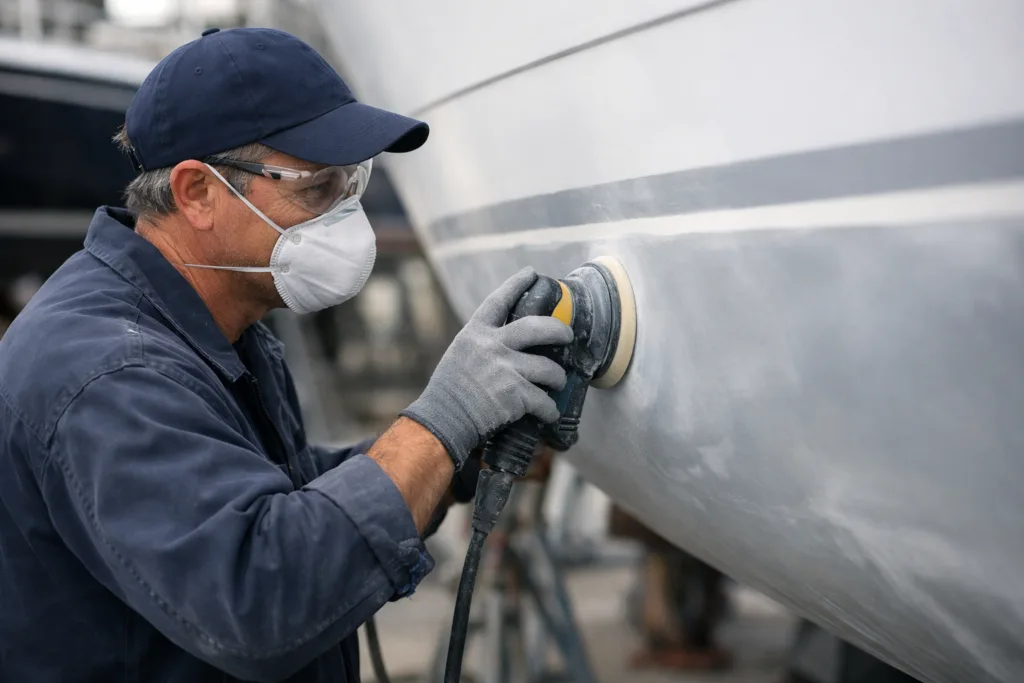
To sum up, marine epoxy putty explained: when to use putty vs liquid epoxy is all about matching your repair method and material to the job. Use putty for vertical fills, fast spot fixes, and places where shaping is needed. Pick liquid epoxy for laminating, deep penetration, or truly structural reinforcement. Always factor in your working temperature, cure time, and color needs. Get your surfaces as clean and prepped as possible, and don’t be afraid to layer liquid and putty for the best of both worlds.
Frequently Asked Questions
Can marine epoxy putty be used for underwater repairs?
Yes, many marine epoxy putties are designed for underwater application, but success depends on surface prep and the specific product’s hydrophobic properties.
Is marine epoxy putty strong enough for structural repairs?
It can handle moderate loads and bulk fills, but for high-stress or load-bearing repairs, liquid epoxy laminating with reinforcement is safer.
Can you sand and paint over marine epoxy putty?
Absolutely. Most marine putties are easily sandable once cured and accept marine paints or varnishes well for seamless blending.
What’s the best way to ensure a long-lasting putty repair?
Clean the area thoroughly, use a liquid epoxy primer if needed, and mix/apply the putty according to technical guidelines for cure and thickness.
Which is better for filling large holes—putty or liquid epoxy?
Putty is superior for large gaps or sculpting shapes—it won’t drip or sag, and can be built up thick. Liquid is best for sealing and reinforcement.
How do low temperatures affect marine epoxy putty?
Cure times are significantly extended in cooler conditions; choose a fast-cure formula or warm the area for reliable results.
Related Reading
- Marine Epoxy vs. Regular Epoxy: The Top Five Performance Gaps Explained
- Choosing Fast-Cure Marine Epoxy: Strength, Speed, and Practical Repairs
- Fiberglass Boat Repairs: The Top 6 Marine Epoxy Resin Properties That Matter Most
- How to Select the Best Marine Epoxy Resin for Durable Repairs and Waterproof Coatings
- Selecting Marine Epoxy Resin Packaging: Sizing Your Project for No Waste and Maximum Value