
Understanding Marine Resin Choices: Epoxy vs Polyester Resin Boat Applications
Boatbuilders and repair professionals often face a crucial decision: epoxy vs polyester resin boat for GRP, lamination, or repair projects. Both resins play critical—though different—roles in marine construction, impacting cost, long-term strength, water resistance, and service life. In this guide, we’ll explore the real-world differences between these materials, their shrinkage and water uptake, and when each makes engineering sense. Our aim is to give you the clarity to match your resin system to your needs—whether you’re in production or performing structural repairs.
Epoxy vs Polyester Resin Boat: Core Differences at a Glance
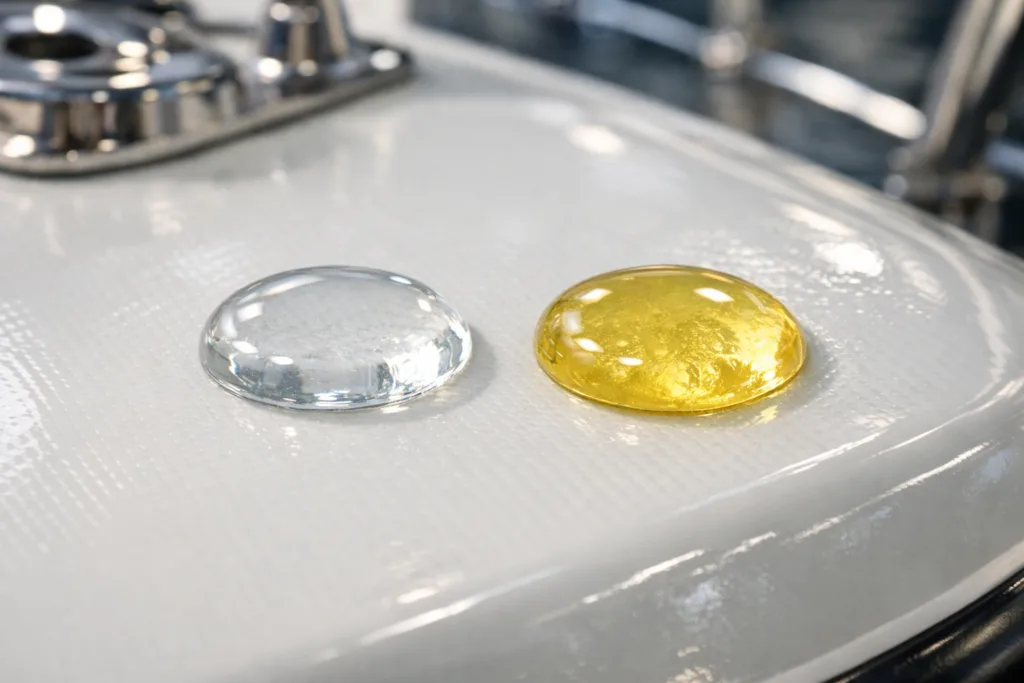
To start, let’s lay out the headline distinctions between marine epoxy and polyester resin systems. While both are thermosetting polymers used with glass fibers (GRP), their chemistry, mechanical behavior, and durability profiles are distinct. Here’s a side-by-side snapshot:
| Property | Epoxy Resin | Polyester Resin |
|---|---|---|
| Strength (Tensile/Shear) | High (40-90 MPa) | Moderate (25-35 MPa) |
| Adhesion to Substrate | Excellent | Good (fresh, poor on cured GRP) |
| Shrinkage (Cure) | Very Low (<2%) | High (5-8%) |
| Water Resistance | Exceptional (esp. in marine epoxy) | Lower (prone to osmosis & blistering) |
| Price (per kg) | Higher | Lower (often 2-4x less) |
| Working Time | Customizable, longer options | Fixed, often rapid gel |
How Epoxy and Polyester Resin Work in Boat Building
Both materials have proven themselves, yet each dominates in different marine jobs:
- Epoxy Resin: Chosen for high-strength bonding, low shrinkage backfills, underwater repairs, secondary GRP laminations, or any area needing water barrier performance.
- Polyester Resin: Preferred for mass production of new GRP (fiberglass) hulls and decks, offering speed and affordability—but with some technical compromises.
Shrinkage: Why It Matters for Boats
Resin curing shrinks the material and can cause internal stress, warping, or fiber print-through. Polyester resins have higher shrinkage, which is manageable in thick, mold-cured GRP hulls but can cause problems in repairs or intricate structures. Epoxy’s low shrinkage minimizes risk—key for bonding, secondary lamination, or surface filling. Many repair pros select marine epoxy resin systems precisely for this quality, ensuring restored sections stay flush and crack-free.
Water Resistance: Beyond Surface Waterproofing
Not all resins repel water equally. Epoxy resins, especially those formulated for marine service, have superior water uptake resistance. Polyester, on the other hand, is more permeable—absorbing water slowly, leading to “osmosis” (blistering inside old hulls) over years. Boatowners often discover polyester blisters, but with epoxies, hull protection can be long-lasting and incredibly resilient, if applied correctly.
Mechanical Properties: Shear, Bond, and Impact Resistance
When bonding two cured surfaces (e.g., patching a hull), epoxy resin creates a crosslinked matrix that chemically bridges old and new glass lamina. Polyester, unless bonding fresh uncured laminate, tends to be weaker here—risks include bondline failure and crack propagation under load. This is why structural repairs nearly always favor epoxy. For new hull layup in a female mold, polyester’s lower bond strength isn’t a liability, especially when sandwiched glass fibers provide much of the mechanical load path.
Price vs. Performance: The Real Economics
The decision between epoxy and polyester isn’t just technical—it’s about budget. Polyester is mass-producible, offering substantial savings (sometimes as little as 20–25% of the cost of specialty marine-grade epoxies). In production, those savings accrue quickly. But repair work is labor-intensive, and failures are expensive; the cost premium for epoxy can translate into years of extra service life, justifying the investment.
GRP Lamination: Compatibility and Repair Logic
Polyester resins and gelcoats dominate GRP hull production, largely due to their fast cycle times and cost. However, once cured, their waxy, low-energy surface is not ideal for secondary bonding with new polyester. Epoxy, in contrast, can bond to cured polyester GRP, as well as wood, metal, and even damp substrates (with the right primer)—adding repair flexibility. For tips on selecting suitable epoxy formulations for such work, see the ZDSpoxy Marine Epoxy Resin Manufacturer knowledge base.
Why Polyester Is Favored in GRP Boat Production
The truth is, polyester resin isn’t “bad”—but it is a commodity material, optimized for speed and price. Its rapid cure enables efficient lay-up, high output, and thick section molding (as seen in moderate-cost production boats). Its limits show mainly with thin sections, surface overlays, or when repairs are needed on aged hulls. For its designed purpose, polyester resin delivers value at scale.
When to Choose Epoxy Resin in Marine Repairs and Bonding
Epoxy comes into its own when quality, durability, and bond reliability matter most. Here’s when marine epoxy should be your default:
- Structural patching of damaged GRP hulls, especially below the waterline
- Backfilling and re-laminating core sections (foam, balsa, or plywood core repairs)
- Surface fairing or smoothing overlays (thanks to epoxy’s low shrink)
- Bonding new hardware, wood, or metals to GRP decks
- Forming a long-term waterproof barrier before applying antifouling or paint
How Shrinkage Affects Lamination, Cracking, and Final Shape
Polyester shrinkage is mostly absorbed in thick production hulls, where external mold constraints prevent surface distortion. But, during repairs or lamination on thin panels, polyester shrink can cause pull-away, micro-cracks, or print-through of underlying fibers. Epoxy’s extremely low shrink ensures better dimensional stability, critical for fairing, finishing, and keeping repairs invisible.
Water Uptake and Osmosis: The Hull Health Challenge
Over time, water can penetrate resin-rich areas, particularly with polyester, leading to osmotic blisters that weaken internal laminate and degrade hull integrity. Advanced marine epoxies greatly reduce water uptake, even when exposed for years, providing a real barrier beneath antifouling or as a repair overlay. ZDS-2060AB and similar solvent-free epoxy repair primers have earned a place in hull maintenance for precisely this benefit.
Industry Insights: Manufacturing Reality vs. DIY Reality
On the production line, polyester resin’s fast spread and good wet-out keep costs under control. But for the marine contractor, project delays, clean-up, and the risk of repairs failing add up. Seasoned builders often recommend epoxy resins not because they distrust polyester, but because emergencies, moisture, and complex substrates demand reliability over speed.
Batch Size, Pot Life, and Mixing Practicalities in Marine Work
Polyester systems typically require strong ventilation and have short pot lives (sometimes under 20 minutes). Epoxy systems offer tailored cure speeds—even ‘slow’ options for large projects—helping to prevent waste, reduce rushed work, and give time for thorough wet-out. This flexibility is critical for repairs and controlled layups, as covered in our detailed resin selection guide.
ZDSpoxy Perspective: Testing for Real-World Marine Durability
From a manufacturing and R&D perspective, ZDSpoxy consistently observes that real-world factors like substrate moisture, ambient temperature, and user discipline in measuring/mixing can outweigh theoretical chemical advantages. Site trials reveal that, in many cases, the difference between a long-life repair and a short-term patch comes down to surface prep and batch mixing accuracy—not just resin chemistry. For example, a poorly mixed epoxy, or an under-catalyzed polyester, can both fail—so QC and application method are everything.
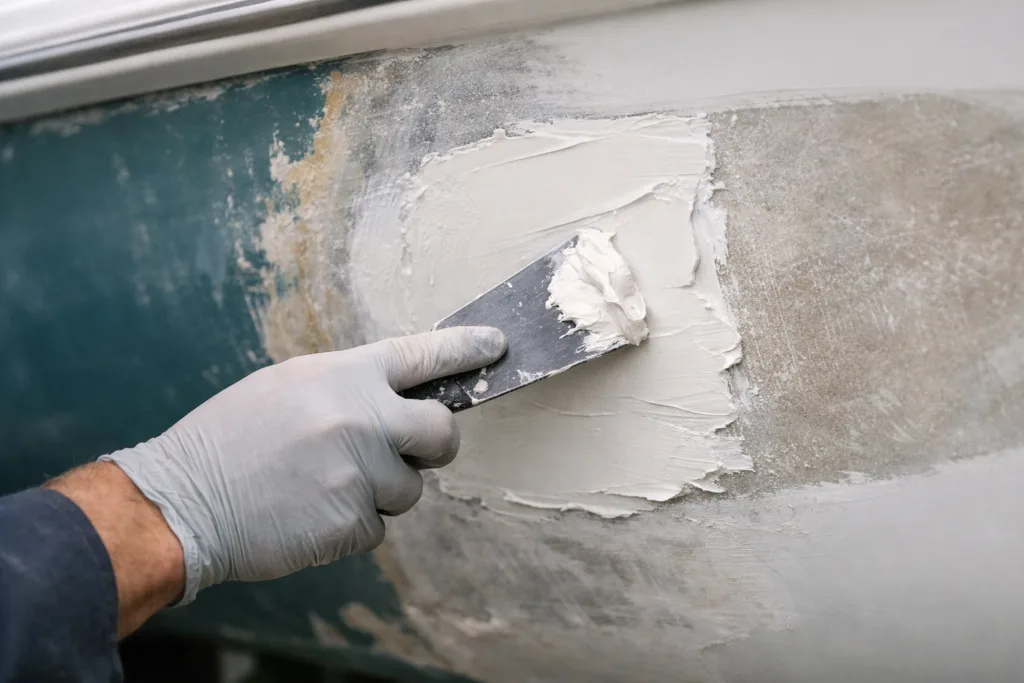
Application Examples: Patching, Fairing, and Laminate Overlays
Consider the following scenarios, where the resin choice impacts your workflow and the final result:
- Patching a hole in a hull: Epoxy is ideal for bonding patches, especially when the original laminate is aged, damp, or contaminated.
- Fairing a surface: Low-shrink epoxy putties ensure smoother, longer-lived surface finishes—particularly important under paint on topsides.
- Overlaying new laminate on old GRP: Epoxy bonds strongly to aged polyester, ensuring the overlay is structurally reliable.
Chemical Resistance and Marine Fouling Tolerance
Both polyester and epoxy resins are resistant to many chemicals, fats, and oils. However, epoxy’s tighter crosslinked structure typically results in superior resistance to water, dilute acids, and marine fouling, making it the preferred primer beneath aggressive antifouling systems or where chemical spills may occur. For a full look at epoxy’s barrier properties for GRP protection, see our article on Marine Epoxy vs Vinyl Ester.
Safety, VOCs, and Practical Handling on Boats
Polyester emits strong fumes (styrene), requiring PPE and ventilation. Epoxy systems, especially modern low-odor types, are cleaner to use—but still demand gloves and eye protection. In marine repair, especially indoors or in compact areas, the lower-VOC profile of some marine epoxies is a real plus for worker safety and compliance with regulations.
Summary Table: Epoxy vs Polyester Resin Boat for Different Scenarios
| Scenario | Epoxy Resin | Polyester Resin |
|---|---|---|
| New GRP Hull Production | Uncommon (high cost) | Preferred (cost-effective, fast) |
| Major Repair/Structural Patching | Recommended | Avoid (weak bond to old GRP) |
| Deck Hardware Bonding | Highly suitable | Less ideal (brittle in load) |
| Surface Fairing/Finishing | Excellently stable | Risk of shrink/print-through |
| Barrier Coating (Below Waterline) | Exceptionally durable | Can blister over time |
| Cost-Sensitive Production | Rarely justified | The go-to system |
Typical Use Cases for Each Resin System
To help you decide, here are common-sense rules-of-thumb aligning project goals to the right resin:
- Choose polyester for new, large-volume GRP boat molds (shells, decks) where cost and speed matter most and you can cure everything in one operation.
- Choose specialty marine epoxy for repairs, modifications, or upgrades where mechanical strength, low shrinkage, and water resistance are priorities.
Long-Term Durability: What the Data Shows
Accelerated aging studies and field experience are clear: soundly applied marine epoxy repairs often outlast the original polyester hull. Epoxy overlays, filled, and barrier coats resist water ingress—and, when paired with good surface prep and compatible fillers, keep hulls blister-free for decades. Polyester repairs, even done with care, may fall short after years in harsh marine conditions.
Handling Old GRP: Tips for Reliable Bonding
When repairing or modifying aged polyester GRP, always grind back to expose clean fibers, then degrease thoroughly. Beware of amine blush (in epoxies)—wash with water before sanding. For wet, oily, or poorly prepared GRP, even the highest grade resin is no substitute for prep—scrupulous cleanliness is your insurance.
Environmental and Cost Considerations
For builders on a budget or with environmental reporting needs, polyester offers a smaller initial resin outlay, but much higher VOC output. Epoxy resins are more resource-intensive to produce but are used in lower quantities for repairs, with lower vapor emissions and longer service intervals—sometimes tipping the lifecycle equation in their favor.
Case Studies: Polyester in Production, Epoxy in Repair
Look at any major boatyard: polyester is standard in high-output, cost-conscious yards, while epoxy dominates in custom, performance, military, or critical refit work. Many OEMs specify epoxy for factory-tuned superstructures, stringers, or high-load areas, even if the hull is polyester-based. The trend: polyester for speed, epoxy for certainty.
Conclusion: Nuanced Choices for Lasting Results
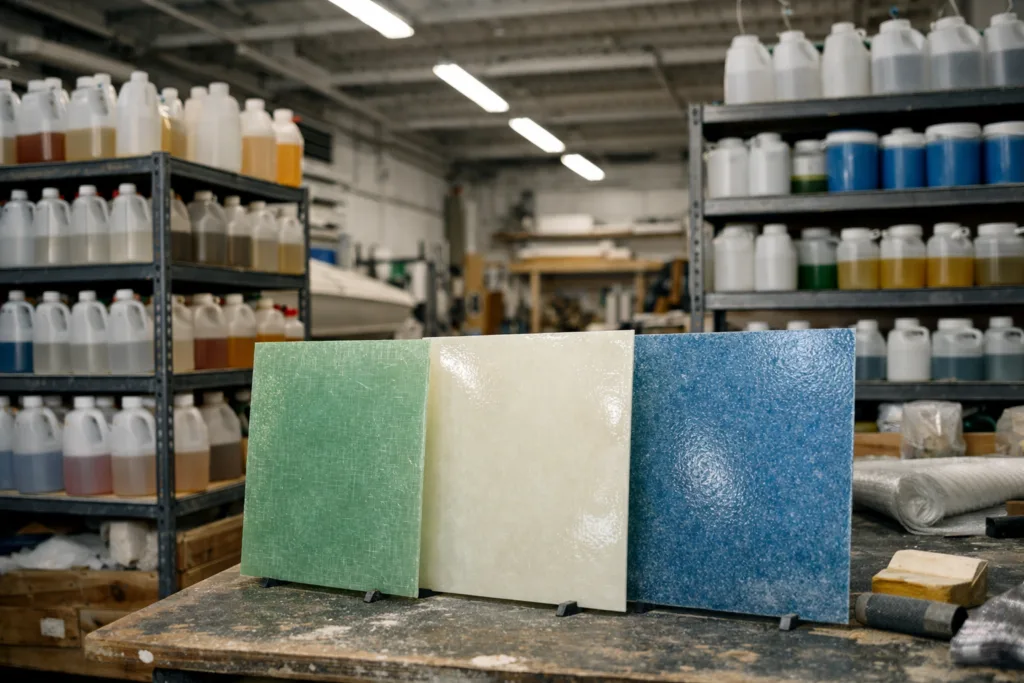
Neither epoxy nor polyester resin fits every marine task. Polyester drives low-cost GRP production, while epoxy delivers robust, water-resistant results in demanding repairs and upgrades. Your choices should reflect technical realities: consider shrinkage, water exposure, compatibility, cost efficiency, and ease of handling on the job. If in doubt, refer to epoxy system selection guides for nuanced, scenario-driven advice.
Frequently Asked Questions
Can I use epoxy resin over cured polyester GRP?
Yes, epoxy can bond strongly to properly prepared cured polyester GRP, making it the preferred resin for structural overlays and repairs.
Does polyester resin always blister in water?
No, but polyester is more water-permeable and prone to osmosis blisters than marine-grade epoxy, especially after years of service or if poorly finished.
Is marine epoxy always more expensive than polyester?
Generally yes; epoxy resins cost more per kilogram, but their performance justifies the premium for structural repairs and barrier coats.
Is polyester resin strong enough for boatbuilding?
Absolutely—when used in production hulls with matched glass content and proper technique, polyester delivers robust, durable GRP boats at scale.
What causes repairs with polyester resin to fail?
Most failures happen due to poor surface prep, high shrinkage on thin overlays, or weak bonding to aged or contaminated GRP substrates.
When is epoxy resin unnecessary in marine projects?
For large, non-structural, cost-sensitive GRP production where speed matters more than ultimate water resistance, polyester is usually sufficient.
Related Reading
- Essential Properties Checklist for Fiberglass Boat Epoxy Repairs
- Step-by-Step Guide to Picking the Right Marine Epoxy Resin
- The 7 Key Differences: Marine Epoxy Putty or Liquid Epoxy?
- Marine Epoxy vs Regular Epoxy: What’s Best for Wet, Salty Conditions?
- How to Select Marine Epoxy Resin for Durable Repairs and Waterproofing