
What Is Resin Flooring?
Resin flooring is a seamless floor system formed by applying multiple layers of liquid resin on a suitable substrate, which cures into a tough, solid surface. Common resin flooring types include epoxy, polyurethane (PU), and polyaspartic systems, each suited for different demands. Typical base surfaces are concrete, cement screeds, or sometimes even existing tiles with correct surface preparation. When selected and installed properly, resin floors deliver high durability, chemical resistance, and excellent hygiene, especially where seamlessness is key.
Understanding Seamless Floor Systems
The seamless nature of resin floors eliminates joints and grout lines. This unique feature makes cleaning and maintenance significantly easier and helps prevent harboring of bacteria or debris. Various resin systems can be tailored for site-specific needs, from anti-static zones to highly decorative finishes for showrooms.
Common Resin Chemistries
The most common resin systems are:
- Epoxy: Renowned for its mechanical and chemical resistance. Broad use in industrial and commercial settings.
- Polyurethane: Outstanding impact and abrasion resistance. Handles temperature swings and dynamic loads well.
- Polyaspartic: Fast-curing, UV-resistant; ideal for quick turnarounds and external applications.
Each chemistry provides unique advantages. ZDSpoxy, for example, designs resin formulations with a sharp focus on compressive strength, flow characteristics during application, and consistent batch quality, ensuring predictable, repeatable site results.
Typical Substrates for Resin Flooring
Concrete slabs are the industry standard, but properly prepared ceramic tiles, cementitious screeds, or even metal are sometimes viable. Moisture levels, surface contamination, and mechanical stability all affect performance outcomes, meaning surface prep—grinding, shot blasting, priming—is never negotiable for a lasting bond.
What Are Tile Floors?
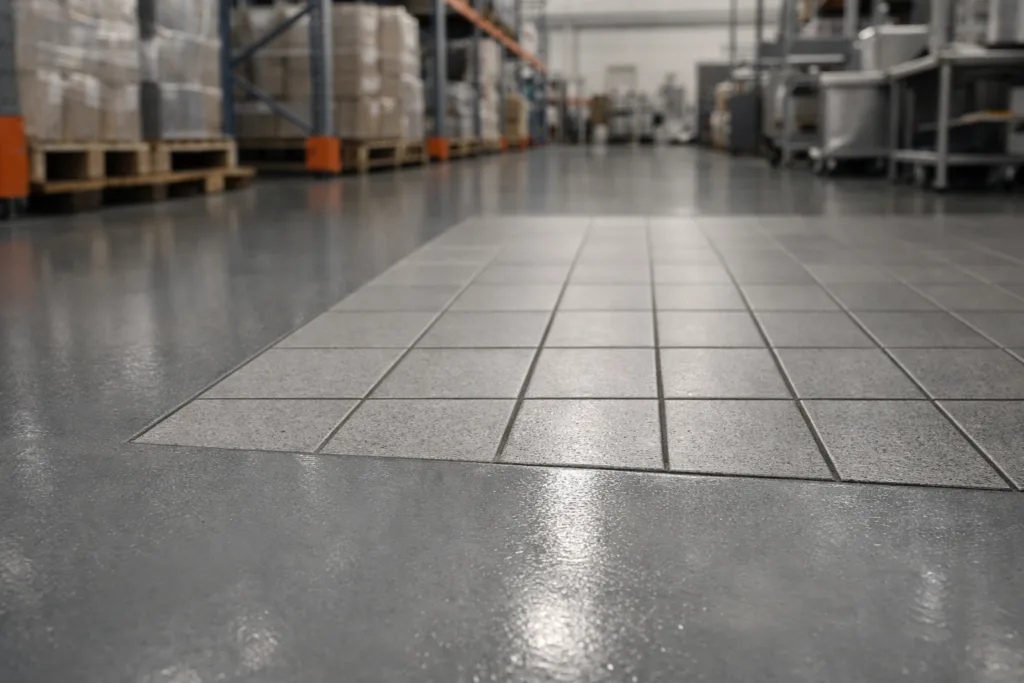
Tile floors utilize ceramic, porcelain, or industrial-grade tiles affixed to a substrate with adhesive or mortar. Joints between tiles are filled with grout, forming a dense but discontinuous flooring system. Common in homes, bathrooms, kitchens, and certain light commercial settings, tiles come in countless designs and finishes. Industrial tiles are thicker, more durable, and often used where chemical or heavy mechanical resistance is needed.
Typical Tile Applications
Ceramic and porcelain tiles excel in decorative residential zones, restrooms, lobbies, and retail spaces where aesthetic flexibility is critical. Industrial tiles are seen in breweries, dairies, workshops, sometimes even in processing environments. However, their grouted joints can pose long-term maintenance challenges—especially when exposed to aggressive cleaning, water, or chemical attack.
Resin Flooring vs Tiles: Head-to-Head Comparison
| Property | Resin Flooring | Tile Floors |
|---|---|---|
| Appearance | Customizable, seamless, many finishes | Infinite visual options, jointed pattern |
| Seamlessness | Yes—continuous surface | No—grouted joints |
| Anti-slip | Customizable textures; even integrable with aggregates | Depends on tile finish; grout may be a weak point |
| Wear Resistance | High—especially epoxy and PU | Generally high, but grout and edges may chip |
| Chemical Resistance | Formulatable for harsh chemicals | Tile surface usually inert; grout is weak under chemicals |
| Waterproof | Excellent—fully continuous barrier | Waterproof tile, but grout lines can leak or stain |
| Cleanability | Very easy—no joints to trap dirt | Grout harbors dirt; regular deep cleaning needed |
| Repair Difficulty | Area-repairable, might be recoated | Individual tile replacement; matching issues |
For environments demanding performance and hygiene, resin flooring’s seamlessness, chemical adaptability, and durability set it apart.
For more on specialized resin systems, see flooring resin systems—solutions tailored to heavy-duty and hygienic needs.
Which One Is Better for Hygiene and Easy Cleaning?
The main hurdle for tile hygiene is grout lines. Even when regularly cleaned, grout absorbs liquids and traps residue, creating hotspots for bacteria and mold—an issue especially in food processing, healthcare, or pharmaceutical sectors. Over time, grouted joints may deteriorate, requiring costly regrouting and posing compliance risks.
By comparison, resin flooring delivers a seamless, joint-free surface that is easy to clean and disinfect. Liquids and contaminants cannot pool or seep beneath the finish, ensuring faster cleaning and superior hygiene. For zones that must meet strict cleanliness standards, such as hospitals or food production facilities, this seamless advantage can be a compliance difference-maker.
Dedicated antimicrobial resin flooring further strengthens infection control and food safety. These resins inhibit the growth of bacteria or fungi on the surface, exceeding the limitations of tiles and grout.
Which Option Lasts Longer in Heavy-Traffic Areas?
Heavy traffic—be it forklifts, pallet jacks, or constant footfall—puts floors under relentless stress. Tiles are hard, but their grout and joints remain weak points. Under heavy wheel loads or sharp impacts, tiles can crack or debond, and grout frequently chips away or stains.
Resin floors, especially heavy-duty epoxy or polyurethane systems, offer monolithic resistance to abrasion, impact, and load. The lack of seams prevents edge chipping and water ingress. Polyurethane resins, for instance, are valued for high wear, impact, and moisture resistance in workshops, corridors, or cold storage. Installed and maintained properly, resin floors often outlast tiles by years in active environments, with less downtime for patching.
Resin Flooring vs Tiles: Which One Costs More Over Time?
Cost is more than initial material and labor. It’s a mix of:

- Upfront installation: Materials, labor, surface prep
- Maintenance needs: Cleaning, repairs, downtime
- Repair/replacement: How simple (or disruptive) is fixing damage?
- Downtime impact: Revenue or productivity lost during repairs
Tiles often offer low-to-mid upfront cost, especially for residential or small projects. But in commercial/industrial settings, hidden costs add up: regrouting, periodic deep cleans, breakage replacement, and the risk of downtime for full-area repairs.
Resin floors can have a higher initial install cost, particularly in larger or high-spec jobs. However, low maintenance and rapid repair/refresh—plus less susceptibility to water or chemical-driven failure—mean the long-term ownership cost can be lower, especially in tough environments.
For facilities where production stops are expensive, minimizing downtime via fast-curing topcoats helps protect your budget and your production schedule.
Best Use Cases for Resin Flooring
- Factories and workshops: Where heavy machinery, chemical spills, or constant movement demand a durable, easily cleaned surface.
- Warehouses: Resistance to abrasion and impact, plus seamless surfaces that don’t trap dust or debris.
- Healthcare: Strict hygiene requirements, easy disinfection, anti-microbial options.
- Food processing: Wet, clean-as-you-go environments that mandate seamless, waterproof, and chemical-resistant floors.
In these areas, resin flooring’s mix of hygiene, performance, and flexible chemistry is a decisive advantage.
When Tiles May Still Be a Better Choice
Tiles retain strong appeal in:
- Residential or decorative spaces: Kitchen, bathroom, or lobby where design and color variety matter.
- Renovations on a tight budget: Small areas where full resin application might not make economic sense.
- Zones with low chemical/mechanical exposure: Spaces not subject to heavy equipment, aggressive cleaners, or demanding hygiene protocols.
In some heritage or stylistic renovations, tiles can preserve desired visual themes. But for demanding industrial/commercial use, limitations show up faster over years.
How to Decide for Your Project
Choosing between resin flooring and tiles should be systematic. Start with a project checklist:
- Traffic demands: How much wheeled or foot traffic? Are impacts likely?
- Chemical & water exposure: Is the floor exposed to aggressive cleaning, acids, or frequent wetting?
- Hygiene needs: Must the floor be sanitized easily or meet regulatory requirements?
- Aesthetics: Are you seeking a continuous look, or is a jointed design desired?
- Budget and lifecycle: Do you measure your ROI over years, or focus on lowest immediate outlay?
Map your priorities and consult with a specialist. Sites with high stakes for downtime or compliance (factories, food plants) often get the best value from modern resin systems.
Resin Flooring vs Tiles: Which One Should You Choose?
The choice between resin flooring vs tiles rests on practical realities. Seamless resin floors excel in hygiene, tough environments, and long-term value. Tiles compete on decorative flexibility and quick, low-cost installation in undemanding situations. For most tough jobs, resin delivers a safer, more reliable return.
Talk to ZDSpoxy About the Right Flooring System
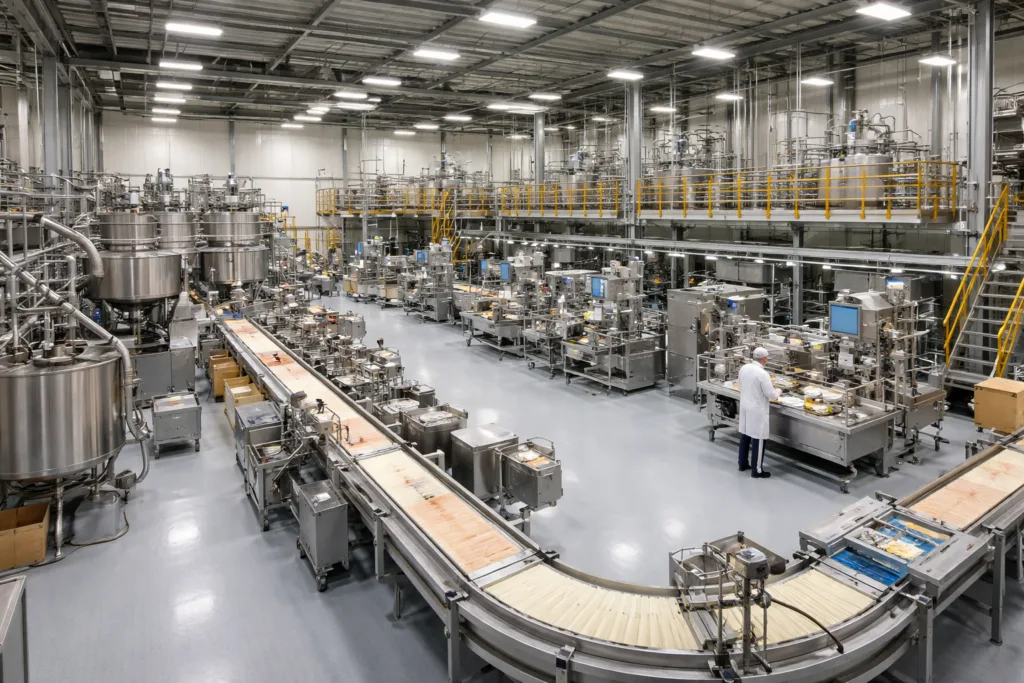
Pursuing the optimal floor system means balancing costs, regulations, and decades of use. ZDSpoxy’s technical team helps clients assess real site conditions, considering moisture, substrate strength, and mechanical loads to specify the right resin chemistry—or to honestly signal when tiles might suffice. Prioritize a realistic project survey before selecting a product or specification.
Frequently Asked Questions
Is resin flooring more expensive than tile floors?
The initial installation cost for resin flooring is typically higher than for basic tile, but lower maintenance and longer lifespan can make it more cost-effective over time—especially in demanding settings.
How does cleaning compare between resin floors and tiled surfaces?
Resin floors are much easier to clean because they have no grout lines or joints where dirt and bacteria can gather. Tiles require regular grout cleaning and sometimes regrouting.
Are resin floors suitable for kitchens or bathrooms?
Yes, resin flooring excels in wet environments due to its seamless and waterproof finish, making it ideal for commercial kitchens, bathrooms, and food production zones.
Do resin floors crack more easily than tiles?
No—when installed on properly prepared substrates, resin floors flex slightly and are less likely to crack under impact compared to tiles, which may crack or debond if the base shifts or impacts occur.
Can I install resin flooring over old tiles?
Resin floors can be applied over tiles if the tiles are well-bonded, clean, and the surface is correctly prepared. However, this needs professional assessment for assurance of long-term performance.
Which is more resistant to chemicals and stains, resin or tiles?
Resin flooring—when formulated correctly—can be highly resistant to chemicals and staining. Tiles themselves may resist chemicals, but grout lines often absorb and stain, leading to weakness over time.