
Introduction: The Connection Between Grout Stiffness and Resonance
When engineers analyze the performance of rotating machinery, the critical speed—the point at which resonance dramatically amplifies vibration and threatens mechanical systems—is a pivotal factor. Surprisingly, one material often overlooked in this equation is grout. Especially in heavy equipment foundations, grout stiffness directly influences the way vibrations travel, dampen, or amplify. This article explores why engineers must pay close attention to grout stiffness when managing resonance, highlights recent material innovations, and provides practical case studies to underline the importance of this physical property in safe and reliable operation.
Defining Grout Stiffness: What It Means for Engineers
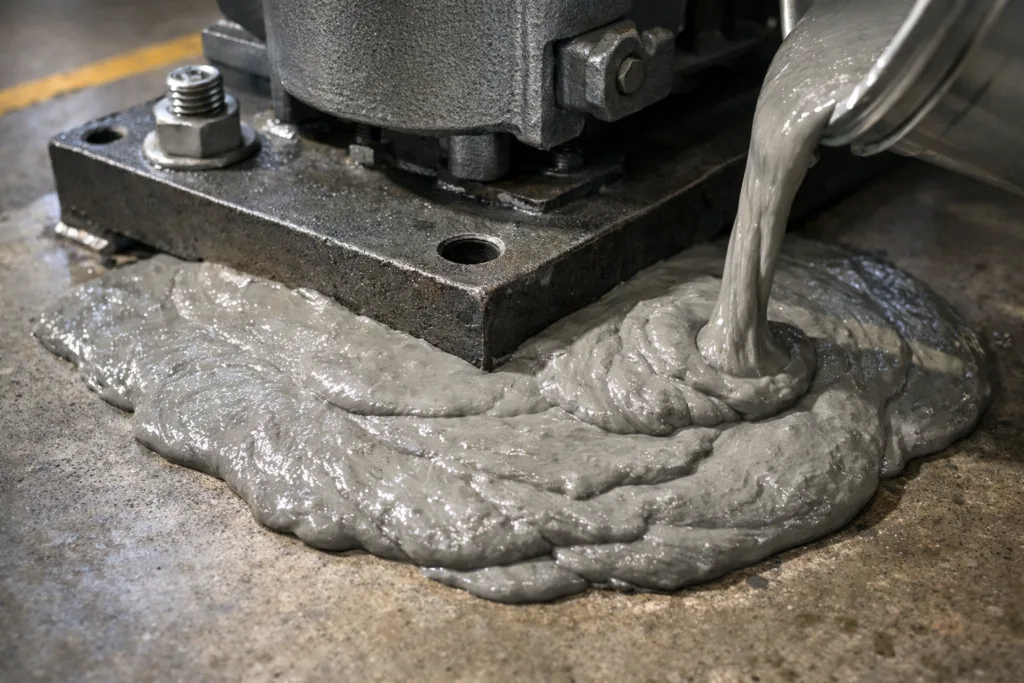
Grout stiffness refers to the material’s ability to resist deformation under load. Measured primarily via its modulus of elasticity (often in GPa), a stiffer grout offers higher resistance to dynamic forces. The selection of a grout with the right stiffness ensures stable support for machinery, especially in operational environments where vibrations are constant.
Why Resonance Matters in Machinery and Foundations
Resonance occurs when the frequency of a force coincides with the natural frequency of the supported system. In machinery like pumps, compressors, turbines, and even bridges, resonance can lead to catastrophic damage—cracked foundations, broken welds, excessive noise, and even sudden failure. One pivotal factor controlling these frequencies is grout stiffness.
Critical Speed Analysis: How Grout Stiffness Affects Resonance
Critical speed analysis predicts the rotational speed at which a machine’s foundation resonates. In this process, engineers model the machine, foundation, grout and soil as a composite system. Grout stiffness determines the degree of foundation flexibility. Too soft, and resonance may be triggered at lower speeds, compromising safety. Too hard, and vibrations can transmit directly, risking structural integrity elsewhere.
The Physics of Grout Stiffness and Resonance Interaction
The interaction is governed by Newton’s laws and vibration theory:
- Stiffness modifies the natural frequency of the foundation system.
- Soft grout lowers system frequency, potentially shifting resonance into the operating range.
- Stiff grout raises natural frequency, often pushing resonance out of the risk zone.
But context matters: machinery weight, baseplate structure, and even grout thickness alter the balance.
Case Study: Compressor Base Resonance and Grout Stiffness Selection
A petrochemical plant reported severe vibration in compressor bases installed with ordinary cement grout. Analysis showed that the relatively low stiffness shifted the resonance frequency near the nominal operating speed. Engineers switched to a high modulus epoxy grout, which significantly improved system stability. By recalculating critical speed with updated stiffness, resonance was avoided.
For similar details and solution options, see Crusher & Compressor Base Grouting.
Rotating Machinery: Pumps, Turbines, and Epoxy Grout Innovations
Rotating machinery, such as centrifugal pumps and turbines, exposes grout to fluctuating loads and flexure. Innovations in epoxy grouts, combining high compressive strength and controlled modulus, enable adjustable stiffness to match project requirements. ZDSpoxy’s formulation approach involves balancing flowability with stiffness, ensuring robust performance without excessive heat or shrinkage.
Recent Research: Material Science Trends in Grout Performance
Emerging epoxy and polyurethane grout technologies integrate additives for improved stiffness control. Nanomaterials, fiber reinforcement, and modified polymer chemistry offer higher modulus and reduced creep, directly impacting resonance characteristics. Labs now test grouts using modal analysis—measuring the impact of diverse stiffness levels on resonance and vibration dampening.
Modulus of Elasticity: The Quantitative Guide
Epoxy grout modulus typically ranges from 5 to 14 GPa, while cementitious grouts often settle between 1 and 4 GPa. High modulus materials, such as ZDS-1410AB High Compressive Epoxy Grout, are ideal for heavy-duty machinery, reducing the risk of resonance-induced damage. Always compare technical datasheets and lab-tested values for project-specific requirements.
How Grout Stiffness Is Measured: Laboratory and On-Site Methods
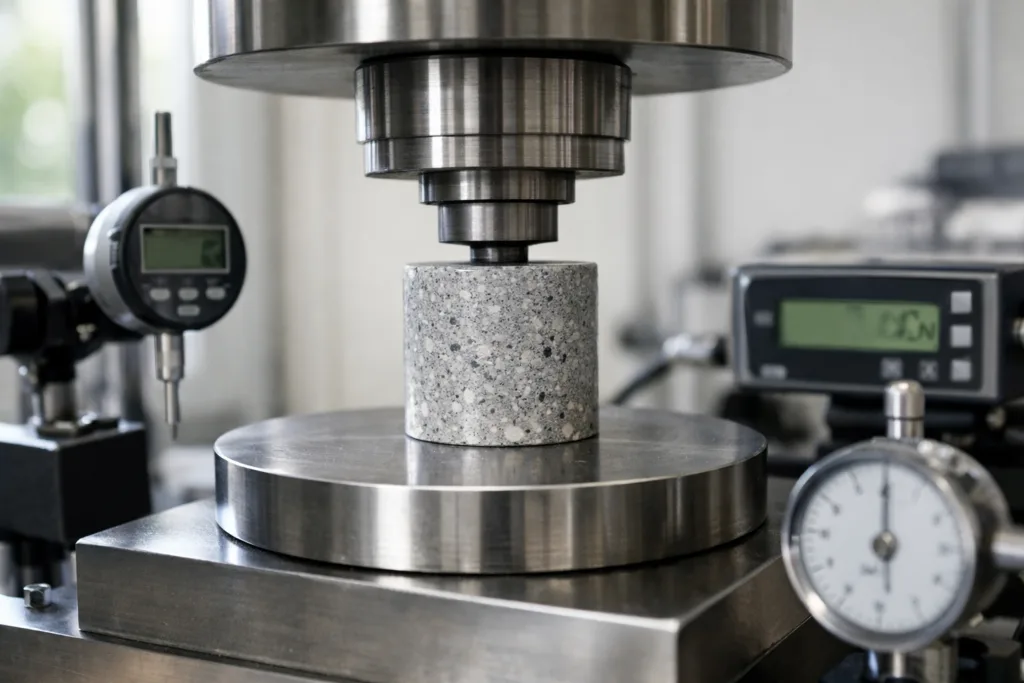
Engineers use compressive tests, stress-strain measurement, and resonance frequency assessments to measure modulus of elasticity. On job sites, samples taken from formwork cure are tested to verify batch-to-batch consistency. ZDSpoxy emphasizes gel time checks and viscosity control to ensure reliable stiffness results under real conditions.
System Design: Integrating Grout Stiffness with Foundation Engineering
Structural engineers integrate grout stiffness values into finite element models, foundation calculations, and vibration analysis. This enables safe machinery installation, accurate critical speed predictions, and strong bases for heavy loads. The process includes evaluating formwork, selecting grout type, and considering external factors like temperature and moisture.
Factors Affecting Grout Stiffness in Practice
Field experience shows that substrate moisture, temperature, mixing discipline, and batch size affect final grout stiffness. Improper mixing, contaminated surfaces, or rapid curing can reduce modulus, inviting resonance risks. Always confirm surface prep and use primers, like solvent-free epoxy primer for improved bond and stiffness reliability.
Innovative Solutions for Enhancing Grout Stiffness
Material science continues to push boundaries. The use of nano-additives, glass fiber reinforcements, and controlled cross-linking agents have raised modulus levels by up to 22%. Projects in high-vibration environments, such as steel mills and marine platforms, benefit from these engineered grouts. Choosing the right product tailored for stiffness needs is crucial.
Epoxy vs Cementitious Grout: Comparative Stiffness and Resonance Damping
| Property | Epoxy Grout | Cement Grout |
|---|---|---|
| Modulus (GPa) | 6-14 | 1-4 |
| Damping | Good, adjustable | Moderate |
| Creep Resistance | Excellent | Low |
| Shrinkage | Minimal | High |
| Resonance Adaptability | High | Limited |
Projects requiring precision in critical speed rely on epoxy grouts for their predictable stiffness.
Grout Thickness and Geometry: The Overlooked Impact
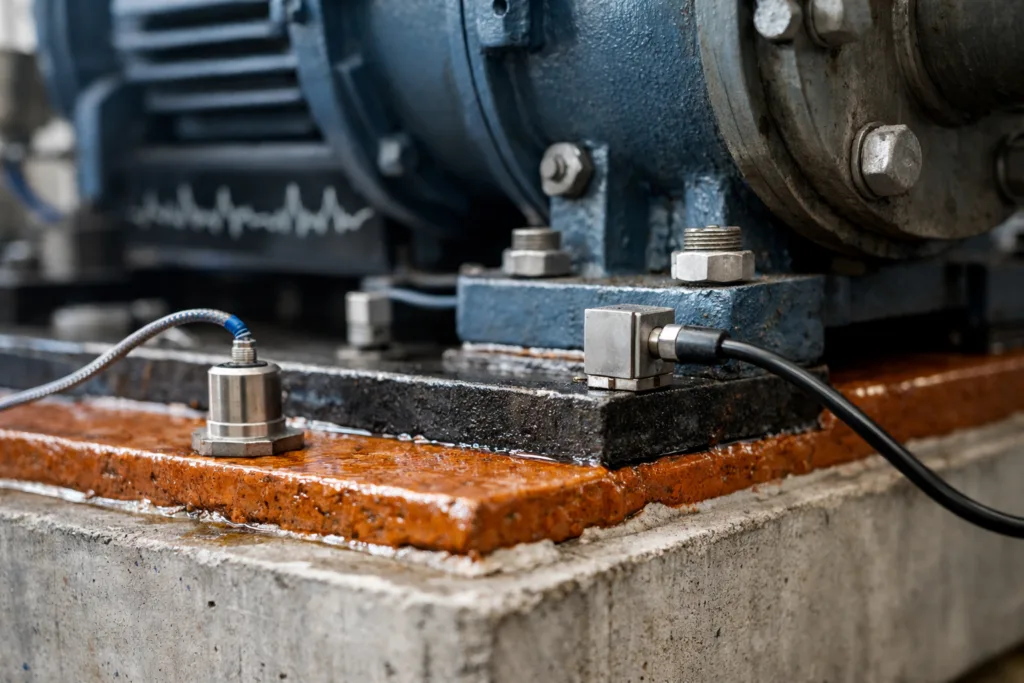
Physical dimensions of grout under machinery can alter effective stiffness. Thin layers often amplify stiffness but may risk incomplete coverage. Thick pours can reduce modulus, especially if air pockets or improper curing interfere. Always calculate optimal thickness for baseplates, compressors, and turbines to avoid shifting resonance inadvertently.
Real-World Observations: The Result of Poor Stiffness Control
Case studies show that improper stiffness selection can cause pump seal failures, noisy operation, and even cracked foundations. Poor mixing discipline or contaminated substrates are often to blame. For practical workflow improvements, see Grouting Vertical Inline Pumps vs. Horizontal Split Case: 7 Essential Performance Lessons.
Applications Beyond Machinery: Bridges, Marine, and Pipelines
Not only is resonance an issue for rotating machinery, but also for bridges, marine structures, and pipelines. Grout stiffness plays a role in vibration damping and load transmission in these applications. Solutions for underwater grouting and tight-gap systems further increase stable performance where vibration and shock loads exist.
ZDSpoxy Insights: Manufacturing Perspective on Grout Stiffness
ZDSpoxy’s manufacturing experience highlights the importance of batch consistency, viscosity control, and correct mixing ratios. Protocols include gel time checks, strict QC records, and frequent modulus testing. Reliable cure and minimal shrinkage make the difference for resonance prevention in large-scale installations, especially in climates with wide temperature swings.
Site Preparation: Ensuring Maximum Stiffness and Performance
Preparing surfaces is key to enabling grout stiffness—remove oil, dust, and moisture. Priming is recommended, particularly for epoxy systems. Incorrect preparation or hasty mixing reduces bond quality and final modulus, increasing resonance vulnerability.
Monitoring Resonance: Tools and Techniques for Engineers
Engineers use vibration meters, accelerometers, and modal analysis software to track resonance risks during and after installation. Early detection paired with critical speed analysis helps adjust grout choice or patch faulty installations before major damage occurs.
Thermal Effects on Grout Stiffness
Ambient and operational temperature affect grout stiffness. Some epoxy systems are designed for high-temperature tolerance; others offer flexible solutions at low temperatures. For performance in extreme conditions, see High-Temperature Epoxy Grout ZDS-4120AB for Industrial Equipment.
Performance Testing: Ensuring Quality Control
Laboratories now routinely test cured grout samples for modulus, compressive strength, and creep to confirm consistency and resonance resistance. Projects specify minimum stiffness criteria and batch-by-batch test results for full compliance.
Innovations in Grouting Technique: Maximizing Resonance Control
New grouting techniques use flowable formulations and self-leveling systems to ensure uniform stiffness under baseplates. Controlled curing systems and air-release methods reduce hidden weaknesses that might shift resonance. Engineering teams monitor every stage for measurable improvement.
Case Study: Pump Foundation Resonance Solved with Advanced Grout Selection
An industrial site, after repeated vibration failures, selected a fine-tuned epoxy grout with specified modulus and monitored cure. Critical speed analysis proved the new stiffness pushed resonance safely outside the operating range, reducing risk and maintenance.
Future Outlook: Material Trends for Resonance Mitigation
Epoxy and polyurethane grouts are increasingly customizable in stiffness and damping. Computational tools model critical speed with more accuracy and real-time tracking. The future promises smarter materials and more reliable machinery installations.
Frequently Asked Questions
How does grout stiffness affect resonance?
The stiffness changes the foundation’s natural frequency, potentially moving resonance into safer or riskier speed ranges for rotating machinery.
Why is epoxy grout preferred for resonance control?
Epoxy grout offers higher modulus, predictable performance, and adjustable damping, making it easier to optimize for machinery vibration challenges.
What is critical speed analysis in machinery installation?
Critical speed analysis predicts when vibration will amplify due to resonance, helping engineers avoid dangerous operating ranges by tuning foundation stiffness.
How can poor mixing affect grout stiffness?
Poor mixing or surface contamination lowers stiffness, undermines bond strength, and increases the chance of resonance-related failures.
Are there special grouts for high-temperature or low-temperature conditions?
Yes, formulations exist for extreme thermal ranges, maintaining stiffness for vibration control even in harsh environments.
How do engineers ensure proper grout stiffness in the field?
Through sample testing, strict mixing protocols, surface preparation, and quality control measures during installation.
Related Reading
- Solving Vibration Challenges for Reciprocating Compressor Foundations
- How Grouting Impacts Pump Seal Life and Maintenance Budgets
- Improve Metal Fabrication Stability Through Smart Grout Hole Design
- Epoxy Grout Solutions for Challenging Applications
- Full Bed vs Chock Grouting: Compressor Skid Installation Strategies