
Understanding Anti Slip Waterproof Coating, Slip Resistant Coating Wet Area Solutions
Slips and falls in wet areas remain one of the leading safety hazards in homes, hospitality environments, and public spaces. The need for anti slip waterproof coating, slip resistant coating wet area systems is especially vital near showers, balconies, and pool decks where moisture is always present. But with so many slip-resistance solutions on the market, how do you match the right texture level to your application? This comprehensive guide walks you through practical choices, cleaning trade-offs, and ways to confirm your decision before a major installation. Let’s ensure your wet zones are safe and easy to maintain.
The Three Levels of Slip-Resistance: Light, Medium, and Heavy Duty
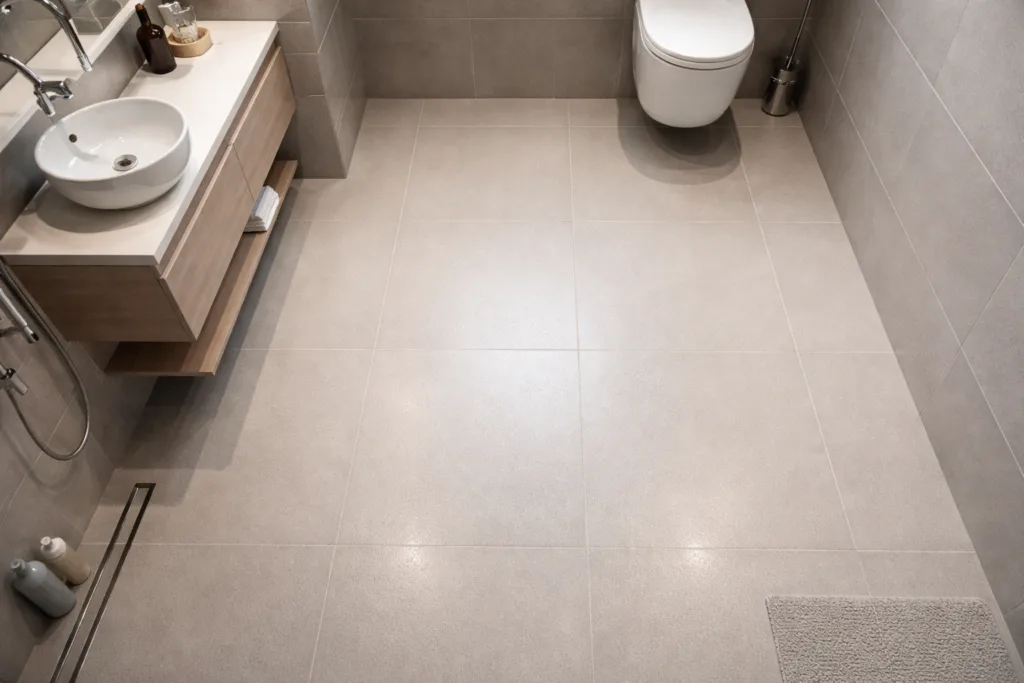
Not all anti slip waterproof coating, slip resistant coating wet area solutions are created equal. The industry typically offers three texture profiles: light, medium, and strong slip-resistance. Each option serves a particular set of needs, balancing foot safety with everyday cleanability.
Light Texture: Subtle Safety for Low-Risk Wet Areas
Light slip-resistant coatings are formulated with fine particles or micro-roughness. They work well for bathroom floors and home balconies where water doesn’t pool in large quantities and barefoot comfort matters. The texture is gentle—perfect for those who prioritize easy cleaning and minimal abrasion against skin or delicate flooring.
- Best for: Residential bathrooms, private balconies
- Trade-off: Offers moderate improvement in grip but is the simplest to mop, sweep, or scrub with normal household tools
- Not recommended for: High-traffic wet zones or where water overspill is constant
For balcony or outdoor wet rooms, see kitchen bathroom tile waterproofing for compatible underlayments and surface prep advice.
Medium Texture: Versatile Safety for Frequent Wet Areas
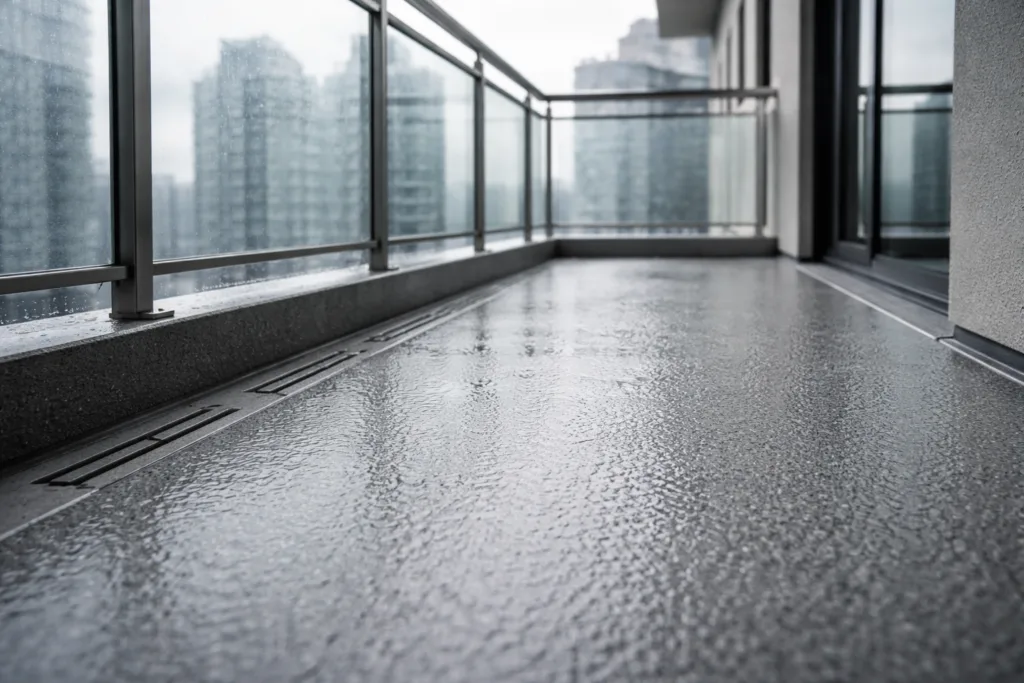
Medium-slip textures use a slightly coarser grain or patterned profile. This grade is common around semi-public bathrooms, outdoor terraces, and typical poolside spots. The feel underfoot remains pleasant but adds a distinct “bite” to help shoes and wet feet grip the surface more confidently.
- Best for: Shared bathrooms, balcony floorings, pool surrounds with moderate traffic
- Trade-off: Increased cleaning attention required—dirt or mildew may settle into grooves but is manageable with proper tools
- Not recommended for: Areas exposed to oils, greases, or constant heavy soiling (such as commercial kitchens)
For more on suited balcony or terrace treatments, explore terrace balcony outdoor floor guidance for slip-resistant system layering.
Strong Slip-Resistance: Maximum Grip for High-Risk Wet Zones
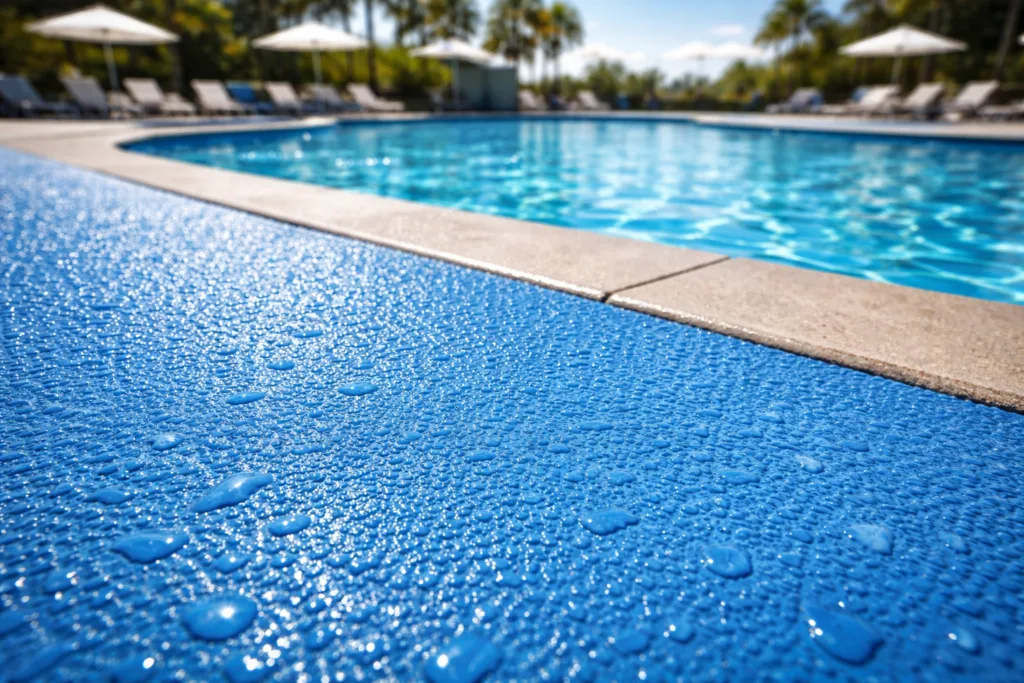
Strong anti slip waterproof coatings use aggressive texturization, such as sharp aggregate, quartz, or special non-slip granules. They are engineered for high-risk, high-traffic wet areas—like commercial pool decks, public showers, or sports facility entrances. This surface profile dramatically reduces slip accidents even with water puddling; however, cleaning is more challenging due to deep texture valleys where dirt or organic matter can accumulate.
- Best for: Swimming pools surrounds, water parks, industrial wet passages
- Trade-off: Cleaning effort increases significantly; mechanical brushing or pressure washing is usually needed
- Not recommended for: Sites requiring frequent barefoot contact by children or the elderly, as the roughness can be abrasive
For specific poolside coating advice, refer to swimming pool waterproofing solutions covering underlayment, primer compatibility, and edge detailing for wet containment.
The Science: How Anti Slip Waterproof Coating, Slip Resistant Coating Wet Area Formulations Work
The core mechanism behind these coatings lies in surface topology. By adjusting the particle size, resin matrix, and application method, manufacturers create controlled friction levels without sacrificing waterproofing. Light textures prioritize easy water run-off; medium and heavy textures use embedded particles for grip and drainage, but at the cost of increased cleaning complexity.
Key Material Choices: Epoxy, Polyurethane, and Polyaspartic
Heavy-duty slip-resistant solutions usually leverage resin chemistries like epoxy or polyaspartic. These resins cure to a dense, waterproof shell while securely locking texture aggregates on the surface. Polyurethane options deliver outstanding flexibility, suiting exterior balconies or areas exposed to sun expansion. Understanding each resin’s cure time, hardness, chemical resistance, and real-world temperature limits is essential before committing to a product system.
Common Test Methods: R-Ratings and Pendulum Tests
Laboratory tests—such as the R9–R13 ramp rating scale or wet pendulum slip tests—quantify the grip of each system. For swimming pools and spa zones, most codes require R11 or higher. Always request slip-resistance ratings validated by credible labs to ensure compliance and reduce accident liability.
Easy-to-Clean vs. Maximum Safety—Finding the Right Balance
It’s a classic dilemma—pursue maximum slip-resistance and cleaning becomes harder. Mild textures need ordinary cleaning routines, while pronounced anti-slip granules trap dirt and demand more physical removal effort. If maintenance resources are limited, aim for the safest surface your cleaning capacity can handle. In hospitality, frequent mechanical scrubbing justifies strong slip-resistance; at home, medium grades usually deliver the best performance-to-maintenance ratio.
Where Each Slip Resistance Level Shines: Practical Application Guides
| Slip-Resistance Level | Bathroom Floor | Balcony | Poolside |
|---|---|---|---|
| Light Texture | ✓ Comfortable, easy to clean | ✓ Good for low-traffic spaces | ✗ Not recommended |
| Medium Texture | ✓ Good compromise | ✓ Slip protection & comfort | ✓ For private/residential pools only |
| Strong Texture | ✗ Too abrasive | ✓ Where slipperiness is a known risk | ✓ Public/commercial, high traffic wet zones |
Site Sample Testing: Why You Should Always Confirm with a Physical Sample
The look and feel of slip-resistant coatings on a product datasheet can mislead. Always ask your supplier for physical samples—at least three textures to test on-site. This hands-on check ensures that the comfort, cleaning effort, and slip resistance are truly right for your unique application. You may find, for example, that strong profiles are too rough for family showers but essential at poolside steps.
Practical Tips for Choosing Anti Slip Waterproof Coating, Slip Resistant Coating Wet Area Products
- Assess traffic and water exposure: High use + frequent wetting calls for medium/high textures; sheltered spots may do well with light profiles.
- Consider users: Where babies, seniors, or frequent barefoot use occur, medium slip is usually safest.
- Match to cleaning resources: Only pick strong slip-resistant coatings if power-washing or aggressive cleaning is possible regularly.
- Check compatibility: Some resin systems have adhesion limitations over tiles or old waterproof membranes—stick to manufacturer primers and surface prep for best results.
ZDSpoxy Manufacturing Insights: Balancing Performance, Real-World Constraints, and Application Reality
From a technical manufacturer’s viewpoint, such as ZDSpoxy, slip-resistance isn’t just a matter of particle choice. Factors like local humidity, substrate moisture, and batch consistency greatly affect application. For instance, using a two-component polyaspartic resin for poolside slip-resistant coating, pot life can become very short on a hot day—if mixing and spreading aren’t disciplined, surface roughness varies and the final finish could become difficult to clean evenly. Quality in both product and jobsite routine is essential to achieving a reliable, easy-to-maintain finish.
Application Guidelines for Each Setting
Bathrooms
Residential bathrooms benefit most from light or medium slip-resistant coatings, prioritizing easy daily cleaning and gentle underfoot comfort. Pay careful attention to waterproofing layer selection beneath the topcoat. Surfaces must be dry, grease-free, and ideally primed with a compatible bonding agent. Thin-film solutions often suffice for private home use; however, shared bathrooms (e.g., gyms, hotels) may call for a slightly rougher finish. See kitchen bathroom tile waterproofing for additional substrate preparation steps and product compatibility.
Balconies
Outdoor balconies require coatings that combine waterproof integrity with slip-resistance fit for random rain and varying footwear. Medium-texture coatings work well, as they resist moss growth and seasonal wetness without capturing too much debris. For surfaces prone to splashing (next to planters or where children play), consider a patch test of strong slip-resistance—bearing in mind the added cleaning that comes with it. Refer to terrace balcony outdoor floor for UV-resistant and flexible system layering advice.
Poolside and High-Wet Areas
Here, legal compliance often requires a minimum R11 or higher slip-resistance. Strongly textured coatings excel in this role, protecting bare feet from pooling water. However, regular maintenance (often with deck brushes or rotating cleaners) is necessary to prevent algae, sunscreen, or organic debris from accumulating in grooves. These products work best when combined with resilient primers and elastomeric base layers for thermal and chemical stability. Consult swimming pool waterproofing solutions for full pool deck system builds.
Summary Table: Slip-Resistance, Cleaning, and Application Guide
| Texture Level | Surface Type | Slip-Resistance | Cleaning Effort | Recommended Application |
|---|---|---|---|---|
| Light | Micro-rough, fine grain | R9–R10 (lowest) | Low (easy) | Bathrooms, home balconies |
| Medium | Coarse, moderate grain | R10–R12 | Medium | Balcony, shared showers, poolside (residential) |
| Strong | Aggressive, sharp grain | R12–R13+ (highest) | High (difficult) | Commercial pool decks, public showers |
Choosing, Confirming, and Installing Your System: The Smart Steps
- Request real samples: Place side-by-side on-site, in both dry and wet conditions. Test barefoot and with shoes.
- Evaluate with actual cleaning tools: See if routine mops, brushes, or washers are effective on the sample.
- Document your selection: Take photos and notes to ensure the installer applies the confirmed sample—minimizing on-site surprises.
- Understand warranty limitations: Some strong slip-resistant finishes are not warranted for easy stain removal; always check datasheet small print.
Slip-Resistance: Should You Always Max Out?
Not always. For home bathrooms, strong slip-resistance coatings can create discomfort, impede cleaning, and may even irritate skin over time. In commercial, high-traffic wet zones, however, strong slip is a must. The “right” answer balances grip, comfort, and realistic maintenance. Lean on your supplier’s knowledge and always validate choices with a physical sample kit.
Conclusion: Making Wet Areas Safer, Smarter, and Simpler to Clean
Anti slip waterproof coating, slip resistant coating wet area solutions are not one-size-fits-all. Choose from light, medium, or strong slip-resistance based on your actual needs by considering who uses the space, how often it gets wet, and your cleaning limitations. Remember, the safer the coating, typically, the more demanding it is to maintain. Don’t skip site samples—always confirm on small sections before large-site application to be sure the result is both safe and serviceable.
Frequently Asked Questions
What does “anti slip waterproof coating, slip resistant coating wet area” actually mean?
This refers to a resin system or coating designed to prevent slipping on wet surfaces while providing full waterproof protection. It’s commonly used in bathrooms, balconies, and pool decks where water exposure is frequent.
Which slip-resistant level is easiest to clean?
Light texture coatings are easiest to clean as their surfaces trap less dirt and permit simple mopping or wiping. Strong textures require more effort and specialized tools to prevent buildup.
Where should I use strong anti-slip coatings?
Strong slip-resistant coatings are ideal for commercial pool surrounds, public showers, and high-traffic outdoor wet areas due to their maximum grip even in puddled conditions.
Can I apply slip-resistant coatings over old tiles?
Often yes, if the surface is stable, oil-free, and well-prepared with proper primer. Always test adhesion first and consult the manufacturer for compatibility with tile surfaces.
Should I get a sample before full installation?
Yes. A physical sample allows you to verify comfort, cleaning effort, and appearance under real conditions, ensuring your final choice aligns with your expectations and needs.
Does higher slip-resistance mean higher safety?
Generally, yes—but in some settings, too strong a texture can cause comfort or cleaning issues. The best level is one that matches both safety demands and practical maintenance ability.
Related Reading
- How to Pick the Right Anti-Slip Floor Texture for Busy Retail Areas
- Clear vs Colored Waterproof Coatings: Ultimate Comparison for 2024 Projects
- Engineer’s 5-Step System Selection for Waterproofing Wet Spaces
- 7 Steps for Applying Slip-Resistant Coatings Over Old Ceramic Tiles
- Cleaner Air, Less Downtime: The Real Value of Low-VOC Waterproof Coatings