
Understanding Emergency Grouting of a Nitrogen Compressor During Shutdown
Industrial operations hinge on the reliability of critical equipment like nitrogen compressors, especially in environments where process continuity and safety cannot be compromised. But unexpected shutdowns—planned or otherwise—demand quick stabilization to mitigate vibration, misalignment, or structural weaknesses. This is where emergency grouting of a nitrogen compressor during shutdown plays a decisive role, safeguarding both infrastructure and operational schedules.
The Critical Role of Emergency Grouting
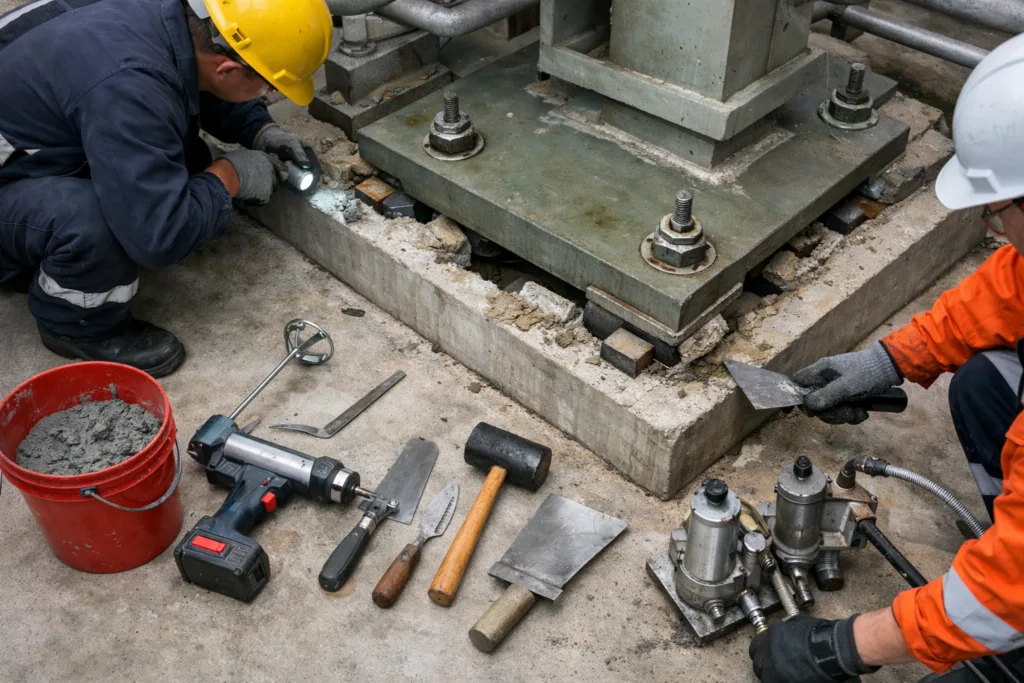
Emergency grouting isn’t just about filling gaps; it is an engineered response to unpredictable events such as compressor trips or sudden failures. When a nitrogen compressor is forced offline, there’s a heightened risk of foundation or soleplate movement, short-term settlement, and vibration transfer across mounts. Grouting in these moments rapidly restores stability, prevents base shifting, and maintains equipment alignment until full repairs or retrofits can be scheduled.
Shutdown Procedures and Why They Matter
Shutdowns of nitrogen compressors—whether emergency or planned—require meticulous adherence to safety and technical protocols. The sequence typically involves depressurization, isolation from feed lines, lockout/tagout, and, finally, inspection of mounting foundations. Each step is critical as improper procedures can both endanger personnel and increase the risk of foundation cracks, loose anchor bolts, or grout delamination.
Technical Challenges of Emergency Grouting
Grouting during a shutdown involves unique hurdles. Frequently, the site conditions are less than ideal: temperatures may be suboptimal, concrete may still be under load, and minimal clearance under baseplates can hinder flow. Additionally, moisture, oil-contaminated surfaces, and limited window for cure time demand that chosen grouts offer rapid strength gain, chemical tolerance, and minimal shrinkage or thermal exotherm.
Selecting the Right Grout for Emergency Work
The selection process must weigh up parameters such as compressive strength, flowability, viscosity, and temperature resistance. For equipment like nitrogen compressors, opting for a high compressive strength epoxy grout ensures the base remains immobile during vibration peaks. ZDSpoxy engineers recommend grouts capable of early strength development—often within 24 hours—while maintaining low exotherm to avoid thermal stress on sensitive components.
Material Choices: Epoxy vs. Cementitious Grouts
While cementitious grouts are suitable for standard applications, emergencies call for epoxy or advanced resin systems owing to their rapid cure time, exceptional adhesion, and superior oil resistance. In cases of oil-soaked or damp foundations, a specialized epoxy solution for oil-soaked concrete crack repair provides long-term hold where standard cementitious formulas would fail.
Best Practices for Emergency Grouting Implementation
Proper execution is as important as material choice. Start with a thorough cleanup of the baseplate and anchor bolt area—removing oil, debris, and moisture with dedicated solvents or vacuum systems. Use formwork with tight seals; leaks from hurried shuttering are a top failure mode in emergency repairs. Batch mixing of resin must be tightly controlled for ratio accuracy and homogeneity; avoid oversized batches to limit exotherm buildup and ensure full flow within usable pot life.
Essential Equipment Inspection and Base Preparation
Pre-grouting assessment includes checking and tightening existing anchors, confirming baseplate level, and inspecting for cracks or voids. Sometimes, thermal imaging or ultrasonic testing is used to pinpoint delaminations in old grout beds.
Application Method: Full Bed Grouting vs. Chocking
Two principal techniques dominate emergency compressor repairs—full bed grouting (where the grout fills the complete space beneath the compressor skid or soleplate) and chocking (localized packs under anchor points). Modern guidance, such as the API recommendations, typically favors full bedding for its superior vibration damping and load distribution, though chocking may be used where time or site constraints prevail.
Mixing, Pouring, and Cure Times
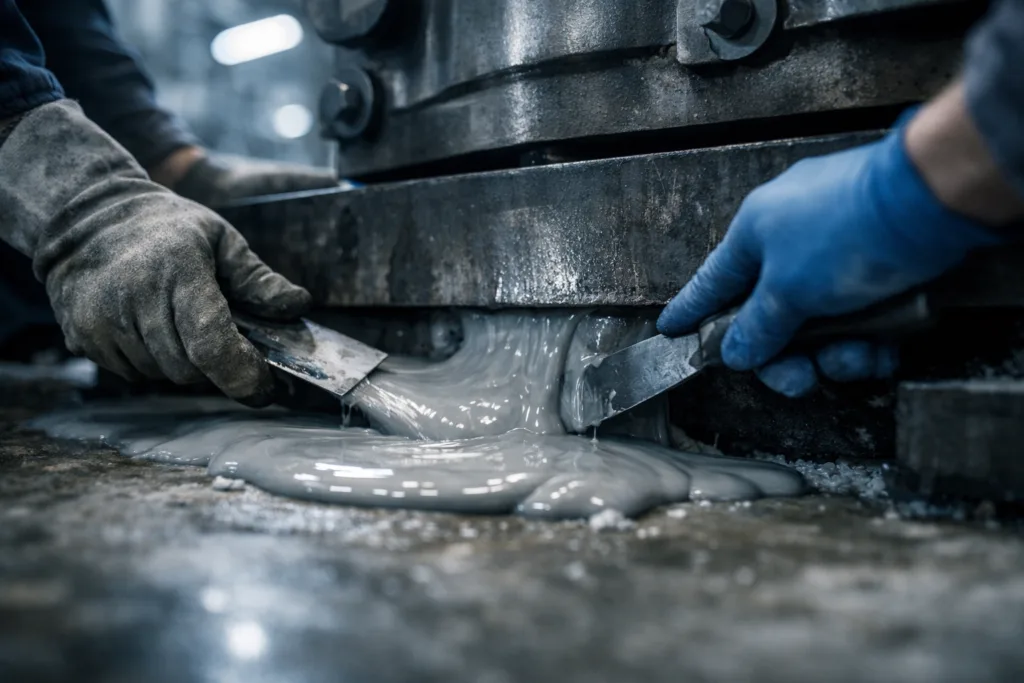
Consistency in mixing is paramount. ZDSpoxy field teams often rely on slow-speed drills with spiral paddles to minimize air entrapment. Formwork should be filled from the lowest point, allowing the grout to self-level and push air out. Most epoxy grouts designed for emergencies reach operational strength within 8–24 hours—making them suitable for compressors that must return to service promptly.
Site Constraints: Temperature, Moisture, and Contaminants
Few sites are perfect during an emergency. Low temperatures (below 10°C) retard cure and flow; here, a low-temperature formulated epoxy grout is essential. For active leaks or sweating foundations, surface-tolerant primers can bolster adhesion and reduce vapor pressure risks. ZDSpoxy notes that for nitrogen compressor pads, the bond line must be thicker than 6 mm but thinner than 25 mm to optimize stress transfer without excessive heat buildup during curing.
Immediate Actions After Shutdown
As soon as a shutdown occurs, coordinate between maintenance, operations, and safety teams. Quick visual checks for grout voids or anchor bolt loosening can guide immediate stabilization actions. Pre-position all equipment and pre-measure grout volumes; for accuracy, use an epoxy grout volume calculator before commencing the pour.
Temporary Supports and Vibration Control
Before grout cures, temporary shims or vibration-absorbing pads are often installed to absorb shocks and maintain alignment, especially for compressors with critical process duties. Remove these supports after the initial cure to allow the grout to carry design loads.
Quality Control Measures in Emergency Grouting
Monitor mixing ratios, ambient temperature, and substrate moisture content throughout installation. Field checks—such as compressive strength cube testing and resin gel time observation—reduce the risk of failures. Maintain a log for batch numbers and timing to ensure traceability in post-event investigations.
Case Study: Sustaining Compressor Performance After Sudden Trip
Consider a facility facing a sudden shutdown due to process upsets. Grouting teams mobilized with ZDSpoxy epoxy grout, applied after rapid teardown and base cleanout. The use of an oil-tolerant primer enabled cure on a surface affected by minor lube leaks, and the system returned to service after just 14 hours, with vibration readings well within OEM specification—demonstrating the profound impact of emergency grouting on avoiding lost time and repair cost escalation.
Success Metrics: What Good Looks Like
- Compressor returned to operational service within 24 hours
- Scrap or rework of grout and concrete is avoided
- Post-repair vibration levels meet or beat baseline values
- Anchor bolts tensioned to full spec with zero slip after 72 hours
Main Failure Modes and How to Avoid Them
Common faults include incomplete base coverage, air or water entrapment, insufficient anchor bolt embedment, and premature load bearing. These are countered by proper job planning, formwork checks, and use of the correct grout type for application temperature and environmental challenges.
The Cost-Benefit of Fast, Correct Emergency Grouting
Emergency grouting a nitrogen compressor prevents not only unplanned downtime but also long-term vibration-related damage, sealing cracks before they propagate, and extending time between full-format maintenance windows—delivering cost savings that quickly balance the initial investment in specialty grouts.
Grouting Specifications: API, OEMs, and Best Practice
API 686 and OEM manuals for rotating equipment spell out expectations for grout type, anchor installation, base preparation, and QC checks. ZDSpoxy grouting solutions are tailored to meet or exceed these standards, with customizable resin formulations for time-critical compressor repairs.
Tools and Accessories that Improve Emergency Grouting Outcomes
Recommended tools include slow-mix paddles, non-absorbent formwork, calibrated resin thermometers, moisture meters, and vacuum cleaners for debris cleanup. Using a purpose-built grout calculator streamlines estimation and batching.
The Role of Manufacturers and Site Supervisors in Quality Assurance
Proactive support from both the resin manufacturer and on-site supervisors ensures work is sequenced for speed and effectiveness. ZDSpoxy’s technical teams, for example, provide advice on mixing ratios and pre-qualification of personnel for high-stakes shutdown grouting tasks.
Safety Procedures: PPE, Ventilation, and Waste Management
All work must be done with full PPE, including gloves, sealed goggles, and respirators where solvents are present. Work areas should be ventilated to dissipate fumes. Leftover resin or hardener must be managed according to local environmental requirements.
Documentation and Reporting for Emergency Shutdown Repairs
Keep a thorough log of all products used, batch numbers, cure times, and post-repair vibration/bearing data. Such records underpin process improvement and insurance claims if needed.
Planning for Future Shutdowns: Lessons From Emergency Grouting
Each shutdown is an opportunity to refine emergency grouting protocols, train staff, and stock the right materials. Keeping a standby supply of rapid-cure epoxy grout and tailored primers will streamline future emergencies and reduce downtime risk.
Conclusion: The Lasting Value of Proper Emergency Grouting

The importance of emergency grouting of a nitrogen compressor during shutdown cannot be overstated. Thoughtful material selection, strict procedural adherence, and lessons learned from case studies translate to operational resiliency, safety, and sustainable plant performance. By anticipating challenges and continually upgrading grouting protocols, facilities ensure both uptime and a safe, vibration-free environment for critical compressor assets.
Frequently Asked Questions
What is emergency grouting for a nitrogen compressor?
It’s the rapid stabilization of a compressor’s foundation during unplanned shutdowns, using high-performance materials such as epoxy grouts to restore alignment and prevent vibration-related damage.
Why not use cement grout in emergency shutdowns?
Cementitious grouts cure too slowly, lack oil resistance, and may shrink or crack—making them less reliable for urgent compressor foundation repairs compared to epoxies.
How soon can a nitrogen compressor be returned to service after emergency epoxy grouting?
Depending on grout choice and site conditions, most compressors return to full service within 8–24 hours, once early strength and alignment checks confirm stability.
What are the biggest risks if grouting procedures are rushed?
Air or water entrapment, poor coverage, and improper anchor bolt engagement can all lead to further misalignment, excessive vibration, or costly rework if not addressed.
How does temperature affect emergency grouting results?
Low temperatures delay cure and reduce flow. Using low-temperature epoxy grout formulations overcomes these challenges to deliver reliable early strength and adhesion.
What should be documented during emergency grouting?
Record all batch numbers, resin types, cure times, and equipment vibration/level data to enable troubleshooting and demonstrate repair integrity for audits or insurance claims.
Related Reading
- Grouting Compressor Skids: A Complete Guide to Best Practices
- Solving Compressor Vibration: Expert Insights into Grouting Reciprocating Machines
- The Ultimate API Pump Skid Pre-Grouting Checklist
- Heavy Machinery Epoxy Grout Solutions for Maximum Stability
- How to Achieve Reliable Base Grouting for Crushers and Compressors