
Understanding Temperature Impacts: Solidification Speed, Leveling, and Bubble Risks
When applying coatings, such as epoxy, polyurethane, or polyaspartic systems, temperature plays a critical role in the final outcome. The main topic—apply coating in cold weather, coating in hot weather—centers on how environmental conditions shift the behavior of these materials. Temperature directly affects curing speed, flow and leveling, and the risk of bubble formation. Jumping between cold, humid mornings or scorching afternoons doesn’t just change your comfort, it changes the chemistry and performance of your coat.
Professionals and DIY renovators alike need to anticipate these shifts to prevent costly mistakes, ensure lasting beauty, and guarantee safety. Here, we analyze the science behind temperature effects, provide actionable recommendations for cold and hot environments, and share real-world wisdom from ZDSpoxy’s manufacturing floor.
How Coatings React to Temperature Shifts
Every resin system responds uniquely to ambient conditions. Curing speed—the time it takes for your coating to harden to a usable state—can slow dramatically in cold weather and accelerate in heat. Flow and leveling, which create that smooth, mirror-like finish, often worsen the colder it gets, while excessive heat may cause too-fast drying and surface roughness. Bubble risk, a constant headache for both resin professionals and site managers, is heightened by temperature-driven viscosity or solvent movement. Let’s break down these effects further.
Apply Coating in Cold Weather, Coating in Hot Weather
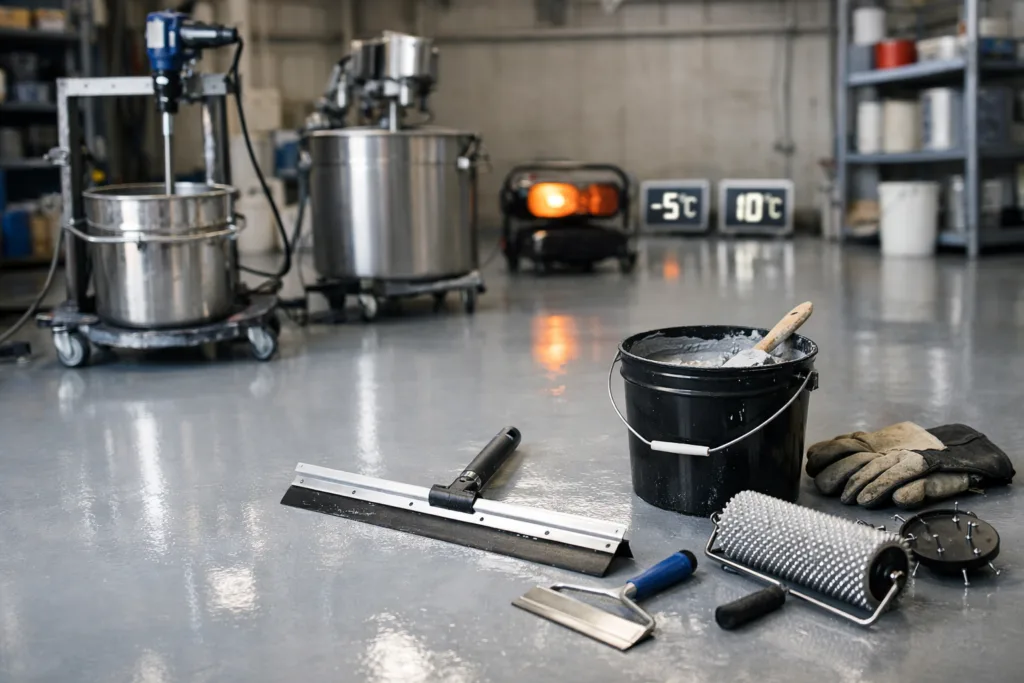
The core challenge with apply coating in cold weather, coating in hot weather lies in balancing working time, surface quality, and risk management. Below, you’ll find practical guidelines for both scenarios, backed by chemical insights and field experience.
Cold Weather Coating: Effects and Risks
- Extended curing time: Lower temperatures slow the chemical reaction rate, delaying full hardening and increasing vulnerability to damage or dust.
- Higher viscosity: Cold thickens your resin, decreasing flow and making level finishes harder to achieve.
- Increased bubble formation: Cold air can trap moisture and slow degassing, leading to bubbles frozen in place.
- Possible condensation: Surfaces colder than the air may gather dew, jeopardizing adhesion.
Hot Weather Coating: Effects and Risks
- Rapid curing: High heat accelerates chemical processes, shrinking working time and making finishes harder to control.
- Thinner viscosity: Warm resins flow easily but may spread too quickly, risking unevenness.
- Air and solvent movement: Heat drives off solvents faster, increasing bubble risk if not managed carefully.
- UV and humidity: Solar exposure may alter color, gloss, and durability if the product isn’t UV-resistant.
5 Essential Cold Weather Coating Tips
- Improve ventilation, but avoid condensation: Encourage airflow to prevent moisture buildup without chilling surfaces below dew point. Monitor humidity closely.
- Allow extended curing time: Expect slower solidification and plan site access carefully; premature traffic can ruin a soft coat.
- Divide work into zones: Smaller batches keep working times manageable and reduce risk of defects in large areas.
- Warm materials in advance (but not the substrate): Store resin at room temperature before use to maintain predictable mixing and flow.
- Use primers designed for low temperature: Specialized systems ensure proper bonding and minimize cure failure. ZDSpoxy’s ZDS1271AB rapid-curing epoxy primer is purpose-built for cold site use.
5 Key Hot Weather Coating Strategies
- Avoid midday application: Plan work for early morning or late afternoon to avoid peak temperature.
- Apply thinner layers: Thin coats cure more evenly, reduce exotherm (heat buildup) and lower bubble risk.
- Pre-chill resin components: Store hardener and resin in cool places before mixing, extending working time.
- Monitor substrate and ambient temperature: Test floors and walls before coating; avoid surfaces over 30°C when using fast-cure materials like polyaspartic.
- Choose heat-tolerant systems: Polyaspartics and certain polyurea coatings, such as ZDS1990AB 2K Polyaspartic Polyurea Waterproof Coating, deliver consistent results even in warm climates.
Comparing Curing Dynamics: Cold vs Hot Conditions
| Condition | Curing Speed | Flow/Leveling | Bubble Risk | Recommended System |
|---|---|---|---|---|
| Cold Weather (< 10°C) | Slow | Rougher | High | Slow-curing, low-temp rated primers |
| Hot Weather (> 30°C) | Fast | Flatter but may dry too fast | High | Polyaspartic, pre-chilled resin |
The Science: Why Temperature Rules Curing Speed
The curing of epoxies, polyurethanes, and polyaspartics relies on chemical crosslinking. Heat speeds up molecular movement and reaction rates, while cold slows everything down. Too cold, and curing may stall completely. Too hot, and the reaction outpaces air release, creating bubbles before leveling is finished. Manufacturers like ZDSpoxy design formulations to balance these factors, including ingredients to modify reaction rates and minimize risk.
Leveling and Flow: Practical Observations
In cold conditions, increased viscosity creates drag, trapping air and leaving visible roller marks or unevenness. In hot weather, rapid thinning often leads to sags and puddles if not kept under control. ZDSpoxy engineers recommend controlled batch mixing—smaller volumes, more frequent stirring—to match temperature reality. This prevents waste, manages heat generation, and improves finish quality.
Bubble Formation and Prevention: Field Strategies
Bubbles arise from trapped air, moisture, or solvent vapor. Cold surfaces slow bubble migration, freezing them in place. Hot weather drives moisture out quickly, sometimes forming bubbles too soon to escape. To manage bubble risk, use sharp roller techniques and gentle mixing in both conditions. Pre-testing the substrate for moisture and temperature prevents surprises. For complex areas like pools or humid balconies, advanced protective systems like swimming pool waterproofing help prevent these defects.
Condensation and Moisture: A Hidden Enemy in Cold
Condensation on cold surfaces is an invisible risk: even if a floor looks dry, dew can form as humid air cools. This destroys adhesion, causing delamination and early failure. Check dew point forecasts and always test surface moisture before coating. If uncertain, add a thin primer layer and allow extra curing time.
The Role of Substrate Temperature (Not Just Air)
Don’t just trust the thermometer. Floor and wall temperatures often lag behind air readings, especially after sunrise or sunset. For successful coating in hot or cold, measure substrate temperature directly. This avoids early cure or slow hardening surprises.
Material Storage and Preparation
Site managers should store all resin components above freezing (but below excessive heat) for cold weather. For hot conditions, refrigerate or cool the materials—not to chill the surface but to extend working time. Always follow manufacturer instructions for correct mixing ratios—too cold, and the resin won’t blend properly; too hot, and it could cure before hitting the substrate.
Application Technique Adjustments: Batch Size, Tool Selection, and Work Pace
Choose roller and brush types suited to temperature. In cold, thicker rollers help level out viscosity. In heat, use thinner tools and more frequent swaps. Reduce batch size in both environments to prevent premature curing or failed adhesion.
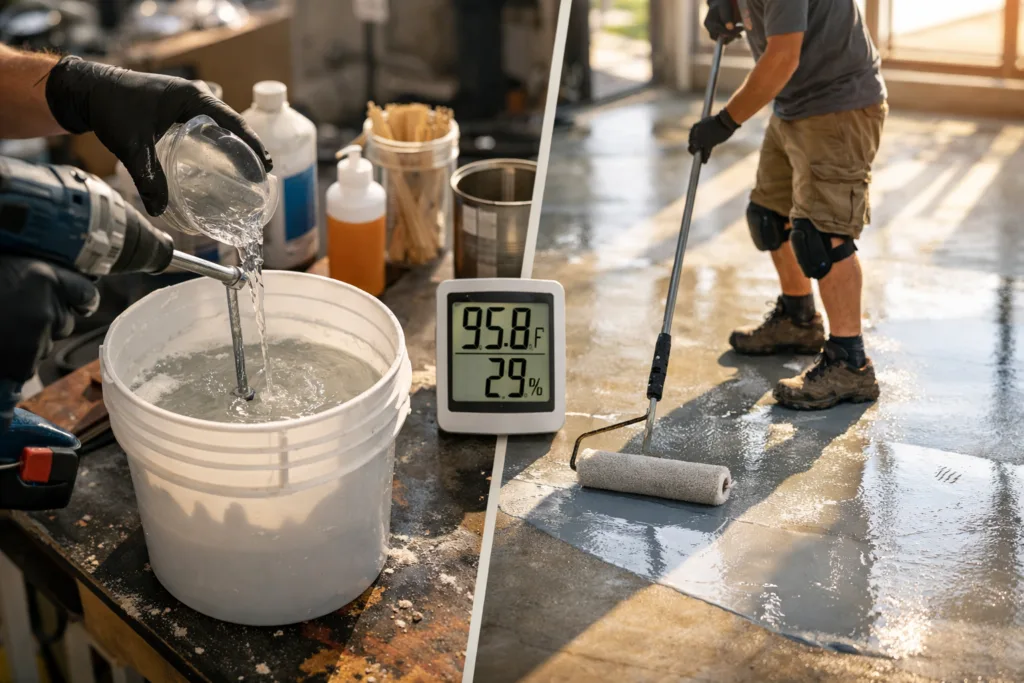
Site Scheduling: Smart Work Zones for Cold and Hot Days
Plan ahead. Divide large surfaces by tape or marks, then coat in steps—especially if temperature changes rapidly. In hot weather, start early and finish before the sun peaks; in cold, allow one zone to cure before moving to the next.
Choosing the Right System for Terraces, Balconies, and Outdoor Floors
Outdoor environments amplify temperature extremes. For terraces, balconies, and outdoor floors, consider specialized systems such as terrace balcony outdoor floor coatings that are designed for weather resistance and flexibility.
ZDSpoxy Experience: Batch Consistency, Mixing Discipline, and Cure Checks
From ZDSpoxy’s production labs, empirical testing proves that consistent batch mixing (strict ratios, precise timing) and routine gel-time checks prevent most cold or hot weather disasters. Record-keeping matters: noting ambient and substrate temperature, batch viscosity, and cure progress assures repeatable results.
Ventilation, Safety, and Environmental Control
Whether battling cold or heat, ensure proper ventilation and PPE use. In cold, ventilation prevents condensation but may stiffen the resin. In heat, keep air moving to reduce fumes but avoid direct sunlight on curing surfaces.
Testing and Quality Assurance for Extreme Conditions
Always perform adhesion, moisture, and cure tests before and after application. Record each step, and if uncertain, test a small area first. Quality assurance is the bridge between chemistry and jobsite success.
Common Mistakes: What to Avoid In Both Hot and Cold Weather Coating
- Ignoring substrate temperature
- Over-mixing or under-mixing resin
- Failing to adjust batch size
- Rushing application during midday (hot) or before surface checks (cold)
- Overlooking primer compatibility
Summary Table: Key Strategies for Each Weather Extremity
| Weather | Strategy | Risk Controlled |
|---|---|---|
| Cold (< 10°C) | Warm resin, zone work, primer | Curing delay, bubbles, adhesion |
| Hot (> 30°C) | Pre-chill resin, thin coats, timing | Curing rush, uneven finish, bubble risk |
Conclusion: Takeaways for Reliable Coating Performance
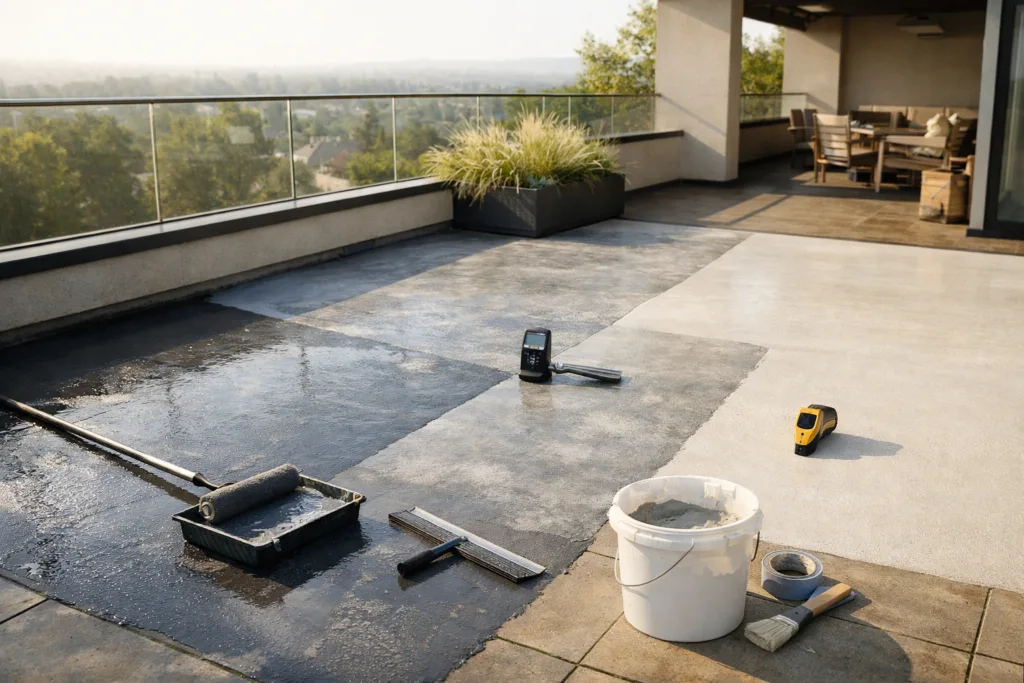
Whether you’re working in freezing temperatures or under blazing sun, temperature will shape every step of your coating process. By adjusting curing expectations, controlling flow and leveling, managing batch size, and monitoring bubble risk, you stay ahead of costly mistakes. Use reliable primers and topcoats engineered for your climate, like those offered by ZDSpoxy, and always record the conditions for quality assurance. Careful planning, consistent technique, and real-world testing are your best allies for lasting results.
Frequently Asked Questions
How do cold temperatures affect curing speed?
Cold temperatures slow down chemical reactions, meaning coatings take longer to cure. This increases the risk of premature traffic and contamination. Be patient and allow extra time before reopening surfaces.
What should I do if bubbles form during coating application?
Tackle bubbles by warming resin before use in cold weather or applying thinner coats in hot conditions. Proper mixing, surface testing, and roller techniques help minimize bubble risk.
Can I use the same coating system for both cold and hot weather?
Many modern coatings are designed for versatility, but you should choose products rated for your local conditions. Specialized primers and topcoats can optimize performance in extreme temperatures.
How can I avoid condensation and ensure adhesion in cold weather?
Maintain good ventilation without dropping surface temperature. Test for dew point and surface moisture before application. Consider using a primer to safeguard bond quality.
Which tools work best for hot weather coating application?
Use thinner rollers and brushes, apply in small batches, and start early in the day. Pre-chilled materials help maintain working time and overall quality.
What’s the best way to schedule coating work in variable temperatures?
Divide work into zones, plan for extra cure in cold, and avoid midday application in heat. Adjust your schedule to align with optimal substrate and ambient temperatures.