
Abrasion Resistant Floor Coating: The Challenge of High-Traffic Surfaces
Floors in warehouses, factories, garages, and busy public spaces face relentless foot traffic, wheeled equipment, and dirt. These surfaces demand more than just a glossy finish—they need tough abrasion resistant floor coating to protect against scratches and wear. The wrong choice can leave you with frequent repairs, safety risks, and higher costs. That’s where chemical innovation steps in.
Polyaspartic vs Epoxy: Abrasion Resistance Face-Off
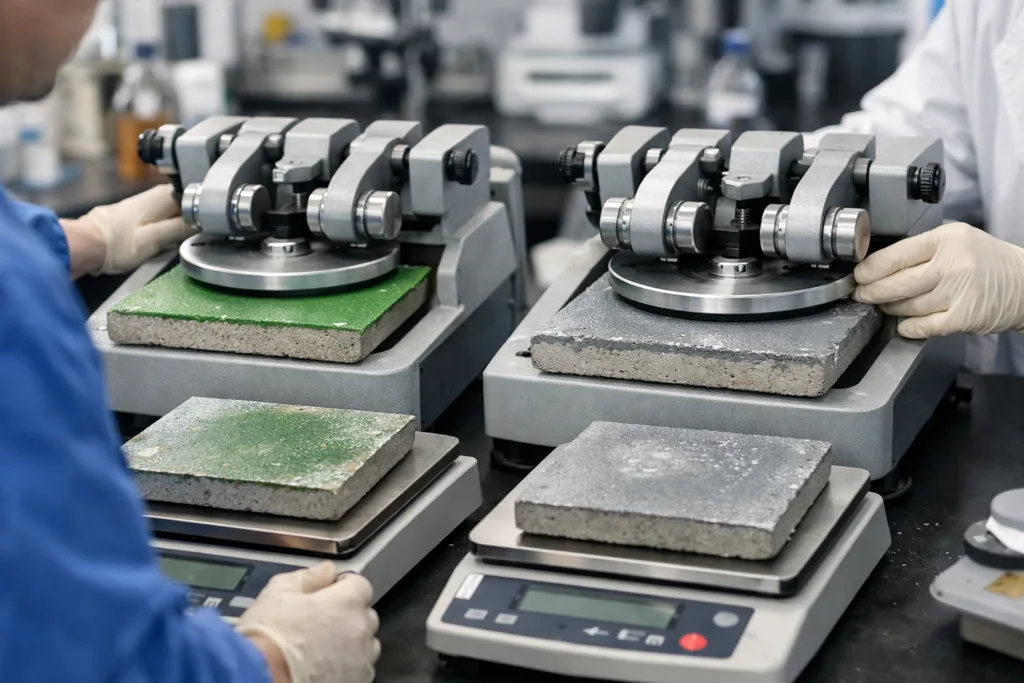
When selecting the best abrasion resistant floor coating, most decision-makers consider two popular chemistries: polyaspartic and epoxy. Both claim high durability, but their real-world performance—especially in standard abrasion tests—often reveals surprising differences.
Polyaspartic coatings are a class of polyurea derivatives. They use fast-reacting aliphatic isocyanates, resulting in rapid curing and impressive flexibility. Epoxies, on the other hand, rely on bisphenol-A or F and hardeners (often amine-based), delivering hard, tough finishes but requiring longer cure times. To compare these systems, manufacturers use standardized abrasion methods, like the ASTM D4060 Taber Abrasion test. In this test, coated samples spin under grinding wheels for set cycles, while technicians record wear loss in milligrams. Lower weight loss equals better abrasion resistance.
Test Case: Performance on Concrete
Imagine a 3,000 psi concrete slab finished with ZDSpoxy’s epoxy, then a matched sample coated in their polyaspartic system. After 1,000 Taber cycles with H22 wheels and 1 kg load:
- Epoxy: Avg. wear loss 70–110 mg
- Polyaspartic: Avg. wear loss 40–60 mg
The numbers show polyaspartic’s superior resistance to abrasion, outlasting most epoxies by up to 40%.
What Makes Polyaspartic Different?
- Fast cure (dry in 2–4 hours, use in 24 hours)
- Low VOC for healthier air
- High flexibility prevents micro-cracks
Polyaspartic’s molecular backbone absorbs impacts and abrasion better than the glassy matrix of classic epoxy. It resists tire marks, scuffs, and repeated scraping—key for commercial, industrial, and parking structure flooring.
Wear Testing Methods for Floor Coatings
Consistency matters. Labs use repeatable tests to measure abrasion resistance. The most trusted is ASTM D4060, but others like ASTM C501 (for concrete floors) and DIN 53754 (Europe) also appear in technical documentation. Typical procedures:
- Apply coating, cure fully (usually 7 days for epoxy, 48 hours for polyaspartic).
- Cut test panels from coated surface (100 mm x 100 mm recommended).
- Weigh panels before and after test cycles.
- Tabulate average mass loss.
Expert takeaway: Always compare coatings based on equivalent thickness and cure time for valid abrasion resistance data.
Hardness and Flexibility Data
Hardness rating uses the Shore D scale. ZDSpoxy’s floor epoxies often score 80–85 Shore D. Their polyaspartic systems reach 65–75, but support higher elongation before failure.
| Chemistry | Wear Loss (mg/1000 cycles) | Shore D Hardness | Best Substrates | Typical Uses |
|---|---|---|---|---|
| Epoxy (ZDSpoxy) | 70–110 | 80–85 | Concrete, metal | Factories, garages |
| Polyaspartic (ZDSpoxy) | 40–60 | 65–75 | Concrete, tile, old coatings | Parking decks, shopping centers |
Abrasion Resistant Floor Coating in Demanding Conditions
Real floors face impacts, dragged pallets, and cleaning machines. The best abrasion resistant floor coating resists scuffs, scratches, and both wet and dry abrasion. Here’s how polyaspartic and epoxy stack up in practical settings:
- Distribution warehouses: Polyaspartic extends floor life during forklift use and pallet movements.
- Auto workshops: Epoxies handle oil spills well but show wear lines after heavy traffic.
- Shopping malls: Polyaspartics provide rapid turnaround, letting stores reopen faster and reducing downtime.
Floor protection isn’t just about surface shine—it’s about long-term abrasion resistance and the ability to maintain structure under repeated load.
Surface Preparation: Keys to Maximum Abrasion Resistance
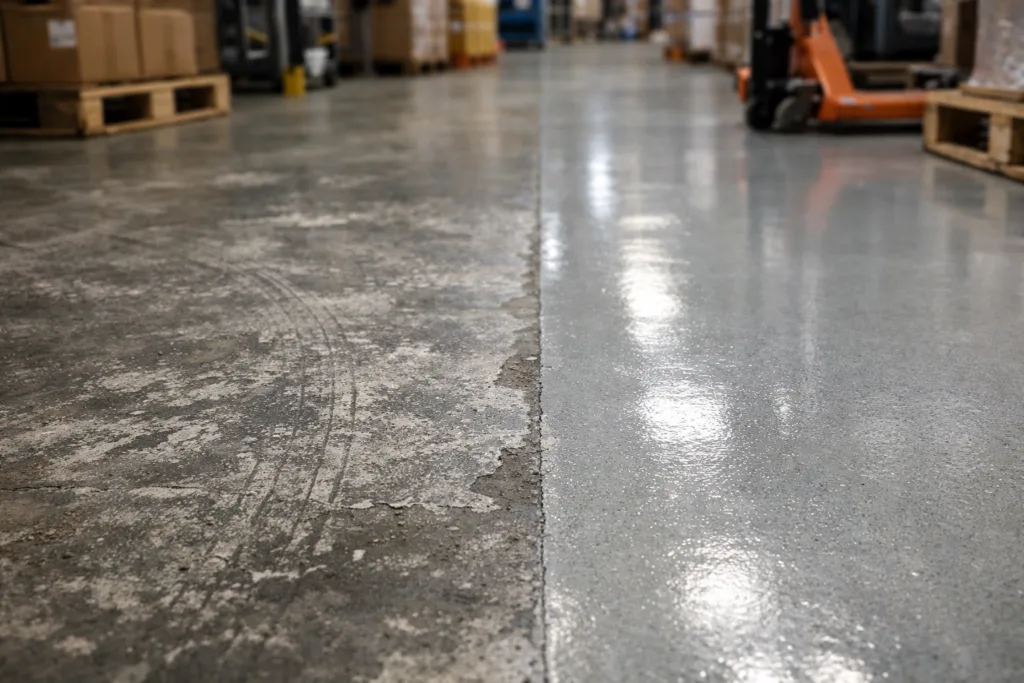
Even the toughest coating fails without proper surface prep. Follow these best practices for lasting results:
- Degrease concrete with alkaline cleaner and rinse well
- Abrade with diamond grinder or shot blast for anchor profile (CSP 3–5)
- Remove dust; check for moisture (below 4% recommended)
- Use adhesion promoters if coating on steel or tile
ZDSpoxy stresses the importance of humidity and temperature control—applying in the correct conditions ensures optimal film formation and maximizes abrasion resistance.
Polyaspartic vs Epoxy: Installation Experience
Polyaspartic coatings force contractors to work quickly. Pot life—the time they remain workable—can be as little as 15–45 minutes at ambient temperature. Epoxies offer longer open time (often 30–90 minutes), enabling more time to brush, roll, or squeegee over large areas. For complex layouts, a two-person team helps manage mixing and application. ZDSpoxy offers pre-proportioned kits to simplify the process.
Dispensing and Finishing
- Epoxy: Mix fully, lay in sections, spike roll to release bubbles.
- Polyaspartic: Use notched squeegee for consistent film, then back-roll; avoid puddling.
Air flow and temperature strongly affect cure speed and finish quality. Always follow technical datasheets for best results.
Long-Term Abrasion Performance
Abrasion tests predict durability, but real-world aging also matters. Polyaspartic coatings resist yellowing from UV exposure and remain flexible over time, which helps absorb shocks. Epoxies may turn amber and micro-crack after years in direct sunlight or high heat. Annual inspections—looking for wear strips and measuring mass loss—keep maintenance schedules tight.
Compliance and Quality Control
ZDSpoxy’s coatings pass ASTM B117 salt spray and thermal cycling tests. All systems meet REACH and RoHS standards, and include full SDS documentation for safe handling. Lab lot traceability ensures product consistency batch-to-batch.
Cost, Value, and Buyer Guidance
Investing in abrasion resistant floor coating pays off through reduced repairs and longer service life. Polyaspartics cost more per liter, but cut downtime and last longer. Epoxies offer budget-friendly protection but may need mid-life recoating in high-traffic zones.
- For heavy-duty industrial use: Choose polyaspartic for maximum abrasion and chemical resistance.
- For moderate traffic: Epoxy gives solid value, especially in dry indoor settings.
- Check with ZDSpoxy’s technical team for tailored recommendations based on your substrate and foot/wheel loads.
Always evaluate life-cycle costs—not just upfront pricing—when choosing an abrasion resistant floor coating.
Abrasion Resistant Floor Coating
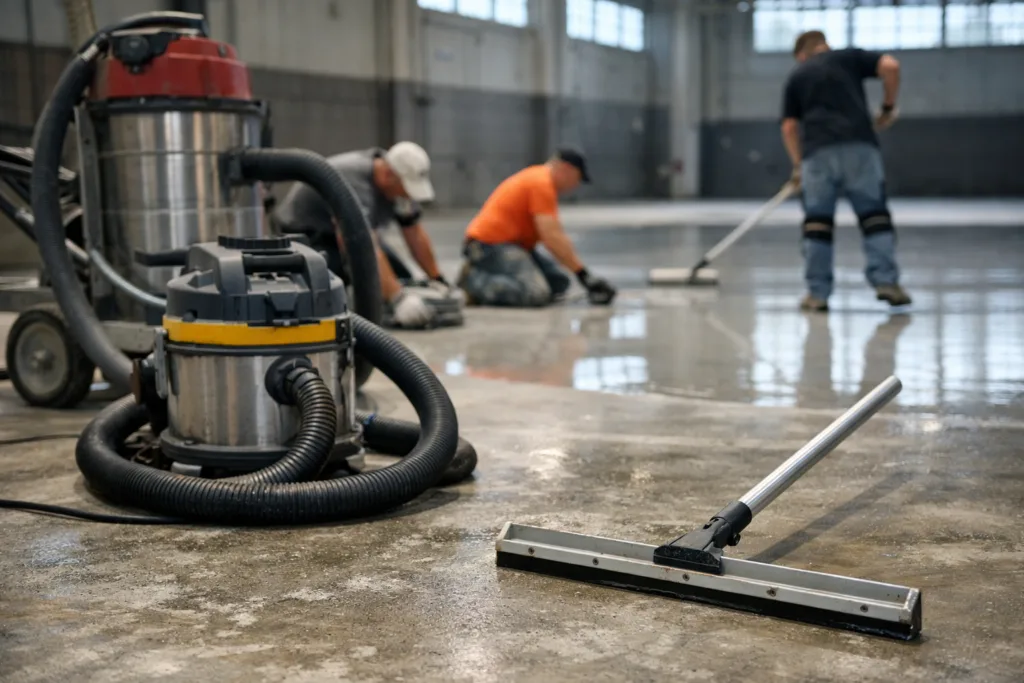
If your project demands floors that stay flawless under harsh conditions, both polyaspartic and epoxy offer strong solutions. Testing proves polyaspartic’s edge in abrasion resistance, rapid cure, and long service life. Epoxy remains a reliable workhorse for many sites but may show limitations in the toughest environments. For a high-traffic zone, consult ZDSpoxy and request abrasion data matched to your substrate and application method. Precision surface prep, correct mixing, and quality assurance guarantee the performance you expect.
Frequently Asked Questions
How is abrasion resistance tested for floor coatings?
Most labs use the ASTM D4060 Taber Abrasion test, which measures how much material a coating loses after set cycles under grinding wheels. Lower milligram loss means better abrasion resistance.
Which is more abrasion resistant: polyaspartic or epoxy?
Polyaspartic coatings generally provide higher abrasion resistance, outperforming epoxies by up to 40% in standard wear tests.
Can both polyaspartic and epoxy floor coatings handle heavy traffic?
Yes, both chemistries work for high-traffic floors. Polyaspartics last longer in extreme conditions, while epoxies suit moderate use.
Do polyaspartic coatings yellow or crack over time?
Polyaspartic floor coatings resist UV yellowing and micro-cracking better than traditional epoxies, staying flexible and clear for years.
How important is surface preparation for abrasion resistance?
Correct surface prep—like degreasing, abrading, and using adhesion primers—is critical to maximize any floor coating’s abrasion resistance and bond strength.
What should I consider when choosing an abrasion resistant floor coating?
Evaluate traffic level, downtime limits, substrate type, total lifecycle cost, and recent lab abrasion test data from your supplier before deciding.