
Introduction: The Importance of Floor Flatness for AGV Robots in Smart Factories
As manufacturing advances toward digital operations and smart factories, Automated Guided Vehicles (AGVs) have become vital in streamlining logistics, reducing labor costs, and boosting productivity. The performance of AGV robots hinges on one often overlooked factor: floor flatness. Without precise flatness and appropriate FF/FL numbers, AGVs may experience tracking errors, excessive wear, and dangerous collisions. Epoxy resin flooring, particularly from manufacturers like ZDSpoxy, enables consistency, durability, and flatness that meet or exceed these critical requirements.
Understanding AGV robot floor requirements is vital as industries adopt Industrial 4.0 principles, demanding robust automation and seamless material flow. We’ll explore the international standards for floor flatness, how these measurements are achieved, and why ZDSpoxy epoxy solutions optimize AGV functionality within smart factories.
AGV Robot Floor Requirements: Setting the Stage for Precision Automation

Modern AGV robots depend on floors that are exceptionally flat and level. Small deviations can result in navigation errors, reduced speed, and increased maintenance needs. Manufacturers must meet AGV robot floor requirements to ensure safe, efficient operations and compatibility with Industrial 4.0 automation frameworks.
AGV platforms require clean, smooth, and dust-free surfaces. Abrasions or unevenness may trigger sensor errors or impede drive mechanisms. Flooring should also resist chemical spills, impact, and moisture—characteristics delivered by advanced epoxy formulations.
Understanding FF Numbers and FL Numbers: Floor Flatness Defined
Floor flatness is defined using two key metrics: FF (Floor Flatness) and FL (Floor Levelness). FF numbers measure the local smoothness of a slab, while FL numbers quantify its overall slope over a long distance. Both are vital for AGV operations where sensor accuracy, alignment, and pathway tracking depend on uniform surfaces.
| Measurement | Meaning | Typical Requirement |
|---|---|---|
| FF | Local smoothness | ≥ 50 for AGV use |
| FL | Overall levelness | ≥ 35 for AGV use |
To achieve these numbers, advanced resin flooring systems are often applied and measured with laser scanning tools, ensuring each section meets or exceeds the set standard for AGV floors.
Measurement and Testing Methods for Floor Flatness
Industry best practices recognize three types of floor flatness testing: straightedge, Dipstick profiler, and laser-based F-number measurements. AGV facilities typically favor the F-number system due to its precision and repeatability. Testing is performed at multiple points post-installation and periodically during the floor’s lifecycle to guarantee ongoing performance.
Epoxy systems offer an advantage: their self-leveling properties and consistency minimize local dips and rises, providing optimal results during flatness testing. Flooring resin systems adapted for AGV pathways ensure that even after heavy usage, flatness remains within required tolerances.
The Role of Epoxy Resin in Achieving Superior Floor Flatness
Epoxy resins—especially those formulated for industrial floors—are prized for their exceptional leveling ability, abrasion resistance, and minimal shrinkage. Their chemical architecture allows for smooth finishes and controlled cure times, producing floors that remain flat and durable even under constant AGV traffic.
ZDSpoxy engineers epoxy solutions specifically for flatness-critical environments. By maintaining strict mixing ratios and controlled batch applications, ZDSpoxy resin installers mitigate exotherm, assure uniform thickness, and ensure a highly repeatable cure profile.
Smart Factory Demands: Integrating AGVs and Flooring Standards
Smart factories combine robotics, sensors, big data, and automation. The intersection of AGV deployment and flooring specifications is where operational efficiency meets physical durability. AGVs require optimal path tracking, minimal vibrations, and low mechanical resistance—all provided by floors with high FF/FL values.
As AGV density increases within smart facilities, even minor surface flaws can multiply maintenance costs and slow down material flow. Advanced flatness measures thus become a foundation for reliable automation.
Industrial 4.0: How Precision Flooring Drives Automation
Industrial 4.0 emphasizes digital transformation, connectivity, and robotics. For AGVs to operate reliably, physical infrastructure must match their digital intelligence. Flooring designed and laid to exacting FF/FL tolerances enables the real-world movement of automated systems, linking technology with tangible performance.
ZDSpoxy’s research-and-development approach optimizes formulation viscosity, working time, and pot life so that installation teams can consistently deliver floors matching these demands.
Key Flooring Characteristics for AGV Use
- High surface smoothness (FF number ≥ 50)
- Consistent levelness (FL number ≥ 35)
- Wear and impact resistance
- Non-slip finish as needed by AGV type
- Electrostatic discharge control (ESD, optional)
- Chemical and oil resistance for industrial environments
- Easy maintenance and cleaning
These are delivered through careful selection of wear-resistant polyurethane resin flooring and modern epoxy solutions.
Challenges in Achieving Optimal Floor Flatness for AGVs
The primary obstacles to AGV floor flatness are substrate inconsistencies, temperature variation, and application errors. AGVs are highly sensitive to irregular joints, undulations, or premature wear. Epoxy and polyurethane systems help tackle these issues by providing robust adhesion and filling surface defects.
However, dust, oil contamination, and improper substrate sealing remain risks. ZDSpoxy recommends batch consistency and viscosity control as crucial to achieving flatness goals in real-world sites.
Preparing the Substrate for AGV-Ready Resin Flooring
Preparation is fundamental. Concrete substrates must be cleaned, tested for moisture, and assessed for structural integrity. Oil contamination, often undetected, can severely hinder epoxy adhesion and flatness. ZDSpoxy’s expertise includes testing and treatment techniques for contaminated concrete—referenced in their guide on repairing oil-soaked concrete foundations. Proper primer selection ensures robust bond lines, avoiding future flatness loss.

Epoxy Resin Formulation: Customizing for AGV Traffic
Not all epoxy resins are suitable for AGV floors. Special consideration should be given to compressive strength, flowability, and shrinkage. Formulations for AGV applications must also balance exotherm and working time, ensuring installers can achieve full coverage without hot spots or cold joints.
ZDSpoxy’s technical team favors formulations that allow for repeatable mixing and controlled cure even under variable site temperatures, contributing to consistent flatness outcomes.
Implementing Self-Leveling Epoxy for Smart Factories
Self-leveling epoxies, combined with advanced installation techniques such as the spiked roller method, are pivotal for attaining top FF/FL values. These systems automatically correct micro-undulations and spread evenly, minimizing labor error. Routine testing following installation ensures the specifications are met and maintained.
Manufacturers may consult entry-level contractor’s guides for superior results with the spiked roller technique to optimize the application process.
Comparing Epoxy and Polyurethane Flooring for AGVs
| Property | Epoxy | Polyurethane |
|---|---|---|
| Flatness/levelness | Excellent | Very good |
| Wear resistance | High | Very high |
| Chemical resistance | Strong | Stronger (varies) |
| Flexibility | Low | Medium |
| Cure time | Moderate | Variable (fast or slow) |
Each material offers benefits, but epoxy’s self-leveling nature makes it a prime candidate for AGV pathway construction requiring highest flatness specifications.
Quality Control and Maintenance for AGV Flooring
Ongoing quality control is key for smart factories. Surfaces should be regularly inspected for abrasion, delamination, and chemical attacks. Maintenance schedules must address wear patterns caused by repeated AGV travel. Epoxy and polyurethane systems allow for simple patch repairs and recoating, extending service life and preserving FF/FL values.
ZDSpoxy Resin: Real-World Engineering Insights
From the engineering floor, ZDSpoxy emphasizes the importance of controlled mixing, disciplined application, and strict batch quality. Installers are advised to monitor viscosity, gel time, and air release during placement. Records are kept for each installation, ensuring traceable performance and compliance with flatness standards. Practical experience suggests that premature floor use or late curing can result in surface irregularities—avoidable with proper ZDSpoxy resin handling and site supervision.
Common Floor Defects and Their Impact on AGV Operations
- Surface undulations: cause AGV tracking errors
- Joint misalignment: increases vibration and maintenance
- Premature wear: leads to frequent epoxy repairs
- Contamination: reduces adhesion and flatness
Addressing these defects early preserves AGV performance and avoids costly downtime.
International Flooring Standards for AGV Robot Use
Global standards such as ASTM E1155 (F-number system), EN 1024, and ISO 6786 specify minimum flatness/levelness requirements for AGV-enabled floors. Compliance ensures AGVs operate smoothly and efficiently. Certified resin systems help factories meet strict audit requirements for automation readiness.
Case Study: Achieving FF/FL Compliance in an Industrial 4.0 Facility
In a recent upgrade of a smart manufacturing plant, the design team selected ZDSpoxy’s epoxy flooring for its proven flatness performance. Initial substrate cleaning, moisture testing, and primer application were meticulously executed. Flatness testing confirmed FF numbers upwards of 60 and FL beyond 40—far above minimum AGV specs. As a result, AGVs performed with increased speed and accuracy, reducing operational costs and maintenance.
Best Practices for New AGV Facilities
- Early substrate assessment and moisture testing
- Selection of AGV-specific resin system
- Controlled batching and mixing by experienced teams
- Routine flatness measurement post-installation
- Scheduled maintenance and repair with compatible resins
Addressing Surface Wear and Contamination: Long-Term Solutions
For surfaces exposed to frequent AGV traffic and industrial soils, antimicrobial and corrosion-resistant flooring systems should be considered for long-term durability. Antimicrobial resin flooring helps prevent microbial degradation, while corrosion-resistant finishes protect from chemical spills.
Summary Table: Flooring Requirements for AGVs vs Traditional Traffic
| Requirement | AGV Floor | Traditional Floor |
|---|---|---|
| FF/FL Values | ≥50/≥35 | ≥35/≥20 |
| Wear Resistance | High | Medium |
| ESD Control | Optional | Rare |
| Maintenance | Routine | Occasional |
| Chemical Resistance | Required | Preferred |
Integrating Floor Flatness Monitoring into Smart Factories
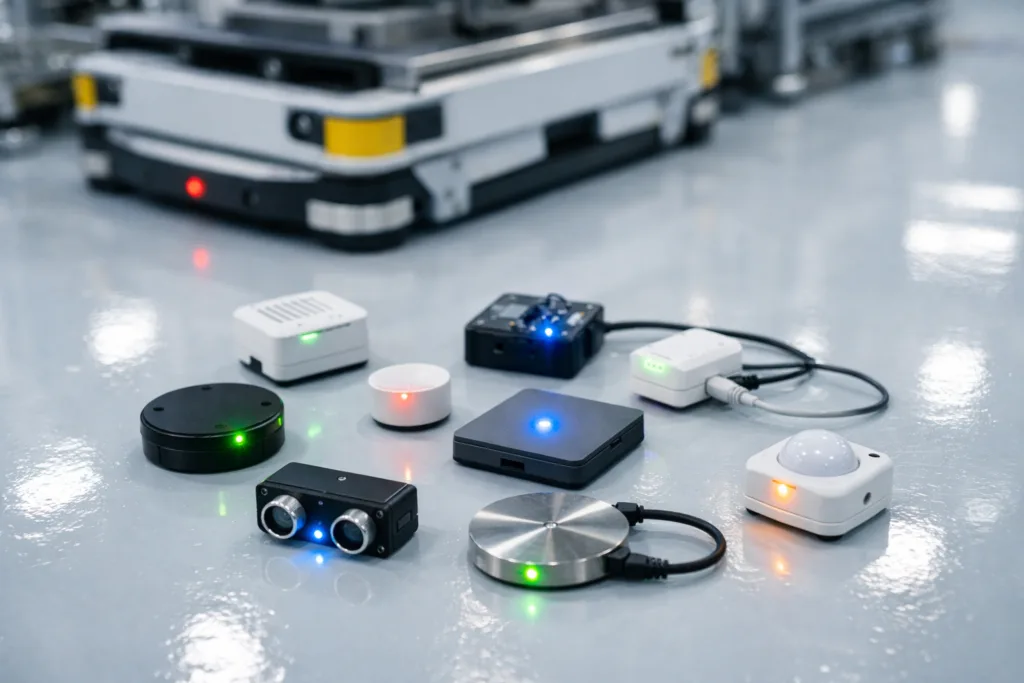
Modern facilities benefit from integrating continuous floor flatness monitoring. Laser-based systems and IoT sensors alert maintenance teams about new surface irregularities. Trending data enables predictive repairs, ensuring AGVs retain operational speed and precision without unexpected downtime.
Conclusion: Building the Foundation for Future Automation
Smart factories depend on the flawless interplay between automation hardware and supportive infrastructure. AGV robots need floors engineered to exacting FF and FL values, built from advanced resins such as those offered by ZDSpoxy. Manufacturers who invest in precision flooring reap the benefits of reduced downtime, greater productivity, and seamless automation. As Industrial 4.0 continues to evolve, the right flooring choices will remain a core driver of factory performance.
Frequently Asked Questions
What FF and FL numbers are ideal for AGV floors?
Most AGV operations require FF numbers of at least 50 and FL numbers of 35 or higher, ensuring smooth and accurate robot movement.
Why is epoxy resin favored for AGV flooring?
Epoxy resin delivers superb flatness, wear resistance, and easy maintenance, making it ideal for environments with high-precision AGV traffic.
How does floor contamination affect AGV performance?
Oil, dust, or unevenness reduces adhesion and flatness, leading to AGV tracking errors and higher maintenance costs if not properly addressed.
Can polyurethane resin flooring match epoxy flatness standards?
Polyurethane achieves similar flatness levels, with increased flexibility, but epoxy’s self-leveling properties are often preferred for critical AGV paths.
How is floor flatness monitored in smart factories?
Laser profilers and IoT sensors are used to measure and monitor floor flatness, quickly identifying issues that could affect AGV operations.
What steps ensure durable AGV-ready resin floors?
Substrate cleaning, moisture testing, correct primer and resin selection, and careful batch mixing guarantee lasting flatness and AGV performance.
Related Reading
- Epoxy Flooring Cost Breakdown and Budgeting for Next Year
- Resin vs Epoxy Flooring: Practical Industry Truths
- How to Restore Oil-Contaminated Concrete for Reliable Operation
- Master the Spiked Roller Method for Self-Leveling Success
- Protecting Industrial Flooring: The Power of Antimicrobial Resin Systems