
Introduction: The Critical Role of R-Rated Anti-Slip Floor Textures in Retail
In the dynamic world of retail flooring, achieving the perfect balance between customer safety and captivating design is more than a goal—it’s a non-negotiable standard. Retailers face daily challenges related to slippery surfaces, with the risk of slips and falls posing potential harm and legal implications. Anti-slip floor texture selection, governed by formal R-ratings (R9, R10, R11, R12, and R13), is a vital factor that shapes both the practical performance and visual appeal of commercial interiors. But what do these R-ratings mean for shop owners, and how do they influence the experience of tens of thousands of customers each day?
This article demystifies anti-slip floor texture grading, explores the pros and cons of R9 to R13 surfaces, and uncovers how innovative resin floor systems—like those pioneered by ZDSpoxy—can deliver safety without sacrificing stunning aesthetics. We’ll also explore regulatory requirements, practical site considerations, and real-world examples that illustrate the art and science of slip-resistant flooring in today’s retail spaces.
Decoding R-Ratings: What Do R9 to R13 Mean for Anti-Slip Floor Texture?
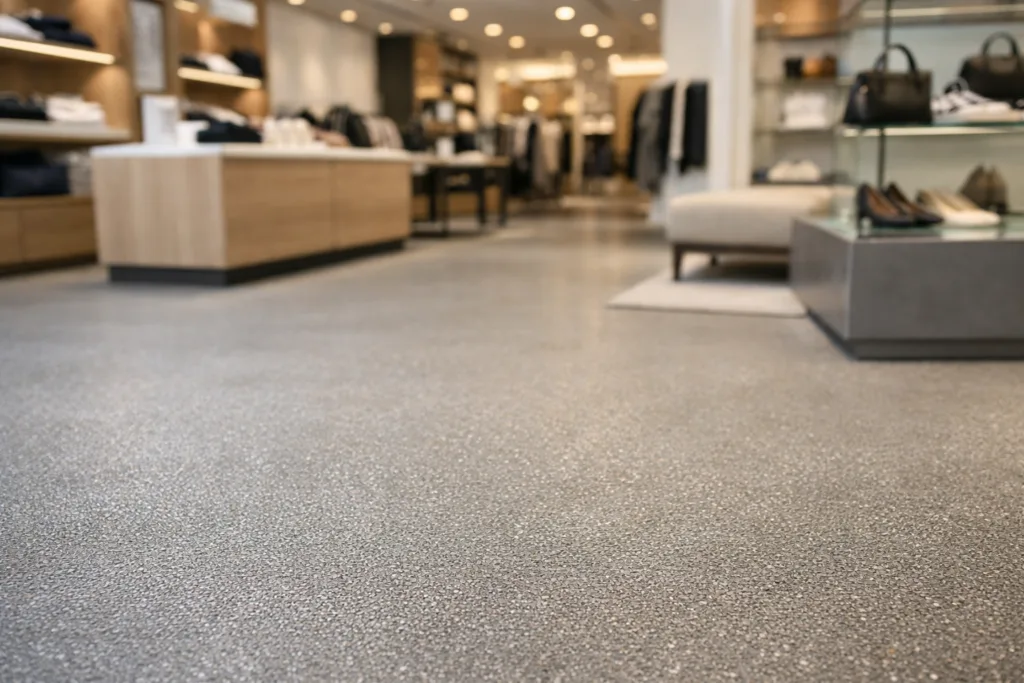
R-ratings arise from standardized ramp tests that measure the ‘slip angle’ at which a person walking on a flooring surface will slip. As the R number increases, so does the surface’s ability to resist slipping when contaminated with water or other substances. In retail settings, proper anti-slip floor texture selection based on R-ratings is a structural component of accident prevention.
| R-Rating | Slip Angle (°) | Typical Application |
|---|---|---|
| R9 | 6–10° | Low-traffic dry retail, showrooms |
| R10 | 10–19° | Retail aisles, boutiques, public areas |
| R11 | 19–27° | Entrances, coffee shops, light food areas |
| R12 | 27–35° | Food courts, wet cleaning zones, washrooms |
| R13 | ≥35° | Heavy-duty wet areas, kitchens, service access |
Why R-Ratings Matter: The Intersection of Safety Regulations and Customer Experience
Accidents in commercial spaces aren’t just costly—they’re preventable. Standards such as EN 16165 and DIN 51130 legally enforce slip resistance thresholds in public floorings according to use type. Retailers must specify anti-slip floor textures aligning with these requirements, or risk liability. Customer safety is at stake, and non-compliance can damage reputations.
But compliance doesn’t have to mean unattractive, industrial-looking floors. Today’s decorative flooring systems seamlessly blend anti-slip aggregates into vibrant or subtle visual designs, confirming that function and form can coexist attractively in busy retail venues.
The Science Behind R-Ratings Testing
To achieve an R-rating, flooring materials undergo a “ramp test.” An operator walks on an inclined plane coated with the candidate flooring, which is covered with engine oil. At the slip angle point, slip occurs, and the R-rating is assigned based on that measure. The test reflects real-world conditions, providing buyers with a scientific basis for floor specification. Higher R-ratings represent a more textured and robust anti-slip floor texture, but also involve subtle changes in look and feel.
Comparing R9 to R13: Safety, Aesthetics, and Everyday Trade-Offs
| R-Rating | Slip Resistance | Aesthetic Flexibility | Typical Location |
|---|---|---|---|
| R9 | Low | High (smooth, lustrous) | Luxury retail, low risk |
| R10 | Moderate | Medium (fine, clean finishes) | Common areas, shops |
| R11 | High | Good (subtle texture options) | Cafes, entrances |
| R12, R13 | Very High-Extreme | Varies (noticeable texture/grit) | Food zones, service corridors |
Designing Retail Floors: Balancing Aesthetics with Anti-Slip Needs
Retailers want their spaces to feel welcoming and luxurious, not harsh or industrial. When applying an anti-slip floor texture, designers and flooring specifiers must choose between subtle matte finishes (achievable with R9 and R10 coatings) or more visible “sandpaper” textures (needed for R12 or R13). The goal is to align aesthetic design dreams with customer safety expectations and legal compliance.
- Natural stone and resin-bound finishes offer granular anti-slip without sacrificing design impact.
- Color quartz and metallic effects present visual depth with underlying slip protection.
Where Each R-Rating Excels in Retail Settings
The right R-rating depends on shop location and use:
- R9 for showrooms or low-traffic boutiques with limited exposure to moisture.
- R10 and R11 for standard aisles, lobbies, and shopping centers.
- R12 and R13 in food courts, service routes, or where mopping is frequent.
Potential Consequences of Getting R-Ratings Wrong
Specifying the wrong anti-slip floor texture can lead to:
- Slips and falls, resulting in injuries or lawsuits
- Excessive cleaning difficulty or premature wear (if the texture is too aggressive)
- Customer dissatisfaction from “rough” feeling floors
Anti-Slip Aggregates: The Innovative Heart of Safe Retail Flooring
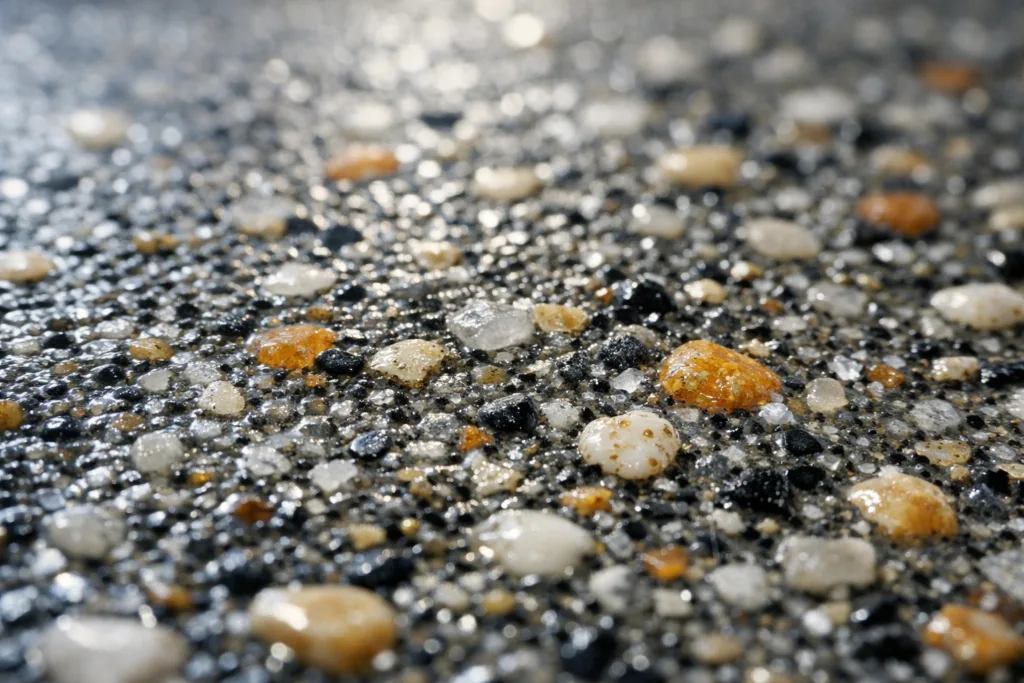
The choice of anti-slip aggregate is central. Modern resins allow for precision blending of fine or coarse aggregates—quartz, bauxite, colored sand—delivering safety without making the design look utilitarian or dull. ZDSpoxy’s research-driven formulations optimize aggregate selection for predictable grip and enduring beauty.
The Importance of Preparation: Surface and Primer Choice
For high anti-slip R-ratings to perform, surface prep and the right primer are essential. Moisture, oil, or dust contamination beneath a textured floor layer can cause delamination, hidden hazards, and rapid failure. Using primers like ZDS-1012ab Epoxy Primer for Concrete & Ceramic Floors ensures bond strength and system longevity, especially beneath sanded or broadcast anti-slip floors. This isn’t just product marketing—it’s been proven in thousands of commercial installations worldwide.
Application Methods: How Texture Is Created
Manufacturers offer several options for adding anti-slip floor texture during installation:
- Broadcasting dry aggregates into the wet resin coat, then back-rolling for an even spread.
- Premixing aggregates with the binder for uniform dispersion, especially in dense areas.
- Layering system approaches, where a high-traction midcoat, such as ZDS-3136AB-90 Epoxy Mid Coat, is followed by a clear topcoat to lock in safety and aesthetics.
Cleaning, Maintenance, and Longevity: Designing for Real-World Retail
An overlooked aspect of anti-slip flooring is how it survives daily retail reality. Textured surfaces require different cleaning protocols—aggressive textures can trap dirt, while overly smooth ones risk safety after spills. Lightweight systems may polish flat over time, losing rating performance. High-quality systems combine durability, easy maintenance, and slip resistance calibrated to the expected foot traffic and cleaning methods.
Case Study: A Fashion Retailer’s Transition from R9 to R12 Flooring
One major fashion retailer came to us after a series of slip incidents near fitting rooms. The existing polished floor (R9) was beautiful but hazardous whenever slight moisture was present. It was replaced with a subtle, color-matched R12 epoxy/quartz composite, improving safety scores and reducing incident rates to near zero—all without disrupting the signature look that made the brand unique.
Case Study: Upgrading a Food Court with R13 Anti-Slip Aggregates
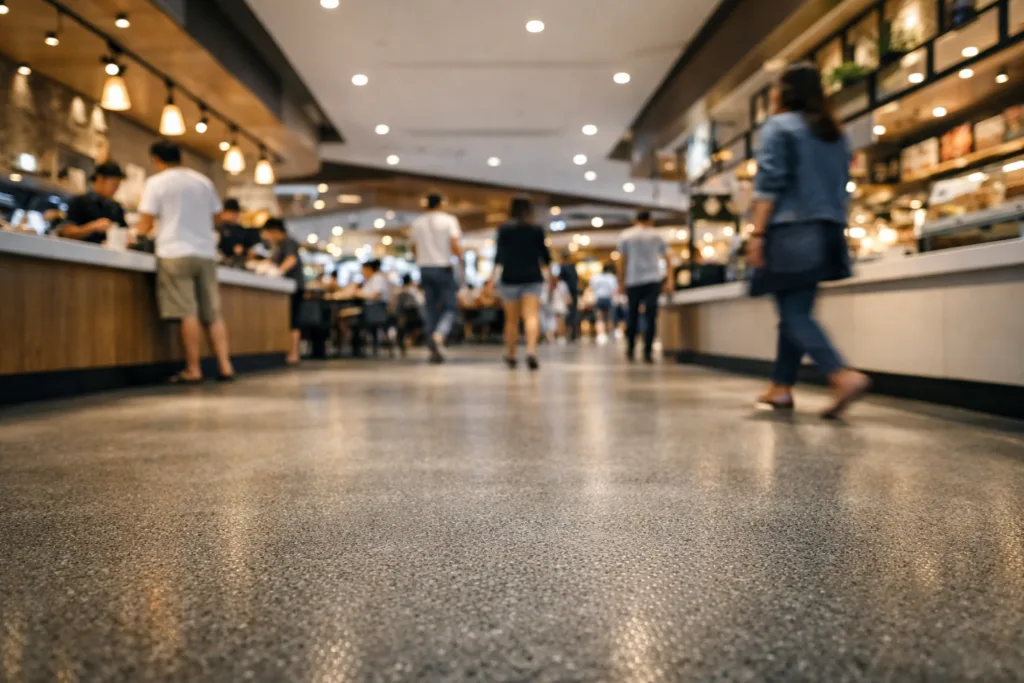
A shopping center food court faced ongoing slip/fall risk due to wet floors. After evaluating several solutions, ZDSpoxy engineers recommended an R13 system using a high-performance polyurethane mortar containing fine bauxite. The floor passed independent slip tests under heavy contamination, and the seamless matte design matched the mall’s modern aesthetic. Maintenance reports cite a drastic reduction in both incidents and cleaning downtime.
How ZDSpoxy’s R&D-Driven Approach Maximizes Real-World Performance
ZDSpoxy specializes in the measurable, repeatable selection of aggregates and binders. Our lab and site feedback consistently show that mixing ratio accuracy, aggregate graduations, and QC checks are just as important as design intent. Contractors and facilities managers see fewer callbacks when the surface design is matched to expected spill risks, cleaning routines, and substrate preparation methods. For those who want to understand more about system selection, explore our full flooring resin system solutions for data sheets and real-world test evidence.
FAQs on R-Rated Anti-Slip Floor Textures
How do I choose the correct R-rating for my retail space?
Consider foot traffic, exposure to liquids, cleaning practices, and local regulations. Consult technical guidelines and suppliers before choosing a rating.
Can I have an anti-slip floor texture that still looks modern and bright?
Absolutely. Today’s resin and aggregate blends allow seamless, customizable colors and finishes with both subtle and robust anti-slip performance.
Do higher R-ratings always mean rough surfaces?
Not always. R12+ ratings usually have a more noticeable texture, but with advanced aggregates and resin layering, the surface can remain visually attractive and comfortable.
Are there specific cleaning requirements for high R-rating floors?
Yes. Aggressive textures (R12, R13) require more frequent and thorough cleaning, often with rotary scrubbers and neutral detergents, to maintain their anti-slip properties.
Can I retrofit existing smooth floors to improve their R-rating?
Often, yes. Surface grinding and the application of anti-slip resin topcoats can upgrade the R-rating, if underlying substrate and adhesion are suitable.
Does ZDSpoxy offer site visits for slip risk assessment?
ZDSpoxy’s team provides practical guidance on-site, drawing on real-world data and test reports to recommend appropriate systems and aggregates for each unique environment.
Frequently Asked Questions
How do I choose the correct R-rating for my retail space?
Consider foot traffic, exposure to liquids, cleaning practices, and local regulations. Consult technical guidelines and suppliers before choosing a rating.
Can I have an anti-slip floor texture that still looks modern and bright?
Absolutely. Today’s resin and aggregate blends allow seamless, customizable colors and finishes with both subtle and robust anti-slip performance.
Do higher R-ratings always mean rough surfaces?
Not always. R12+ ratings usually have a more noticeable texture, but with advanced aggregates and resin layering, the surface can remain visually attractive and comfortable.
Are there specific cleaning requirements for high R-rating floors?
Yes. Aggressive textures (R12, R13) require more frequent and thorough cleaning, often with rotary scrubbers and neutral detergents, to maintain their anti-slip properties.
Can I retrofit existing smooth floors to improve their R-rating?
Often, yes. Surface grinding and the application of anti-slip resin topcoats can upgrade the R-rating, if underlying substrate and adhesion are suitable.
Does ZDSpoxy offer site visits for slip risk assessment?
ZDSpoxy’s team provides practical guidance on-site, drawing on real-world data and test reports to recommend appropriate systems and aggregates for each unique environment.
Related Reading
- How Shore D Hardness & Impact Resistance Influence Floor Longevity
- Epoxy versus Polished Concrete: 10-Year ROI Revealed
- 100% Solids vs. Water-Based Epoxy: Safe & Durable Floors
- Zero Odor Resin Flooring: The Game-Changer for Retail Spaces
- 6 Signs Your Waterproofing Is Failing—What Retailers Should Watch