
Introduction: Understanding Best Epoxy for Fiberglass Boat Repair
The search for the best epoxy for fiberglass boat repair isn’t just about picking a product off the shelf. It’s about understanding key performance factors—wet-out, adhesion, viscosity, thickening, sandability, and cure speed—that contribute to a reliable, long-lasting fix. Whether you’re fixing a hull, deck, or cabin, getting the right epoxy mix and application process is what separates a high-performance repair from a failure. This guide demystifies essential epoxy properties for GRP (Glass Reinforced Plastic) repairs, how to handle wet-out and thickening, and practical steps so your marine fix doesn’t let you down when it counts. Throughout, we’ll highlight specification-driven choices instead of brand hype, and link to commercial resources and technical guides for matching products to site conditions.
What Makes the Best Epoxy for Fiberglass Boat Repair?
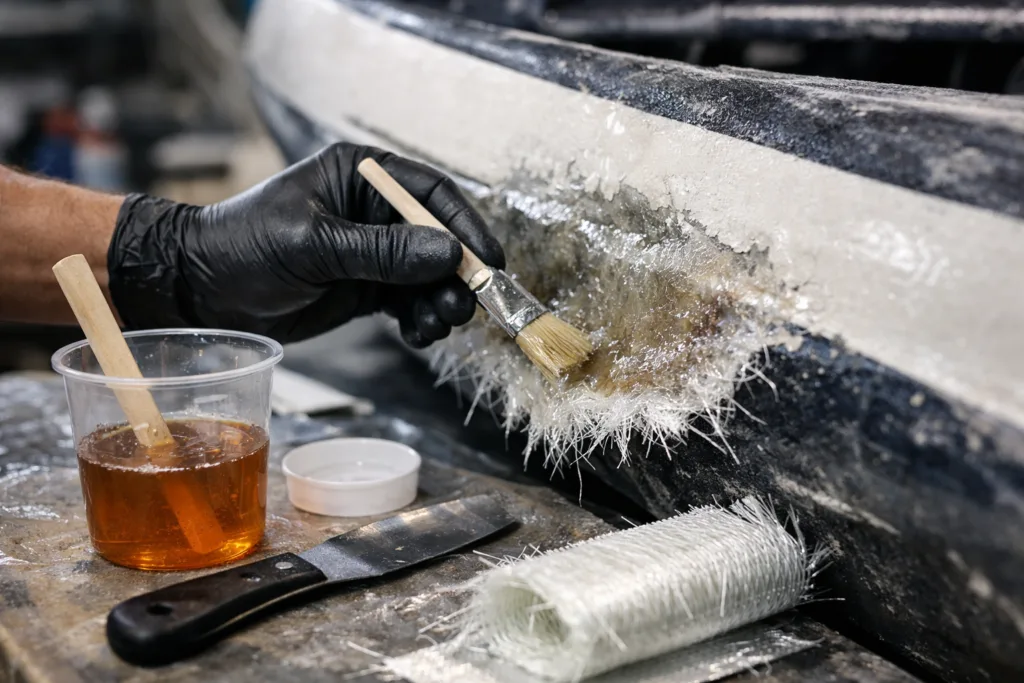
The best epoxy for fiberglass boat repair delivers reliable adhesion to GRP substrates, wets out cloth or mat without voids, cures fast enough for site schedules, can be thickened as needed, and finishes to a sandable surface. On the water, these properties are not optional—they’re essential. Let’s break down the performance fields you need to evaluate before beginning any repair.
Critical Performance Factors for GRP Repair
To achieve a durable repair, focus on key resin properties:
- Wet-out ability: The resin must penetrate and fully saturate both fiberglass cloth and mat, eliminating air pockets.
- Adhesion: Bond strength to cured and uncured fiberglass is central.
- Workable viscosity: Thin enough for wet-out, thickening options for gap filling.
- Sandability: Post-cure, the surface must be smoothable for painting or fairing.
- Cure speed: Fast enough to move through steps, but not so quick it’s unworkable.
Wet-Out Explained: Why Resin Consistency Matters
Wet-out is the process of saturating fiberglass cloth or mat with liquid epoxy to achieve a void-free bond. If the resin’s viscosity is too high, fibers clump and corners starve; too low and the resin pools or drips. Manufacturers design marine epoxy with a balance: enough fluidity to wick into glass, but enough body to stay put on vertical surfaces. For professionals, measuring pot life and flow on site ensures predictable results.
The Role of Adhesion in GRP Repairs
Fiberglass repair depends on the chemical bond between the epoxy and the substrate. Epoxy’s cross-linking reaction forms a tight interface, far stronger than polyester. However, surface prep is the real game: sanding, solvent cleaning, and timing the layup all enhance the final bond. If you want deeper guidance on marine epoxy’s bond mechanics, visit our marine epoxy resin manufacturer pillar for performance data.
Viscosity and Thickening: Matching Resin to Repair Task
Epoxy for boat repairs comes in multiple viscosities. For laminating cloth, thin resin flows into every fiber. For gap filling or shaping, thickened epoxy holds its form—especially on hull sides or overhead repairs. Practical fillers include colloidal silica for structure or microspheres for easy sanding. Experienced users mix in increments, always checking consistency before application.
Sandability: Preparing Surfaces for Paint and Fairing
Epoxy must cure to a hardness where it can be sanded easily but not brittle. If the resin is too hard, it gums up sandpaper or chips. If too soft, it smears and clogs. Ideally, marine epoxy should be sandable within 24–48 hours after cure depending on ambient conditions. Batch QC helps avoid unpredictable results.
Fast Cure and Working Time: Balance for Jobsite Rhythm
Marine epoxy systems are often formulated for faster cures than standard room-temperature systems. Still, cure speed needs to be balanced against workable pot life and jobsite realities. ZDSpoxy technical guides emphasize that ambient temperature, resin thickness, and batch size all strongly affect gel time and cure speed, sometimes more than the formulation itself. See our Pot Life vs Working Time vs Cure Time: The Essential Marine Epoxy Timing Guide for site-tested insights.
Choosing Cloth vs Mat for Fiberglass Repairs
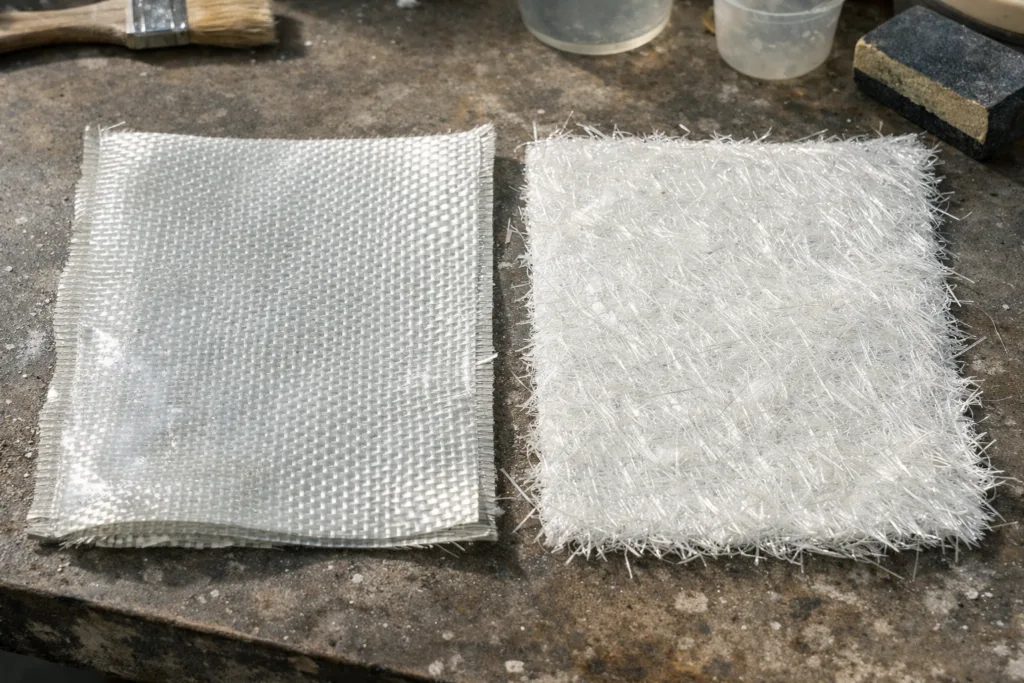
Cloth and mat serve different structural roles. Cloth (woven glass) yields strong, directional repairs, ideal for hulls and decks. Mat (chopped strand) offers bulk and gap filling, often used for quick fixes or uneven surfaces. The best epoxy for fiberglass boat repair wets out both types effectively, but application technique must be adjusted. For large repairs, alternate layers to optimize strength and thickness.
Epoxy Resin vs Polyester Resin in Marine Repair
While many boatbuilders use polyester resin for original construction, epoxy dominates for repairs due to superior mechanical properties, chemical resistance, and bond strength. Unlike polyester, epoxy’s tolerance for post-cure prepping and working is better, especially for builds exposed to moisture or high stress. See our Marine Epoxy vs Regular Epoxy: The Top Five Performance Gaps Explained for a deep comparison.
Mix Ratio Discipline: How to Prevent Cure Failure
Epoxy chemistry relies on careful mix ratios. Deviations—too much or too little hardener—lead to incomplete cure, tacky spots, or brittle repairs. Use calibrated pumps or scales, stir thoroughly, and never guess batch sizes. For more on ratio mastery, check our guide Epoxy Mix Ratio Mastery: Preventing Marine Cure Failure with Weight & Volume Techniques.
Site Preparation: Ensuring Reliable Adhesion
Even the best epoxy for fiberglass boat repair won’t stick properly to oily, dirty, or gloss surfaces. Sand the repair area with medium-grit paper, wipe clean with solvent, and avoid moisture during layup. If temperature falls, condensation can disrupt adhesion. For more surface prep tips, see What Material Will Epoxy Not Stick To? The Boat Surface Prep Checklist.
Mini Process Walkthrough: GRP Repair with Epoxy
- Assess damage and mark repair area.
- Remove loose glass and sand edges to a feathered profile.
- Clean substrate, cut cloth/mat patches to fit.
- Mix epoxy, saturate glass, apply in layers. Alternate cloth and mat as needed.
- Allow cure for recommended time, trim excess, check bond.
- Thicken resin for fairing or filling if needed.
- Sand smooth after full cure, prime for paint/finish.
Designing Epoxy Systems: What Manufacturers Test
Epoxy manufacturers—including those with advanced R&D like ZDSpoxy—test for multiple fields: viscosity, gel time, Shore D hardness, adhesion to aged and new glass, and post-cure sandability in varied climates. Batch consistency is quality controlled with viscosity, gel time, and bond testing, often logged per shipment. Plant-floor insights and site feedback then refine formulations to fit both hot and cold marine environments.
Primer Selection and Its Importance
On challenging substrates or when patching old wood/fiberglass, primer choice is critical. Epoxy primers such as ZDS-2060AB provide high bond and low odor, sealing surfaces for main resin layers. Primers also prevent air bubbles and delamination, especially on porous or degraded glass.
Gap Filling and Fairing with Epoxy Putty
Epoxy putties like ZDS-189 are useful for filling dents or gouges before glassing. These putties are easy to mix, apply, and sand after cure. Select high-thixotropic formulations for vertical repairs or quick fixes.
Underwater Repair: Fast Cure Solutions
Sometimes boat repairs can’t wait for dry dock. Rapid-setting epoxy putties such as ZDS-1002AB are engineered for underwater fixes—delivering quick adhesion and cure even below the waterline. Real-world trials show these products offer lasting repairs if prep is thorough and cure times are respected.
Temperature and Cure: What to Watch in Marine Repairs
Ambient temperature strongly influences epoxy cure. Cold slows gel and set; high heat accelerates but can cause exothermic spikes—leading to cracks, voids, or uneven finish. Practical experience says mixing smaller batches and monitoring temperature are critical in real environments. ZDSpoxy engineers recommend site-specific batch sizing and monitoring for predictable results.
Safety and Handling: PPE and Ventilation Best Practices
Epoxy resins can irritate skin and lungs if handled without care. Wear gloves, goggles, and work in a ventilated area. Store hardeners separately and follow expiration dates for best results. Safety data sheets provide full chemical and handling guidance.
Batch Consistency and Shelf Life: Avoiding Surprises
Epoxy shelf life is real—expired resin can fail to cure or bond. Always check date codes, store in cool, dry spaces, and test viscosity before large-scale application. ZDSpoxy tracks batch QC from manufacture through distribution as part of responsible supply chain practice.
Repairing Structural vs Cosmetic Fiberglass Damage
For structural repairs (cracks, holes), prioritize cloth or mat layering and use neat resin for best adhesion to the substrate. Cosmetic repairs (chips, scratches) often benefit from epoxy putty or thickened resin—speeding sanding and finishing.
Signs of Epoxy Cure Failure and Rapid Diagnosis
Sticky spots, cloudy finish, or persistent brittleness signal incomplete cure or ratio errors. Rapid diagnosis—checking batch date, ratio, and site conditions—lets you regroup and correct before major failure. See our cure troubleshooting guides for step-by-step help in the field.
Waterproofing and Chemical Resistance in Marine Applications
Epoxy’s water and chemical resistance are critical for marine repairs exposed to salt, fuel, and sunlight. Testing in salt spray chambers and immersion conditions validates these performance fields for every batch and formulation.
Comparison Table: Key Marine Epoxy Properties for GRP Repair
| Property | Why It Matters | How to Evaluate |
|---|---|---|
| Wet-out | Eliminates air pockets for strong bond | Saturate sample glass; check for voids |
| Adhesion | Prevents delamination | Shear/peel tests; field bond checks |
| Viscosity | Allows easy handling, configurable | Flow measures; batch mixing checks |
| Sandability | Allows smooth finish | Manual sanding after cure |
| Cure Speed | Fits site schedule | Pot life, gel time, full set |
Best Epoxy for Fiberglass Boat Repair
Ultimately, the best epoxy for fiberglass boat repair solves jobsite problems with reliable wet-out, strong adhesion, flexible viscosity, fast curing, and easy sanding. Focus on specs—test resin batches, read manufacturer data, and match features to site specifics. Avoid brand-only choices; use technical comparisons and real-world trials as your guide.
Conclusion: Practical Takeaways for Marine Fiberglass Repair
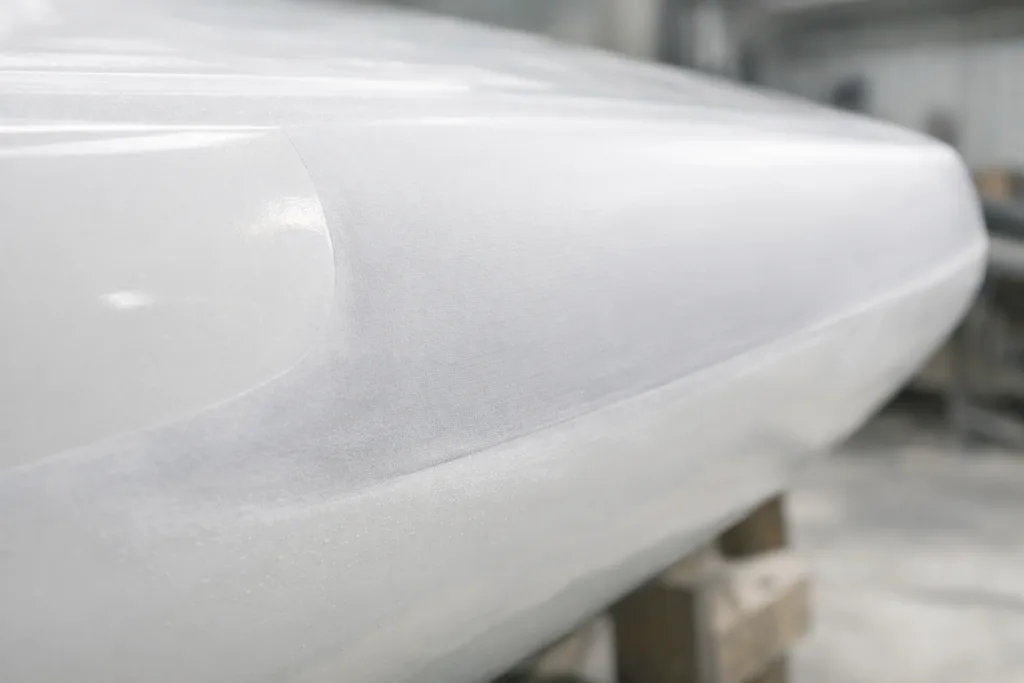
Choosing epoxy for your GRP repair is a spec-driven process, not guesswork. Evaluate wet-out, adhesion, viscosity, sandability, and cure speed before making your decision. Prep surfaces thoroughly, mix with ratio discipline, and test before scaling up. Technical resources and manufacturer insights bring the jobsite wisdom you need. As the marine industry evolves, reliable epoxy ensures your repairs are built to last.
Frequently Asked Questions
What is wet-out in fiberglass repair?
Wet-out is the process of thoroughly saturating fiberglass cloth or mat with epoxy resin. It ensures full fiber penetration and a strong, void-free bond.
How do I thicken epoxy for vertical repairs?
Mix in fillers like colloidal silica or microspheres as recommended by the manufacturer. Add slowly until the desired consistency holds shape without sagging.
What is the ideal sandability window for marine epoxy?
Epoxy is usually sandable within 24–48 hours after curing, depending on ambient temperature, batch size, and site conditions. Always test before finishing.
Can epoxy be used below the waterline for boat repairs?
Yes, fast-cure marine epoxy and putty can be used underwater, provided surface prep is thorough and instructions are followed for cure and bonding.
What is the safest way to handle and mix marine epoxy?
Wear gloves, goggles, and mix in a ventilated area. Use exact ratios, keep batches small for predictable cure, and read safety sheets before starting.
How do I ensure maximum adhesion with epoxy on fiberglass?
Sand the repair area, clean thoroughly, avoid moisture, and apply epoxy within recommended working times to achieve a strong chemical bond.