
Best Marine Epoxy Resin: How to Choose for Repairs, Coating & Laminating
Marine environments are demanding. Water, UV rays, salt, and mechanical stresses can quickly break down weak repairs or coatings. That’s why selecting the best marine epoxy resin isn’t simply a matter of picking a popular brand—real success comes from matching performance to your application: repair, bonding, coating, or laminating. This comprehensive guide explains the critical resin properties, how these impact field results, and provides a practical matrix for project-specific selection. Whether you’re refurbishing a wooden hull, sealing a fiberglass deck, or bonding hardware, the right engineering decision prevents premature failures and wasted labor.
Understanding Marine Epoxy Application Scenarios
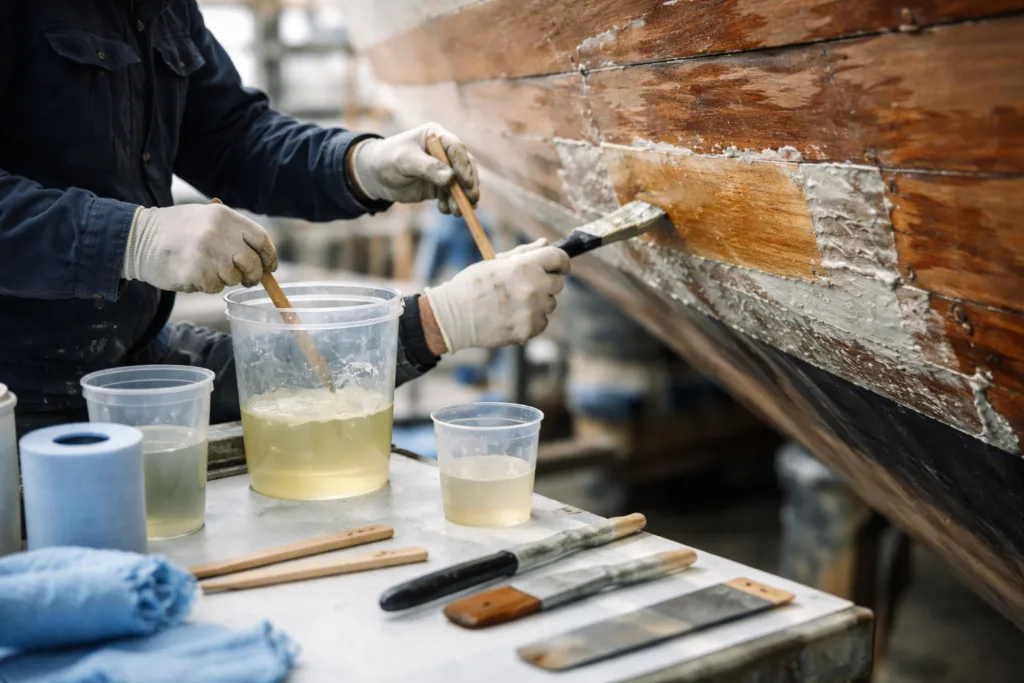
The type of project you’re tackling shapes every resin choice. Below are the four core use cases for marine epoxy, each presenting distinct requirements. Recognizing these upfront helps avoid costly trial and error down the line.
- Repairs (Structural & Cosmetic) – Patching voids, rot, cracks, and gouges in wood, fiberglass, or composite. Prioritizes gap-filling, high mechanical strength, sandability.
- Bonding – Joining dissimilar surfaces or laminating core to skins. Adhesion strength, short clamp time, and flexibility are vital.
- Protective Coating – Barrier layers against water, salt, and UV. Focuses on surface wetting, chemical/UV resistance, gloss retention.
- Laminating (Fiberglass/Epoxy Composites) – Building new structures or repairs using glass, carbon, or aramid fabrics. Requires controlled viscosity, pot life, and superior wet-out.
Let’s explore how each goal impacts your selection criteria.
Key Selection Standards for Best Marine Epoxy Resin
Instead of comparing brand names, let’s break down the real engineering parameters behind “best” resin selection, applicable to all marine environments:
- Viscosity – Determines flow, gap filling, and surface wetting. Thinner is easier for laminating; thicker for void repair.
- Pot Life (Working Time) – Must balance handling needs and cure speed. Shorter for urgent repairs, longer for large applications.
- Cure Time – Impacts downtime and workflow sequencing on-site.
- Hydrolytic Stability/Water Resistance – Core to marine use; low water absorption and stable mechanicals after immersion.
- UV Resistance/Low Yellowing – Essential for exposed decks, masts, and topsides to prevent weakening/discoloration.
- Adhesion to Substrate Type – Compatibility with wood, fiberglass, steel, aluminum, or plastics.
- Sandability/Post-cure Handling – For fairing, finishing, and overcoating without gumming.
This checklist is your technical yardstick. Let’s see how these factors play out in each main application area.
Marine Epoxy Formulations: How Chemistry Impacts Results
Epoxy resins achieve their performance through careful formulation. The base resins, curing agents, and modifiers all influence the properties outlined above. For example:
- Solvent-free formulations ensure low VOC and maximum build thickness, important for structural wood rot repair.
- Modified amine hardeners provide better UV and chemical resistance required in marine epoxy resin waterproof projects.
- Rubber or filler modifications may add flexibility and thixotropy, supporting vertical or overhead repairs but may reduce ultimate strength.
Always review the technical datasheet, not just generalized claims, for clarity on each attribute.
Choosing Marine Epoxy Resin for Repairs
Cracked beams, soft spots, rotten transoms, or fiberglass gouges require resin with precise gap-filling, quick green strength, and excellent sandability. In these cases, the marine epoxy for repair must combine moderate viscosity (to bridge voids), forgiving pot life (for staging), and fast cure for return-to-service.
- Resins like ZDS-189 Wood Repair Putty are engineered for easy troweling and minimal slump on vertical wood or composite repairs.
- For underwater or wet repairs, rapid-set epoxies such as ZDS-1002AB Rapid Underwater Putty offer a practical solution where dewatering is not feasible.
Checking pot life, cure time at expected jobsite temperatures, and post-cure hardness will ensure the repair is both strong and easily finished for painting or fairing.
Best Practices: Surface Preparation & Compatibility
Substrate prep is often the make-or-break step. Residual grease, dust, or moisture blocks proper adhesion. Each type of surface—wood, glass fiber, metals, or aged composites—requires a unique process:
- Wood: Sand to bare grain, vacuum off dust, dry thoroughly. Do not over-dry as splintering reduces wetting.
- Fiberglass: Sand to a dull finish, clear away amine blush, test for bond capabilty if old coatings are present.
- Metal: Abrade to bright finish, degrease with solvent, apply suitable primer for corrosion protection.
These steps prevent delamination and ensure the resin’s mechanical performance translates into real-world durability.
Coating & Laminating: Maximizing Marine Epoxy Resin Waterproof and UV Resistance
For decks, hulls, or above-waterline laminates, resin must provide a continuous, pinhole-free barrier that stands up to immersion and solar exposure. Here’s what to prioritize:
- 100% Solids Content – Ensures maximum build and no solvent porosity, leading to lasting waterproofing.
- UV Inhibitors – Specialized marine epoxy resin UV resistance formulations reduce yellowing and chalking.
- Viscosity Control – Flow to wet-out fabric but not drain away.
Some marine epoxies (and polyaspartic finishes) add extra layers of UV performance; read more about these applications in polyaspartic UV coating strategies for marine use.
Laminating with Marine Epoxy Resin: Tips for Success
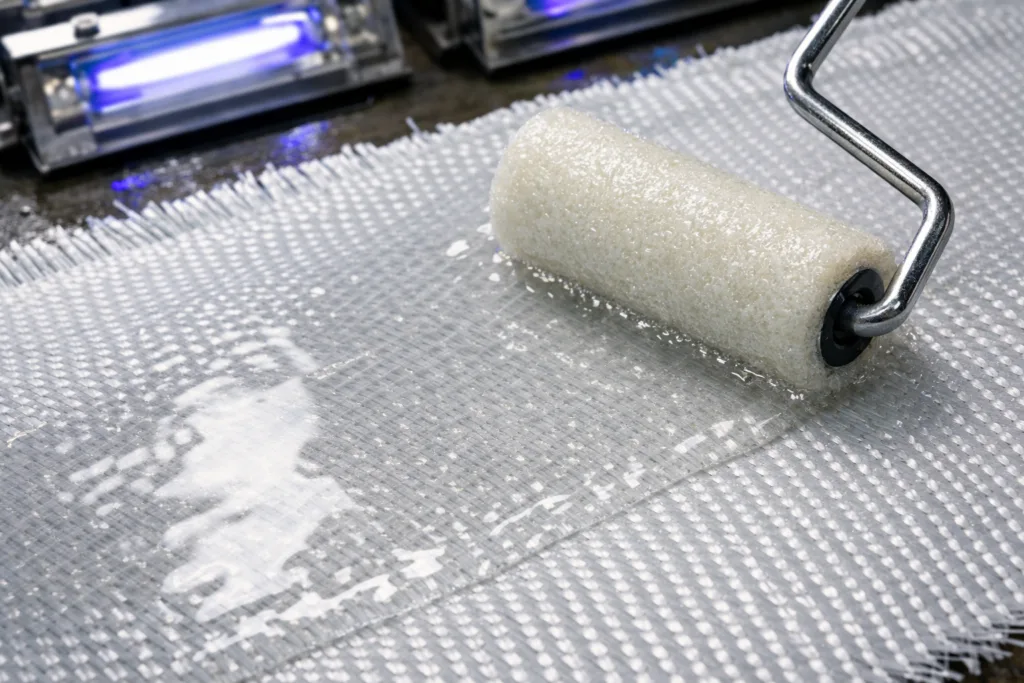
Laminating involves overlaying fabric (like fiberglass) with resin to create high-strength, lightweight parts—transoms, bulkheads, stringers, even full hulls. Here’s what separates a successful lamination from one plagued by weak spots or air voids:
- Medium-Low Viscosity: Promotes full fabric saturation without excess run-off.
- Controlled Pot Life: Gives enough working time for wet-out, rolling, and consolidation.
- Compatible Hardener: For thicker layups or warmer climates, choose slow hardener to prevent exotherm damage.
Refer to the section on mix ratio mastery for practical advice on batch sizing and error-free blending during multi-stage laminations.
How to Read Marine Epoxy Technical Data Sheets
Technical sheets provide the real criteria you need for comparing resins. Look for:
- Mix ratio (by weight/volume)
- Viscosity (mPa.s or cps at 25°C)
- Pot life (minutes at room temp, for a certain volume)
- Cure schedule (time to sand/overcoat at 25°C)
- Shore D hardness (mechanical rating at full cure)
- Water absorption, % (usually after 7 or 14 days immersion)
- UV resistance and yellowing index (Delta E or visual after exposure)
- Adhesion (bond strength to wood, FRP, steel, concrete)
Comparing these frankly between products gives much more realistic application results than marketing blurbs.
Engineering Case Study: Matching Epoxy to Onsite Conditions
Consider a project where you need to repair and reinforce a wood/composite deck exposed to both splash zone water and sunlight. Key requirements include:
- Strong gap-filling for deep repairs
- Low yellowing and high UV resistance
- Good wetting on both wood and glass fabrics
- Practical working time at 30°C
Reviewing technical data, you would target:
- Medium/high viscosity putty for initial repairs
- A 100% solids, low-yellowing marine epoxy resin formulated for boats for overall recoating and fabric layup
- A compatible UV-resistant clear coating or topcoat for final finish
When temperatures rise or application is in direct sun, slow hardener versions may be essential to prevent exothermic cure damage. Field trials with sample kits and controlled small-area testing are standard engineering best practice before scaling to the whole project.
ZDSpoxy Insight: Real-World Handling of Marine Epoxy Resin
From a technical manufacturing standpoint, ZDSpoxy engineers emphasize the discipline in mixing and batch control for marine epoxy installations. Batch viscosity, mixing accuracy by weight, and real-time pot life observation must be adhered to, especially in hot or humid environments. Field experience shows most failures trace back not to the resin’s chemistry itself, but poor ratio controls, contaminants in the substrate, or rushing the process during cure. For mission-critical repairs, always conduct a small test patch and record temperature/humidity, then scale up with confidence. Plant QC logs can verify batch-to-batch consistency of resin and hardener, reducing surprises onsite.
Comparison Table: Matching Marine Epoxy to Applications
| Application | Recommended Properties | Typical Product/Type |
|---|---|---|
| Rot & Structural Repairs | High viscosity, good gap filling, sandable, fast cure | Repair Putty, Rapid-Set Epoxy |
| Bonding (Laminated Timber/Joints) | Medium viscosity, high adhesion, flexible, moderate pot life | Two-part Structural Epoxy Adhesive |
| Coating/Barrier Layer | Low viscosity, high solids, waterproof, UV resistant, glossy | Clear Marine Epoxy, Polyaspartic Topcoat |
| Fiberglass Laminating | Very low viscosity, wet-out, slow/medium pot life, low exotherm | Laminating Epoxy System |
Frequently Seen Issues: Marine Epoxy Pitfalls and Remedies
Even the best marine epoxy resin can see compromised performance if critical steps are overlooked:
- Mixing Inaccuracy – Off-ratio blending leads to soft or brittle cures. Use proper scales and measure by weight when possible.
- Poor Substrate Wettability – Waxy, oily, or damp surfaces defeat adhesion. Meticulous cleaning and, where needed, a primer coat, restore bond performance. For guidance, see how to select the right primer.
- Timing Errors – Exceeding pot life or applying in direct sun can result in gelation before application or air entrainment.
- Inadequate UV Protection – Always topcoat clear/white epoxies with a dedicated UV-blocking layer if sun-exposed.
Field Checklist: Steps to Success with Marine Epoxy Resin
- Define the application area (repair, bond, coat, laminate).
- Consult the project’s mechanical and environmental demands (water immersion, sunlight, abrasion).
- Match epoxy properties (viscosity, pot life, UV, hydrolytic stability) to scenario.
- Prepare substrate as per material best practice.
- Mix strictly by weight/volume ratio from the supplier (test batch first).
- Apply within the working window, monitor for environmental changes.
- Finish and sand only after full cure. Overcoat quickly if undercoating is at risk of contamination.
Best Marine Epoxy Resin
The best marine epoxy resin isn’t universal—but it is always the one that fits your job’s scenario, ensures waterproofing and UV stability, and meets safety as well as application ease. Choose with engineering discipline rather than marketing claims. This way, whether you’re patching rot, lining a bilge, or building out a composite structure, your work will deliver durability that stands up to the harshest marine conditions.
Conclusion: Mastering Marine Epoxy Resin Selection
With thoughtful selection rooted in engineering need—rather than trend or convenience—you ensure both integrity and longevity in marine builds and repairs. Match scenario, check technical properties, and respect jobsite realities. This discipline transforms marine epoxy resin from mere repair material to a foundation for resilient, safe, and beautiful marine surfaces. Looking ahead, this approach will set the benchmark for future waterproofing, coating, and composite work in marine environments. Carefully reading datasheets, field-testing in real-world weather, and committing to best practices at every stage will pay lasting dividends for any boat owner, contractor, or fabricator.
Frequently Asked Questions
What makes an epoxy resin truly “marine grade”?
Genuine marine epoxy resins are formulated to resist water absorption, withstand salt spray, maintain strong adhesion to common marine surfaces, and offer enhanced UV resistance and low yellowing, making them ideal for boats and marine repairs.
Can I use standard epoxy for boat repairs?
While standard epoxies may bond or fill minor voids, they lack the hydrolytic stability and UV resistance of marine-specific resins—resulting in premature breakdown or unsightly yellowing under real water exposure.
How can I ensure the strongest bond for marine epoxy repairs?
Proper surface preparation—removing oil, dust, and moisture—and strict mixing ratio control are essential for maximum bond strength. Testing a small area before full application is always recommended.
Will marine epoxy resin turn yellow in the sun?
High-quality marine epoxies have added UV inhibitors and stabilizers for low yellowing, but unprotected resin may eventually discolor. Applying a UV-blocking topcoat offers the best defense for surfaces exposed to sunlight.
How do I know which epoxy type is best for my application?
First define whether you’re repairing, bonding, coating, or laminating. Then match resin properties like viscosity, working time, and UV stability to your project’s needs—reference technical datasheets for specifics.
Is it safe to use marine epoxy indoors?
Most marine epoxies are low in VOCs and safe for indoor use with basic ventilation and PPE. Always follow safety data sheet guidance and allow for adequate cure time before placing areas back in service.
Related Reading
- Unlock Marine Grade Epoxy: Properties & Performance Checklist
- Simple Steps to Master Marine Epoxy Pot Life & Working Time
- Critical Insights: How Temperature Affects Marine Epoxy Curing
- Marine Epoxy vs Regular: Top 5 Differences for Contractors
- Seven Essential Marine Epoxy Properties Every Repair Needs