
Introduction: Revealing the Hidden Costs of Cheap Epoxy
Cheap epoxy hidden costs are a growing concern for contractors, facility managers, and homeowners aiming to save money upfront. However, picking bargain epoxy often introduces overlooked expenses—lower coverage rates, more labor, and risky re-coating situations. These can transform ‘affordable’ decisions into expensive headaches. In this article, we’ll explain the technical reasons behind these pitfalls and equip you to recognize the genuine long-term value of quality epoxy products.
What Is Cheap Epoxy?
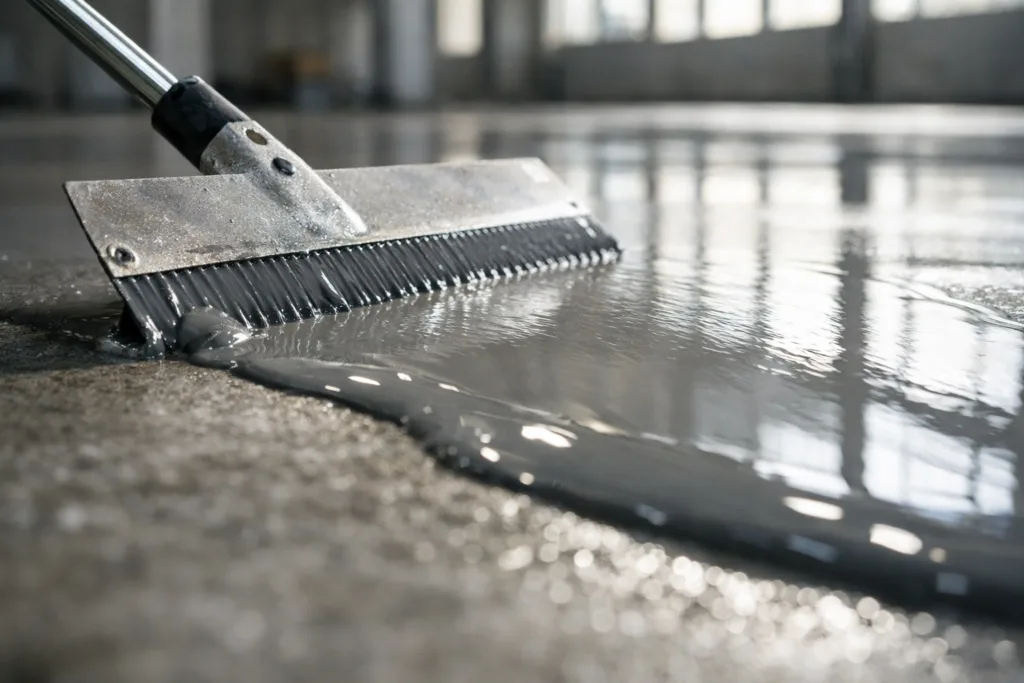
Cheap epoxy refers to floor coatings or adhesives marketed at below-standard prices, usually featuring reduced resin content and increased fillers. While tempting for budget projects, their performance often pales compared to professional-grade resins. Whether for residential garages or industrial floors, choosing the lowest price can backfire—especially when hidden costs emerge during installation and maintenance.
Cheap Epoxy Hidden Costs Explained
The hidden costs of cheap epoxy go far beyond initial purchase price. Contractors frequently underestimate the financial, safety, and operational consequences. Let’s break down the most common contributors:
- Low coverage rates: More material is needed to achieve desired thickness.
- Labour escalation: Extra applications increase working hours and costs.
- Re-coating risks: Quality issues may compromise adhesion and durability.
- Premature failure: The need for early replacement increases total project cost.
For more information on resin system solutions, see Flooring Resin Systems.
Chemical Composition: Why Cheap Epoxy Fails
Cheap epoxy often substitutes a portion of resin with fillers like talc, silica, or calcium carbonate. These reduce manufacturing costs but also decrease mechanical strength, chemical resistance, and self-leveling properties. High percentages of fillers may result in reduced coverage rates and poor film integrity.
Coverage Rate Breakdown: Cheap vs Quality Epoxy
| Product Type | Average Coverage Rate (m²/L) | Typical Thickness | Repeats Needed |
|---|---|---|---|
| Cheap Epoxy | 5-7 | 150-200 µm | 2-3 |
| Quality Epoxy | 7-9 | 250-300 µm | 1-2 |
Higher filler content in cheap products means you need more coats for satisfactory protection. While the price per litre looks appealing, total material and labor add up quickly.
Re-coating Risks with Cheap Epoxy
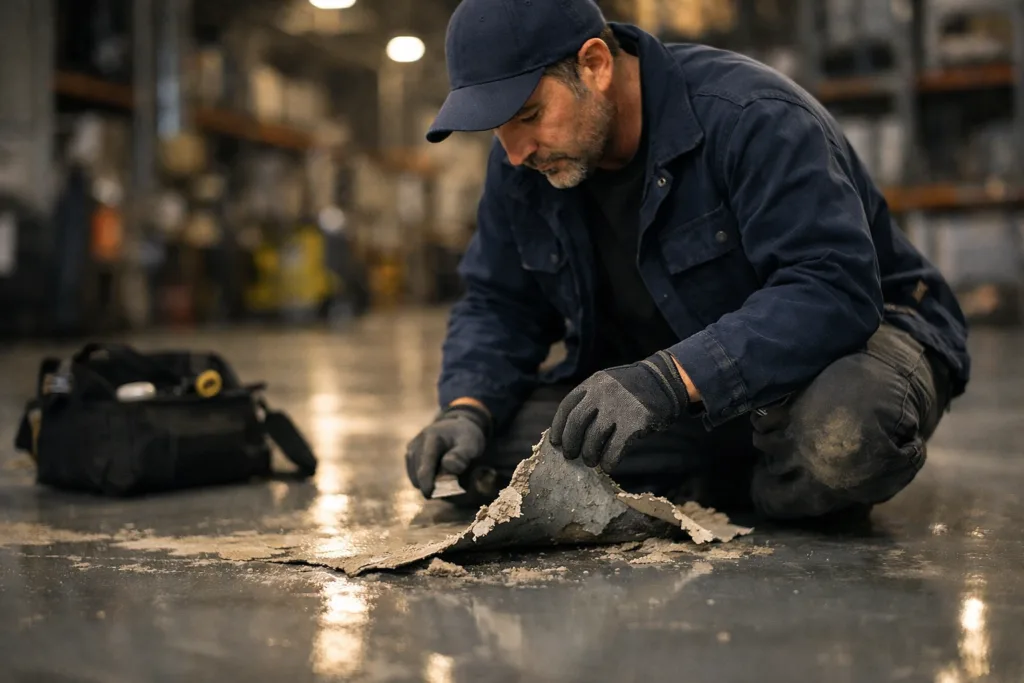
Re-coating is especially problematic with low-quality products. Multiple layers create adhesion challenges, and inconsistent surface curing can lead to delamination or soft spots. Contractors must test each coat for tack-free status before proceeding, unpredictably extending project timelines. Frequent re-coating increases labor costs and can result in finish defects.
Labor Costs: The Hidden Multiplier
Labor is often the largest expense on epoxy projects. Cheap epoxy’s reduced coverage and repeated coatings multiply installation time. Add in extra prep work (e.g., sanding and cleaning failed coats), and the savings vanish.
Material Waste: Costs Beyond the Purchase Price
Wasted material is another unplanned expense. Unusable batches, overmixing, or discarded layers all contribute to higher operating costs. Professional-grade epoxies are engineered with batch consistency in mind, reducing waste and risk.
Long-Term Durability: Cheap Epoxy’s Downfall
Poor durability means more frequent maintenance. Cheap epoxies tend to yellow, peel, or degrade under foot traffic, chemicals, or sunlight. For long-lasting protection, quality resins are more cost-effective over time. ZDSpoxy formulations are engineered to resist yellowing and UV exposure, standing up to harsh environments.
Comparing Premium Epoxy Solutions
Premium products like ZDS-1012ab epoxy primer for concrete deliver reliable coverage, strong adhesion, and minimal need for repeat coatings. Investing in quality reduces hidden expenses and ensures better site results.
Technical Performance Trade-Offs
When evaluating epoxy, consider compressive strength, flowability, viscosity, and gel time. Cheap products often have lower Shore D hardness and reduced chemical resistance. For more comparisons, see ZDS-105 water-based acrylic epoxy primer for concrete and ceramic floors.
Failure Risks: What Happens When You Re-coat Cheap Epoxy?
Re-coating low-grade epoxies can result in unpredictable failures:
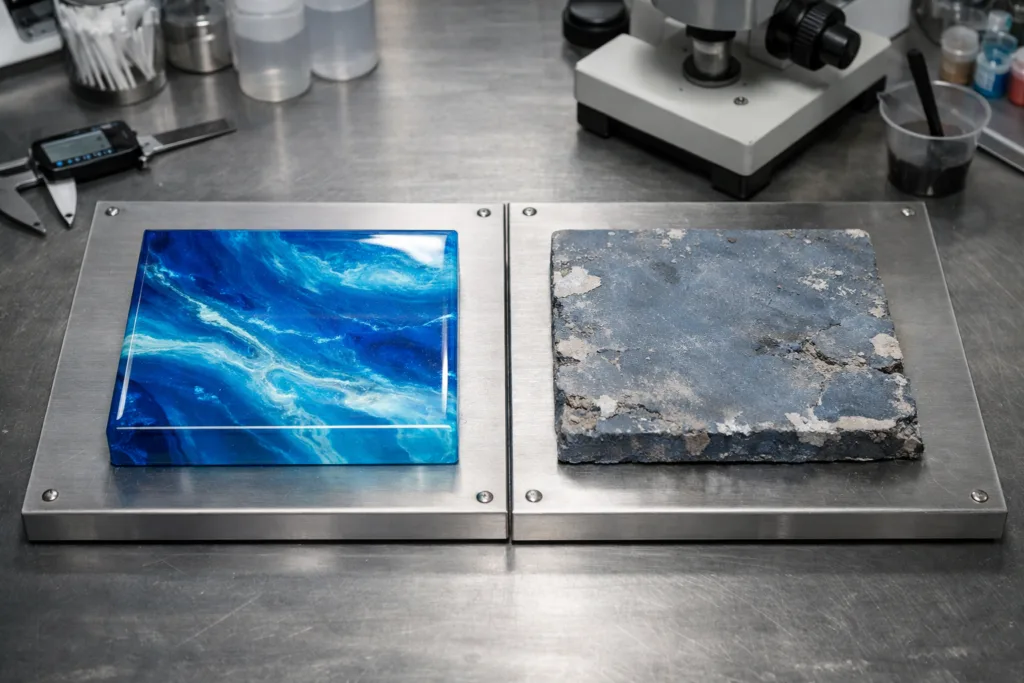
- Delamination: Layers separate under stress.
- Intercoat adhesion problems: Weak chemical bond between layers.
- Surface contamination: Residual dust, oil, or cleaning agents hinder cures.
- Soft spots: Poor resin-to-hardener ratios lead to unreacted regions.
Real-World Example: Commercial Garage Floor
Consider a medium-sized commercial garage. Using cheap epoxy resin increases coating repeat cycles and labor. After one year, visible wear, yellowing, and delamination require expensive repairs. By contrast, a high-quality system with fewer applications outlasts, reducing downtime and ongoing costs.
Installation Timing: How Cheap Epoxy Delays Projects
Low-grade products can extend projects by hours or days. Extended wait times between coats, slow curing, and surface prep between re-coating delay completion. Tight schedules become impossible, frustrating clients and teams.
Contractor and Facility Manager Insights
Experienced installers report the same pattern: bargains lead to callbacks, warranty claims, and lost productivity. Facility managers prefer quality systems for lower lifecycle costs and easier upkeep.
ZDSpoxy Perspective: Mixing & Application Discipline
On the manufacturing floor, ZDSpoxy engineers focus on repeatable batching, precise mixing ratios, and viscosity control. Proper batch testing ensures consistent gel times, minimizing risk during large projects. Using quality resin means fewer site surprises and predictable performance. Following rigorous mixing discipline is key to avoiding soft spots and ensuring every batch meets technical benchmarks.
Quality Control and Testing: How Manufacturers Prevent Failures
The best resin manufacturers—like ZDSpoxy—run batch-level QC checks: Shore D hardness, salt spray resistance, and adhesion testing. These quality investments help contractors trust performance and minimize long-term maintenance.
Environmental and Safety Costs
Cheap epoxies may not meet VOC standards or safe handling guidelines. Proper products are engineered for safer indoor air quality and easier transport/storage. Exposure to excess solvents or poor-cure byproducts adds another layer of hidden risk.
The Value Proposition: Upfront Savings vs. Lifetime Costs
Choosing cheap epoxy can result in upfront savings of 10-20%. But add repeat applications, extra labor, waste, and early replacement, and costs often double or triple.
| Cost Element | Cheap Epoxy | Quality Epoxy |
|---|---|---|
| Material | Lower | Moderate |
| Labor | Higher | Lower |
| Re-coating | Frequent | Rare |
| Durability | Poor | Excellent |
| Total Lifecycle Cost | High | Low |
How to Spot Cheap Epoxy (Checklist)
- Read technical data sheets for filler content
- Check Shore D hardness and chemical resistance
- Ask for QC and batch testing documentation
- Calculate true coverage rates (per coat, per batch)
- Seek trusted manufacturer guidance
Summary: Making Smart Epoxy Choices
Hidden costs matter. While cheap epoxy seems attractive, its lower coverage, increased re-coating, and hidden risks can drive up total project costs. Investing in quality resins brings savings in labor, maintenance, and durability. The performance gap is clear—know your options and choose wisely for stable, professional results.
Frequently Asked Questions
How does filler content affect epoxy coverage rates?
High filler content reduces resin density, meaning you need more material and coats to reach proper thickness. This increases material and labor costs.
Can cheap epoxy cause adhesion failures when re-coating?
Yes, low-quality epoxies often have unpredictable cure times and weak chemical bonds between coats, raising the risk of delamination or soft spots.
Why does labor cost increase with cheap epoxy?
Extra coatings, extended cure times, and more surface prep lead to higher labor hours, negating any material savings.
What visible signs indicate poor durability of cheap epoxy?
Common signs include yellowing, peeling, cracks, and areas where the topcoat starts to wear or degrade under normal use.
Are there health or safety risks with cheap epoxy?
Certain cheap epoxies may contain excessive VOCs or unreacted chemicals, creating health and compliance issues indoors.
How can contractors ensure they are buying quality epoxy?
Check technical specs, demand QC testing records, review batch consistency, and consult reliable manufacturers for site-specific recommendations.
Related Reading
- The Essential Steps for Choosing an Epoxy Primer—Avoid Delamination
- 15 Methods to Prevent Epoxy Yellowing in Solar-Exposed Floors
- How Shore D Hardness Defines Epoxy Floor Longevity
- Safety & Durability: Comparing 100% Solids vs. Water-Based Epoxy
- Maximize Commercial Garage Floor Lifespan and Spill Protection