
Introduction: The Realities of Commercial Garage Flooring
If you manage an automotive detailing bay or a busy repair shop, your floors never get a break. Vehicles roll in and out nonstop, leaving behind more than just dust—they deposit rubber scuffs, oil spills, and stubborn fuel stains. In this article on Commercial Garage Flooring: Maximizing Tire Mark Resistance and Handling Fuel Spills, we uncover practical, field-tested solutions for keeping your space clean, safe, and professional-looking—all while standing up to the daily barrage of tire marks and hazardous spills. You’ll learn how the right epoxy flooring choices, built with advanced chemistry and site-savvy installation, can solve these problems long term.
Understanding Commercial Garage Flooring Challenges
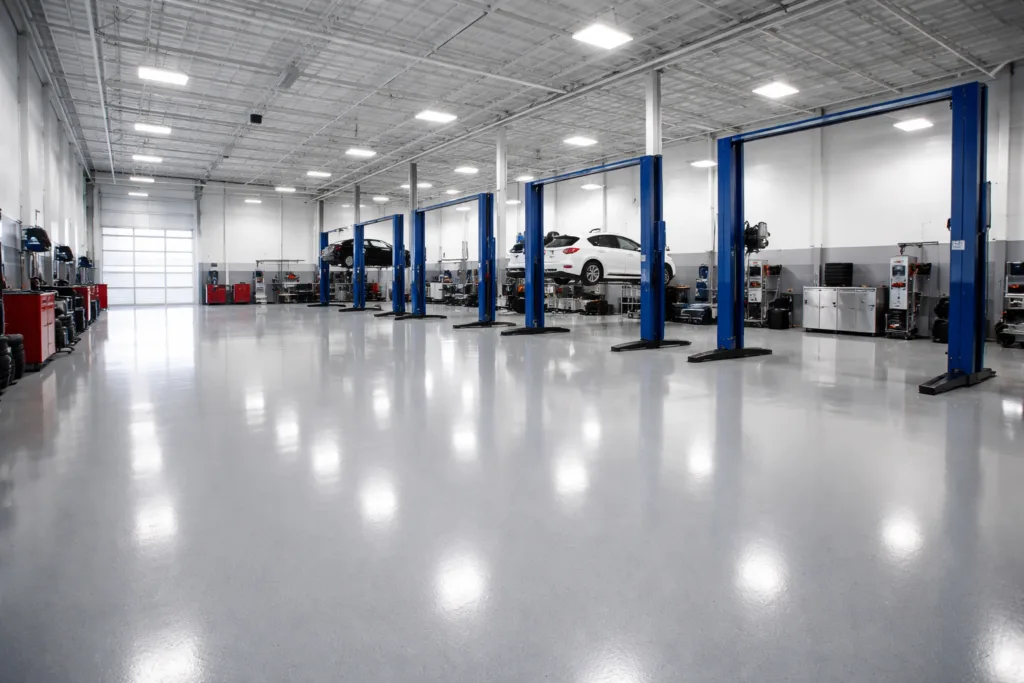
Commercial garage flooring is subject to extreme abuse. Between the daily rush of vehicles, frequent tool drops, and constant movement of lifts or trolleys, these surfaces must be tough, resilient, and easy to maintain. Most concrete slabs absorb stains easily and get etched by strong automotive chemicals, while cheap coatings flake or yellow after only a few months. Shops that focus on aesthetics and safety need floors that can resist tire marks from high-performance rubber compounds and survive surprise gasoline or hydraulic fluid leaks.
Why Tire Marks Are Tough to Remove
Tire marks form when hot, soft rubber compounds react with unprotected or inadequately sealed floors. This is made worse by repeated wheel rotations or parking, which literally burn tread compounds into the surface. Because automotive service locations see higher vehicle turnover and hotter tires than home garages, tire staining is more aggressive and persistent. Choosing chemical-resistant resin flooring makes a noticeable difference, since these advanced epoxy systems block rubber migration and simplify cleaning.
How Fuel Spills and Chemical Leaks Threaten Your Floor
Gasoline, brake fluids, lubrication oils, and coolants can all damage traditional flooring. Many of these liquids seep into hairline cracks or porous surfaces, leading to dark stains, sticky residues, and even surface delamination. In addition, some chemicals degrade generic floor coatings, causing bubbling or peeling. For any shop, handling chemical spills quickly isn’t just about appearance—it’s about operational safety and avoiding slip hazards or long-term corrosion.
Epoxy and Polyurethane: The Industry’s Gold Standards
Among professional installers, epoxy and polyurethane coatings stand out for their exceptional resistance to chemicals and abrasion. These two systems create dense, crosslinked surfaces that stop liquid from soaking in and block rubber transfer. They can be customized for extra skid-resistance, heavy load capacity, or quick turnarounds. Polyurethane, in particular, offers excellent flexibility for areas with temperature swings, while epoxies deliver unbeatable adhesion and wear resistance for static environments.
What Sets Premium Epoxy Flooring Apart?
Not all epoxies are created equal. ZDSpoxy’s commercial-grade flooring resins are engineered for extreme durability, proper cure-rate control, and chemical resilience. This formula ensures minimal discoloration from fuels, even after repeated clean-ups, and reliably prevents tire marks from becoming permanent scars on your floor. For automotive shops needing lasting value, investing in advanced flooring resin systems pays off with reduced downtime and simplified cleaning routines.
Comparing Common Garage Flooring Materials
| Flooring Material | Tire Mark Resistance | Chemical Resistance | Longevity |
|---|---|---|---|
| Basic Concrete | Poor | Poor | 5-10 years* |
| Epoxy Coating | Excellent | Excellent | 10-20+ years |
| Polyurethane Coating | Very Good | Excellent | 10-15 years |
| Vinyl Tiles | Fair | Poor | 5-8 years |
| Polished Concrete | Moderate | Good | 8-12 years |
*Depends on maintenance and exposure
Factors That Affect Tire Marking
Several variables influence whether tire marks stick for good or clean up easily:
- Type of vehicle tires (performance tires are softer)
- Temperature of the tire at contact
- Type and porosity of flooring
- Frequency and type of cleaning
- Chemical makeup of the floor coating
Best Practices for Preventing Tire Marks
To prevent tire marks, select resins with proven chemical resistance and ensure proper installation. Keep surfaces clean of dust and oil, as these increase rubber transfer. Applying a quality clear topcoat, such as a high-gloss polyurethane or epoxy polyurethane topcoat, adds another layer of defense.
Handling Fuel and Chemical Spills: Step-by-Step
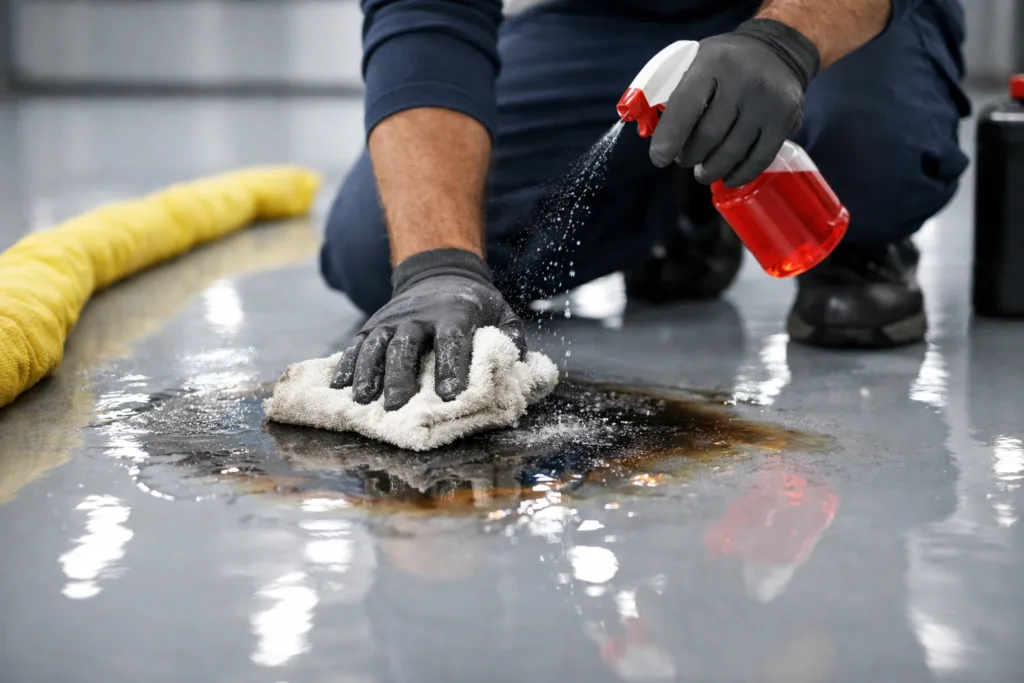
- Contain and absorb: Use absorbent pads to control spread
- Clean quickly: Wipe, sweep, or use a neutral pH cleaner to remove residue
- Inspect for damage: Check for swelling, stains, or delamination
- Maintain regularity: Institute routine maintenance checks and cleaning to avoid deep stains
Application Matters: Professional vs. DIY
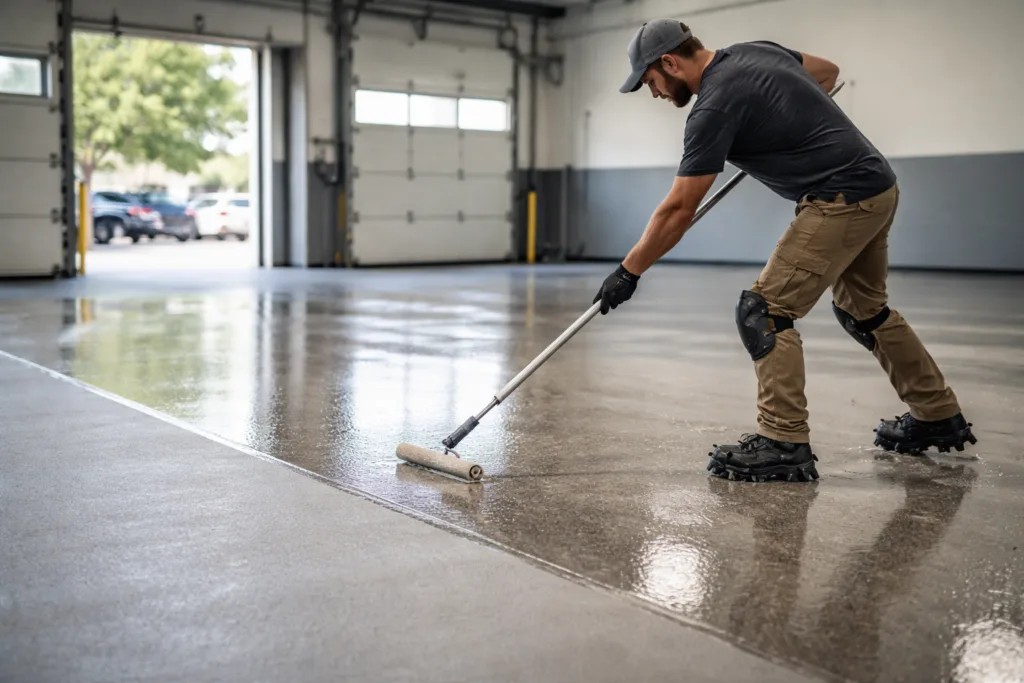
While DIY kits can appear cost-effective, commercial garages require industrial-grade resins, proper substrate testing, and application under controlled humidity and temperature. Surface preparation—including grinding, shot-blasting, and moisture assessment—determines overall system performance. If the substrate is not properly prepared or primed, tire marks and spills can penetrate quickly, regardless of the resin used.
How ZDSpoxy Approaches Real-World Garage Flooring
On job sites, ZDSpoxy’s technical teams often encounter two recurring problems: insufficient substrate cleaning prior to resin application and incorrect mixing ratios. Both lead to premature failures, even with premium-grade coatings. ZDSpoxy’s step-by-step system involves strict substrate moisture testing, disciplined primer selection, and batch-controlled mixing, resulting in consistent chemical and tire mark resistance even under high workload. Their expert oversight during cure phases ensures coatings reach targeted shore D hardness and resistance targets.
Epoxy Primers: The Foundation of Durable Floors
High-quality epoxy primers, like ZDS-1012ab Epoxy Primer for Concrete & Ceramic Floors, lock down dust and improve topcoat bonding. Primers block micro-porosity, which is the main entry point for both rubber migration and chemical absorption. For best results, primers should be matched to both the substrate and final topcoat resin system to prevent delamination and ensure a seamless, easily cleaned surface.
Choosing the Right Topcoat for Your Garage
The choice of topcoat determines your final level of protection. Polyaspartic, polyurethane, and high-performance epoxies all bring different benefits. Polyaspartic topcoats provide outstanding UV resistance and rapid cure, ideal for shops needing minimal downtime. Polyurethane topcoats offer high elasticity, while fully crosslinked epoxies focus on chemical and abrasion resistance. Consult installation data sheets and match your topcoat system to your shop’s workflows and typical threats.
Preventing Wear and Tear: Daily Maintenance Tips
- Sweep floors daily to remove abrasive sand and debris
- Spot-mop spills as soon as they occur
- Use only neutral or mildly alkaline cleaners (avoid harsh solvents)
- Inspect for early signs of abrasion and address immediately
Signs It’s Time to Upgrade Your Floor
If you notice deep tire grooves, dark staining, or frequent slippery spots despite regular cleaning, your floor’s protective system may be compromised. Bubbling, chipping, or soft patches are red flags that require professional repair or reapplication. In extreme cases, stubborn stains may signal chemical attack beneath the surface, which demands a full removal and replacement to maintain safety.
Case Study: Auto Service Shop Transformation
One regional service shop struggled with a dull, stained floor that left customers unimpressed and technicians frustrated. After switching to a commercial-grade epoxy primer and polyurethane topcoat, tire marks wiped off with simple mopping, and the risk of slips dropped sharply. Technicians appreciated the brighter, glare-free finish, while management saw a 20% reduction in floor maintenance costs within the first year.
Environmental and Safety Considerations
Modern commercial garage flooring systems are formulated for lower VOC emissions and easy cleanup, containing spills more effectively than generic products. Always provide proper PPE and ensure adequate ventilation during installation. Used resins and clean-up materials should be disposed of as per local environmental regulations.
Cost-Benefit Analysis: Epoxy Flooring vs. Alternatives
| Solution | Initial Cost | Annual Maintenance | Expected Life |
|---|---|---|---|
| Epoxy Floor Coating | Medium | Low | 10-20 years |
| Polished Concrete | Medium | Medium | 8-12 years |
| Basic Paint | Low | High | 2-3 years |
| Vinyl Tile | Low | Medium | 5-8 years |
Why Invest in Professional Installation?
The performance of your garage floor depends just as much on installation as on product selection. Trained professionals ensure the correct thickness, uniform surface, perfect mixing, and ideal cure times. This reduces the chance of tire mark penetration, bubbling, or chemical attack—problems that often follow DIY or low-cost applications. A professional finish also extends the service life and maintains warranty validity.
Commercial Garage Flooring: Maximizing Tire Mark Resistance and Handling Fuel Spills
Summing up, commercial garage flooring demands more than a pretty finish. By maximizing tire mark resistance and planning for quick chemical spill response, shops save money, impress clients, and create a safer work environment. ZDSpoxy systems, tested for real-world performance, bring peace of mind to operators who can’t afford interruptions or unsafe floors. Choosing the right resin system—matched with expert surface prep and regular upkeep—delivers results you see and feel every single day.
Frequently Asked Questions
What causes tire marks on garage floors?
Tire marks occur when soft or warm tire rubber transfers to the floor surface or reacts with unprotected coatings. High temperatures and porous floors also increase marking.
Can epoxy flooring really resist fuel and oil spills?
Yes, quality epoxy coatings form a dense, non-porous barrier that resists fuel, oil, brake fluid, and other chemicals, preventing them from penetrating and staining the floor.
How long does commercial epoxy flooring last?
With proper surface preparation and maintenance, commercial-grade epoxy flooring typically lasts 10 to 20 years or more, even under heavy vehicle and chemical exposure.
What maintenance is needed for epoxy garage floors?
Routine sweeping and prompt removal of spills, plus occasional mopping with a mild detergent, are usually enough to keep epoxy floors in top shape for years.
Are professional installations worth the extra cost?
Absolutely. Professionals ensure correct substrate preparation, mixing, and curing—critical factors for maximizing longevity, appearance, and chemical resistance.
Do epoxy floors get slippery when wet?
Epoxy floors can be made slip-resistant by adding texture or using non-slip aggregate or topcoats, which is recommended for shop safety.