
Introduction: Why Epoxy Cure Temperature Matters
Understanding epoxy cure temperature isn’t just a technical detail—it’s a critical factor for the performance, safety, and lifespan of any resin system, especially marine-grade applications. Temperature swings in real job sites or boatyards drive changes in viscosity, cure speed, bonding strength, and even chemical safety. A misjudged temperature can trigger cure inhibition, excessive exotherm, or surface blush that weakens the finished product. This guide is built for installers, specifiers, and facilities managers who need reliable, easy-to-apply methods for every weather condition—grounded in real manufacturing experience, not internet guesswork. Let’s dig into the temperature ranges, preparation steps, and safe scheduling that deliver a flawless cure even when Mother Nature doesn’t cooperate.
Epoxy Cure Temperature Explained
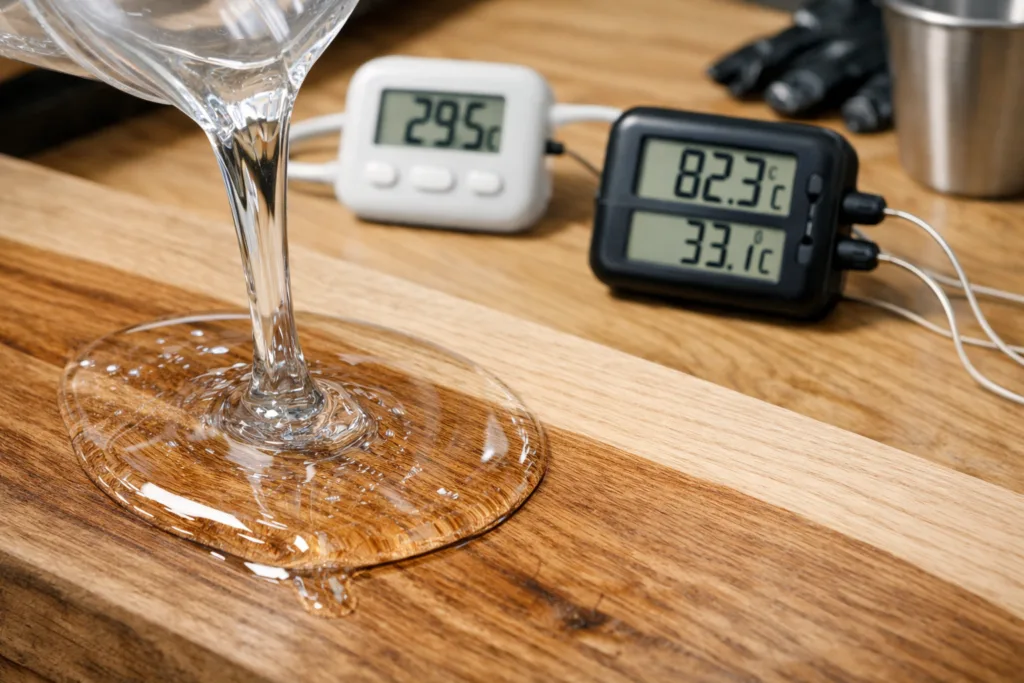
The epoxy cure temperature is the range in which a two-part resin system smoothly polymerizes (hardens), delivering its optimal chemical resistance, bond strength, and surface finish. Each kit’s Technical Data Sheet (TDS) or Safety Data Sheet (SDS) should specify this window—commonly 15°C–25°C (59°F–77°F) for most marine epoxies, though some advanced grades work above and below. Outside this target, cure delays, soft spots, or amine blush can occur, making proper planning essential.
The Impact of Temperature on Epoxy Resin Chemistry
Epoxy chemistry is temperature-sensitive. Resin and hardener react more quickly as the temperature rises, and slow dramatically with cold. This is why hot weather means fast cures—and sometimes short working windows—while cold requires patient, weather-conscious planning. Not only does cure speed change, but viscosity and exotherm (heat generated by the reaction) do too: these play major roles in how easily you can mix, pour, and apply epoxy resins for marine repairs or builds.
Cold Weather Epoxy: Challenges and Solutions
When ambient temperatures drop below 15°C (59°F), cold weather epoxy work slows down. Resins thicken, air release becomes difficult, and cure times lengthen—raising the risk of amine blush or incomplete hardening. For contractors, frozen nights or early-morning starts on the water can make even premium resin sluggish. Are there safe ways to warm materials and substrates? Yes, but let’s look closer at risks and best practices first.
Common Problems in Cold Weather Epoxy Work
- Thickened resin: Harder to mix and wet out surfaces
- Difficult air release: Risk of bubbles and voids increases
- Suppressed chemical reaction: Longer time to full strength
- Cure inhibition: May leave tacky/soft surfaces or create weak bonds
- Condensation on substrate: Hidden moisture can compromise adhesion or cause surface blushing
Safe Cold Weather Solutions
- Pre-warming resin and hardener: Store in a temperature-controlled room or bucket of lukewarm water until application (never above 35°C/95°F).
- Warm the workspace: Use safe, indirect heaters or insulation blankets. Do NOT use open flames or expose materials to unsafe heat—always review the manufacturer’s SDS and TDS before applying any heat.
- Apply during afternoon lows: Schedule mixing or spreading for the warmest part of the day.
- Choose winter-formulated resin: Some products are engineered for cold climates (always check Technical Data Sheet for recommendations).
ZDSpoxy recommends closely matching the pot life and working time listed on the TDS to your expected minimum application temperature for consistent, defect-free results.
Hot Weather Epoxy: Risks and Adjustments
When the jobsite heats up above 25°C (77°F), hot weather epoxy faces different problems—cure times become dangerously short, air bubbles expand rapidly, and excessive exotherm (heat of reaction) can cause yellowing, cracks, or even smoke. Managing these risks demands precise timing, smaller batch sizes, and careful mixing.
Issues Arising in Hot Conditions
- Reduced pot life: Fast onset of gelling or hardening, especially with >2 kg pour size
- Increased viscosity drop: May lead to over-spreading or drips
- Blush or sticky surfaces: Hot, humid air invites surface problems if material outgases too rapidly
- Color changes or bubbles: Too much exotherm destroys finish quality
Hot Weather Best Practices
- Mix smaller batches to control exotherm
- Shade stored materials and surfaces—not direct sun
- Use low-exotherm, slow-hardener blends for large pours
- Apply early in the morning or late afternoon to avoid peak heat
ZDSpoxy’s technical advisors underline that, in extreme cases, scheduling repairs during moderate weather or overnight is better than risking cure failures. When using ZDS-1060AB solvent-based wood rot repair primer, for example, temperature shifts above 30°C (86°F) demand strict batch size discipline and continuous monitoring.
Blush Risk and Cure Inhibition: Causes and Cures
Humidity, temperature, and surface contamination all play a role in surface blush and cure inhibition. Blush is the greasy or sticky film that can appear after curing—often worse in cold, humid weather or when air temp falls sharply overnight. Cure inhibition results in soft, uncured resin patches—typically due to moisture, cold, or mismatched mix ratios.
How to Minimize Blush and Cure Issues
- Always follow mixing ratios (by weight or volume) exactly
- Keep substrates clean, dry, and above dew point
- Use temp/humidity monitors to anticipate condensation risk
- Remove any blush mechanically before overcoating—never coat over a greasy or amine-contaminated layer
- Choose products with well-documented blush testing when possible
If you have recurring surface issues, review the in-depth ZDSpoxy guide: Epoxy Mix Ratio Mastery: Preventing Marine Cure Failure with Weight & Volume Techniques.
How Temperature Changes Viscosity and Pot Life
Both viscosity and pot life are directly tied to epoxy cure temperature. Viscosity determines how easily epoxy wets out glass fibers, wood, or concrete; pot life is your total ‘working window’ before irreversible hardening begins. Each 10°C (18°F) rise above the ideal range cuts pot life by roughly half. Conversely, each 10°C drop doubles the pot life, but raises application risks (bubbles, incomplete cure, sagging). Erratic ambient conditions (e.g., sun/shade cycles or sudden cold fronts) rapidly change these properties.
| Temperature (°C) | Estimated Pot Life (minutes) | Viscosity Trend |
|---|---|---|
| 10°C / 50°F | 60–90 | Very thick, slow to flow |
| 20°C / 68°F | 30–45 | Smooth, easy to wet out |
| 30°C / 86°F | 15–18 | Thin, fast spreading |
Pre-Warming Resins and Substrates: Methods and Safety
Pre-warming epoxy resins is an effective way to bring cold-stored material into the proper working range—without compromising safety or chemistry. However, avoid open flames, direct heat guns, or uncontrolled heat sources. The safest, most repeatable methods include:
- Letting containers sit indoors for 24 hours at 18°C–25°C (65°F–77°F)
- Placing cans/jugs in a water bath (no hotter than 35°C/95°F, water never exceeding 40°C)
- Using a warming blanket or heating pad set to low, with temp probe monitoring
NEVER microwave or ‘speed-heat’ epoxy. Rapid pre-warming risks fire, loss of certification, and ruinous resin degradation.
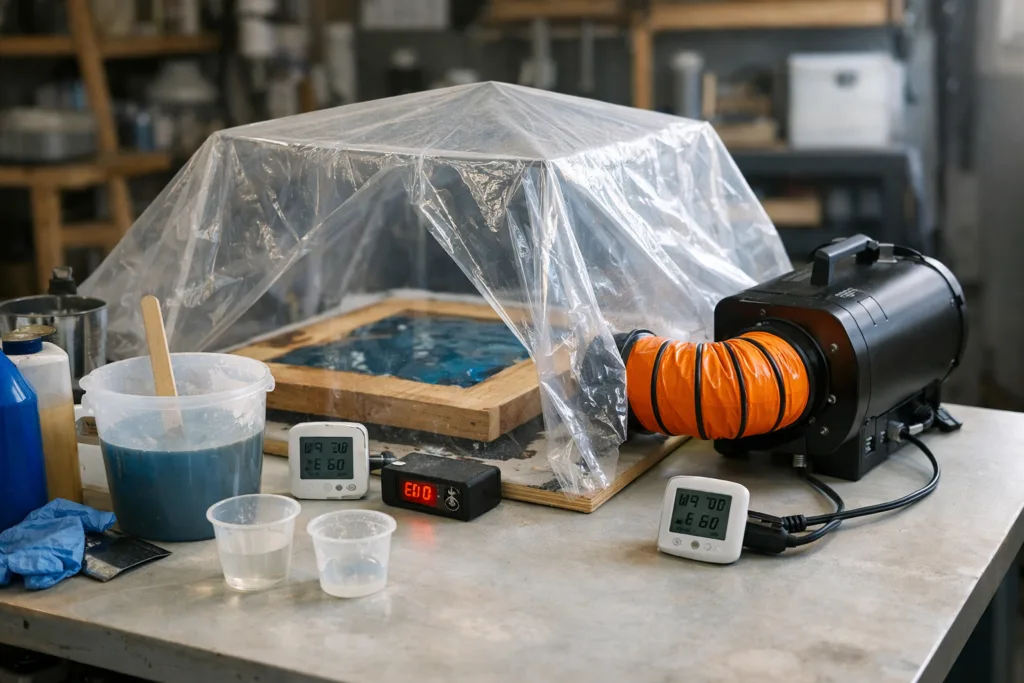
Safe Use of Heaters and Tenting
Tenting and indirect space heaters can make cold weather epoxy work possible, but site safety must always come first. Preferred methods:
- Use forced-air electric heaters positioned away from resins, strictly monitored for area temperature and fire risk
- Heat the air & substrate together—epoxy cures best when surface temp is steady
- If using a tent or enclosure, ensure proper airflow and ventilate any heater exhaust outside the work zone
Blush Risk in Humid or Cold Conditions
Blush is most likely when humidity spikes or surface temps fall below the dew point during curing—common in coastal climates or overnight applications. Any surface blush (sticky or greasy layer) must be removed via abrasion or detergent-washing before recoating. Never sand through partially cured blush—this can embed contamination beneath subsequent coatings.
Storing and Handling Epoxy in Temperature Extremes
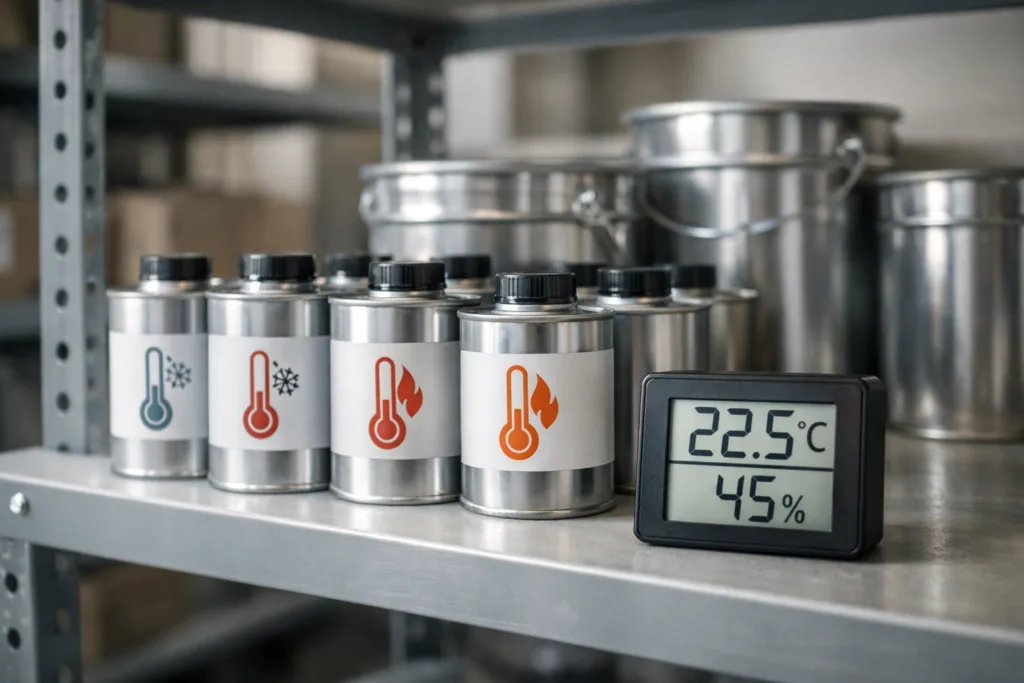
Long-term resin quality depends on stable storage conditions. Store unopened resin and hardener at 15°C–25°C (59°F–77°F), off cold floors and away from sunlight or direct heaters. Extended freezing or overheating can alter properties, creating inconsistent viscosity, clouding, or uneven reactivity.
How to Schedule Epoxy Work to Manage Cure Temperature
Site scheduling can make or break a cure outcome. Here are practical tips:
- Check weather forecasts and trend lines for days ahead—not just air temperature, but substrate surface and overnight minimums
- Time your mixing and application for periods when temperature is stable (typically midday in winter, dusk/dawn in summer)
- Allow for extra cure or recoat time when below 15°C (59°F)
- Record batch numbers, ambient, and substrate temps on every job for accountability
Choosing the Right Epoxy for Your Temperature Range
Selecting an epoxy (and hardener) that matches your season, substrate, and project size is the foundation for strong, lasting results. ZDSpoxy’s ZDS-1010AB rapid epoxy demonstrates shorter pot life and fast turnarounds in warm weather, while the ZDS-189 wood repair putty maintains sufficient open time for precise application even when cold fronts roll in. Always refer to the manufacturer’s TDS/SDS before selecting any resin system for temperatures outside the standard range.
When to Use Specialized Resin Blends for Extreme Climates
In some environments—Arctic boatyards, subtropical waterfronts, factories with no environmental controls—standard marine epoxy may not suffice. Seek out low-exotherm, cold-curing, or high-temp blends, and communicate all expected conditions to your supplier or technical contact.
Pot Life, Gel Time, and Full Cure in Context of Temperature
Understanding the differences:
- Pot life: Time after mixing when the resin remains usable
- Gel time: When system first noticeably thickens—signals end of workability
- Full cure: Achievement of max chemical/physical performance
All three terms shift with every 5–10°C swing, so always adapt your plans accordingly. For an in-depth breakdown, see Pot Life vs Working Time vs Cure Time: The Essential Marine Epoxy Timing Guide.
How to Monitor Temperature and Humidity During Cure
Digital thermometers and hygrometers (humidity sensors) are invaluable tools. Place them near substrates, not just in open air, to accurately track real working conditions—avoid relying on smartphone weather apps alone. Note all readings with batch documentation to diagnose issues later if needed.
Dealing with Cure Failures: Post-Mortem and Prevention
If surfaces remain soft, glossy, or sticky after expected cure time:
- Check if actual ambient and substrate temperatures matched TDS recommendations
- Verify mixing ratios and application schedule
- Test for possible inhibition by moisture, oil, or old coatings on the substrate
- If in doubt, sand off all problem layers down to sound, cured resin before repair
Scheduling Tips for Marine and Humid Environments
Plan outdoor or waterfront applications for periods with consistently moderate temperatures and stable humidity. In highly variable weather, modularize your application in small test sections. Always record environmental data and monitor for surface condensation before each coat.
Linking to Technical Support and Resource Sheets
When working on critical assets, keep the TDS and SDS for your epoxy at hand. ZDSpoxy provides ongoing technical support: always contact technical staff before improvising temperature adjustments or using untested heating methods. This not only safeguards your installation, but protects site safety and compliance records.
Summary Table: Epoxy Cure Temperatures & Practice Guide
| Scenario | Recommended Resin Practice | Risks & Tips |
|---|---|---|
| Below 15°C (59°F) | Pre-warm, use cold-weather blend, extend cure time | Risk: Blush, slow or incomplete cure; keep dry, follow TDS |
| 15–25°C (59–77°F) | Standard resin application; normal timing | Ideal performance; refer to TDS for details |
| Above 25°C (77°F) | Small batches, rapid work, shade materials | Risk: Short pot life, overheat, poor finish; use slow hardener if available |
Conclusion: Confidence in Every Cure
Epoxy cure temperature is far more than a footnote on a technical sheet—it’s the master variable behind chemical strength, surface quality, and project safety. Whether you’re fighting a cold snap, a sweltering summer, or a humid marine environment, success means matching your product selection and workflow to real jobsite conditions. Pre-warm with caution, monitor every batch, and always respect your resin’s technical limits. Meticulous planning and safe methods will repay every job with professional-grade results.
Frequently Asked Questions
What is the ideal epoxy cure temperature for marine applications?
The optimal range is typically 15°C–25°C (59°F–77°F) but always check your product TDS. Adjust application plans if operating outside this window.
Can I safely heat up my epoxy to speed curing?
Yes, but only with indirect methods like room heating or water baths below 35°C (95°F). Never use direct flames, heat guns, or microwaves, which pose fire and chemical risks.
What causes amine blush, and how can it be removed?
Blush arises from cold, humid air or poor mixing. It should be scrubbed off with water or a mild detergent—never sanded—before recoating.
How does temperature affect epoxy pot life and viscosity?
Higher temperatures shorten pot life and lower viscosity, making resin runnier; cold extends pot life but thickens the mix and slows cures.
What storage conditions keep my resin stable?
Store unopened resin and hardener at 15°C–25°C (59°F–77°F), off concrete floors and away from direct sun or rapid temperature shifts.
Why is it essential to check the Technical Data Sheet before curing?
The TDS lists the resin’s safe temperature range, mixing ratios, and all critical handling warnings. Following it prevents costly failures and compliance issues.
Related Reading
- The Practical Contractor’s Checklist for Choosing the Right Epoxy Primer Every Time
- Why Mass Pours Demand Exotherm Awareness: Avoiding Cures Gone Wrong
- Mastering Thermal Expansion: Compatibility Strategies for Epoxy-Steel-Concrete Projects
- Decode Resin Shelf Life vs. Pot Life vs. Working Time in Minutes
- Stop Floor Blistering Before It Starts: Five Clues for Tackling Epoxy Osmosis