
Introduction: Epoxy Flooring vs Polished Concrete Cost, Maintenance ROI, Durability
If you’re weighing the choice between epoxy flooring and polished concrete, you’re already thinking like a smart facility manager. Over a decade, costs can add up—or savings can emerge—based on which material you select. In this complete guide, we take a deep dive into the 10-year maintenance cost, installation expenses, ROI, and durability between epoxy flooring (especially high-performance options like ZDSpoxy) and polished concrete. Whether you’re setting up a warehouse, manufacturing plant, retail space, or food facility, understanding the cost-to-performance ratio of each option will steer you toward a flooring solution that’s financially sound and reliably tough.
Initial Cost Breakdown: Epoxy Flooring vs Polished Concrete
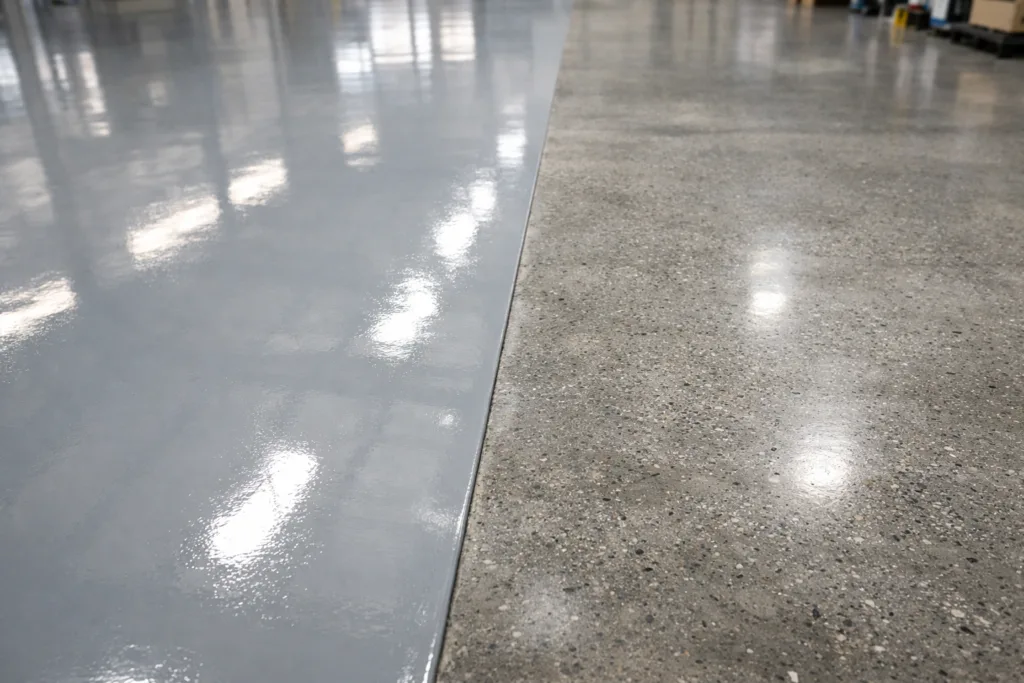
One of the first questions asked is, “What does it cost to install?” Epoxy floor installation typically ranges from $3 to $11 per square foot, depending on system build. Polished concrete generally lands between $2 and $8 per square foot, depending on desired finish and prep required. But the story doesn’t end at the starting line—the type of resin or polish, substrate condition, and labor intensity change the numbers.
| Floor Type | Typical Install Cost/sq.ft | Surface Prep | Total Initial Cost (1000 sq.ft) |
|---|---|---|---|
| Epoxy Flooring | $4–$10 | Medium–High | $4,000–$10,000 |
| Polished Concrete | $2–$7 | Medium | $2,000–$7,000 |
While polished concrete often offers a lower entry price, epoxy flooring—especially industrial-grade systems—may provide bigger cost savings in the long run. ZDS-1012ab epoxy primer for concrete floors is often specified for aggressive environments, boosting both initial performance and lifecycle value.
Maintenance Cost Factors Over 10 Years
The real difference between epoxy and polished concrete becomes clear when you look at ongoing care. Polished concrete requires scheduled re-polishing, surface densifiers, and can be vulnerable to acidic or oily spills. Epoxy floors demand periodic inspection but typically only minor repairs if properly installed. Cleaning costs are lower for seamless resin floors due to the non-porous finish, which prevents deep grime absorption.
| Floor Type | Annual Maintenance Cost/sq.ft | Common Issues | 10-Year Total (1000 sq.ft) |
|---|---|---|---|
| Epoxy Flooring | $0.20–$0.60 | Minor patching, topcoat | $2,000–$6,000 |
| Polished Concrete | $0.60–$2.00 | Re-polishing, stain repair | $6,000–$20,000 |
For areas exposed to chemicals or industrial traffic, consider chemical resistant resin flooring systems for enhanced durability and reduced risks of stain or corrosion-related repairs.
Durability and Performance: Standing Up to Real-World Conditions
Polished concrete performs admirably in low-traffic, dry environments. However, in spaces with forklift traffic, spill hazards, or temperature swings, epoxy flooring steps ahead. Epoxy’s seamless surface prevents intrusion by moisture, oils, acids, and contaminants. ZDSpoxy’s engineered resin systems are designed to resist abrasion, impact, and chemicals, which keeps maintenance costs low and performance high year after year.
- Epoxy: Excellent chemical resistance, customizable finishes, slip resistance options
- Polished Concrete: Attractive, low initial cost, but prone to surface stains and etching under harsh conditions
For heavy-duty operations, integrating a wear-resistant polyurethane resin flooring can further extend the service life beyond standard epoxy systems.
Lifetime ROI: Which Flooring Pays for Itself?
Total cost of ownership includes not just installation and maintenance, but downtime, cleaning labor, repair cycles, and risk of surface failure. In industrial and commercial settings, epoxy flooring often recoups its investment by lowering annual repair costs, slashing cleaning time, and preventing shutdowns caused by floor damage or contamination. Polished concrete, while cost-effective up front, can suffer unexpected costs in challenging environments.
Comparison Table: Epoxy Flooring vs Polished Concrete Over 10 Years
| Factors | Epoxy Flooring | Polished Concrete |
|---|---|---|
| Initial Cost | $$$ | $$ |
| Annual Maintenance | $ | $$–$$$ |
| Downtime Risk | Low (Quick Repairs) | Medium–High (Repolish Needed) |
| Chemical Resistance | Superior | Poor |
| Return on Investment | High (5–7 years payback) | Medium (8–10 years payback) |
| Typical Failure Modes | Minor chipping, edge wear | Major surface staining, spalls |
ZDSpoxy’s Manufacturing Insights: How Engineering Choices Impact Real Results
From the perspective of a site-focused resin engineer, the way you prep, mix, and apply matters as much as the product itself. ZDSpoxy finds that consistent quality checks—such as viscosity and gel-time measurements—make the biggest difference in ensuring long-term performance. Epoxy floor failures are often tied to rushed mixing, poor surface preparation, or skipping primer steps. Proper curing (temperature and humidity control), batch size discipline, and the right primer—like ZDS-1012ab—prevent common issues such as osmotic blistering or bond failure, especially over a 10-year service window.
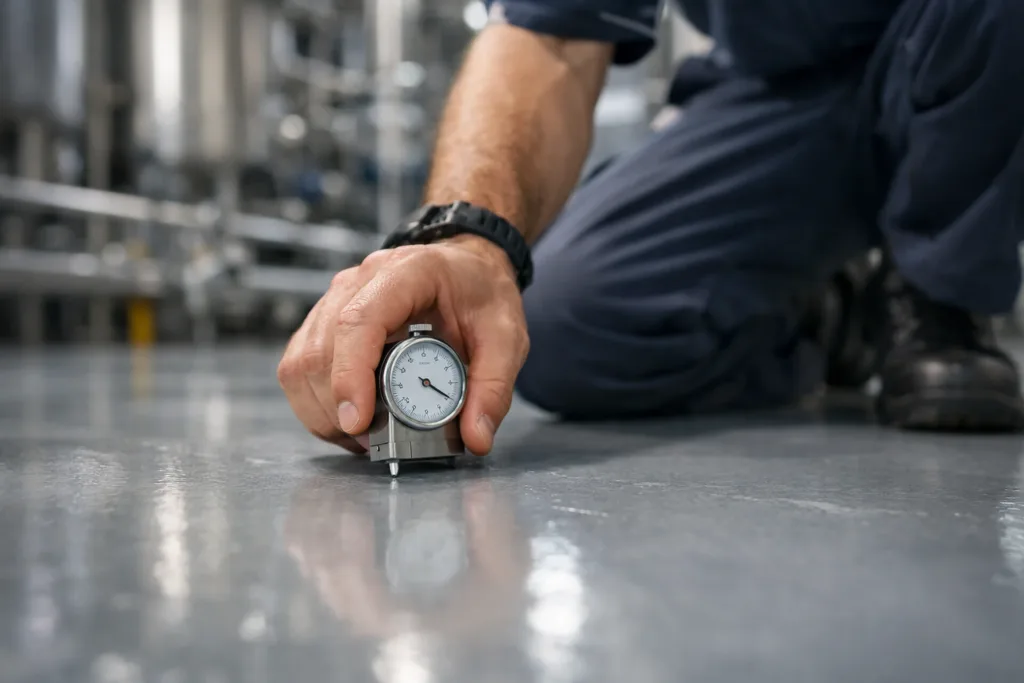
Epoxy Flooring vs Polished Concrete: A 10-Year Maintenance Cost Deep Dive
Environmental Considerations and Sustainability
Epoxy floors today use lower-VOC formulations and water-based primers, reducing health and environmental impact. Polished concrete eliminates the need for coatings, but frequent re-polishing requires machinery and consumables, impacting overall sustainability. Life-cycle analysis favors long-lasting, low-maintenance systems like epoxy (especially where repairs are rare and system upgrades are minimal).
Safety, Compliance, and Special Requirements
Safety matters, especially in pharmaceutical, food, or ESD-sensitive environments. Epoxy flooring systems can be designed for antimicrobial, anti-static, or slip-resistant properties to meet regulatory requirements. If your project demands highly specialized flooring, explore ESD & Anti-Static Epoxy Flooring or antimicrobial resin flooring systems for tailored compliance.
Installation Challenges and Pro-Tips
Proper installation sets the stage for a decade of savings. Common pitfalls include poor substrate moisture management, skipping surface grinding, or mismatched mixing ratios. Epoxy flooring requires controlled pot life and application temperature. Polished concrete relies on stepwise grinding and application of densifiers. Always consult a professional with experience in your site’s conditions to maximize lifespan and minimize surprises.
How to Choose: Comparing Use Case Scenarios
- Warehousing: Epoxy for high traffic; polished concrete for light storage
- Manufacturing: Epoxy or polyurethane resin for abrasion/corrosion resistance
- Retail/Public: Polished concrete for aesthetics; epoxy for color and slip resistance
- Laboratories: Chemical-resistant epoxy for containment
- Food Facilities: Antimicrobial epoxy systems
Conclusion: Key Takeaways for Smart Flooring Decisions
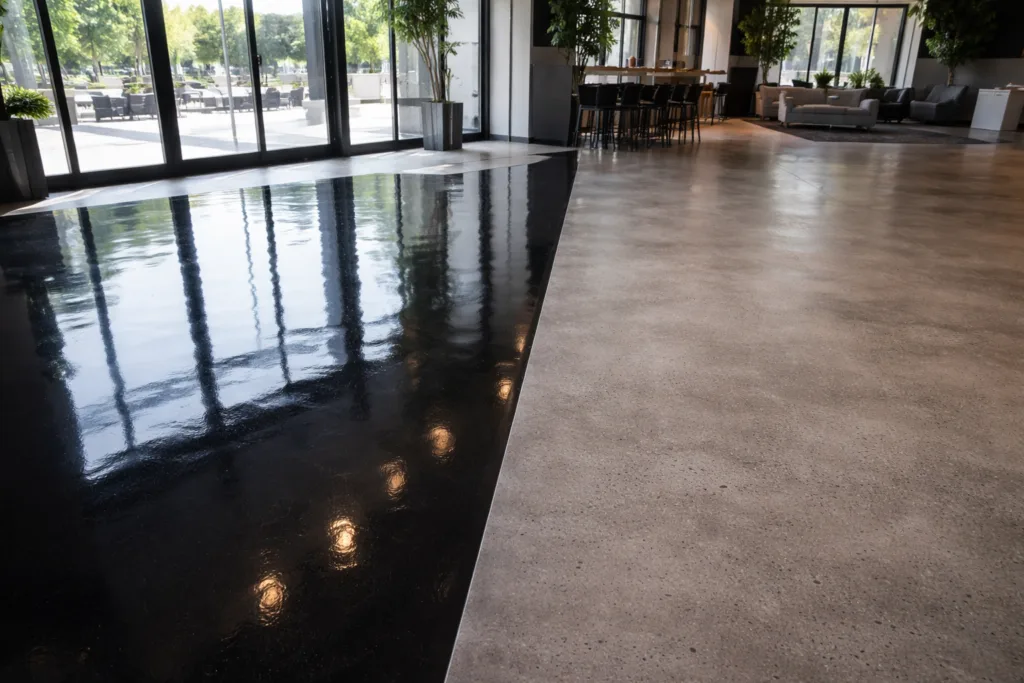
Over a 10-year period, epoxy flooring delivers a powerful mix of durability, low maintenance, and higher ROI compared to polished concrete—especially in commercial and industrial settings. Polished concrete offers aesthetic appeal and lower upfront costs but struggles in high-demand, high-traffic environments. Choosing the right solution is about more than price—it’s about reliability, compliance, and overall value. By balancing installation price, long-term maintenance, and operational resiliency, facility managers can secure floors that stand the test of time, save resources, and keep operations running smoothly.
Frequently Asked Questions
How often does polished concrete require re-polishing?
Typically every 2–5 years depending on foot traffic, exposure, and cleaning practices. Heavy-use areas may require more frequent attention.
Can epoxy flooring be repaired if damaged?
Yes. Epoxy systems can be spot-repaired quickly, with minimal downtime and cost compared to full surface restoration for concrete.
Are there specific environments where one type is clearly better?
Epoxy excels in chemical, food, pharma, and heavy traffic environments. Polished concrete is best for aesthetic, low-use, or dry spaces.
How does moisture under concrete affect epoxy or polished finishes?
Moisture can cause delamination in epoxies if primers and prep are neglected; for polished concrete, it can promote surface discoloration or spalling.
Are epoxy floors slippery when wet?
Standard epoxy can be slippery, but slip-resistant aggregates or additives are available to improve safety.
Does epoxy release strong odors during installation?
Some solvent-based epoxies do, but water-based and low-VOC options greatly minimize odors and health concerns during application.
Related Reading
- Complete Guide to Epoxy Resin Flooring: Everything You Need to Know
- How Long Will Epoxy Flooring Really Last? The Ultimate Longevity Insight
- 5 Powerful Benefits of Industrial Epoxy Coating Solutions
- Epoxy Floor Blistering: 5 Common Causes & Prevention Tips
- Polyaspartic vs Epoxy: Comparing True Lifecycle Costs