
Introduction: Why Epoxy Primer Selection Matters
Within the world of industrial and commercial flooring, the phrase “the primer is the soul” of any epoxy system rings particularly true. While topcoats steal the spotlight for durability and aesthetic, the unsung epoxy primer controls whether a floor will succeed or sadly delaminate and fail. For contractors, project managers, and specialist applicators, mastering epoxy primer selection, delamination causes, surface profile, bonding failure, and substrate preparation is more than a technical exercise—it is the foundation of every flooring project’s lifecycle. This article investigates why deliberate primer selection prevents delamination and reveals how matching both surface profile and substrate type forms the backbone of reliable, long-term bond strength. We’ll cover strategies for new concrete, aged surfaces, ceramic tile, and contaminated substrates, all while focusing on actionable, EEAT-driven insight.
Understanding Delamination in Epoxy Flooring
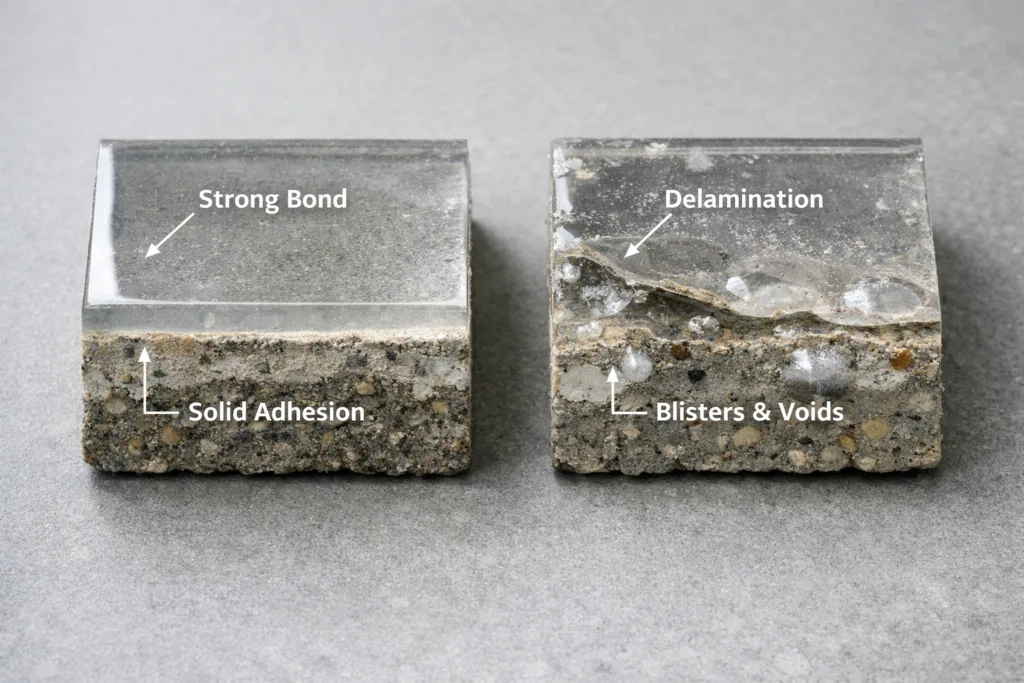
Delamination is when the epoxy floor system separates or lifts from the substrate, forming blisters, bubbles, or even entire sheets of failed coating. This is not just an eyesore—it’s a critical safety and investment concern that erodes trust, increases costs, and compromises facility operations. Most importantly, delamination can almost always be traced to issues with primer selection, surface preparation, or a mismatch between surface profile and resin chemistry.
The Chemistry and Function of Epoxy Primers
Epoxy primers are engineered to bridge the gap between complex substrate materials (like old concrete, glazed tiles, or dusty screeds) and high-performance topcoats. Their main function is to anchor epoxy to the surface by wetting and penetrating the microscopic pores, forming a tenacious bond line. The right primer will also control substrate moisture, resist alkaline attack, and provide a platform for subsequent coats. When contractors consider the array of primer chemistries—solvent-free, water-based, high solids, fast-curing—it’s critical to match the product’s functionality to the substrate environment. For example, ZDS-1012ab epoxy primer is specifically designed to bond dense concrete and glazed ceramics, preventing classic detachment modes.
Substrate Preparation: The Bedrock of Adhesion
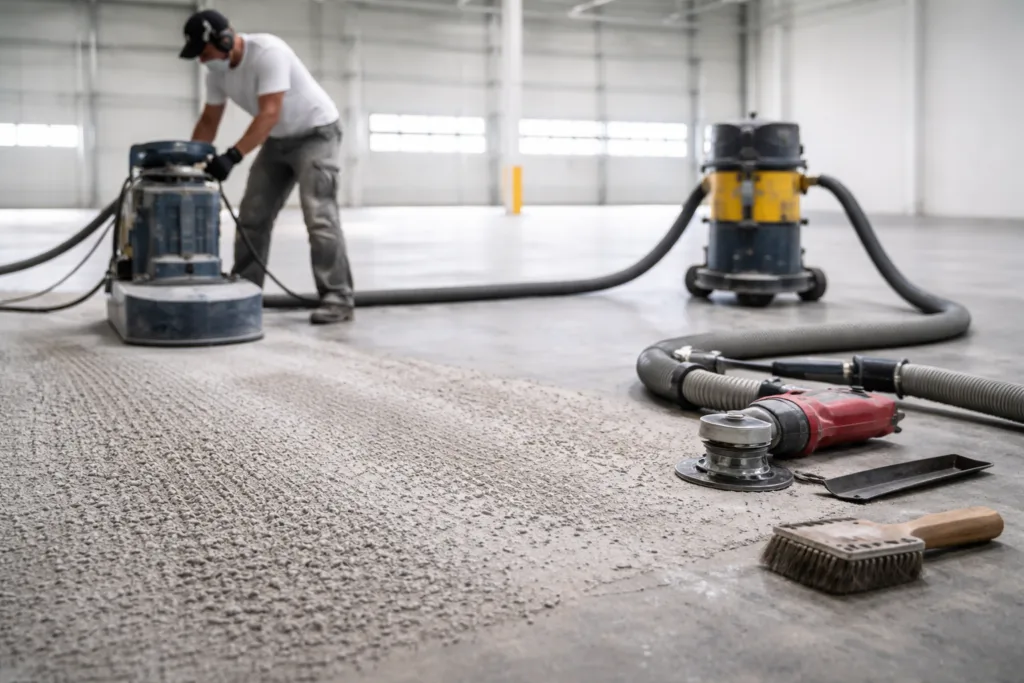
No matter how advanced the polymer resin, poor substrate preparation will almost always lead to costly floor failures. Expert contractors know that prepping the surface is a multi-step process: cleaning, degreasing, moisture testing, and mechanical profiling. Space-specific cleaning solutions are imperative for removing oil, laitance, old adhesive residues, and curing compounds. To maximize long-term results, ZDSpoxy routinely recommends thorough moisture tests as detailed in our moisture testing guide, ensuring the surface is in the correct condition before any primer touches the slab.
Surface Profile: What Is CSP and Why It Matters
Concrete Surface Profile (CSP) is a standardized rating from 1 (smooth) to 10 (rough), designed to specify the texture generated by shot blasting, grinding, scarifying, or sanding. Selecting the right CSP is essential because some primers and topcoats need deeper “tooth” to embed, while others require smoother microtexture to prevent over-penetration and thin bond lines. For typical self-leveling epoxy flooring, CSP 2–4 is ideal, but heavy-duty systems may call for CSP 5 and above. Not sure how to assess? Many leading flooring guides, including those by ICRI, provide detailed visual and tactile references. Matching CSP to primer is essential—otherwise, you risk incomplete wetting and localized bonding failure. For a solution overview (including chemical resistance needs), see chemical resistant resin flooring solutions.
Common Causes of Delamination in Epoxy Floors
Delamination occurs when the adhesion between layers fails. Here are the five most common triggers:
- Improper substrate preparation: Residual moisture, oil, or dust prevents the primer from bonding properly.
- Poor primer selection: The primer is incompatible with the substrate (e.g., using standard primer on glazed tile).
- Incorrect surface profile: Either too smooth for mechanical grip or too rough, preventing good coverage.
- Mismatched resin systems: Using products whose chemistry doesn’t align for the environmental stress or temperature swing.
- Application errors: Incorrect mixing ratios, batch size, missed recoating window, or poor air movement.
How to Select the Right Epoxy Primer
Choosing the right primer is not a one-size-fits-all process. Instead, contractors must account for material, age, moisture status, contamination history, and even operating environment. Consider these factors:
- Substrate type: Concrete, tile, asphalt, terrazzo, or steel require different bonding profiles.
- Moisture status: Damp or green concrete needs a specialty moisture-tolerant or vapor-barrier primer.
- Mechanical strength: Weak, friable surfaces may require consolidation with a penetrating sealer first.
- Chemical resistance: Processing plants, labs, and breweries demand primers with resistance to acids, alkalis, and solvents.
- Project deadlines: Sometimes, a fast-curing dual-layer primer (like ZDS-1011ab) makes sense for rapid turnaround.
Matching Primer to Substrate Types
Let’s look at typical scenarios:
- Old Concrete: Likely contains dust, laitance, and cracks. Needs deep-penetrating, consolidating primer.
- Ceramic Tile: Glazed surfaces are notorious for poor adhesion. Requires special adhesion promoters or primers designed for impervious, smooth substrates.
- Aged Asphalt: Requires flexible, elastomeric primers to accommodate movement and expansion.
- Steel Surfaces: Need rust-inhibiting, high-adhesion epoxies with strict surface prep (blast-cleaning SA2.5+).
Surface Contamination and Its Impact on Bonding
Flooring failures often start invisibly—with a thin film of oil, a hidden patch of moisture, or remnants of past adhesive. Epoxy primers are sensitive to even minor contamination. For this reason, strict site cleaning, vapor checks, and the use of specialty primers (such as water-dispersed or acrylic-epoxy hybrids like ZDS-181 water-based acrylic primer) can often be the decisive factor in performance.
How Application Practice Affects Primer Performance
Application quality is just as important as chemistry. Mixing ratios must be measured by weight or calibrated dosing, stirred thoroughly (including drum corners), and applied within manufacturer-specified working times. On fast-curing systems, tools should be ready and a batch plan in place. Poor practice—like stretching coverage, rushing, or skipping surface checks—quickly leads to weak bond lines and eventual coating detachment.
The Role of Environment: Temperature and Humidity
Epoxy primers are formulated with specific ambient conditions in mind. Cold slows cure (risking blush/poor crosslinking), while heat accelerates reaction (reducing pot life and work time). High humidity can cause amine blush—a greasy surface layer that hinders intercoat adhesion. ZDSpoxy recommends logging temperature and humidity on every floor job to adjust application procedure and avoid surprises.
Epoxy Primer Selection: Case Studies and Common Failures
Consider the case of a warehouse retrofitted with high-gloss epoxy over decades-old concrete. Skipping CSP profiling and using a standard primer caused delamination within months. Switching to a deep-penetrating, moisture-tolerant primer and grinding to CSP 3-4 eliminated these failures in subsequent bays. Another case involved chemical storage, where improper primer selection led to alkali attack and blisters—solved by switching to a dedicated chemical-resistant primer.
Choosing Primer for New vs. Aged Concrete
Fresh concrete contains higher moisture and free-lime. Here, vapor-barrier or moisture-tolerant primers are essential. For aged slabs, focus on cleaning, checking for contamination, and targeting loose or dusty surfaces for consolidation.
Primers for Tiles and Difficult Substrates
Ceramic and quarry tiles, as well as mosaics, are tricky because their non-porous nature limits traditional primer wetting. Mechanical profiling (diamond grind or sandblast) plus specialty adhesion promoter primers is the only reliable solution. Failed applications often skip one of these steps, making bond failure almost inevitable.
Evaluating Surface Moisture: Are You at Risk?
Residual moisture is one of the most underestimated causes of primer-induced delamination. Simple plastic sheet tests or advanced electronic concrete moisture measurements should be part of every flooring contract, as covered in our detailed guide.
Comparing Different Types of Epoxy Primers
| Primer Type | Typical Use | Surface Profile | Strengths | Weaknesses |
|---|---|---|---|---|
| Solvent-Free Epoxy | Standard concrete | CSP 2–4 | Strong adhesion, low odor | Longer cure, moisture limits |
| Water-Based Epoxy | Moist or green concrete | CSP 1–3 | Moisture tolerant, low VOC | Lower adhesion to some surfaces |
| Acrylic-Epoxy Hybrid | Asphalt, tiles | CSP 2–4 | Flexible, strong wetting | May blush under high humidity |
| Chemical Resistant Epoxy | Labs, process plants | CSP 3–5 | Resists acids/solvents | Longer recoat windows |
Moisture Tolerance and Primer Choice
Some primers are formulated to tolerate elevated moisture in green slabs. Selecting a moisture-barrier primer early prevents osmotic blistering and ensures the flooring system meets long-term performance guarantees.
Epoxy Primer and Topcoat Compatibility
Primers and topcoats are not universally compatible. Crosslinking, flexibility, and recoat windows must all be checked—ideally via manufacturer’s data sheets. Incompatible layering can literally seed future delamination at the interface.
Batch Size, Pot Life, and Working Time in Practice
In real-world installation, managing batch size and pot life is critical—especially for dual-component systems where heat buildup can shorten working time. Following ratio discipline and minimizing job pauses staves off incomplete cure and preserves bond integrity. Maintaining control over these elements is also covered in ZDSpoxy’s deep dive into epoxy mix ratios and cure failure prevention.
Application Tools and Their Effect on Bond Quality
Choice of roller (medium pile for standard floors, short nap for tiles, squeegees for thick-bed installs) and back-rolling technique impact primer coverage and surface wetting. Poor tool selection leaves pinholes or thin spots—factors best avoided with standardized application method statements.
Inspection and Testing: Verifying Bonding Performance
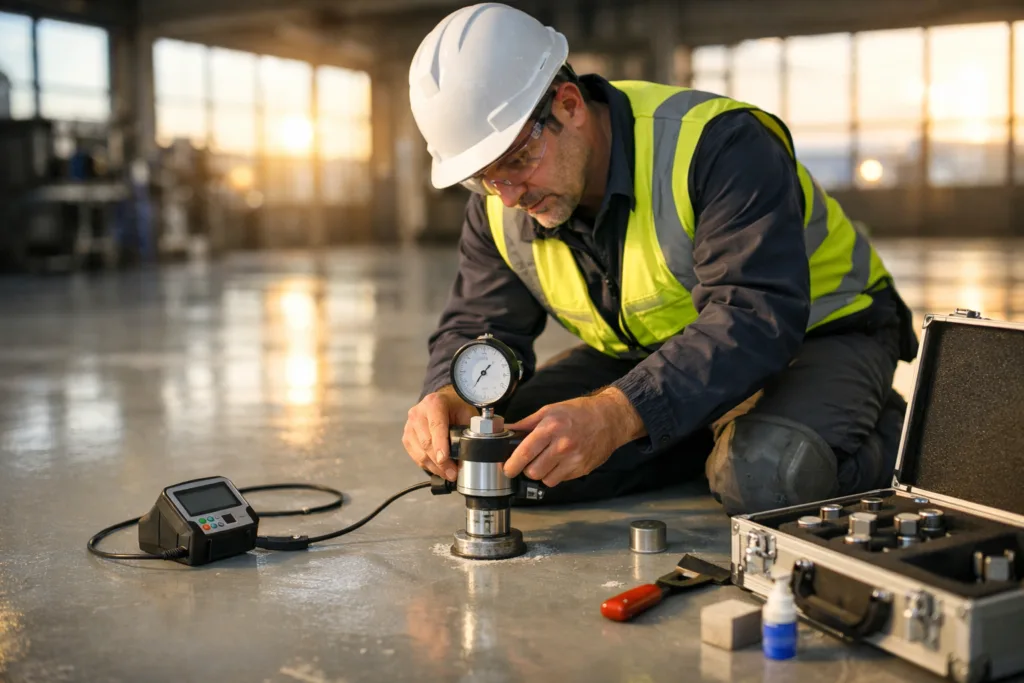
Pull-off adhesion tests, tape-peel checks, and even simple scratch tests are practical confirmation of good priming. Consistent failures call for a root cause analysis—something ZDSpoxy sees as essential for continuous improvement and long-term flooring reliability.
Best Practices Checklist for Epoxy Primer Success
- Perform moisture and contamination checks
- Define and create the correct CSP
- Select compatible primer for substrate and environment
- Mix and apply strictly to technical data sheet
- Follow recommended batch size and work times
- Inspect after cure before topcoat
Future Innovations in Epoxy Primer Technology
Emerging primer technologies focus on increased moisture tolerance, self-healing micro-particles, and improved performance on substrates with minimal prep. These advances promise less downtime and greater fail-safety, especially relevant for retrofit and rapid-turnaround contracts.
Epoxy Primer Selection, Delamination Causes, Surface Profile, Bonding Failure, Substrate Preparation
These five core elements work together. Primer selection responds to delamination risks by considering surface and substrate, while proper profiling and preparation closes the gap between theory and outcome. Only when these factors are consistently aligned does a resin flooring system achieve design life and high client satisfaction. For full solution overviews, ZDSpoxy catalogues are a reliable reference.
Conclusion: Long-Term Performance Starts with Primer Wisdom
In sum, successful epoxy flooring jobs hinge on the careful orchestration of primer chemistry, substrate preparation, and surface profiling. Contractors who respect the science behind primer choice, work methodically, and conduct thorough testing drastically reduce their risk of costly delamination or bonding faults. As real-world facilities and substrates continue to vary, ongoing education—and a little brand humility—remain essential to delivering the reliability users expect. Make primer selection systematic, and every flooring system gains the foundation to last.
Frequently Asked Questions
What is the main purpose of an epoxy primer?
The primary role of an epoxy primer is to ensure a strong, long-lasting bond between the flooring substrate and the subsequent epoxy layers, preventing delamination and premature failure.
How do I know if my surface profile (CSP) is correct?
Check the primer and topcoat technical sheets for recommended CSP, and use tactile comparison or ICRI guides to match the surface texture. CSP 2–4 typically serves most standard applications.
Why does epoxy sometimes delaminate from concrete?
Delamination arises from inadequate substrate preparation, unsuitable primer selection, residual moisture, or poor mix/application practice—each disrupting adhesion.
Can I apply epoxy primer over tile without grinding?
No; tiles require mechanical profiling (such as grinding) and an adhesion-promoting primer for any hope of reliable long-term bond.
How can I test for substrate moisture before primer application?
Practical methods include plastic sheet tests, electronic moisture meters, or standardized calcium chloride tests—all vital before application.
Is any primer compatible with all epoxy topcoats?
No; always check for primer and topcoat compatibility per manufacturer guidelines, especially concerning chemical resistance and cure windows.