
Introduction: Understanding Epoxy vs Vinyl Ester Marine Comparisons
Boat owners, repair shops, and marine engineers often face a critical decision when choosing a resin for their next marine project: epoxy vs vinyl ester marine systems. Whether you’re repairing a fiberglass hull, installing a new barrier coat, performing an infusion, or battling water intrusion and corrosion, your resin choice matters. Each system carries distinct strengths and trade-offs in blister resistance, adhesion, lamination quality, water absorption, repair practicality, and cost. This guide simplifies those differences—so you can confidently pick the right resin for each marine application.
The Chemistry Behind Marine Epoxy and Vinyl Ester
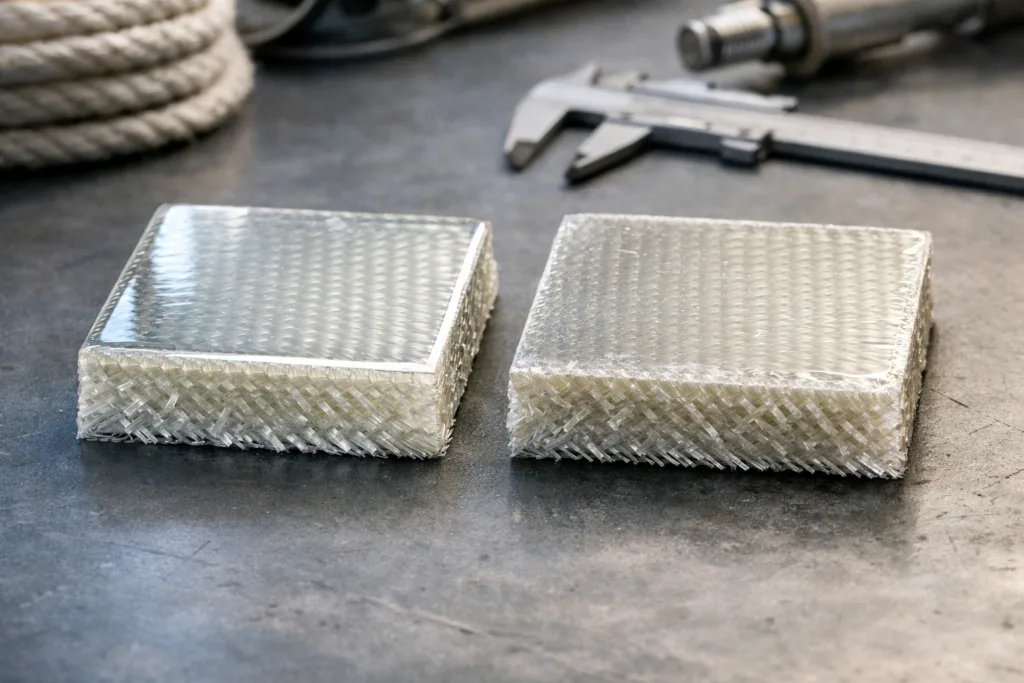
To understand performance, it pays to know what’s inside these resins. Epoxy resins are formed by chemically combining epoxide monomers with a hardener, resulting in a tightly cross-linked structure. Vinyl ester resins are a hybrid: they are made by reacting epoxy resin with unsaturated carboxylic acids, and then dissolved in a monomer like styrene. This hybridization brings properties from both polyester and epoxy systems.
- Epoxy: High crosslink density, low shrinkage, excellent bond strength
- Vinyl Ester: Good chemical resistance, moderate flexibility, “bridge” between polyester and epoxy in cost/performance
Blister Resistance in Marine Environments
One of the most persistent problems in boating is osmotic blistering: water seeps into the laminate, reacts, and blisters form. In marine tests, epoxy consistently outperforms vinyl ester for blister resistance. Its dense, water-resistant network helps stop moisture migration. However, marine-grade vinyl esters (especially iso-based) do offer improved resistance compared to general-purpose polyester resins.
For boats living in water year-round, or for applications below the waterline, barrier coats made from epoxy significantly reduce risk. When vinyl ester is used, ensure it’s a marine-grade formula, applied well, and properly cured.
Adhesion: Which Resin Grips Fiberglass and Other Substrates Best?
When it comes to adhesion, epoxy is the gold standard—it reliably bonds to fiberglass, wood, metals (such as aluminum and stainless), and even aged laminates under proper prep. Vinyl ester’s chemical structure makes it somewhat less tenacious on varied or damp surfaces. However, its bond is usually strong enough when working with fresh, compatible reinforcements (like new fiberglass fabrics).
If you’re bonding old laminates, non-porous metals, or doing patch repairs, epoxy provides extra insurance against delamination failures. This is why specialists often pick it for safety-critical repairs or when dealing with unknown surface conditions.
Lamination: Wet-Out, Flow, and Structural Performance
Lamination success depends on several factors: resin flow, wet-out qualities, cure control, and resulting mechanical strength. Both epoxy and vinyl ester can be formulated for hand layup, infusion, or spray-up. However, epoxy typically provides better fiber wet-out and less exotherm—vital for complex shapes or thick layups. Its slow cure means careful workers can work at their own pace. Vinyl ester cures faster, which can benefit production speed but may increase shrinkage or print-through if not carefully managed.
For infusion, the correct choice often rests on the scale and budget—not just chemistry. Epoxy infusion resins excel at minimizing voids and maximizing strength. Vinyl esters win on large runs where budget and speed outweigh peak strength/fatigue performance.
Water Absorption: Long-Term Performance
Water absorption is critical for underwater durability. Epoxy resins typically exhibit lower water absorption rates than vinyl ester—this keeps mechanical properties stable over time and further boosts blister resistance. Vinyl esters, while better than standard polyester, still absorb more moisture. This can impact laminate weight and properties in long-term immersion.
Corrosion and Chemical Resistance
Both resin types perform well in marine applications, but their chemical resistance profiles differ. Vinyl ester resins excel when exposed to acids, fuels, and aggressive chemicals. This makes them a go-to choice for engine bays, fuel tanks, and chemical storage areas in marine settings. Epoxy performs extremely well in saltwater service and exposure to typical marine contaminants but can degrade under some acidic or alkali environments over time—always check formulation compatibility!
Repair Resin: Practicality, Smell, and Working Conditions
For repairs, operability and safety matter. Epoxy resins are almost always preferred for structural repairs—they bond diverse substrates, cure at lower temps and higher humidity, and have little to no odor. Fast-cure epoxies allow rapid fixes in wet or emergency conditions (see ZDSpoxy’s ZDS-1010AB for example). Vinyl ester often releases strong styrene vapor, so requires excellent ventilation. Curing speed can be tricky for patch repairs, as pot life is shorter and temperature-sensitive, especially on hot or humid days.
Cost: Material Price, Labor, and Lifecycle
It’s no secret: vinyl ester usually costs less per kilogram/liter than epoxy. However, price must be balanced against total performance. If your application is short-term, non-structural, or above the waterline, vinyl ester can be the budget choice. But for high-value assets, underwater service, or structural repairs, epoxy’s long-term reliability may save costly failures and repeat works later. Project scale also matters—vinyl ester is favored in mass boat production for this reason.
| Criteria | Epoxy | Vinyl Ester |
|---|---|---|
| Material Cost | $$$$ | $$$ |
| Blister Resistance | Best | Good |
| Adhesion to Various Surfaces | Excellent | Moderate |
| Water Absorption | Very Low | Lower than polyester, higher than epoxy |
| Repair Versatility | Superior | Limited |
| Chemical Resistance | Saltwater, mild acids | Acids, fuels, solvents |
| Ease of Use | Low odor, long pot life | Strong odor (styrene), faster cure |
Barrier Coats: Keeping Moisture Out
For boats that stay in water, a robust barrier coat is non-negotiable. Here’s where epoxy can shine—its dense crosslinking and low porosity seal out water, making it the best-in-class barrier coat. Many marine technicians recommend several coats of marine epoxy for both new builds and old hull restoration. Vinyl ester can serve as a barrier, but only if well formulated, applied thick enough, and cured at optimal conditions. The cost savings may not justify the risk for high-value vessels.
For more on how to match resin properties to real-world hull repairs, see ZDSpoxy’s Marine Epoxy Resin Manufacturer page for details on advanced marine-grade epoxies.
Lamination Repairs and Structural Bonding
When bonding new material to old, epoxy remains the safer solution. For delamination, replacing coring, or reinforcing stringers, its superior gap-filling and bonding ensure long-term safety. Vinyl ester can do the job for new layups or blending with existing vinyl ester/polyester hulls—in these cases, chemical compatibility can simplify workflow for production lines.
Vacuum Infusion: Process Considerations
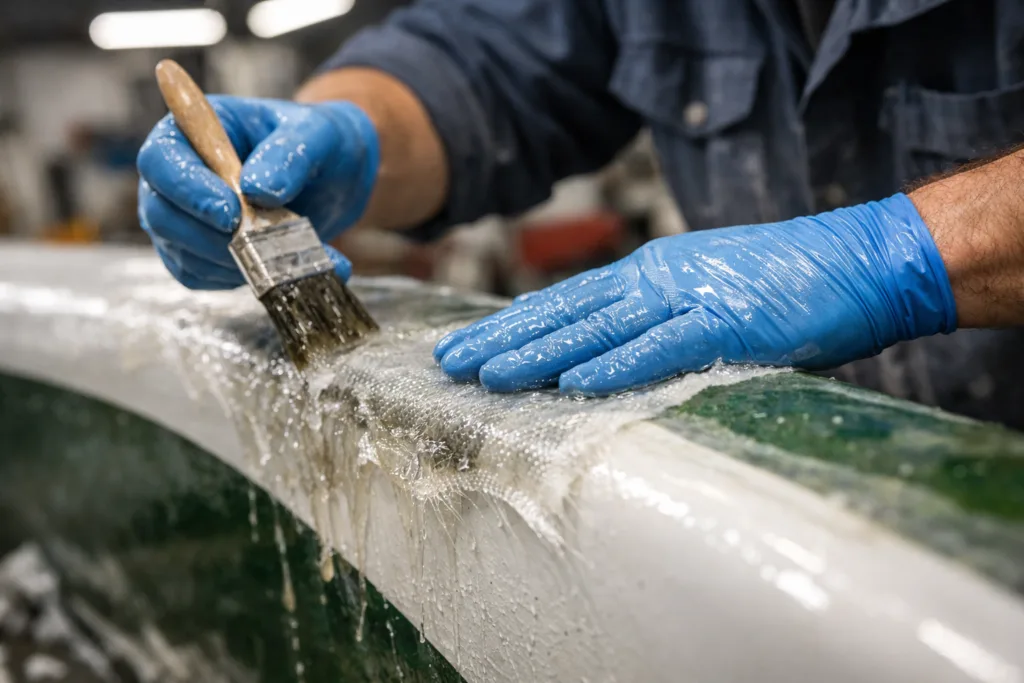
Epoxy and vinyl ester resins can both be tailored for vacuum infusion. Epoxy often provides higher ultimate part strength and lower void content, but the process is more sensitive to mixing accuracy and working time. ZDSpoxy engineers advise batch size discipline and accurate mixing with epoxy—uneven mix ratios or rushed infusion can ruin large parts due to incomplete cure or exotherm risks. Vinyl ester offers reduced material cost and rapid cure for large production runs—ideal for manufacturers with high output needs, but the final part may not match epoxy in fatigue resistance or hydrolytic stability.
Choosing for Corrosion Resistance: Engine Rooms, Fuel Tanks, and Bilges
Chemical environment drives this choice. Vinyl ester’s unique resistance to acid, oils, and aggressive solvents makes it preferred for lining fuel tanks, chemical holds, or engine bay splash pans. While epoxy offers robust performance in saltwater or non-aggressive environments, it’s not as resistant to strong acids or fuels as vinyl ester. For solution-specific advice, explore ZDSpoxy’s articles on UV and chemical resistance in marine epoxy.
Environmental and Safety Factors: VOC, Odor, and Handling
Epoxies, particularly marine-focused formulations, typically have low VOCs and barely any odor—making them safer for enclosed spaces and indoor repairs. Vinyl ester, by contrast, contains styrene monomer (a strong-smelling VOC) and requires extensive ventilation and PPE. Always review the safety data and storage recommendations for the specific resin chosen, as safety is non-negotiable on-site.
Use Epoxy When…
- Building barrier coats or repairs below the waterline
- Making critical structural repairs (e.g., hull breaches, delaminations)
- Laminating to metal, damp, or unknown substrates
- Need consistent water resistance and low risk of blistering
- Repair jobs happening in low temperature or variable humidity
- Working indoors or needing low odor
Use Vinyl Ester When…
- Cost efficiency is critical for a large production run
- Parts are exposed to fuels, oils, or acids
- Laminating new layups on new hulls (especially for chemical compatibility)
- Above-waterline applications or short service life needs
- Ventilation is abundant and application speed is prioritized
Common Pitfalls: What Goes Wrong in Real Marine Jobs
Practical site experience exposes common errors: incomplete mixing, improper surface prep, and over-aggressive filler use all cause failures—regardless of resin type. At ZDSpoxy, in-plant QC and field feedback highlight three key rules: always check your mix ratio (by weight for accuracy), maintain batch size discipline, and test on-site surface conditions. With epoxy, watch exotherm in thick pours; with vinyl ester, beware of ambient temp swings shortening pot life. Rushed prep or thick applications create risks with both systems.
Comparative Table: Epoxy vs Vinyl Ester at a Glance
| Property | Epoxy | Vinyl Ester |
|---|---|---|
| Blister Resistance | Superior | Moderate |
| Bond Strength | Excellent | Good |
| Water Absorption | Very Low | Low, but higher than epoxy |
| VOC Emission | Low | High (styrene) |
| Cure Control | Longer, adjustable | Shorter, climate-sensitive |
| Chemical Resistance | Salts, mild alkalis | Acids, fuels, solvents |
| Material Cost | High | Medium |
How Water Absorption Affects Long-Term Durability
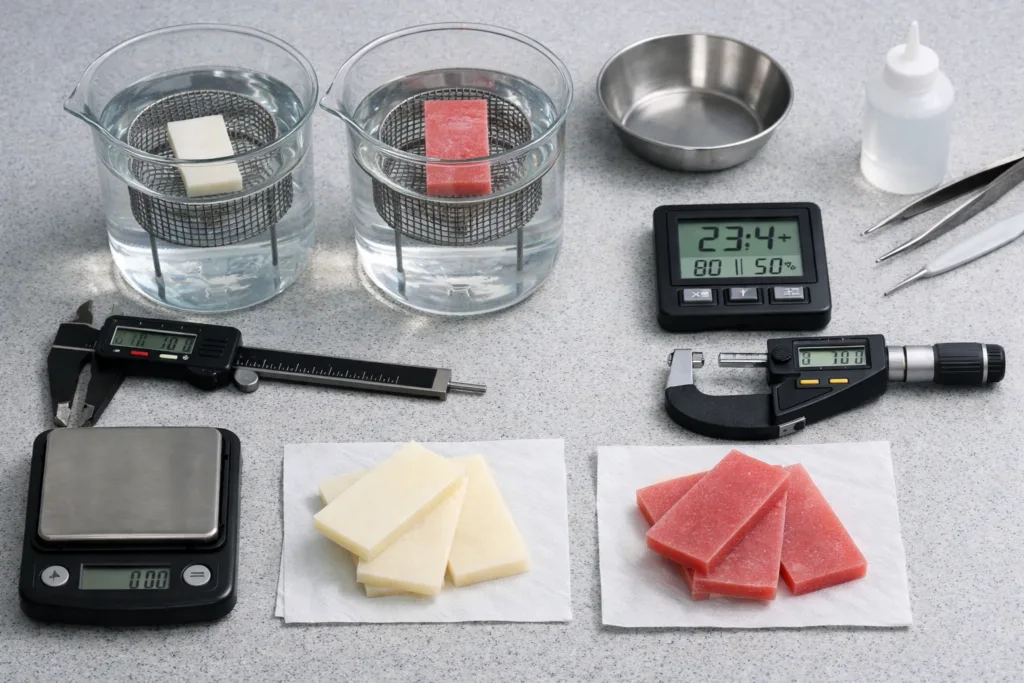
Over years, water absorbed into resin matrices can weaken, swell, or blister laminates. With properly formulated epoxy, absorption is so low it does not impact mass or strength even after years of immersion—ideal for hull repairs and splash zones. Vinyl ester, being more resistant than polyester but not as truly impervious as epoxy, is adequate for production boats or budget repairs, with proper thickness and topcoating. However, for high-performance boats or professional repair shops, epoxy is still the conservative, proven option.
Blister Resistance in Real-World Testing
Field and laboratory data both confirm: vessels using multiple coats of marine-grade epoxy show vastly reduced incidence of osmosis blisters—even after a decade afloat. The tight molecular net of cured epoxy prevents hydrolysis and swelling better than any polyester or vinyl ester alternative. For cruisers and liveaboards, this peace of mind often outweighs initial expense.
Lamination and Infusion: Strength vs Production Scale
Infusion resins must balance viscosity, cure rate, and finished part quality. Epoxy’s well-controlled cure allows for reliable part quality and minimal print-through. However, on massive production numbers, the cost barrier leads some builders to opt for vinyl ester formulations, which provide a middle ground between price and performance, provided the requirements are not above waterline or extreme loading environments.
Repairs: From Minor Fixes to Structural Rehabilitation
For repair work—especially below the waterline—epoxy’s unbeatable combination of adhesion, gap-filling, and moisture resistance is unmatched. By contrast, vinyl ester can be used for above-waterline cosmetic fixes, but is best avoided for wet or unknown substrate repairs. See ZDSpoxy’s ZDS-2060AB solvent-free primer and companion systems for repair workflows that target strength and site practicality.
How to Decide: Epoxy vs Vinyl Ester Marine—A Summary Guide
- Choose epoxy for underwater service, repairs, or unknown substrate quality
- Pick vinyl ester for large layups, tanks, or where cost and speed dominate
- Carefully follow surface prep, mixing, and application procedures for both
- Factor in working environment (temperature, humidity, ventilation)
If in doubt, start at the Marine Epoxy Resin Manufacturer knowledge hub for comprehensive guidance.
Conclusion: Your Decision Checklist for Boat Repairs
Epoxy and vinyl ester both serve the marine sector well—but with distinct job profiles. Epoxy gives unmatched confidence when performance, durability, and safety count most: hull repairs, underwater laminations, and tough bonding jobs. Vinyl ester’s strengths are cost efficiency and chemical barrier roles, mainly above the waterline or in controlled, repeatable manufacturing. Ultimately, understanding your specific marine challenge—and being diligent with prep, mix, cure, and safety—will deliver the lasting results your project deserves.
Frequently Asked Questions
Which resin is best for underwater boat repairs?
Epoxy is usually preferred for underwater repairs due to its strong adhesion, low water absorption, and reliable cure characteristics even on damp or unknown substrates.
Can I use vinyl ester resin for structural repairs on my hull?
Vinyl ester can handle some structural repairs, especially on new, compatible laminates, but epoxy is safer and more versatile for long-lasting, safety-critical fixes.
How do I minimize blistering risk for my boat?
Apply several coats of marine-grade epoxy resin as a barrier. Ensure surfaces are clean, dry, and properly prepared to block moisture ingress for years.
Are vinyl ester resins more cost-effective than epoxies?
In terms of raw material, yes—vinyl ester resins usually cost less than epoxies, making them attractive for large production runs or above-waterline applications.
Why does epoxy have less odor than vinyl ester?
Epoxy resins typically have low VOC content and don’t contain styrene, so they produce less odor during mixing and application compared to vinyl ester systems.
Is it possible to mix epoxy and vinyl ester resins in one repair?
Generally, this is not recommended. While epoxy may bond to cured vinyl ester with prep, you should avoid mixing the raw resins and follow compatibility guidelines for best results.
Related Reading
- Marine vs Standard Epoxy: Differences for Harsh Environments
- Step-by-Step Guide: Selecting the Best Marine Epoxy Resin
- Critical Properties That Make or Break Your Fiberglass Boat Epoxy
- Marine Epoxy Putty vs Liquid Explained—Safety and Strength in Repairs
- 7 Essential Marine Epoxy Resin Specs For Reliable Repairs