
Introduction: Why Fast-Cure Marine Epoxy Matters
Fast-cure marine epoxy is often the top choice for urgent repairs, tight project schedules, and cold climate installations. The need for quick turnaround, rapid cure, and reliable strength retention are essential for boat owners, contractors, and marine engineers. However, selecting the right system involves balancing cure speed, working time, exotherm control, and mechanical integrity. In this guide, we’ll explain the critical trade-offs, batch sizing rules, and best practices for choosing fast-cure epoxy for marine environments—without risking bond strength or lasting performance.
Understanding Fast-Cure Marine Epoxy
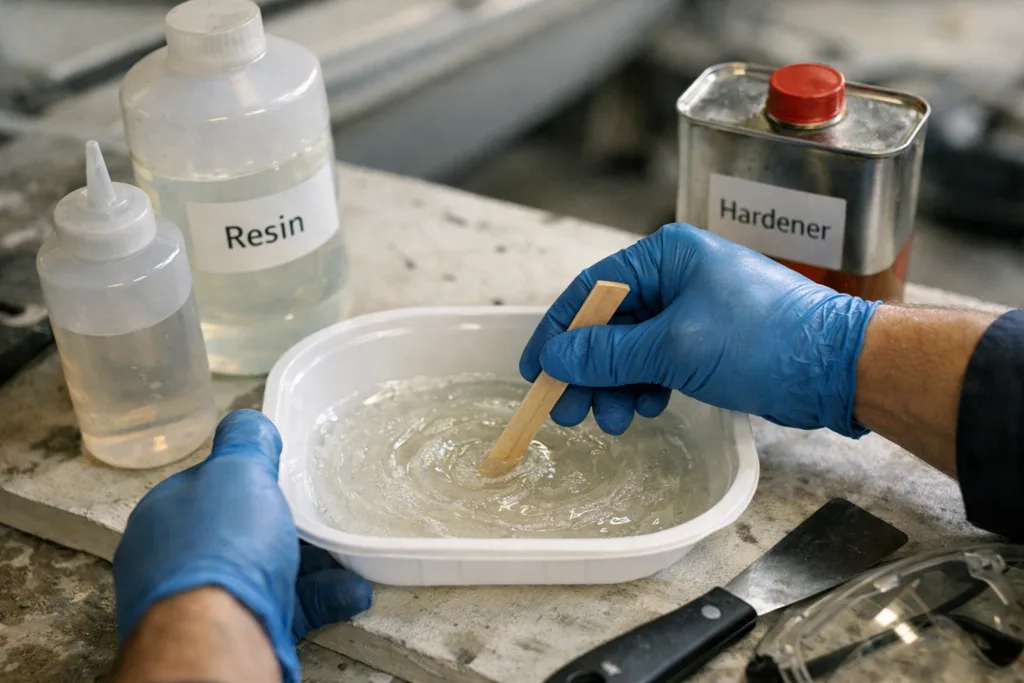
Fast-cure marine epoxy is a two-part resin system engineered to polymerize and harden quickly after mixing. Key properties include a short working time, rapid cure, and consistent mechanical strength once fully hardened. This makes it a go-to solution for emergency boat fixes, quick dockside repairs, and projects exposed to low ambient temperatures.
When to Use Fast-Cure Marine Epoxy
Effective use of fast-cure marine epoxy hinges on context. It shines in applications where time is limited, such as critical hull repairs, rapid waterproofing, or last-minute maintenance during unpredictable weather. For water-contact areas, check the product data sheet for immersion ratings and bond line thickness specs. Evaluate if fast cure is genuinely needed or if slower curing could improve final mechanical properties.
Key Performance Criteria: Cure Speed, Working Time, Turnaround
Three main factors drive epoxy selection:
- Cure Speed: How fast the material hardens and reaches functional strength.
- Working Time: The window to mix, apply, and shape before the system gels.
- Repair Turnaround: Total time before the repaired boat or structure is back in service.
These criteria impact productivity, safety, and long-term durability. For boat owners, saving hours with a fast cure can restore function quickly, but mishandling the timing can compromise strength or introduce defects.
The Trade-Offs: Cure Speed vs. Strength Retention
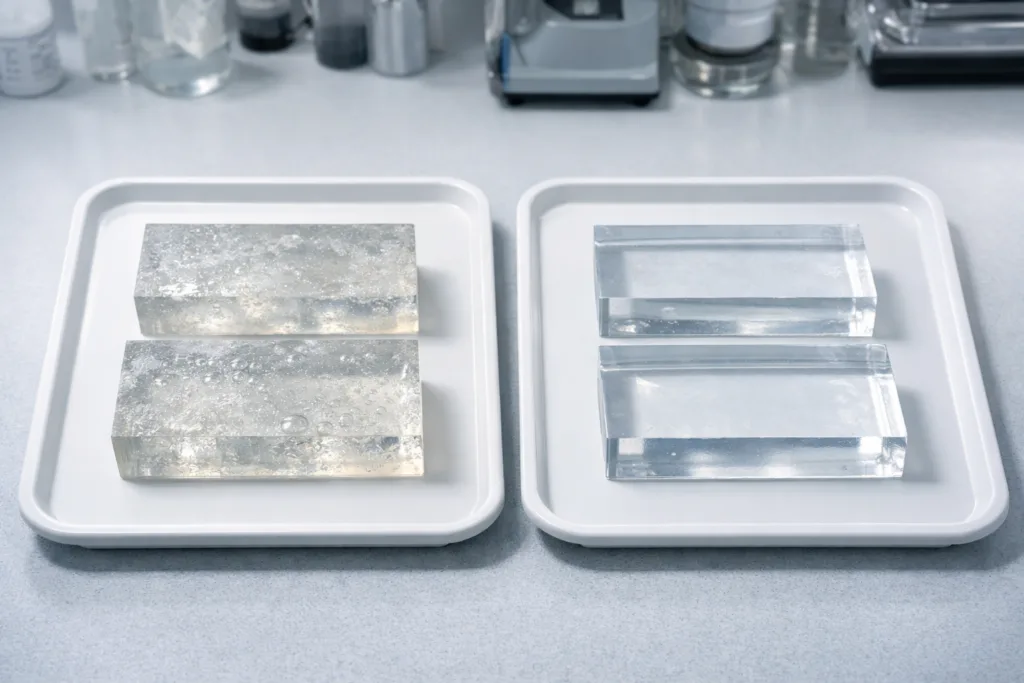
Speed isn’t free. Rapid polymerization produces more heat due to exothermic reactions. In thick repairs or mass pours, exotherm buildup can create bubbles, shrinkage, or even thermal damage. Materials set quickly, but may not reach the same ultimate strength or flexibility as slower-cure systems. Always weigh the need for speed against the importance of long-term mechanical performance.
Batch Sizing: Safe Mixing for Fast-Cure Epoxy
Batch sizing is critical when working with fast-cure marine epoxy. Larger batches can increase exotherm, accelerating gel time, and risk premature hardening. For optimal results:
- Mix only what you can apply within the stated working time.
- Divide large jobs into small, controllable batches.
- Use shallow mixing trays to dissipate heat.
- Check product technical data for maximum recommended mass per batch.
Site supervisors at ZDSpoxy emphasize measured batch control—especially when urgent repairs are required or ambient temperatures are low.
Exotherm Dynamics: Controlling Heat Build-Up
Exotherm refers to the heat generated as the epoxy cures. Fast-cure systems produce more heat, which can shorten working time and risk damaging the substrate. Controlling exotherm:
- Mix in smaller batches and spread out thinly.
- Avoid pouring thick sections unless product is rated for mass pours.
- Monitor ambient temperature—colder conditions reduce exotherm but extend cure time.
- Place batches away from direct sunlight or warm surfaces.
Proper exotherm management ensures the bond line stays intact and avoids curing defects.
Low Temperature Cure: Fast-Cure Epoxy in Cold Climates
Fast-cure marine epoxy is popular for off-season repairs and northern climates where standard epoxies slow down dramatically. Choose products designed for low temperature cure; these have catalysts and formulations that maintain speed and full bond strength. Explore temperature cure insights for marine work for more tips on handling epoxy in varying weather conditions.
Strength Retention: Ensuring Long-Term Performance
Fast-cure does not always compromise strength—but only if mixed and applied correctly. Quality marine epoxies should fully crosslink and achieve high bond strength even at rapid speeds. Check product datasheets for compressive, flexural, and adhesive strength ratings. Avoid shortcuts like altering mix ratios to extend or accelerate cure, as this weakens final performance and risks unpredictable outcomes. For repair batches tailored to your jobsite needs, see ZDSpoxy’s marine epoxy cure profile options.
Avoiding Common Mistakes: Mixing Ratio Discipline
One common pitfall is changing the resin-to-hardener ratio to alter cure speed. This often results in incomplete cure, weak bonds, or sticky surfaces. Always follow manufacturer recommendations for mixing ratios. For jobs needing precise timing, select a product formulated with an appropriate pot life for your conditions. If you’re unsure, refer to resources like the marine epoxy timing guide for detailed breakdowns on pot life and working time.
Application Areas: Where Fast-Cure Marine Epoxy Shines
- Hull repairs and patching
- Waterproofing rudder and keel joints
- Emergency deck fixes
- Rapid adhesive bonding for fittings
- Underwater pool repairs (see ZDS-1002AB for rapid aquatic repair)
Choose fast-cure marine epoxy for these tasks when downtime is costly and your project needs to return to service quickly.
Surface Preparation: Steps for Reliable Bond
Proper surface prep is vital for full strength retention:
- Clean off oil, dust, salt, and loose paint.
- Dry surfaces thoroughly—moisture slows cure and reduces adhesion.
- Roughen glossy substrates for improved mechanical key.
- Apply recommended primers if specified.
Bad surface prep is a leading cause of marine epoxy repair failure.
Mixing Methods: Tools and Technique for Consistency
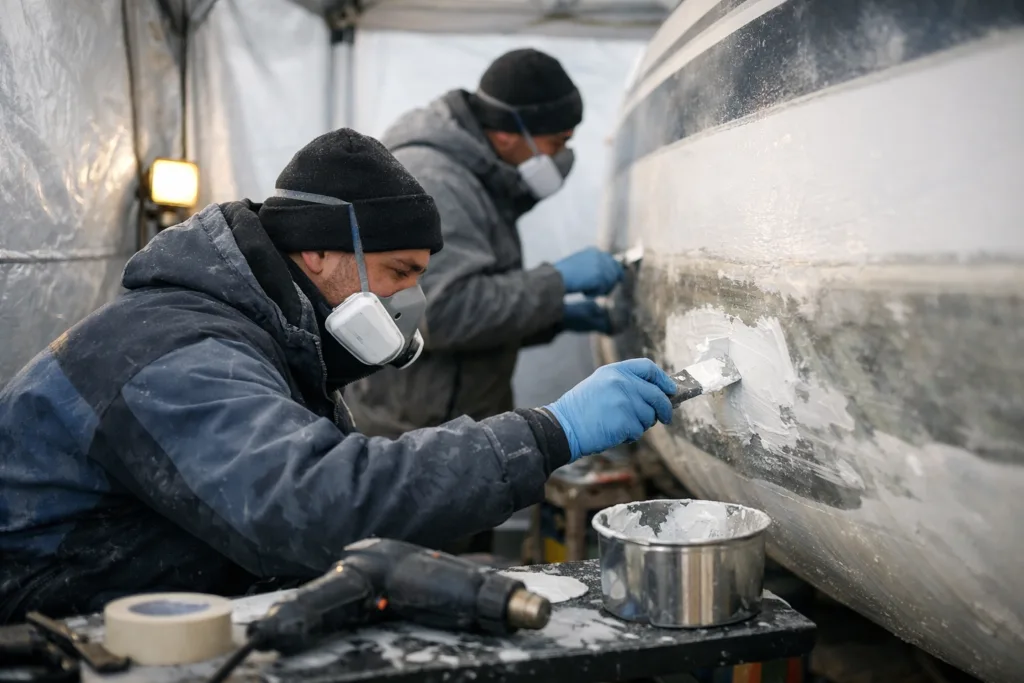
Use graduated cups for accurate ratio measurement. Mix slowly and scrape container sides, switching to a second mixing container to guarantee uniformity. The ZDSpoxy engineering team recommends batch size control and mechanical stirring for jobs over 500 grams to avoid air entrapment and incomplete blending.
Quality Assurance: Field Testing for Fast-Cure Epoxy
Even with correct mixing, verify cure by:
- Checking gel time against datasheet predictions
- Pushing a fingernail into the cured surface (should leave no impression)
- Performing a quick tensile test if possible
Record batch numbers and monitor viscosity—these checks help ensure repeatability across repairs, especially in changing weather.
Health, Safety, and Storage: Handling Fast-Cure Systems
Fast-cure marine epoxies may have higher VOC content or shorter shelf life. Always ventilate the area, wear Personal Protective Equipment (PPE), and store unopened resin in cool, dry conditions. Avoid direct contact; cured epoxy can be sanded but uncured material is hazardous.
Urgent Repairs: Step-by-Step Workflow
- Assess damage and choose the proper fast-cure epoxy
- Prepare the surface (clean, dry, roughen)
- Measure batch size and mix according to instructions
- Apply quickly and press firmly; work within product’s pot life
- Allow to cure undisturbed for recommended duration
- Check for full set before exposing to water or load
Following this routine maximizes speed and reliability in emergencies.
Repair Turnaround Time: What to Expect
Fast-cure marine epoxy systems often allow handling after 30–60 minutes and full strength within 6–24 hours, depending on temperature and thickness. Thicker repairs may take longer, especially if exotherm is managed by small batch application.
Product Comparison: Table of Fast-Cure vs. Slow-Cure Marine Epoxy
| Feature | Fast-Cure Marine Epoxy | Slow-Cure Marine Epoxy |
|---|---|---|
| Cure Speed | Rapid (minutes to hours) | Slow (hours to days) |
| Working Time | Short (5–30 mins) | Long (30–120 mins) |
| Strength Retention | Good if applied correctly | Typically higher, especially in mass pours |
| Exotherm Risk | Higher in mass batches | Lower, easier to manage |
| Low Temp Performance | Optimized for cold | May require heat |
| Application | Emergency repairs, quick fixes | Large builds, structural repairs |
Trade-Off Scenarios: Deciding When Fast Cure Is Appropriate
Use fast-cure marine epoxy for urgent repairs, jobs requiring rapid access, or installs in cold weather. Opt for slower cure in mass pours or high-stress joints to maximize bond strength and avoid excessive exotherm. Consult ZDSpoxy technical resources for batch sizing and cure profile guidance tailored to your application.
Tailoring Cure Profiles for Site Needs
Do not alter mix ratios to speed up or slow down cure—request customized cure profiles from a marine epoxy resin manufacturer instead. This ensures consistent quality and reliable performance without risking defects. Get site-specific cure options here.
Fast Cure Marine Epoxy: Best Practices and Case Examples
- Choose product with documented low temp cure capability
- Follow exact ratio and batch sizing recommendations
- Use mechanical mixers for larger batches
- Verify cure against datasheet before loading repaired part
- Prioritize surface prep and environmental controls
ZDSpoxy engineers have observed that disciplined technique, not shortcuts, delivers the best trade-off between speed and strength in marine repairs.
Expert Tips for Cold Weather and Urgent Conditions
- Pre-warm resin containers to improve mix consistency
- Insulate repair area from wind/chill to maintain cure speed
- Choose epoxies formulated for low temp saturation
- Record ambient temp and batch numbers for QA
- Consult technical support when unsure
Final Recommendations: Making the Right Fast-Cure Marine Epoxy Choice
Always match product specs to jobsite needs, observing batch sizing, mixing discipline, and cure timing. Never shortcut ratios or ignore datasheet limits. For custom jobs, coordinate with a technical provider like ZDSpoxy for tailored solutions. Proper selection and application deliver the fastest repair turnaround—and preserve long-term strength.
Frequently Asked Questions
How fast does a typical fast-cure marine epoxy set?
Most fast-cure marine epoxies will gel in 15–30 minutes and be ready for handling or sanding within 1–2 hours, depending on ambient temperature and project thickness.
Will using a fast-cure system reduce long-term bond strength?
Not if you follow mixing, batch sizing, and surface prep rules. Quality fast-cure epoxies retain strong mechanical properties when applied correctly.
How do I handle exotherm risk in thick repairs?
Always mix in small batches, use shallow trays, and avoid mass pours unless the product is rated for it. Monitor temperature and follow datasheet guidelines to prevent heat buildup.
Is it safe to change the mix ratio for a faster cure?
No. Altering the resin/hardener ratio can compromise cure, strength, and surface quality. Use a manufacturer-formulated fast-cure system instead.
Can fast-cure marine epoxy be used for underwater repairs?
Yes, if the product is rated for submerged applications. Check technical data for underwater cure and bond line thickness recommendations.
What is the best practice for repairs in cold weather?
Choose epoxies formulated for low temp cure, pre-warm resin, insulate the repair area, and stick to batch sizing rules to ensure consistent results.
Related Reading
- Why Slower Epoxies Make Stronger Repairs for Larger Marine Projects
- Mastering Pot Life & Working Time in Epoxy Repairs: Avoid Costly Mistakes
- Preventing Cure Failure: The Engineer’s Guide to Marine Epoxy Mix Ratios
- Improving Metal Fabrication Stability With Baseplate Grouting Tips
- Cold & Hot Weather Success With Marine Epoxy: 7 Temperature Factors