
Introduction: Why Grouting, Baseplate Design, and Metal Fabrication Depend on Grout Hole Precision
When it comes to Grouting, Baseplate Design, and Metal Fabrication, the proper sizing and placement of grout holes in baseplates play a pivotal role. These seemingly simple features are essential for the safe, stable, and lasting performance of heavy machinery, structural steel, and industrial equipment. Engineering principles such as load distribution, vibration damping, and anchorage are all directly influenced by the grout system design. Not only does this ensure longevity and safety, but it also prevents expensive failures, alignment issues, or even catastrophic structural problems. In this guide, readers will discover how to achieve optimum grout hole sizing and layout, supported by best practices, field-proven installation methods, and insights from the manufacturing floor.
The Role of Grout Holes in Baseplate Engineering
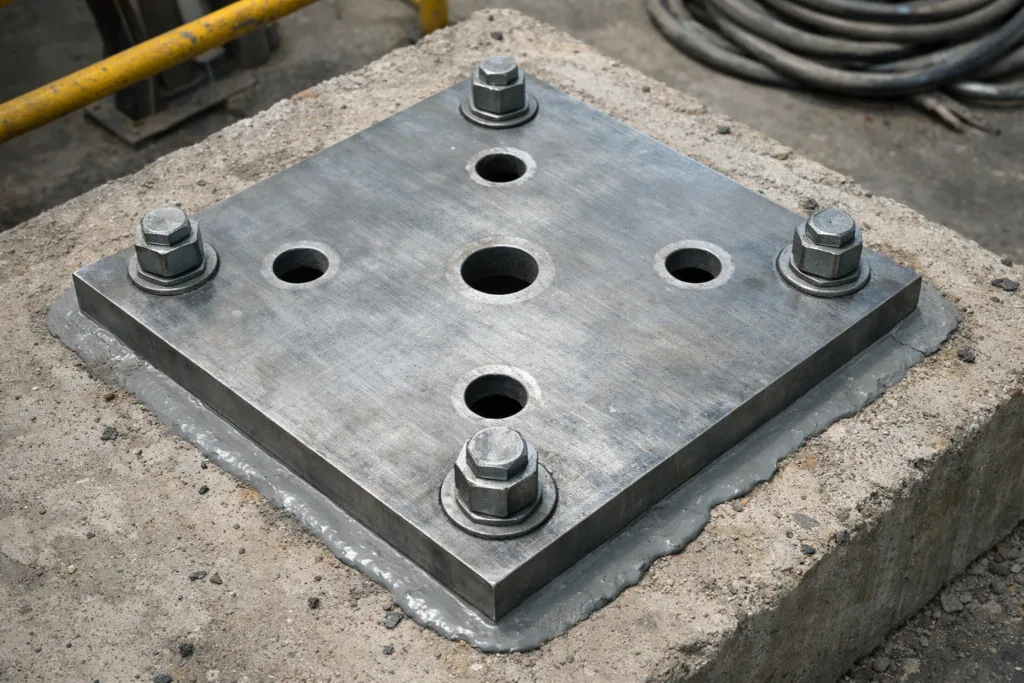
Grout holes are not just openings—they are engineered features with a critical purpose in industrial structures. When foundation grouting is performed beneath baseplates, these holes provide access to inject or pour the grout, ensuring complete filling beneath the plate. This eliminates voids, distributes loads, and maintains a solid, consistent bond between the steel plate, grout, and underlying concrete. Without proper grout hole design, even the strongest materials can fail to deliver lasting performance.
Load Distribution Fundamentals
One of the primary jobs of grout is to transfer loads efficiently from baseplate to foundation. The location, shape, and size of grout holes affect how well the grout fills high-stress zones. Engineers must align grout holes with load paths to maximize bearing area, minimize stress concentrations, and avoid weak points. For high-compressive applications such as heavy machinery anchors, check out the ZDS-1410AB High Compressive Epoxy Grout for Crushers, which is designed for consistent performance in demanding installations.
Vibration Damping and Dynamic Loads
Many industrial projects involve dynamic loading—motors, pumps, compressors, or processing equipment. Grout holes need strategic placement to ensure a continuous mass of grout under all dynamic load points, especially when following standards such as API 610 or 686. Proper grout coverage absorbs vibration, dampens resonance, and protects anchor bolts from fatigue and loosening.
Grout Hole Size: Getting the Dimensions Right
Sizing grout holes correctly is a balancing act between accessibility and structural integrity. Too small, and grout can’t flow through, risking voids; too large, and the steel baseplate might weaken. Typical guidelines suggest:
- Minimum Diameter: 40–50 mm for manual pouring, 25–35 mm for pressure injection
- Number of Holes: Depends on plate area and complexity; usually 1–4 per square plate and extra for long or irregular plates
- Spacing & Edge Distance: At least 1/6 the plate width from edges, with uniform spacing to reach all corners
Always confirm with structural specifications or project standards, especially in high-precision sectors like petrochemical, power generation, or marine facilities.
Recommended Hole Placement Patterns
For rectangular baseplates, grout holes are often arranged symmetrically. For circular or irregular plates, holes are placed along radial axes, targeting the thickest or most load-bearing sections. Designs should allow grout to flow smoothly and air to escape, ensuring void-free filling. Many engineers use multiple holes: one or two for grout entry, and others for venting or observation.
| Plate Shape | Grout Hole Layout | Purpose |
|---|---|---|
| Rectangular | Symmetrical near corners | Complete grout spread, load path coverage |
| Circular | Radial/separated along center axis | Central filling, uniform outer coverage |
| Irregular | Customized per stress zones | Target high-stress or thickest areas |
Installation Best Practices for Grouting Baseplates
Practical success depends on precise field procedures. Here are proven steps to ensure stable and lasting installations:
- Formwork sealing: Prevents grout loss and ensures pressure retention
- Hole cleaning: Free from oil, dust, rust; often solvent wiped
- Pre-moisture checks: Dry substrates are required for epoxy grouts, but for challenging wet conditions, use solutions like Solvent-Free Primer for Wet Concrete
- Batch size control: Mix only what can be handled within the working time, especially in larger jobs
- Air release: Vent holes or tapping ensures trapped air escapes for better bond
- Monitoring: Observe grout flow, stop when grout emerges from adjacent holes
Epoxy vs. Cementitious Grout: Performance Considerations
Epoxy grout offers high compressive strength, chemical resistance, and minimal shrinkage. Cementitious grout is easier to handle, less expensive, and suited for static loads. Consider conditions like temperature, chemical exposure, and vibration intensity. For tough environments, epoxy solutions such as Heavy Machinery Epoxy Grout provide exemplary performance and stable alignment.
Engineering Principles: Anatomy of a Well-Grouted Baseplate
A successful baseplate grout job is more than pouring resin—it’s about aligning design, material, and onsite procedures. Key engineering factors include:
- Effective Bearing Area (EBA): Target at least 85% coverage to prevent stress concentrations. Read more about bearing area calculations in Effective Bearing Area & the 85% Rule.
- Compressive Modulus: Balance stiffness and flexibility for dynamic loads.
- Thermal Compatibility: Ensure grout, steel, and concrete expand similarly with temperature shifts.
- Creep Resistance: Prevent long-term deformation under constant load.
Industry Standards and Compliance
Standards like API 610, API 686, and AISC set minimum requirements for grout hole design, installation tolerances, and coverage ratios. Always reference industry guidelines for critical facilities. Documentation of material batch numbers and QC checks are mandatory for major contracts.
Practical Observations from the Field: ZDSpoxy Experience
From a plant-floor perspective, real-world projects rarely unfold in ideal conditions. Technical teams at ZDSpoxy have observed that the most common grout hole mistakes arise from batch mixing errors, poor substrate prep, and neglecting vent holes. For high-strength epoxy grout jobs, especially with large or multiple holes, strict adherence to mixing ratio and air release steps makes a measurable difference in long-term performance. Grout hole edges should be de-burred and sealed to avoid resin leaks.
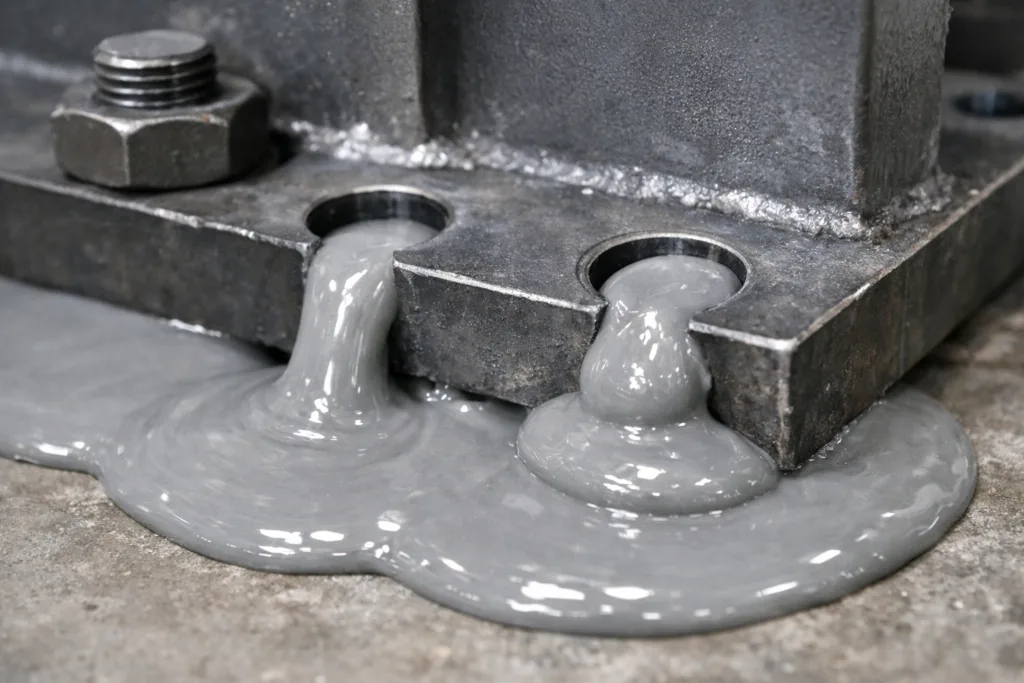
Common Failures Linked to Improper Grout Hole Design
Ignoring correct grout hole sizing or placement leads to real consequences:
- Voids: Unfilled areas undermine load transfer and can cause plate cracking or shifting
- Vibration Looseness: Poor grout coverage lets machinery vibrate excessively, risking bolt loosening
- Alignment Loss: Insufficient holes mean uneven grout flow and misaligned baseplates
- Thermal Failures: If grout does not fill sections evenly, thermal expansion strains can cause cracking
Careful planning and execution prevent these predictable failures.
Tips for Successful Grout Hole Implementation
- Review all plate drawings and align holes with anchor layout
- Test grout flow with water or dye before full product installation
- Use a grout volume calculator to estimate coverage and batch sizing (calculate your usage efficiently at Epoxy Grout Volume Calculator Project Quote)
- Seal holes well to prevent grout escape
- Record batch numbers for traceable QC
Advanced Considerations: Challenging Environments and Innovative Solutions
In some projects, conditions such as cold weather, marine environments, or restricted access demand special solutions. Tight-gap grouting, underwater applications, and high-temperature equipment require tailored products and methods. Epoxy solutions can cure underwater or at low temperatures, while custom-shaped plates may need additional holes for full coverage and venting.
Case Studies: Metal Fabrication Projects and Grout Hole Strategies
Heavy Machinery Foundation Grouting
Machinery bases with multiple mounting points need careful hole placement to ensure all stress zones are filled. In a recent fabrication facility install, engineers mapped hole positions to align with both anchor bolts and vibration zones, reducing long-term alignment losses.
Compressor Baseplates
Compressor baseplates operate under high dynamic loads. Installing four grout holes at corners plus two vent holes along the centerline ensured complete coverage and minimized vibration transfer, giving longer bolt life and reduced maintenance.
Grouting, Baseplate Design, Metal Fabrication: Putting the Principles Into Practice
Bringing together grouting, baseplate design, and metal fabrication means understanding how engineering theory translates to real-world reliability and safety. Attentive grout hole design—size, placement, cleaning, sealing—creates a solid foundation for everything from pipeline supports to industrial machinery. Review standards, do a flow test, and document your steps for consistent and compliant results across every project.
Conclusion: The Lasting Impact of Proper Grout Hole Design
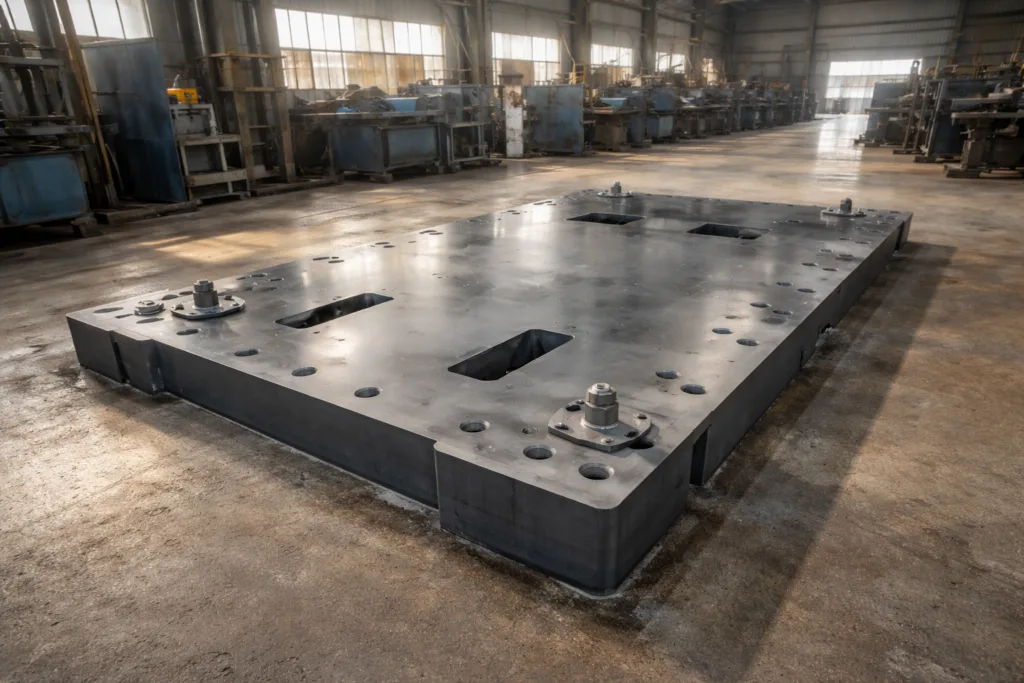
Properly sized and strategically placed grout holes are fundamental for stable, vibration-resistant, and safe baseplate installations. The best engineering practices combine material science, field-proven methods, and rigorous site discipline—results that deliver reliable performance you can measure over decades. Whether working with epoxy, cementitious grout, or specialty solutions, remember that careful design is the start, but precise installation and quality control are what guarantee success. In challenging projects where longevity and alignment are paramount, follow the principles and practical tips outlined here to prevent failures and optimize every baseplate.
Frequently Asked Questions
How do you determine the optimal size for grout holes?
The optimal size depends on plate thickness, grout type, and installation method. Typically, holes range from 25–50 mm in diameter, balancing accessibility and structural integrity.
Why is hole placement critical in baseplate grouting?
Placement directly affects grout flow, coverage, and load transfer. Holes near stress points or anchor bolts ensure void-free and vibration-resistant installations.
Can epoxy grout be used in wet conditions?
Yes, specialized formulations and primers, like solvent-free epoxy primers, allow epoxy grout to be used on damp substrates in certain applications.
What happens if grout holes are too few or poorly positioned?
Poor positioning leads to unfilled voids, weak load transfer, and increased risk of vibration or plate shifting. Proper planning prevents costly failures.
Should vent holes always be included?
Vent holes allow trapped air to escape and confirm full grout filling. They are recommended for large plates, complex shapes, or high-precision applications.
How does temperature affect grout curing under baseplates?
Temperature influences cure rate and strength development. Cold conditions may require low-temperature grouts or extended cure times.
Related Reading
- Demystifying API 686 Grouting: Standards for Safe Equipment Foundations
- Vertical Pumps vs Split Case: Key Grouting Performance Lessons
- Choosing Grout for Static and Dynamic Loads: Critical Steps Explained
- 7 Reasons Creep Resistance Is Essential for Long-Term Alignment
- Managing Thermal Expansion: Compatibility Strategies for Epoxy, Steel, and Concrete