
Understanding Grouting: The Key to Reliable Pump Installations
Grouting is a critical step in the installation of pumping systems, directly impacting performance, reliability, and service life. When selecting between vertical inline pumps and horizontal split case pumps, the choice of grout and the grouting technique affect everything from vibration isolation to alignment. This article explores the operational nuances and installation best practices that maximize pump efficiency and system longevity. By analyzing material compatibility and practical considerations, we provide a comprehensive guide to optimizing pump performance using proper grouting methods.
Grouting Vertical Inline Pumps vs. Horizontal Split Case: A Technical Comparison
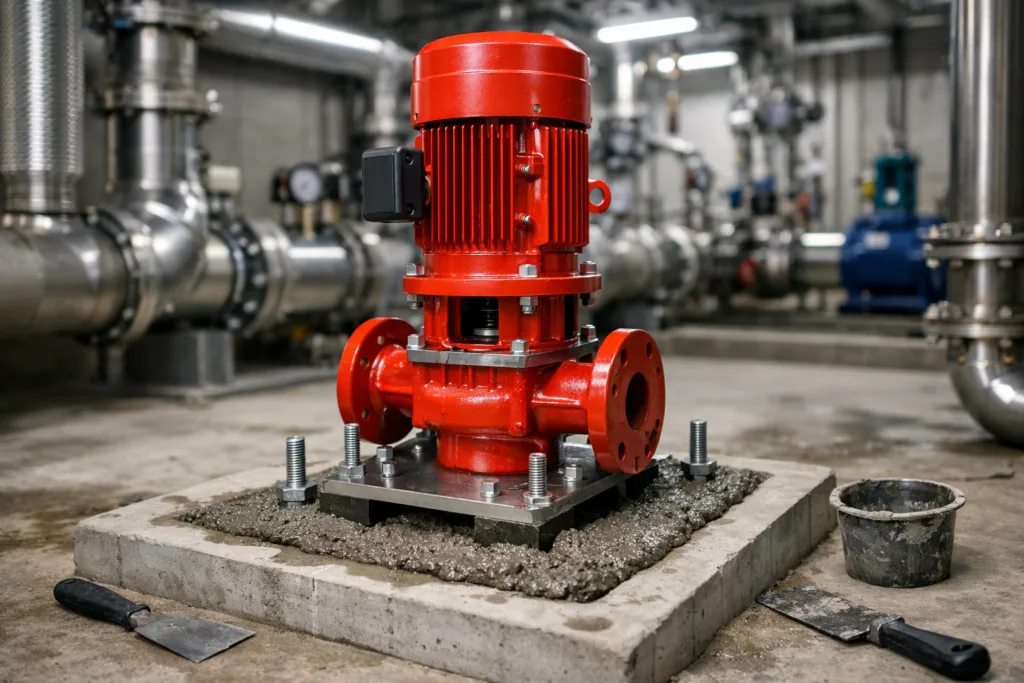
Both vertical inline pumps and horizontal split case pumps are widely used for a variety of industrial and commercial applications, each with distinct design features and installation requirements. The effects of grouting on their operation are significant, influencing vibration control, alignment, and overall durability.
Pump Designs and Installation Requirements
| Pump Type | Mounting/Grouting Needs | Applications |
|---|---|---|
| Vertical Inline Pumps | Compact base, often requires precision epoxy grout for alignment | HVAC, water circulation, condensed mechanical rooms |
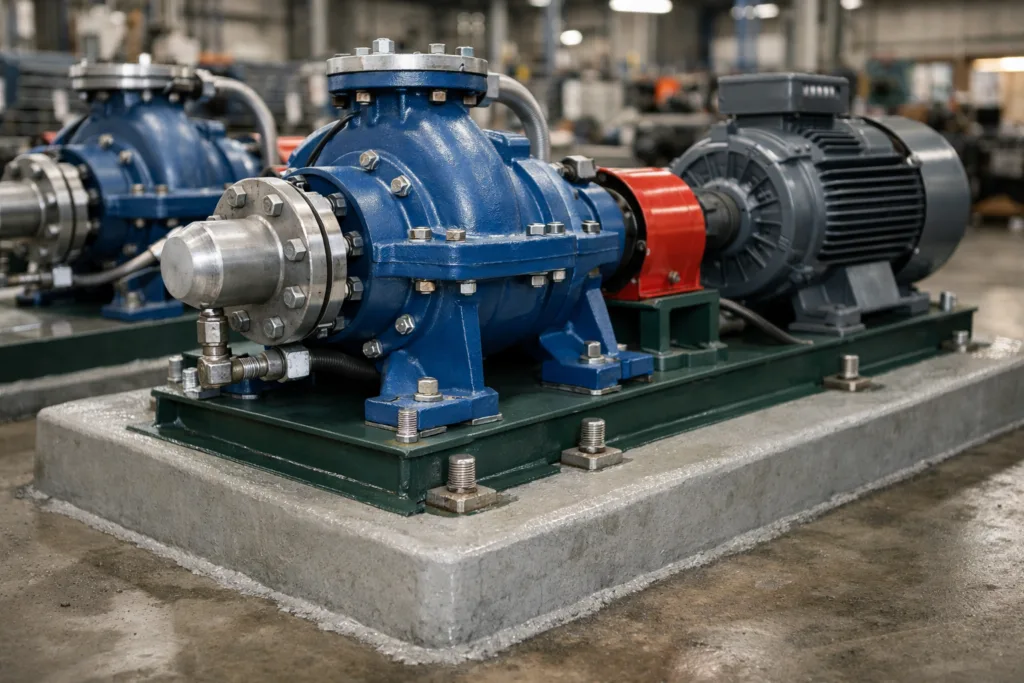
| Horizontal Split Case Pumps | Larger baseplate; often uses cementitious or epoxy grout for heavy-duty vibration dampening | Municipal water, large-scale processing, fire protection |
Material Compatibility: Choosing the Right Grout
Material compatibility plays an essential role in the success of a grout installation. Epoxy grout offers superior bond strength, chemical resistance, and minimal shrinkage, making it ideal for pump bases subject to vibration and dynamic loads. For heavy pump bases, products like heavy machinery epoxy grout deliver both high compressive strength and dimensional stability. Proper selection ensures the grout can withstand operational stresses and maintain the integrity of the equipment foundation.
Effects of Grouting on Pump Efficiency, Maintenance, and Longevity
Effective grouting minimizes vibration transmission, prevents misalignment, and reduces long-term maintenance needs. By providing a stable and uniform bearing area, grout absorbs dynamic forces and prevents premature component wear. The durability and maintenance frequency of both vertical inline and horizontal split case pumps are largely determined by the quality of their foundation grouting.
Vibration Isolation and Alignment
Precision grouting techniques improve vibration isolation for both pump categories. Modern epoxy grout formulas fill even tight gaps, creating void-free surfaces critical for alignment. For installations demanding extreme accuracy, using tight-gap low-viscosity grouting solutions can enhance bearing uniformity and reduce the risk of soft foot or pump displacement issues.
Pump Longevity and Maintenance Optimization
- Epoxy grout resists chemical attack and water ingress, extending equipment life.
- Proper grouting reduces maintenance intervals by preventing baseplate movement and misalignment.
- Correct installation techniques—such as ensuring full bearing area and void-free fill—are proven strategies for maximizing pump longevity.
Specific Applications: Where Each Pump Design Excels
The choice between vertical inline and horizontal split case pumps is application-driven. Each design responds differently to grouting, which must match operational demands.
- Vertical Inline Pumps: Perfect for space-constrained mechanical rooms, where compact baseplates necessitate accurate grouting. Epoxy solutions ensure minimal vibration and rapid cure times.
- Horizontal Split Case Pumps: Suited for high-flow, high-pressure scenarios. Their baseplates often require mass grouting with robust epoxy formulations, such as ZDS-1410AB High Compressive Epoxy Grout, to withstand heavy dynamic loads and maintain alignment under constant duty.
Grouting Practices for Challenging Environments
Installing pumps in environments with fluctuating temperatures or moisture requires special attention. Low-temperature grout options (low-temperature grouting (0–10°C)) ensure reliable cure and performance in cold rooms, while solvent-free primers prevent loss of adhesion on damp substrates.
Vibration Isolation: Advanced Grouting Methods
Vibration isolation is essential for both types of pumps, particularly when installed on structural floors or in critical process applications. Proper grout selection and installation techniques play a crucial role in reducing transferred vibration and noise.
- For vertical inline pumps, epoxy grout provides a seamless interface, absorbing mechanical energy without degrading.
- For horizontal split case pumps, mass pour grouting establishes a solid, void-free foundation. Overlooking these details can result in excessive vibration, costly repairs, and efficiency loss.
Alignment Sensitivity: Ensuring Long-Term Performance
Maintaining acceptable levels of misalignment is critical for pump performance. Grouting practices must focus on formwork sealing, correct mixing ratios, and batch control to prevent distortion after cure. ZDSpoxy’s plant-floor experience confirms that consistent mixing discipline and meticulous surface prep are vital to preventing failures from grout shrinkage or air entrapment.
Performance Metrics and Real-World Case Studies
Direct performance metrics help illustrate the effects of grouting across pump types:
| Metric | Vertical Inline | Horizontal Split Case |
|---|---|---|
| Vibration (mm/s) | ≤ 2.5 | ≤ 1.2 |
| Alignment Tolerance (mm) | ±0.10 | ±0.05 |
| Baseplate Movement (mm/year) | 0.5 | 0.2 |
| Downtime for Maintenance (days/year) | 2–3 | 1–2 |
Case studies highlight that epoxy grouting consistently outperforms traditional cementitious products when it comes to alignment retention and vibration control. In large municipality water projects, horizontal split case pumps set with high compressive epoxy grout have shown measurable reductions in vibration and longer operational intervals between maintenance.
Zdspoxy Insights: Real-World Pump Installations
ZDSpoxy’s engineering teams observe that substrate moisture, room temperature swings, and working time discipline can make or break pump foundation reliability. In practice, workflow planning—such as batch size control and air release—is as important as the chemistry of the grout itself. For vertical inline pumps in HVAC upgrades, solutions like tight-gap epoxy help achieve rapid turnaround without sacrificing alignment. For heavy split case pumps, using solvent-free epoxy primer ensures bond strength even on damp concrete, especially in cold storage or municipal works.
Quality Control and Grout Testing: Ensuring Consistency
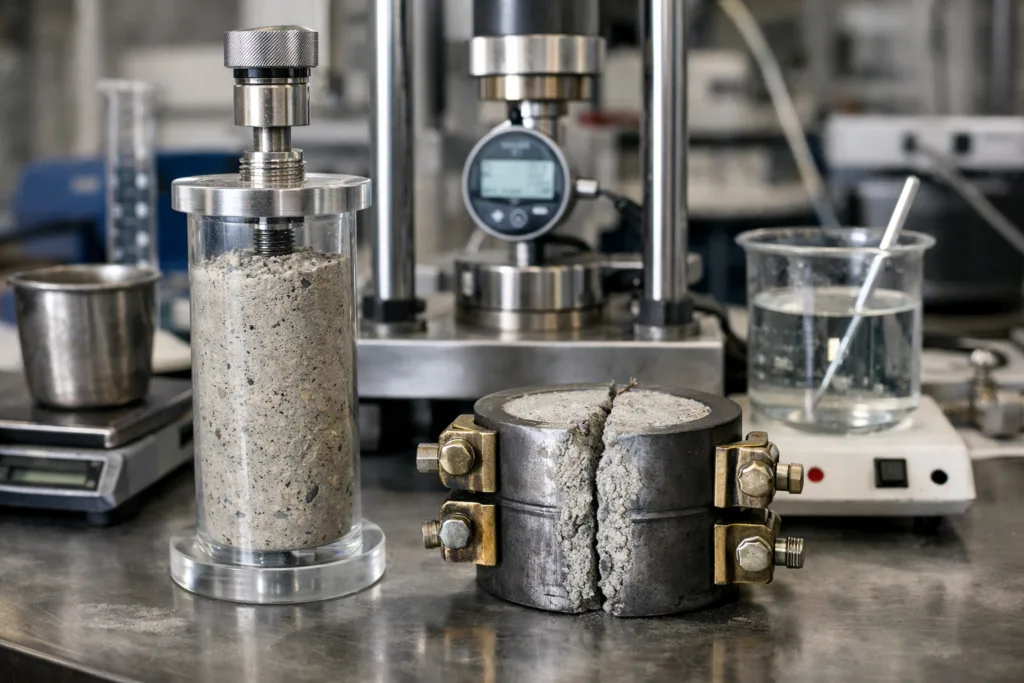
Batch consistency and viscosity control are essential for repeatable results. Grout samples should be tested for compressive strength, gel time, and air release prior to application. Quality assurance checks, including cure time validation and effective bonding area calculation, are standard for both vertical inline and horizontal split case installations. Documentation helps track performance and guides corrective action if needed.
Safety, Compliance, and Handling Considerations
Safe handling is paramount for grouting products, especially epoxies. Technicians should wear proper PPE, ensure ventilation, and avoid over-exposure to VOCs. Storage and transport should maintain product integrity, and shelf life tracking prevents surprise failures on site.
Conclusion: Grouting Vertical Inline Pumps vs. Horizontal Split Case—What Matters Most?
Choosing the right grout and installation technique for vertical inline or horizontal split case pumps is an investment in long-term reliability, efficiency, and maintenance control. The proper combination of material compatibility and grouting precision ensures optimal vibration isolation, alignment, and longevity. In practical terms, consistent quality checks, site-specific adaptation, and real-world preparation are the pillars of pump performance. For plant managers and engineers, these approaches drive results and reduce risk. Confident grouting practices translate directly into more reliable, safer, and cost-effective pump operation.
Frequently Asked Questions
What is the main purpose of grouting pump bases?
Grouting secures the pump base, isolates vibration, ensures alignment, and protects equipment against long-term movement and environmental exposure.
How does material selection affect pump grouting?
Selecting compatible epoxy or cementitious grout is critical; epoxy offers strength, chemical resistance, and minimal shrinkage, ideal for demanding applications.
Can improper grouting impact pump performance?
Yes, improper grouting can lead to misalignment, excess vibration, reduced efficiency, shortened equipment lifespan, and increased maintenance needs.
What factors should guide grout choice for split case pumps?
Consider load, vibration level, environmental conditions (temperature, moisture), and desired alignment accuracy. Robust epoxy grout is often preferred for heavy-duty installations.
How does grouting help with maintenance optimization?
Proper grouting slows baseplate movement, resists chemical/water damage, and maintains alignment, reducing frequency and cost of maintenance over time.
Are epoxy grouts suitable for cold environments?
Specialized low-temperature epoxy grouts are formulated to cure reliably in cold settings, ensuring strong bond and performance even at 0–10°C.