
Understanding Crack Types: Hairline Crack Repair, Moving Crack Waterproofing
Cracks in building surfaces are a concern for owners, facility managers, and contractors alike. Two main types often raise questions: hairline cracks and moving cracks. Knowing how to differentiate these is critical to planning effective hairline crack repair and moving crack waterproofing. In this article, we’ll guide you through identifying crack movement, recording and mapping, and selecting repair strategies based on real-world site conditions.
How to Identify Crack Movement: The “Map and Observe” Method

Before choosing a repair or waterproofing approach, it’s essential to judge: is your crack moving or stable? Follow these practical steps to assess movement:
- Visual Inspection: Is the crack recurring after prior repair?
- Location Assessment: Does the crack cross structural joints, appear at thresholds, corners, or slab edges?
- Crack Map Recording: Draw a simple ‘crack map’ of your surface, noting length, width, position, and date. Re-inspect every few weeks. Watch for widening, lengthening, or new branches forming.
Owners and contractors who keep this ‘crack map record method’ can make clearer judgments: a stable, unchanged crack indicates a hairline crack; but if growth occurs, it signals a moving crack—and demands special approaches.
Hairline Cracks: Characteristics and Repair Approaches
Hairline cracks are typically less than 0.3 mm wide. They rarely affect structural integrity but may allow moisture, chlorides, or CO2 to penetrate and cause long-term damage. These are common in render, screed, tiled floors, or concrete after curing.
- Often do not cross structural joints
- Located away from slab edges, thresholds, or heavy-duty corners
- Usually static—don’t expand noticeably over time
Best Methods for Hairline Crack Repair
For hairline cracks, your goal is to seal and reinforce the surface, preventing water and contaminant ingress:
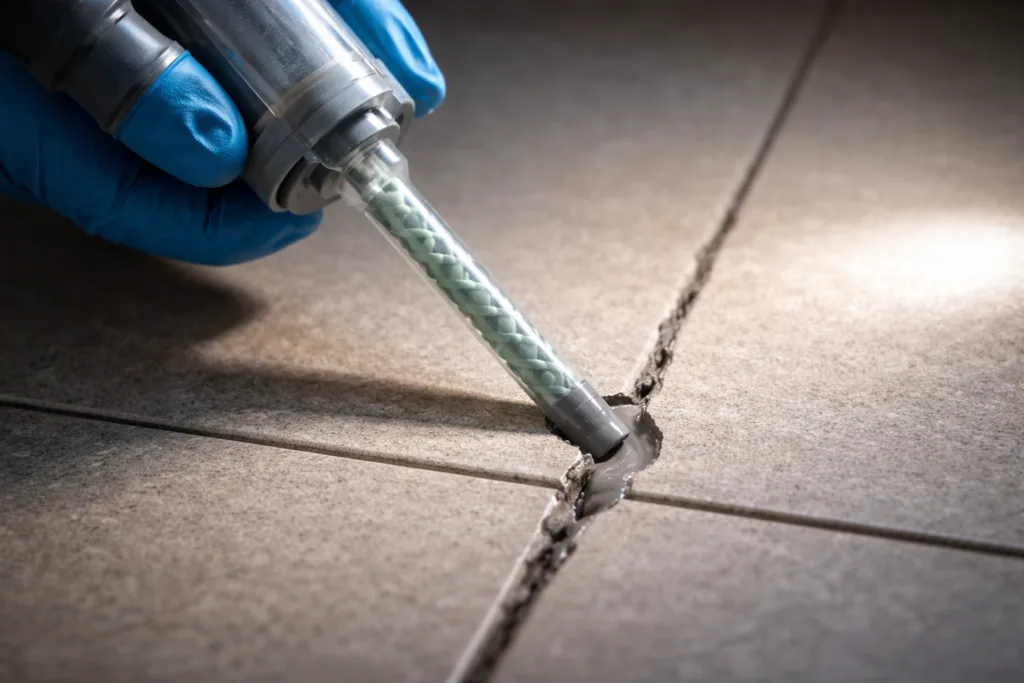
- Clean the crack: Remove dust and contaminants using compressed air or vacuum.
- Prime the area: Use low-viscosity, deep-penetrating epoxy primers such as ZDS1090ab for solid substrate adhesion.
- Apply specialized crack sealers or hydrophobic mortars (e.g., ZDS1340AB) if hairline cracks are present in critical waterproofing zones.
- Finish with a suitable waterproof coating or tile adhesive to lock in durability.
If hairline cracks appear outdoors (e.g., on balconies or terraces), consider coatings designed specifically for terrace and balcony outdoor floors to combat temperature cycles and UV exposure.
Moving Cracks: Identifying and Managing the Challenge
Unlike hairline cracks, moving cracks show regular change—they widen, lengthen, or reappear even after past repair. They often occur at:
- Slab-to-slab joints
- Door thresholds, wall corners, and window perimeters
- Areas exposed to vibration, settling, or major temperature differences
If your crack map shows recurring movement, it’s time for moving crack waterproofing methods.
Moving Crack Waterproofing: Strategies That Last
- Widen and Undercut: Enlarge the crack into a uniform channel to receive materials with flexibility.
- Install Bond Breakers: Use tapes or flexible fillers at the base to allow some movement, preventing stress concentration in rigid fillers.
- Use Flexible Fillers: Select high-elongation polyurethane or polyurea systems (like ZDS1990AB or ZDS109) that accommodate dynamic movement.
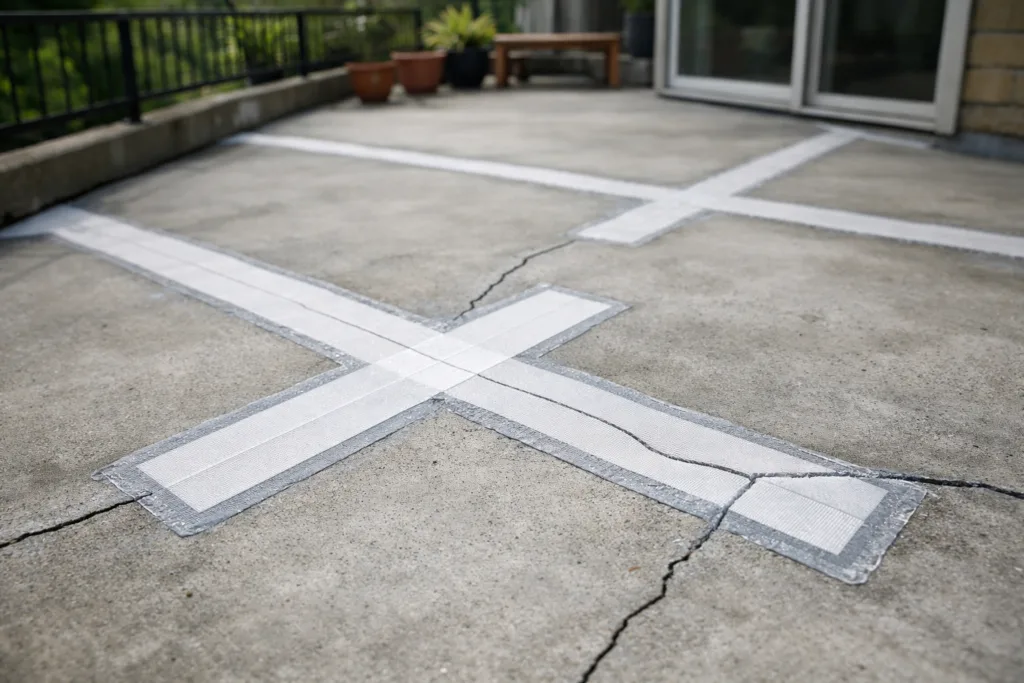
- Surface Reinforcement: Overlay with fabric-backed, elastomeric membrane systems, especially at thresholds or corners known for movement.
In high-moisture or exposed environments, such as swimming pool decks, using industry-rated swimming pool waterproofing products adds a further layer of defense against persistent leaks.
Deciding Between Hairline Crack Repair and Moving Crack Waterproofing
The crack map record is your tool for smart judgment. If the crack’s width, length, and direction remain unchanged across several observations, treat it as a hairline crack—pursue sealing and surface strengthening methods. If movement is clear, prioritize elastomeric, flexible materials capable of handling repeated stress without re-cracking.
How Crack Location and Substrate Affect Your Repair Plan
Not all cracks behave the same. Surface, location, and substrate type can change your repair and waterproofing expectations. For example:
- Corners and Wall-to-Floor Junctions: Higher risk for movement, even if cracks seem narrow.
- Thresholds: Often affected by foot traffic and substrate shrinkage.
- Outdoor Slab Edges: Prone to weather-driven expansion/contraction.
Check nearby joints, the presence of expansion gaps, and history of repairs. Document everything on your crack map for clear maintenance history and reliable decision-making.
The Crack Map Recording Method—Step-by-Step Guide
Don’t underestimate the power of systematic observation. Here’s how to implement the crack map method efficiently:
- Draw your floor/wall outline, marking measurable landmarks (pillars, doors, drains).
- Sketch all visible cracks. Note start and end, length and width (even visually estimated).
- Assign a record date. Photograph the crack from similar distance and angle for re-checks.
- Revisit the site at 2, 4, and 8 weeks. Compare with your previous sketches and photos—any change means a repair upgrade is likely warranted.
This method empowers teams to justify decisions (and budgets) and support preventive maintenance planning.
Material Selection for Crack Repair: From Primers to Waterproofing Coatings
Product selection should be informed by observed crack behavior, substrate material, environmental exposure, and application practicality. Here’s a comparative table for reference:
| Material Type | Hairline Crack Repair | Moving Crack Waterproofing |
|---|---|---|
| Low-viscosity Epoxy Primer | Excellent for sealing & bonding | Not suitable—lack of flexibility |
| Hydrophobic Epoxy Mortar | Deep filling for narrow cracks | Poor for repeated movement |
| Polyurethane Sealant | Low elongation grades for static areas | High-elongation version for dynamic cracks |
| Polyaspartic/Polyurea Membranes | Not cost-effective | Ideal—high flexibility, fast cure |
| Elastomeric Fabric Sheets | Rarely used | Recommended over moving joints |
Product system compatibility matters. For large areas and long cracks, plan joint placement to relieve stress. Explore versatile solutions on waterproofing renovation solutions for a comprehensive view.
Common Failures in Crack Repair—And How to Avoid Them
- Poor surface prep (dust, oil, moisture) stops adhesion
- Using rigid materials for moving cracks causes re-cracking
- Skipping primer limits penetration, reducing bond strength
- Ignoring crack map data leads to repeat failures and wasted repairs
ZDSpoxy recommends discipline in application: always check mixing ratios, batch sizes, and substrate condition. These steps, though simple, drastically improve the outcome and lifespan of repairs.
Practical Application Insights from Real-World Projects
Site constraints are real. For example, when repairing warehouse floors, engineers must consider limited downtime; rapid-setting polyaspartic systems offer quick return-to-service compared to traditional mortars. In hospitals or kitchens, low-VOC, odorless systems may be prioritized even if cure time is longer. ZDSpoxy site experience shows that, on high-traffic thresholds, bond line thickness and air release are critical—insufficient compaction or trapped air can compromise even the most advanced polymer filler.
Step-by-Step Hairline Crack Repair
- Mark and record crack appearance on your map
- Clean thoroughly—dry and dust-free is key
- Prime with low-viscosity epoxy
- Inject sealer if needed, finishing at surface level
- Cure fully before overlay or use
Step-by-Step Moving Crack Waterproofing
- Mark, measure, and monitor for movement
- Widen crack if necessary
- Install flexible bond breaker or backer rod
- Fill with high-elongation coating or sealant
- Overlay with elastomeric membrane or reinforcing fabric
Special Case: Crack Repair at Door Thresholds and Slab Corners
These locations experience concentrated stress. Use double-layer reinforcement, combining flexible fillers and fabric sheets, extended at least 100mm into adjacent surfaces. Expansion joints with intentional movement gaps may be necessary.
Assessing Interior vs. Exterior Repairs
Indoor areas focus on moisture and air quality. Use low-odor resins to meet workplace safety. Outdoor cracks demand UV stability, freeze-thaw resistance, and color retention. Review options for exterior wall renovation and outdoor flooring for solutions matched to the environment’s demands.
Timing and Environmental Considerations for Crack Repair
Repair materials and results depend on substrate temperature, humidity, and expected movement. In cold climates, flexible resins that withstand thermal shock perform better. In hot or wet areas, prioritize products with controlled pot life and consistent batch performance.
Site Safety, Handling, and Compliance
Always check product safety data sheets: use gloves, wear eye protection, and work in well-ventilated areas. Storage and mixing discipline prevent dangerous reactions. Contractors must ensure proper container disposal and protect non-target areas from spillage or droplets.
Maintenance and Monitoring After Crack Repair
Do not neglect post-repair observation. Keep your crack map up-to-date and re-inspect prioritized sites monthly and after heavy rainfall or freeze-thaw cycles. Early detection of recurring movement allows targeted intervention, saving future cost and downtime.
When to Call for Specialist Support
If cracks move across significant structures or grow rapidly, or if repairs fail repeatedly, consult a structural engineer or materials specialist familiar with resin systems and building movement diagnostics.
Summary: Making On-Site Decisions That Last
Judgment is everything in crack repair. Start with the crack map. Track the signs, size, and movement. For hairline crack repair, focus on sealing and reinforcement. For moving crack waterproofing, use high-flexibility systems and strengthen vulnerable details. With these tools and insights, any owner, engineer, or contractor can make informed improvements, extending the life of their building and safeguarding their surfaces for years to come.
Frequently Asked Questions
How can I tell if a crack is moving or stable?
Monitor the crack’s width, length, and direction over several weeks using a crack map. If you detect change, it’s likely moving.
What is the recommended material for hairline crack repair?
Low-viscosity epoxy primers and specialized hydrophobic mortars are ideal for hairline crack sealing and strengthening.
Which product types should I use for moving crack waterproofing?
High-elongation polyurethane or polyurea sealants and membranes are best for cracks that move or repeat over time.
Is surface cleaning important before crack repair?
Absolutely. Crack surfaces must be free of dust, oil, and loose debris to achieve good adhesion and lasting repairs.
How often should I monitor cracks after repair?
Inspect repaired areas monthly or after significant weather events, updating your crack map to spot recurring issues early.
When do I need a structural engineer for crack issues?
If cracks move across major load-bearing structures, or repairs repeatedly fail, specialist engineering assessment is advised.
Related Reading
- Epoxy Flooring Costs for 2026: Plan and Save
- Clear vs Colored Waterproof Coatings: Selection Guide for Lasting Surfaces
- Waterproof in 5 Easy Steps: The Professional Engineer’s System Decision Map
- 6 Signs of Waterproofing Failure—Expert Diagnosis and Rapid Repair Paths
- Top 5 Strategies: Mastering UV Resistant Waterproof Coatings for Long-Term Protection