
Introduction: The Critical Role of Epoxy Grout in Dynamic Load Transfer
Epoxy grout plays a vital part in modern construction and industrial settings where the transfer and management of dynamic loads are critical. From vibrating machinery bases to bridge repairs, its unique ability to dampen vibrations and resist heavy impacts has set new standards in reliability. This article explores how epoxy grout transfers dynamic loads and why its properties make it an essential choice for environments challenged by vibration and movement. Whether you’re a site supervisor, engineer, or plant manager, understanding this material’s behavior delivers immediate benefits in safety and equipment longevity.
What Are Dynamic Loads & Why Do They Matter?
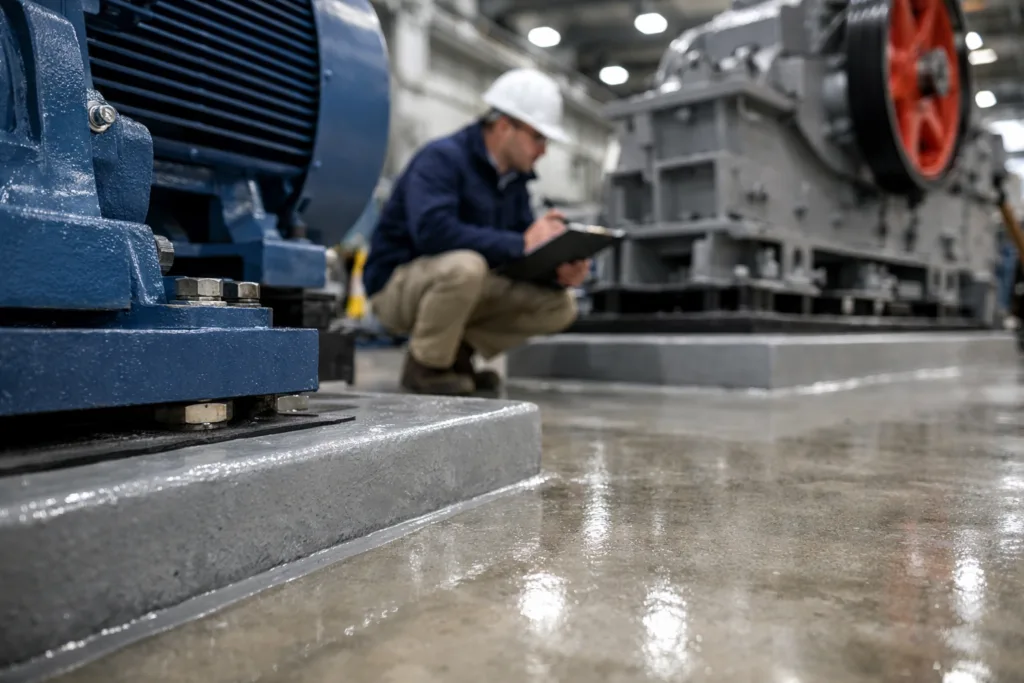
Dynamic loads are forces that change in magnitude or direction over time, such as those generated by moving machinery, heavy traffic, seismic activity, or repetitive impacts. These loads can cause vibration, fatigue, and eventual failure in concrete, steel, or foundation systems if not managed correctly. Unlike static loads, which remain constant, dynamic loads present unique engineering challenges requiring specialized materials for mitigation and transfer.
Physical Properties of Epoxy Grout That Enable Load Transfer
Epoxy grout is a two-component system known for its impressive compressive strength, chemical resistance, versatility, and very low shrinkage. Its dense structure allows it to bridge gaps, adhere tightly to surfaces, and handle high-pressure events while distributing stresses uniformly. Its ability to cure quickly and bond securely to a wide range of substrates makes it nearly unbeatable for transmission of dynamic forces.
Mechanisms of Vibration Damping in Epoxy Grout
The secret to vibration damping lies in epoxy grout’s internal structure. At the molecular level, the strong cross-linking resists oscillation, dispersing mechanical energy instead of letting it concentrate. Fillers added during manufacturing also play a part by increasing mass and interrupting vibration pathways. Together, these traits allow epoxy grout to absorb, redistribute, and dissipate vibrational energy—minimizing cracks and improving asset lifespans.
The Science of Epoxy Grout in Dynamic Applications
When dynamic stress is transmitted to a grout foundation—such as from an industrial compressor—epoxy grout distributes the forces through its network of bonds. This prevents stress concentrations and micro-cracks, which can otherwise propagate to catastrophic failure. Additionally, the seamless interface between epoxy grout and both steel and concrete supports efficient energy transfer, enabling predictable vibration damping.
Comparing Epoxy Grout to Cementitious Grout for Dynamic Loads
| Property | Epoxy Grout | Cementitious Grout |
|---|---|---|
| Compressive Strength | High (>80MPa typical) | Medium (<50MPa typical) |
| Shrinkage | Minimal | Moderate to High |
| Chemical Resistance | Excellent | Poor to Fair |
| Vibration Damping | Superior | Poor |
| Bond to Baseplate | Exceptional | Variable |
Key Factors Affecting Dynamic Load Transfer with Epoxy Grout
- Mixing Ratio and Homogeneity: Proper ratio ensures consistent mechanical properties.
- Substrate Preparation: Clean, dry surfaces maximize adhesion.
- Formwork and Containment: Tight forms prevent air pockets and ensure uniform stress distribution.
- Cure Time: Observing recommended cure times prevents premature load application, reducing failure risk.
- Environmental Conditions: Temperature and humidity must be controlled for optimal performance.
Epoxy Grout in Industrial Machinery Foundations
Machinery bases and compressor platforms regularly face dynamic loads from rotation, vibration, and impact. Epoxy grout is favored for its capacity to securely anchor baseplates, preventing micro-movement and reducing wear. For foundation grouting in heavy machinery, solutions such as Heavy Machinery Epoxy Grout deliver consistency and resistance against dynamic stresses, critical for long-term stability and asset protection.
Case Study: Crusher & Compressor Base Grouting
Consider the installation of industrial crushers. Vibration and shock can quickly deteriorate cementitious grouts. By using high-performance epoxy grout such as ZDS-1410AB High Compressive Epoxy Grout, plants have dramatically reduced downtime, maintenance costs, and risk of sudden base failure.
Epoxy Grout Performance in Bridge Crack Injection & Repair
Bridges experience not only static traffic loads but also micro-vibrations from trucks and wind. Epoxy grout, with its advanced filler systems, is widely chosen in bridge crack injection repair because of its ability to seal cracks and absorb dynamic shocks, prolonging structural lifespan.
How Epoxy Grout Transfers Dynamic Loads
In critical applications, epoxy grout forms a rigid load path between the equipment and its anchoring substrate. When dynamic forces—such as vibration from a running motor—reach the grout, its low shrinkage and high modulus reflect and disperse the energy quickly. This transfer ensures that vibrations do not concentrate, lowering the risk of fatigue cracks or bond failure.
Applying Epoxy Grout for Optimal Dynamic Load Transfer
- Achieve prescribed mixing ratio using calibrated vessels
- Allow full wetting of all aggregate and filler particles
- Pour continuously for uniform matrix with few air voids
- Seal all formwork tightly to eliminate pathways for leakage or air pockets
- Verify surface moisture before grout placement using moisture meters
Real-World Insight: Manufacturer Guidance for Consistent Performance
From a manufacturer’s perspective, like ZDSpoxy, it’s crucial to maintain strict quality control through regular batch testing, viscosity checks, and curing parameter verification. Trade-offs, such as choosing flowable grouts for fine gaps over high-strength epoxies for mass pours, must be made in context. In the field, discipline in mixing, placement speed, and surface prep will always be the primary line of defense against premature grout failure under dynamic conditions.
Factors Influencing Epoxy Grout’s Vibration Damping Ability
- Grout Thickness: Thicker grout beds can absorb more vibration, but excess thickness may lead to exothermic heat buildup.
- Aggregate Selection: Choosing the right aggregate/filler size and type enhances vibration attenuation.
- Baseplate Design: Plates with stress-relief notches can improve load transfer efficiency.
- Temperature Range: Specialized grouts for high or low temperatures preserve vibration damping across extremes.
Epoxy Grout for Tight Gaps and Low Viscosity Applications
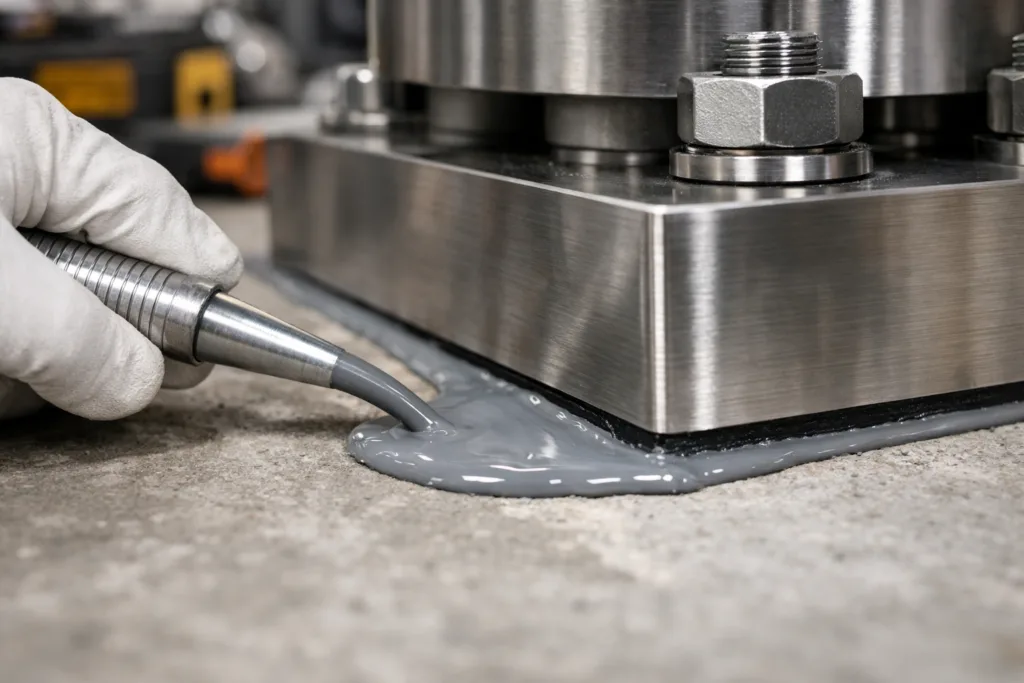
Epoxy grout also excels where tight tolerances matter—such as in precision machinery assemblies. Low-viscosity variants, like ZDS-3382AB Grey Low Viscosity Epoxy Grout, allow perfect filling in fine seams and narrow channels, ensuring vibration damping without shrinkage or loss of bond.
Challenges in Epoxy Grout Placement for Dynamic Loads
Issues such as uneven substrate temperature, oil contamination, or rapid exotherm can present problems. Experienced engineers know that careful surface cleaning (oil removal, abrasive blasting), environmental monitoring (humidity, temperature), and the use of compatible primers are essential for reliable load transfer.
Quality Checks and Testing Procedures
- Compressive strength testing (cube/cylinder samples)
- Bond pull-off tests
- Viscosity measurement during mixing
- Gel time and working time records
- Salt spray and chemical resistance where relevant
Epoxy Grout Solutions for Extreme Environments
Facilities facing corrosive chemicals, temperature swings, or saturated substrates require specialized formulations. Product lines for underwater, high-temperature, or low-temperature service often incorporate advanced fillers and modified resin systems to preserve load transfer efficiency and vibration damping, even in harsh conditions.
Designing Foundation Grouts for Dynamic Stability
- Consult with both structural and materials engineers for tailored specifications
- Adjust grout bed thickness, aggregate type, and cure schedules for expected dynamic loads
- Coordinate pour sequences to minimize cold joints
- Include vibration isolation pads if needed for sensitive equipment
Epoxy Grout Volume Calculator: Ensuring Accurate Usage
To plan application accurately, you can calculate your usage with our Epoxy Grout Volume Calculator Project Quote. Proper volume control prevents under- or over-pouring, which could compromise load transfer and vibration control.
The Importance of Safety, Compliance & Environmental Control
Epoxy grout contains chemicals requiring safe handling: gloves, goggles, ventilation, and adherence to VOC regulations. Storage and transport should respect shelf life to avoid batch inconsistency and performance loss. Site safety protocols and environmental controls are paramount to successful dynamic load management.
Epoxy Grout Applications Beyond Machinery and Construction
Epoxy grout is increasingly used in marine engineering, wind turbine bases, railway infrastructures, and seismic retrofits. Its reliable performance under dynamic stress continues to expand its footprint in challenging applications beyond traditional industrial settings.
Smart Selection: Choosing the Right Epoxy Grout for the Job
- Assess expected dynamic load type and magnitude
- Match resin and filler system to substrate and environment
- Consider cure time vs. required downtime
- Request manufacturer performance data for vibration damping
- Account for ease of placement and field mixing realities
Conclusion: Epoxy Grout as a Proven Solution for Dynamic Load Transfer

Epoxy grout excels in transferring dynamic loads and dampening vibrations due to its strong molecular bonds, adaptive filler systems, and precise application techniques. With the right selection and attention to site conditions, this material protects foundations, machinery, and infrastructure from repetitive stress and impact. From industrial machinery bases to bridge repairs and precision assemblies, epoxy grout has become the go-to solution for engineers seeking durability, vibration resistance, and safety. Looking ahead, continued innovation in epoxy systems will further enhance their performance in ever-more demanding environments.
Frequently Asked Questions
How does epoxy grout handle heavy machinery vibration?
Epoxy grout absorbs and dissipates machinery vibrations due to its dense composition and robust cross-linked molecular structure, preserving machine alignment and extending foundation life.
Can epoxy grout replace cementitious grout for dynamic loads?
Yes, epoxy grout offers higher compressive strength, lower shrinkage, and much better vibration damping, making it superior for dynamic load applications.
What is the cure time before epoxy grout can accept dynamic loads?
Standard epoxy grout typically needs 24–48 hours to cure fully; however, check manufacturer specifics as temperature and thickness can affect actual cure time.
Does epoxy grout require special preparation for substrates?
Yes, substrates must be clean, dry, and free from oil, dust, and contaminants. Sometimes primers are used for challenging surfaces to improve adhesion and bond strength.
Are there specific epoxy grout products for extreme temperatures?
Special formulations can handle high or low temperatures, preserving dynamic load transfer and vibration damping under thermal stress. Always match the product to the site’s temperature range.
How is epoxy grout volume calculated for an installation?
Measure the void size to be filled, then use epoxy grout volume calculators for accurate estimation to ensure full support and effective load transfer.