
Understanding Marine Epoxy Clear: Core Properties for Boats
Clear marine epoxy is the unassuming hero behind glassy, long-lasting finishes found on modern boats, yachts, and marine builds. Whether sealing a polished wooden deck or creating an invisible shield on a fiberglass hull, marine epoxy clear must resist ongoing UV, saltwater, and heat exposure. The goal: maintain clarity and a high-gloss finish year after year, all while providing a tough, protective bond between the elements and your boat’s core materials.
But achieving that flawless, transparent look on a boat isn’t as simple as using any clear epoxy resin. Key properties—like UV resistance, hardness, working time, and viscosity—must be balanced against the challenging marine environment. For project success, it’s crucial to understand how marine epoxy behaves differently compared to basic “art” resins, especially when clear appearance is non-negotiable and weathering is the chief threat.
The Practical Challenge: Yellowing and Clarity Loss in Marine Epoxy Clear
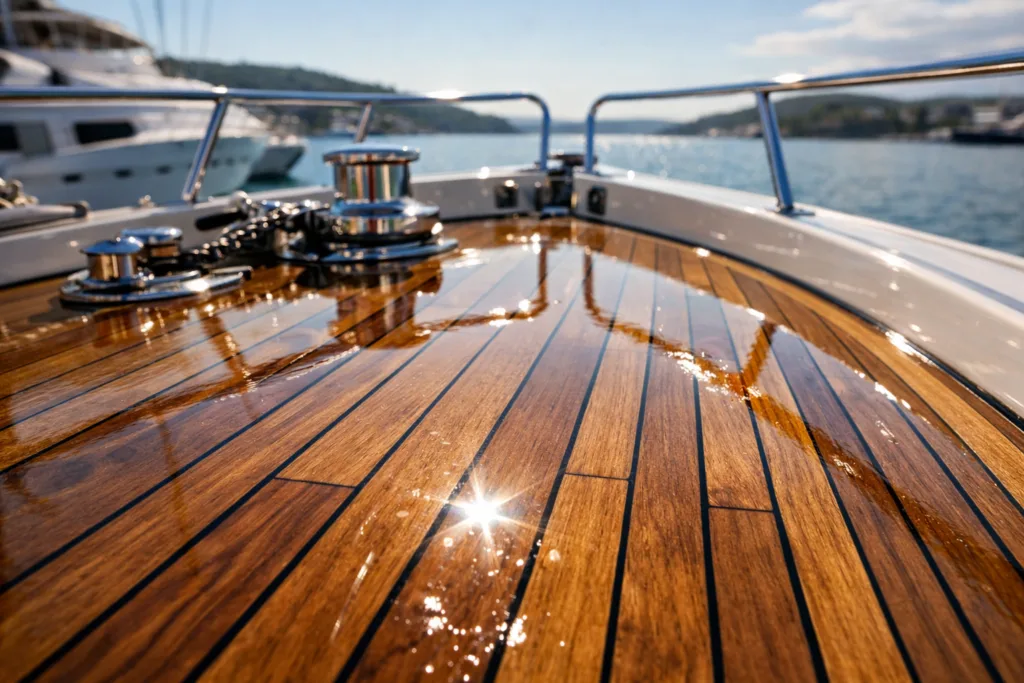
Most boat owners and marine trades encounter the same dilemma: how to keep clear epoxy for boats transparent and glossy when constant sunlight, moisture, and salt exposure seem determined to turn it dull and yellow? The two-fold challenge is clear:
- Transparency – Achieving bubble-free, water-clear coats with no cloudiness or haze.
- Weather resistance – Maintaining that clarity even after years of UV rays, heat, and temperature swings.
There’s a catch: all epoxies, even “marine grade,” are vulnerable to yellowing unless carefully formulated and applied. Factors like UV exposure, high temperatures, and certain amine hardeners speed up yellowing or clouding. For those aiming for a true marine clear coat, common pitfalls stem from applying consumer art resins, skipping UV topcoats, or pouring in thick, uncontrolled layers.
Why Does Marine Epoxy Yellow? The Science of UV, Heat, and Formulation
Epoxy yellowing is primarily caused by three factors:
- Ultraviolet (UV) radiation – Sunlight breaks down molecular bonds in epoxy, resulting in discoloration.
- Thermal exposure – High curing or service temperatures can speed up degradation and yellowing.
- Resin formulation – Impurities or certain hardener chemistries (such as aromatic amine systems) make resin more liable to turn yellow.
Even the best clear marine epoxy can show signs of yellowing if left unprotected or applied without special care. Marine environments add extra stress: high humidity, temperature cycles, and direct sun push resins to their limits.
For those seeking in-depth details, ZDSpoxy engineers typically assess coatings for molecular stability using salt spray and accelerated QUV tests to simulate real-world marine aging. These methods help select systems for the longest clarity and gloss retention.
Top Strategies for Reducing Yellowing in Marine Epoxy Clear
So, how do experienced boatbuilders and resin manufacturers keep clear epoxy looking fresh? Years of practical trials and lab research consistently point to these essential tactics:
- Ultra-Thin Application: Apply clear coat epoxy marine in multiple thin layers instead of a single thick coat. This limits internal heat buildup and improves uniform UV resistance.
- Temperature Control: Always pour, mix, and cure below 30°C (86°F) whenever possible. Higher heat increases the risk of exotherm (runaway chemical reaction) and premature yellowing. For hot climates, early morning or evening application is best.
- Use Only Marine-Optimized Resin & Hardener: Choose formulas labeled for marine finishes, not generic or “art” epoxies. True marine systems, like those offered by ZDSpoxy, control viscosity, mix ratio, and yellowing tendency through advanced fillers and stabilizer packages.
- Bubble Elimination: Employ bubble release tools (heat gun, torch, or careful mixing with slow movement) to prevent air entrapment, which can scatter light and make yellowing more visible.
- Always Topcoat with UV-Blocking Layer: Epoxy alone is never truly UV stable. A UV-resistant clear polyurethane or marine-grade varnish topcoat is a must to extend long-term clarity.
Application Secrets for Bubble-Free and High-Gloss Marine Epoxy
For pristine, bubble-free epoxy marine finishes, blending art and science is vital during every step. Here’s how professionals approach application:
- Mixing: Use two-cup mixing. First, mix resin and hardener in one cup until fully blended, then transfer to a second cup and mix again (this avoids unmixed pockets).
- Batch Size Control: Mix only the volume you can spread within the working pot life (typically 15–40 minutes). Larger batches can overheat and yellow prematurely.
- Layering: Apply in coats no thicker than 1–2 mm. Thicker pours generate internal heat, causing hazing and more rapid yellowing—especially under sunlight.
- Defoaming: After pouring, use a propane torch, heat gun, or specialty roller (like a spiked roller) to gently remove surface bubbles. Avoid excessive heat that may scorch or trap gases.
- Substrate Prep: Dry, dust-free, and lightly sanded surfaces ensure efficient bonding and smoothness. Moisture or oil can disrupt clarity and cause delamination over time.
Want an in-depth step-by-step? See our guide on fiberglass boat crack repair using marine epoxy resin for prep details and field-proven results.
Why UV Stable Clear Coats Are Non-Negotiable for Boats
No matter how “clear” a marine epoxy claims to be, unprotected surfaces will experience yellowing if exposed to daily sunlight. The smart solution? Always protect with an additional UV-blocking layer.
- Polyurethane Topcoats (sometimes called clear urethane or polyaspartic clear) act as high-performance sunscreen for your epoxy.
- Marine Spar Varnishes with advanced UV absorbers are an alternative for classic wood boat finishes, combining tradition with modern performance.
These top layers absorb and dissipate harmful UV before it ever reaches your epoxy base—proving especially crucial in tropical or high-UV latitudes.
Neglecting this step is the primary reason new boat finishes rapidly lose gloss or clarity, regardless of initial resin quality.
Proven Tips for Applying Clear Epoxy to Boat Wood, Fiberglass, and More
Différent materials on boats pose different risks for yellowing and clarity loss. Proven approaches include:
- Wood Decks: Seal with thin epoxy primer; apply at least two coats of clear epoxy, sanding lightly between; finish with UV clear topcoat.
- Fiberglass Hulls: Clean and dry; spot-prime any repairs; roll or brush on clear epoxy in thin, even coats; sand, then overcoat with marine-grade polyurethane.
- Existing Epoxy: Properly abrade (lightly sand, degrease); test a patch for compatibility and color shift before recoating.
Detailed workflow guidance for clear coat epoxy marine on boats is available in ZDSpoxy’s marine epoxy for wood repair guide.
Comparison Table: Marine Epoxy Clear vs. Other Marine Finishes
| Property | Clear Marine Epoxy | Polyurethane Topcoat | Marine Varnish |
|---|---|---|---|
| Clarity (initial) | Water-clear, high gloss | High, sometimes tinted | Warm amber, glossy |
| UV Resistance | Moderate (needs protection) | Very high | High |
| Scratch Resistance | Good, hard after full cure | Excellent | Moderate |
| Maintenance | Low (if protected) | Low | Regular re-coat |
| Ease of Application | Requires care (bubble/level) | Single coat over epoxy | Multiple coats, sanding |
Best Practices for Thin Layering and Multi-Coat Systems
Why do professionals nearly always recommend multiple thin coats? It’s a combination of science and field-tested wisdom:
- Less Heat Generation: Thin coats don’t overheat. This prevents clouding and premature yellowing during cure.
- Superior Bonding: Each layer can form strong chemical bonds (if applied within the recoat window), maintaining system integrity.
- Better Air Release: Air and bubbles have an easier path to the surface in thin pours, giving a crystal-clear finish every time.
- Less Defect Risk: Runs, sags, exothermic “blush” (surface residue), and curing marks are all reduced.
For more information about the best timing and curing practices for epoxies, see The Contractor’s Guide to Temperature, Pot Life & Recoat Success.
Controlling Temperature and Humidity: Real-World Lessons
Environmental factors—especially heat and moisture—can make or break a clear epoxy finish. Mixes above 30°C speed up curing, increasing bubble formation and risking yellowing. Humid air can deposit surface amines, causing “amine blush,” which must be washed off before recoating or topcoating.
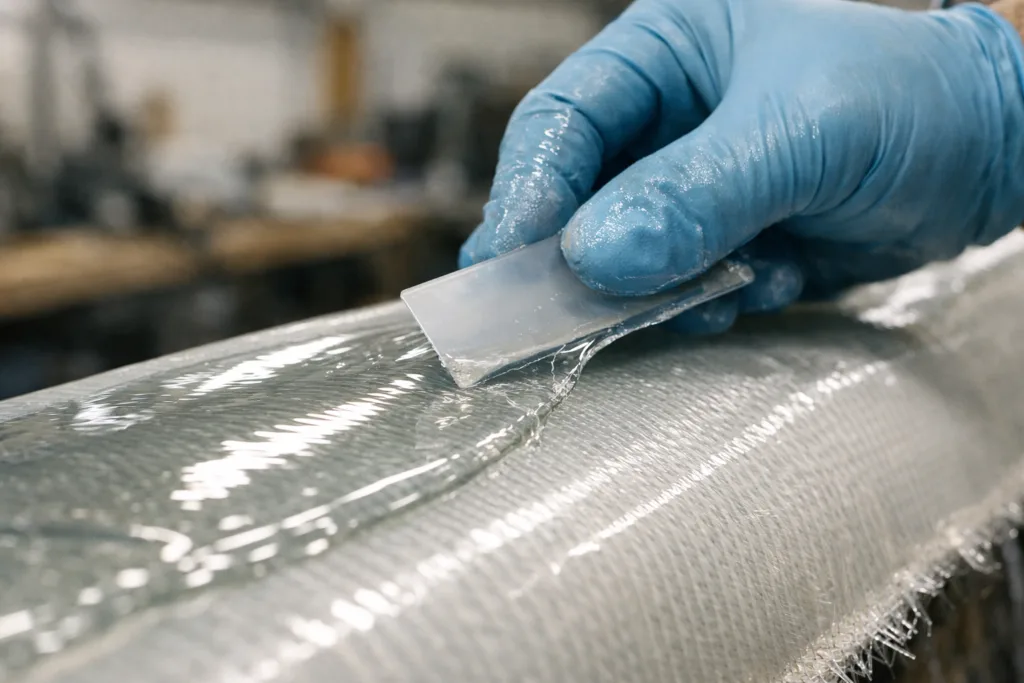
ZDSpoxy’s R&D teams regularly advise installers to monitor substrate and room (or outdoor) temperatures, using digital thermometers and hygrometers. This helps prevent surprise defects and encourages consistent, repeatable results.
Bubble Management Methods for Clear Marine Epoxy
Bubbles are the primary cause of cloudy or milky epoxy finishes, especially on large surfaces like decks or hulls:
- Gentle Stirring: Avoid vigorous mixing, which entraps air. Use slow, deliberate stirring.
- Temperature Balance: Slightly warming parts A & B (but never hot) helps lower viscosity and air entrapment.
- Utilizing Heat Tools: Pass a propane torch or heat gun 15–20 cm above the surface to burst microbubbles.
- Spiked Roller: On large, flat surfaces, run a spiked roller to encourage air to escape before gelling.
To troubleshoot stubborn bubble issues, ZDSpoxy recommends reviewing our bubble prevention guide for epoxy coatings, which covers fixes and prevention in greater detail.
Epoxy Yellowing Prevention: Essential Chemistry
The resin and hardener chemistry underpin everything about long-term clarity. To maximize yellowing resistance:
- Avoid Aromatic Amines: Modern marine epoxies typically use cycloaliphatic or aliphatic amine hardeners for lower yellowing risk.
- Look for UV Stabilizers: While no additive can stop all yellowing, UV-absorbers and HALS (hindered amine light stabilizers) substantially delay the process.
- Verify Batch Consistency: Manufacturing controls—like batch-to-batch viscosity checks—are vital for repeat clear results.
ZDSpoxy’s QC laboratories also use salt spray and QUV weathering cabinets to test yellowing rates objectively over months.
Case Study: Achieving Lasting Gloss on a Marine Wood Deck
During a recent repair of a teak yacht deck, a three-step clear system was implemented:
- Epoxy Primer: Penetrated and sealed wood to block moisture.
- Multiple Thin Epoxy Layers: Built up a glassy, protective barrier with careful bubbles removal between coats.
- UV Polyurethane Topcoat: Provided long-term clarity and repellence to water spots, preventing yellowing.
After a full season, gloss levels remained high and yellowing was almost undetectable. This layered system highlights why skipping the final UV-blocking topcoat is the main reason for failure on clear marine applications.
When to Choose Epoxy, Polyurethane, or Varnish for a Marine Gloss Finish?
Use marine epoxy clear as the base for bonding and bulk build, but never as the only outer layer for a boat’s surface—the topcoat takes the brunt of the UV load. Polyurethane and advanced clear marine varnishes offer greater sacrificial protection. In summary:
- Structural build & bond? Epoxy first.
- Gloss, UV, and weather barriers? Polyurethane, polyaspartic, or next-generation clear marine varnish as a final coat.
Curious about upgrades? See our comparison: Epoxy vs Polyurethane Marine.
[PROMPT]: Clear Marine Epoxy: How to Reduce Yellowing & Get a Gloss Finish
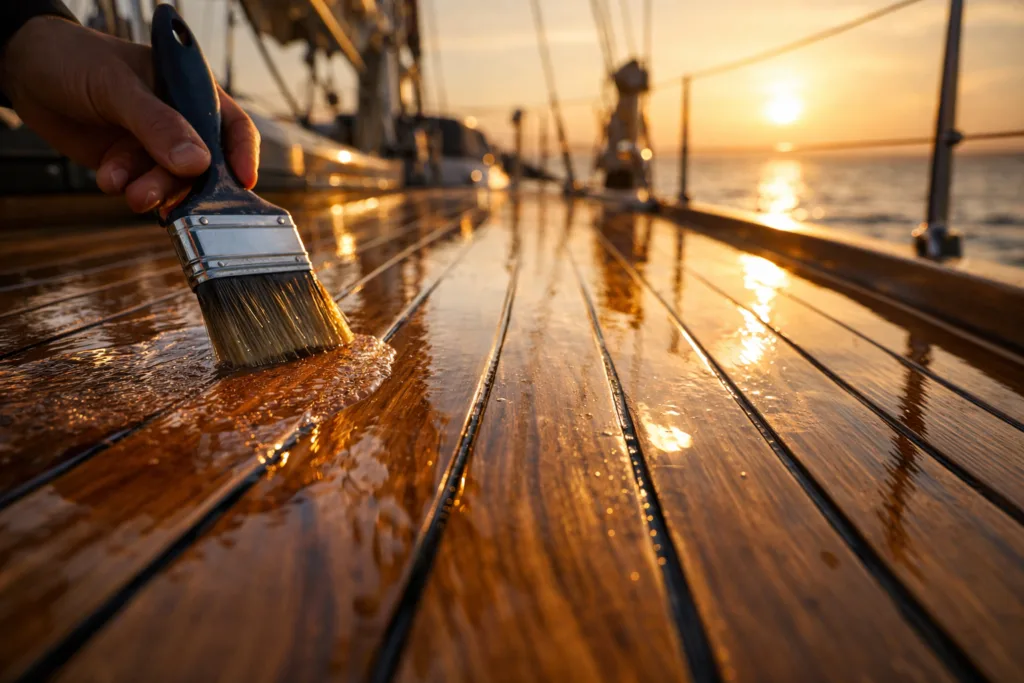
Summing up, the hardest part of using clear marine epoxy is not just getting a smooth finish—but keeping it colorless and glossy in marine conditions. Remember these keys:
- Always apply in thin layers, allowing each to cure fully before the next.
- Work at optimal substrate and ambient temperatures to limit exotherm and air bubbles.
- Eliminate surface bubbles with heat and spiked rollers, especially on boat decks and hulls.
- Never trust raw epoxy to remain clear on its own—seal with a professional UV-resistant clear topcoat.
By following these manufacturer and field-proven methods, boat owners and trades can achieve truly professional, glass-clear marine finishes that last season after season.
Frequently Asked Questions
Will clear marine epoxy always turn yellow?
While all epoxies slowly yellow over time exposed to sunlight, selecting marine-grade epoxy and using a UV-blocking polyurethane or varnish topcoat can greatly slow or hide discoloration.
How thick should I apply clear marine epoxy for gloss finishes?
For best clarity and durability, each coat should be 1–2 mm thick. Applying multiple thin coats prevents overheating and bubbles, improving gloss and yellowing resistance.
Is “art epoxy” suitable for marine or outdoor use?
No, art/craft epoxies generally lack the chemical backbone and UV stabilizers for marine environments and will yellow or break down quickly when exposed to sunlight or water.
What causes bubbles in clear marine epoxy?
Bubbles stem from mixing, trapped air in the substrate, or environmental factors like temperature swings. Using spiked rollers, gentle heat, and careful mixing minimizes bubbles.
Can I use only clear epoxy as a final coat on a boat?
No, for maximum UV protection and yellowing resistance, always top epoxy coatings with a marine-grade polyurethane, polyaspartic, or UV-absorbing varnish.
How do I clean and maintain clear epoxy gloss on boats?
Use mild soap and water, avoid harsh abrasives, and monitor finish regularly for signs of wear. Reapply protective topcoats to maintain clarity and gloss over the years.