
Introduction: Unlocking the Secrets of Marine Epoxy Resin Properties
Marine epoxy resin plays a vital role in boat building, ship repair, and underwater barrier applications. Its core properties—viscosity, pot life, cure time, glass transition temperature (Tg), tensile strength, water absorption, and volatile organic compound (VOC) content—directly impact your project’s success, durability, and cost. If you’re searching for reliable solutions, understanding these specs helps you match the right resin to your needs.
In this expert guide, we’ll break down each critical field on a marine epoxy resin datasheet. From speedy repairs to zero-odor barrier layers, you’ll discover how performance figures translate to real-world advantages. We even provide a simple mapping to help you rank the most important resin attributes for your specific project—be it infusion, repair, or long-term protection.
What Are Marine Epoxy Resin Properties?
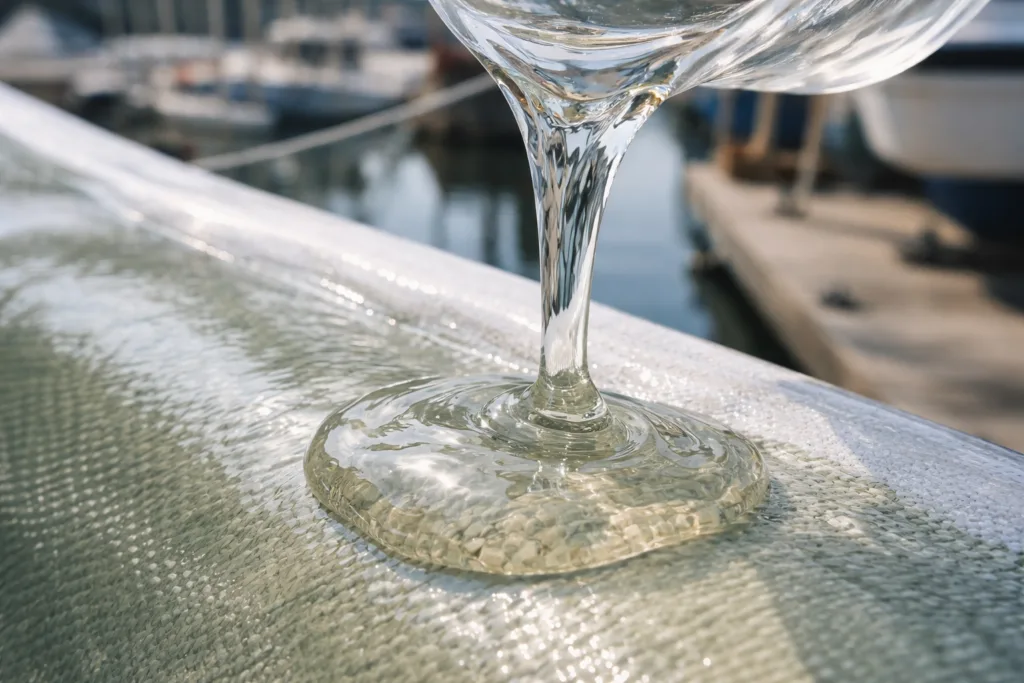
Marine epoxy resin properties are technical features outlined in a product’s datasheet. These figures reveal the chemical and mechanical performance you can expect on the job—such as how quickly the resin sets, its strength, its sensitivity to moisture, and environmental friendliness. Read on for a practical breakdown of each property, including how they interact in shipyards, marinas, and dockside repairs.
Quick Reference: Key Terms & What They Mean
- Viscosity: Thickness—affects flow, wetting, and coverage.
- Pot Life: Usable working time in the mixing bucket.
- Cure Time: Total time until resin reaches full strength.
- Tg (Glass Transition Temperature): Maximum temperature before resin softens.
- Tensile Strength: How much pulling force the cured resin can endure.
- Water Absorption: How much moisture the resin may take in over time.
- VOC Level: Safety and odor—linked to solvent content and environmental compliance.
Viscosity: Choosing the Right Flow for Each Marine Task
Viscosity measures how thick or runny marine epoxy resin is—a key factor in application style and results. High-viscosity resins are best for repairing wood holes, cracks, or overhead surfaces. Low-viscosity options suit infusion, filling narrow voids, or acting as primers that soak deeply into substrates.
| Application | Ideal Viscosity Range | Why? |
|---|---|---|
| Infusion/Fiberglass Layup | Low (thin) | Penetrates fibers, reduces bubbles, ensures full wet-out |
| Rot Repair/Crack Filling | Medium-High | Stays in place, builds up thickness quickly |
| Barrier/Priming | Low-Medium | Effortless surface wetting and sealing |
For deeper technical insight, see our dedicated Marine Epoxy Resin Manufacturer pillar, including OEM customization options for viscosity.
Why Viscosity Matters in Real Projects:
- Thin resin flows into gaps, reduces air pockets in laminations.
- Thicker resin prevents sagging on vertical hull repairs.
- Mismatched viscosity can lead to waste, poor coverage, or failures.
Pot Life: Timing Your Mixes for Success
Pot life is the window you have to apply marine epoxy resin before it starts to gel. This working time heavily depends on batch size, ambient temperature, and mixing efficiency. For emergency repairs, a short pot life gets you back on the water fast; for large scale infusions, long pot life allows careful laying and air bubble removal.
Industry standards usually state pot life at 25°C (77°F) in a 100g batch. ZDSpoxy engineers recommend batch-testing—especially in hot climates—to avoid premature setting and waste.
Real-World Pot Life Risks & Solutions
- Too short: Resin hardens in bucket, causing stress and lost material.
- Too long: Can delay project schedules or allow excess dust/particles to settle in resin.
- Always prep work area and tools before mixing!
Choosing Pot Life by Task
| Use Case | Optimal Pot Life |
|---|---|
| Large Infusion | 45-90 min (allows careful placement) |
| Quick Repairs | 8-20 min (fast curing) |
| Barrier/Priming | 30-45 min |
Cure Time: When Is Marine Epoxy Really Ready?
Cure time marks the transition from soft “green” phase to true, load-bearing hardness. Rapid cures mean speed repairs but may increase risk of incomplete bonding at low temperatures. Extended cure time allows lower exotherm—vital for mass pours or thick sections.
For example, our ZDS-2060AB solvent-free rot repair wood primer achieves full cure in 36 hours at standard room temperatures but can be accelerated with mild heat.
Application Mapping: Cure Time Preferences
- Infusion/Fiberglass: Longer cure = more safety, less heat buildup
- Boat Yard Repair: Fast cure = quick turnaround for surface recoating
- Barrier Layers: Medium cure = even substrate adhesion, minimal stress cracking
Tg (Glass Transition Temperature): Heat Resistance for Demanding Marine Use
Tg is the point where cured epoxy starts to soften under heat stress. Marine epoxies with high Tg are essential for sun-exposed decks, engine compartments, or areas subject to boiling water immersion. Low-Tg resins may lose rigidity and cause surface deformation above their rating.
Tg Selection Guide
| Scenario | Minimum Tg |
|---|---|
| Engine Bays, High-Temp Areas | 85°C (185°F) |
| General Deck Surfaces | 65°C (149°F) |
| Underwater/Shadowed Surfaces | 55°C (131°F) |
It pays to match Tg to your environment. Over-specifying increases material cost—under-specifying risks deformation. Factory samples and real-world salt spray tests help confirm reliability.
Tensile Strength: The Backbone of Durable Marine Repairs
Tensile strength quantifies a marine epoxy’s resistance to being stretched or pulled apart. In deck repairs, hull lamination, or joint bonding, higher tensile ratings signal durable bonds that won’t crack under load. For gap filling or wood repair, moderate tensile strength plus flexibility prevent stress risers and ensure shock absorption.
Some resin makers—like ZDSpoxy—balance resin with modifiers to maximize tensile performance without sacrificing application ease. Always check how laboratory values compare to real field usage, especially if adding fillers or using on irregular surfaces.
Crucial Factors Affecting Tensile Performance
- Substrate condition (clean, dry, free of oil/dust)
- Mixing discipline (exact ratio, methodical blending)
- Final bond line thickness
Water Absorption: Keeping Moisture Out of Repairs and Laminates
Water absorption rates show how much moisture a cured resin can absorb and retain. Lower absorption means less risk of swelling, softening, or osmotic blistering beneath paints or gel coats. This property is especially vital in saltspray zones, underwater patching, and any repair that must resist hydrostatic pressure.
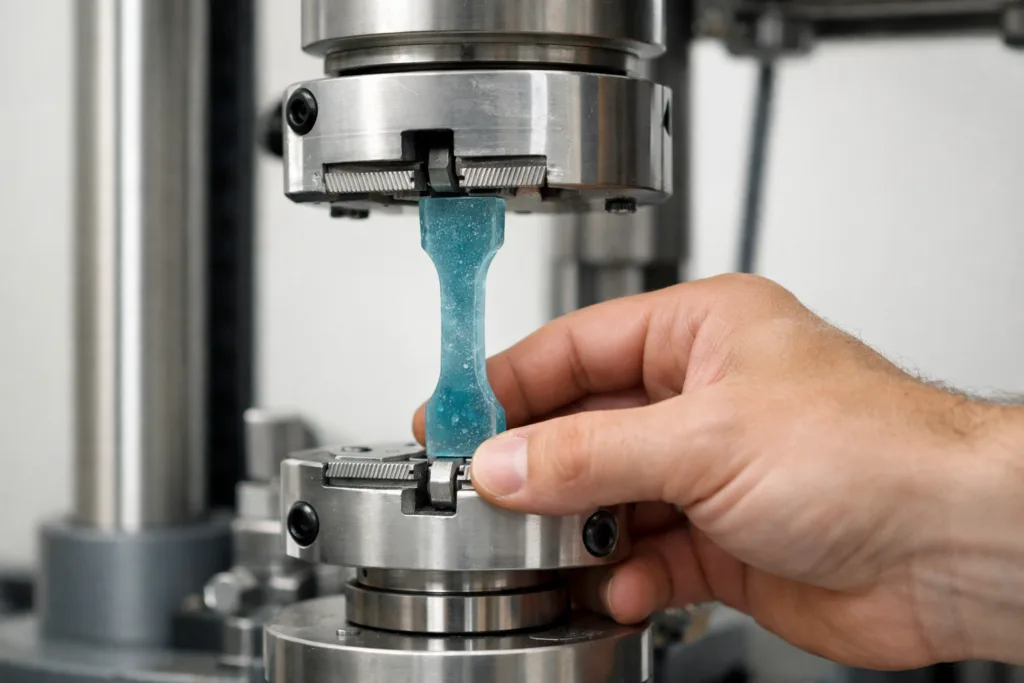
Compare absorption rates (commonly measured over 7 days at room temp) before choosing a resin for below-the-waterline use. Our ZDS-189 wood repair putty offers very low absorption, ideal for dock repairs and structural patching.
Water Absorption – When It Matters Most
- Underwater barrier layers
- Keel repairs
- Fiberglass hull patching
Low VOC: Eco-Friendly and Safer Marine Epoxy Resin
VOC content is a hot-button topic in marine coatings and adhesives. Low-VOC marine epoxy means safer workspace, easier compliance with regulations, and reduction in harmful odors during application. Solvent-free epoxies are ideal for enclosed spaces, marina work, and environmentally sensitive zones.
Check VOC ratings for barrier coatings and floor primers, especially in commercial and residential boatyards. ZDS-1240 flexible waterproof sealant highlights low-emission properties suited to dock repair where ventilation is poor.
When to Insist on Low VOC Marine Epoxy
- Indoor boat repair shops
- Residential marinas
- Eco-sensitive waterfronts
Marine Epoxy Resin Properties: The Ultimate Application Mapping Table
| Project Type | Most Vital Property | Why It Matters |
|---|---|---|
| Gelcoat/Laminate Infusion | Low viscosity, slow cure | Maximizes wet-out and reduces voids, minimizes heat |
| Quick Structural Repair | Short pot life, high tensile strength | Fast set, durable fix to get back on water quickly |
| Underwater Barrier | Low water absorption, high Tg | Prevents blistering and resists heat/pressure |
| Priming Wood/Concrete | Low VOC, medium viscosity | Safe indoor use, penetrates surface for deep bond |
| Hull Filling/Gap Sealing | Medium viscosity, moderate tensile | Stays put, provides flex for variable movement |
| Mass Pouring | Low exotherm, long pot life | Avoids overheating and incomplete curing in thick sections |
How Marine Epoxy Resin Properties Work Together in Real Jobs
The sum of these specs—viscosity, pot life, cure time, Tg, tensile strength, water absorption, and VOC—determine not just the outcome but the ease, safety, and longevity of your work.
- Too low viscosity may cause drips in vertical repairs; too high may trap air in laminates.
- Short pot life risks rushing, but long pot life risks dust contamination.
- High Tg is needed for engine rooms, but wastes money on shadowed hull zones.
- Tensile strength is vital for stressed joints, but not always for cosmetic fills.
- Water absorption rates matter most underwater, less topside.
- Low VOC is a must for closed boatsheds and public waterfronts.
ZDSpoxy Insider: Practical Testing & OEM Customization for Your Marine Project
In the manufacturing world, matching marine epoxy resin properties to project realities means rigorous small-batch mixing, lab cure-time trials, and scaled-up substrate testing. ZDSpoxy’s engineers routinely adjust formulation viscosity, pot life, or Tg depending on jobsite feedback—from tropical dock repairs to high-traffic commercial marinas.
If your application is unique—like structural hull reinforcing or prepping historic wood with deep rot—our R&D team works with OEMs and contractors on custom blends. Always verify supplier specs with site-matched samples and real-world moisture or salt spray resistance tests before full application.
Common Pitfalls: What Happens When Specs Don’t Match the Job
- Choosing incorrect viscosity for infusion causes dry spots and delamination.
- Ignoring cure time risks incomplete hardness, leading to premature failures.
- Applying high VOC resin in enclosed spaces leads to health and odor complaints.
- Using low Tg resin near engines causes warping, peeling, or softness.
- Substrate prep errors weaken tensile strength and degrade bond quality.
- Underestimating water absorption results in flaking, swelling, or osmotic blistering.
Optimizing Marine Epoxy Resin Properties: Testing, Quality Control, and Mixing Discipline
On a real jobsite, spec sheet numbers are the starting line. Consistent results come from quality control checks—batch viscosity measurements, gel time tests, mix ratio accuracy, and thorough surface preparation before pouring or laying up. Experienced technicians monitor air temperature, humidity, and batch size. This level of discipline prevents failures and assures strength, moisture resistance, and safety.
Environmental and Safety Considerations: Why Low VOC Content Is Non-Negotiable
Regulations around VOC emissions are strict, especially in public marinas and ports. Solvent-free and low-VOC resins are now preferred for indoor repairs, sensitive ecological areas, and high-traffic yacht and boat storage facilities. Always check product SDS and handling guidance—proper PPE, ventilation, storage, and disposal methodology keep your team safe and project compliant.
Marine Epoxy Resin Properties: Field Tips That Make the Difference
- Always batch mix the smallest quantity needed to avoid wasted pot life.
- Use mixing paddles and timed mixing to minimize air entrapment—especially for barrier layers.
- On vertical repairs, choose medium viscosity and layer-up as needed.
- For underwater use, select products with verified low water absorption rates and back them up with practical immersion tests.
- Check local compliance for VOC content in repair areas open to the public.
Conclusion: Matching Marine Epoxy Resin Properties to Your Project for Reliable Results
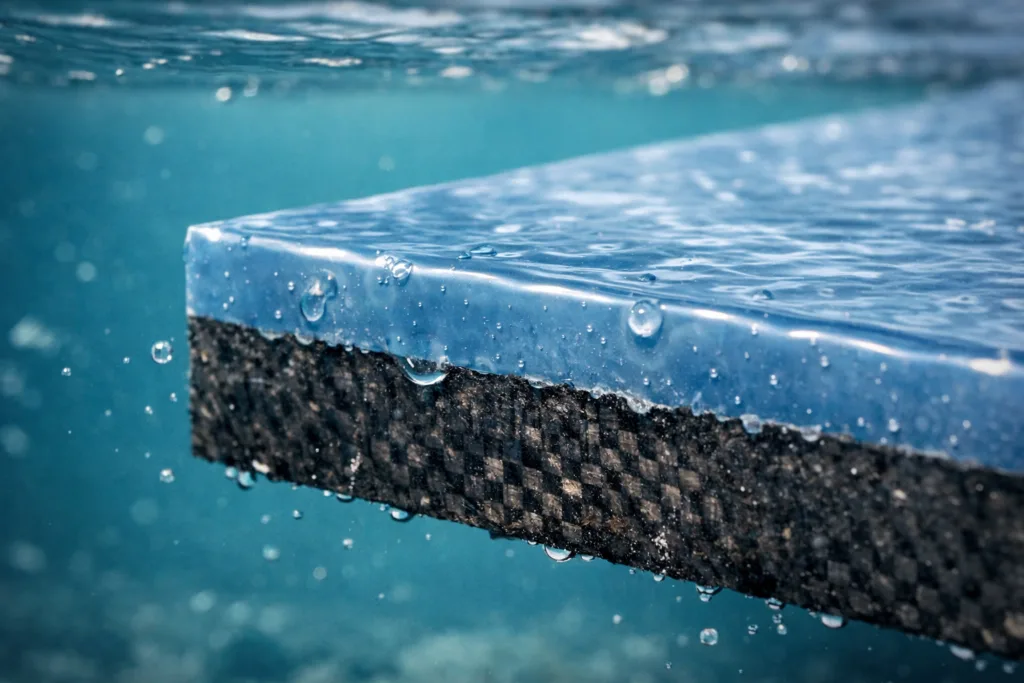
Marine epoxy resin properties—viscosity, pot life, cure time, Tg, tensile strength, water absorption, and low VOC—are the heartbeat of every successful marine repair or build. When you understand what each spec means and how they interact, you can pick the best formula for infusion, structural repair, or long-term barrier protection. Remember, it’s not about chasing the highest numbers—it’s about fitting performance to purpose. Always request product samples, run practical tests, and prioritize the most relevant spec for your application.
Frequently Asked Questions
Which marine epoxy resin property is most important for underwater repairs?
Water absorption rate is crucial for underwater repairs. Low water absorption minimizes swelling, flaking, and osmotic blistering, ensuring the repair lasts even under continuous moisture.
How do I choose the right viscosity for marine epoxy?
Match viscosity to the job: low for infusion and deep laminates, medium-high for crack filling and rot repair. Thinner resins flow into gaps, while thicker ones stay put on surfaces.
Can I use a fast-curing marine epoxy for large builds?
Fast-cure epoxies are best for quick repairs, not large builds or infusions. They may set too rapidly, trapping heat and air. For bigger jobs, use a formula with long pot life and slow cure time.
Does a higher Tg always mean better resin?
Not always. High Tg is required in high-heat, sun-exposed areas. For shadowed or underwater zones, a moderate Tg suffices and avoids unnecessary cost.
Why is low VOC preferred in the marine industry?
Low VOC resins offer safer handling, less odor, and easy compliance with environmental regulations—especially in closed boatyards, marinas, and eco-sensitive waterfronts.
How does tensile strength affect epoxy repair quality?
Higher tensile strength means more durable repairs, especially for structural joints. For gap filling or cosmetic repair, moderate tensile strength paired with good flexibility is ideal.
Related Reading
- Five Key Differences Between Marine and Regular Epoxy—Avoid Costly Mistakes
- 10 Marine Epoxy Resin Truths Every Boat Owner Should Know
- Shelf Life vs. Pot Life vs. Working Time—Guide to Preventing Waste in Epoxy Projects
- Solving Epoxy Osmotic Blistering—5 Root Causes and the Solutions Pros Use
- Mastering Filler Content in Resin Projects for Maximum Strength and Longevity