
Understanding Oil Contamination in Concrete Foundations Under Compressors
Concrete foundations beneath compressors in industrial and commercial settings frequently face the challenge of oil contamination. Oil leaks or spills—from lubricants, hydraulic fluids, or mechanical failures—can saturate the concrete substrate, leading to several problems. Proper oil contamination, concrete repair is essential for ensuring equipment stability, facility safety, and structural durability.
Why Are Compressors Prone to Oil-Soaked Foundations?
Compressors, particularly in manufacturing plants and maintenance workshops, operate under demanding conditions. The combination of vibration, high-pressure mechanical parts, and routine oil changes increases the risk of leaks. Over time, this persistent exposure causes oil to penetrate the pores of concrete, compromising its load-bearing ability and making it susceptible to further deterioration.
The Primary Risks of Oil-Contaminated Concrete
- Reduced Structural Integrity: Oil acts as a bond-breaker between cement particles, weakening concrete.
- Surface Delamination: Oil-laden areas hinder the adhesion of repair materials, leading to patch failure.
- Long-Term Durability Challenges: Absorbed oil can attract more dirt, accelerate chemical reactions, and create microcracks.
- Environmental and Safety Hazards: Spilled oil can migrate into soil and pose slip hazards for workers.
Recognizing Oil Contamination Damage Under Compressors
Common signs of oil-soaked damage include dark stains, soft patches, a persistent oily sheen, cracking, and spalling. Uneven settlement or vibration-related cracks often emerge when foundations are undermined by oil attack.
Case Study: Oil-Soaked Concrete Repair Success
A food processing facility experienced repeated compressor loosening and grout failures after years of minor oil leaks. After detailed contamination testing and a full-surface degrease, the repairs used specialized epoxy grout solutions for oil-soaked concrete crack repair. Post-repair, equipment downtime decreased, and vibration issues were resolved—even under washdown cycles and high loads.
The Mechanics of Oil Penetration and Concrete Deterioration
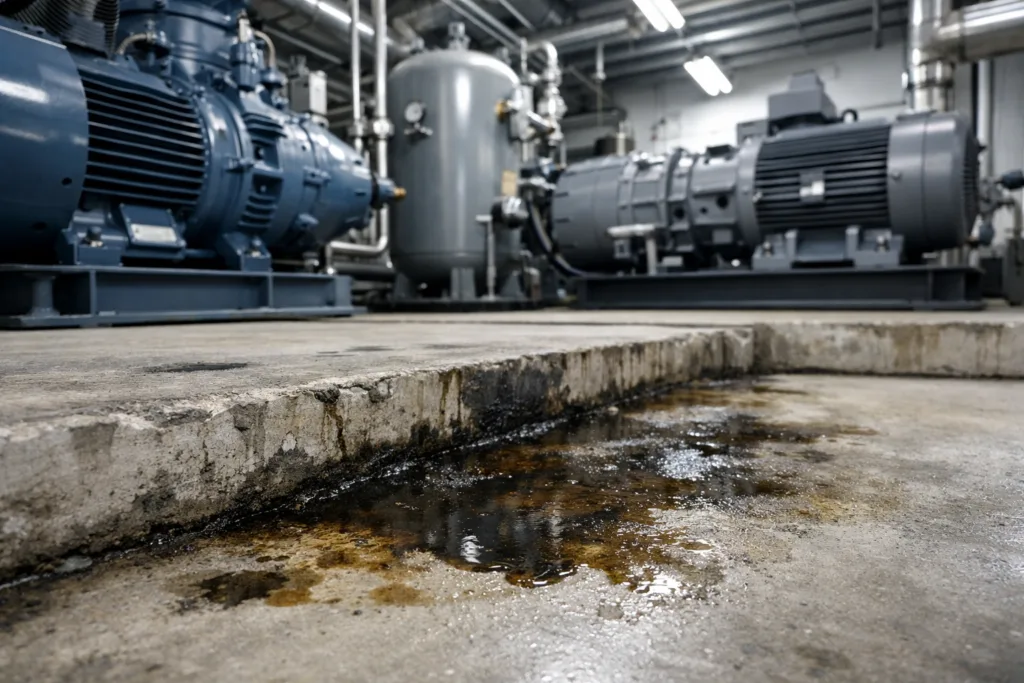
Oil contamination interacts with concrete on both physical and chemical levels. When oil enters pores and microcracks, it can travel surprisingly deep, often far beyond what is visible at the surface. This alters the moisture dynamics, blocks cement hydration, and disrupts the composition that ensures strength and adhesion.
Physical Effects of Oil on Concrete
- Porosity Increases: Oil’s thin viscosity helps it seep into fine voids, making complete removal challenging.
- Surface Cohesion Loss: The concrete surface may develop a greasy, non-binding layer, preventing proper bonding with overlays or repair materials.
- Freeze-Thaw Vulnerability: Trapped oil disrupts water movement, increasing freeze-thaw cycles’ impact if exposed to such conditions.
Chemical Interactions and Long-Term Risks
Certain oils can chemically react with the alkalis in cement, especially when combined with heat from running compressors. These reactions can lead to accelerated breakdown of cement paste, particularly if aggressive cleaning agents are later used incorrectly. This highlights the importance of using tested, compatible cleaners and meticulously following recommended repair steps.
Assessing Oil-Soaked Concrete: Inspection and Testing Methods
Not all contamination is immediately visible. Effective oil contamination, concrete repair starts with a thorough assessment. Key steps include:
- Visual Inspection: Identify stained or delaminated areas.
- Core Sampling: Extract small concrete samples to evaluate oil penetration depth.
- Water Drop Test: Water beads on oil-soaked surfaces, indicating reduced wettability.
- Chloride and pH Testing: Assess if the oil has altered the concrete chemistry in ways that may affect repair durability.
Partnering with technical teams or experienced inspectors helps ensure no contaminated zone is missed during prepping and repair.
Using Modern Site Tools for Better Assessment
Today, digital moisture meters and fluorescent dye testing offer fast and reliable results, supporting more targeted kitting and repair strategies. If in doubt, it’s better to cut out an extra margin around the obviously oil-affected patch rather than risk edge failure.
The Importance of Surface Preparation for Lasting Repairs
No repair method will succeed if oil remains in the repair zone. Surface preparation is where most failures occur—usually due to shortcuts or lack of the right tools. To restore concrete foundations beneath compressors effectively, the old oil must be removed as completely as possible. Typical preparation steps include:
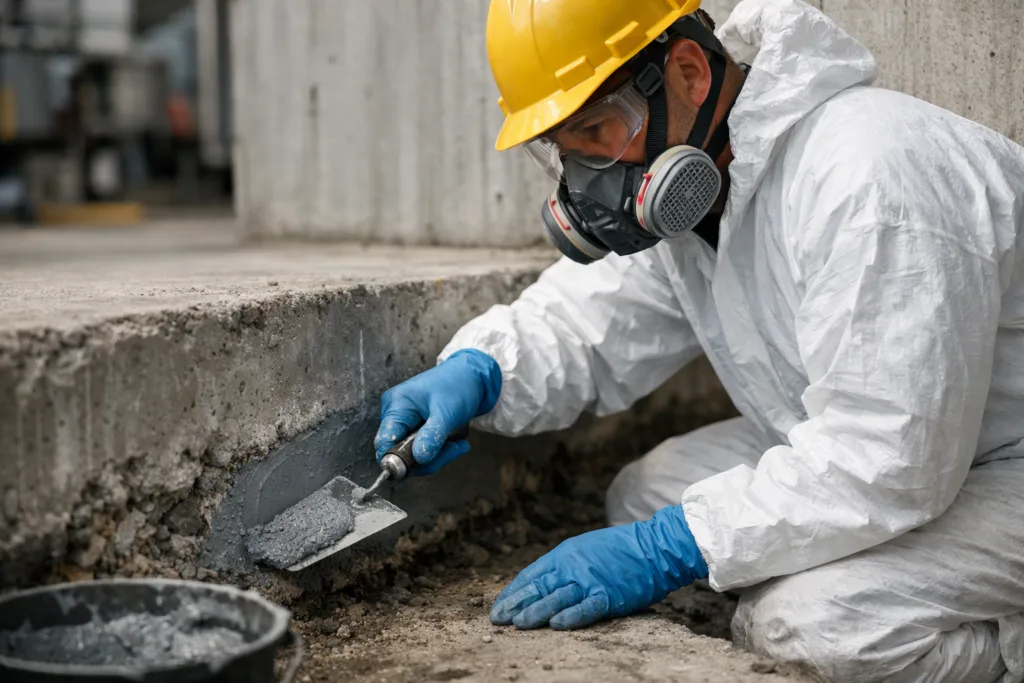
- Mechanical cleaning (scarifiers, shot blasting, or grinders) to remove surface oils and loose concrete.
- Application of industrial degreasers, allowed to dwell, then removed with hot water and vacuum systems.
- Testing surfaces again for absorption and cleanliness before proceeding to repairs.
For the cleanest bond, repeating degreasing and scrubbing cycles—even three or four times—is often needed for heavily contaminated foundations.
Innovative Surface Prep: Oil-Binding Primers
New generations of solvent-free primers and specialty bonding agents designed to tolerate residual oil can help “lock in” contamination left below the cleaning depth. ZDSpoxy technical teams occasionally use such oil-tolerant primers on critical compressor bases, but only after rigorous removal of as much oil as practical. This reduces the risk of bond failure from deep-set contaminants and boosts long-term reliability.
Best Methods for Repairing Oil-Soaked Concrete Foundations Under Compressors
After surface preparation, several repair strategies are available, depending on the contamination level, structural demands, and environmental conditions.
Epoxy-Based Concrete Repairs
Epoxy repair mortars and grouts stand out for their high bond strength, superior chemical resistance, and tolerance to some levels of residual oil. Epoxy solutions cure to form a dense, durable patch that can handle the dynamic loading and vibration from compressor operations. In critical cases where tight cracks or deep fissures are present, injectable products like ZDS-2002AB are used to fully penetrate and rebond the substrate. Learn more about this approach at epoxy concrete repair.
Polyurethane and Polyaspartic Systems
For situations where concrete movement or exposure to aggressive chemicals is expected, flexible polyurethane or polyaspartic grouts and coatings offer added protection. Their elongation properties help accommodate minor shifting without cracking, while fast curing limits downtime. However, they generally require an even higher standard of surface cleanliness for best adhesion.
Cementitious Overlays (When Acceptable)
If contamination is shallow and fully removed, high-performance cementitious repair mortars can be applied. These should always be bonded with a compatible primer and are best for non-structural top surfaces. For foundation-critical repairs, resins are preferable due to their superior oil resistance.
Material Selection Considerations for Oil-Contaminated Concrete Repair
The success of oil contamination, concrete repair depends on choosing repair materials tested for bonding to previously contaminated substrates. Key material selection factors include:
- Compressive strength
- Tolerance to residual oil
- Thermal resistance (to handle hot compressor cases)
- Workability and application method (grouting, trowel, injectable)
- Cure time (minimize equipment downtime)
Experienced manufacturers like ZDSpoxy recommend pilot testing repairs and using solvent-free epoxy primers for best performance where low-VOC and high adhesion are crucial.
Table: Common Repair Materials and Their Properties
| Material | Advantages | Drawbacks | Best Application |
|---|---|---|---|
| Epoxy Mortar | High strength, oil tolerant | Pricier, critical mixing | Pits, cracks, anchor repairs |
| Polyurethane Grout | Flexible, chemical resistant | Requires near-total oil removal | Joints, moving cracks |
| Polyaspartic Coating | Rapid cure, abrasion resistance | Lower thick patch ability | Fast turnaround surfaces |
| Cementitious Mortar | Cost-effective, compatible | Low oil tolerance | Minor, non-structural repairs |
Step-by-Step Workflow: Oil Contamination, Concrete Repair
Tackling oil-soaked compressor foundations involves disciplined processes to maximize repair longevity. Here’s a typical workflow:
- Initial Cleaning: Mechanically remove surface oils and deteriorated concrete.
- Deep Degrease: Use industrial-strength degreasers, followed by multiple hot-pressure rinses and vacuums.
- Assessment: Test for residues using water drop or fluorescent dye tests.
- Excision: If needed, remove deeply saturated concrete to reach a sound substrate.
- Priming: Apply oil-tolerant or solvent-free primer for bonding, as required.
- Filling: Apply suitable repair mortar, grout, or injectable resin, ensuring no voids remain beneath equipment pads.
- Finishing: Allow proper curing time before reassembling or loading compressors.
For precise material estimation, use the Epoxy Grout Volume Calculator Project Quote to avoid batch shortages or wastage during tight shutdowns.
Quality Checks After Repair
- Bond Test: Verify that repairs adhere well and no edge lifting occurs with light hammer tapping.
- Compressor Alignment: Check for flatness and even bearing of machine feet.
- Vibration Baseline: Record vibration metrics post-repair to compare against pre-repair data for assurance.
Best Practices to Prevent Future Oil Contamination in Compressor Foundations
Once repairs are complete, adopting robust preventive measures helps keep foundations healthy and reduces maintenance cycles.
- Routine Leak Checks: Regular inspections and fast response to new leaks stop deep saturation.
- Drip Trays and Oil Mats: Installing oil catchment systems limits floor contact.
- Scheduled Deep Cleaning: Performed quarterly as part of facility care for high-load compressor rooms.
- Protective Coatings: Applying durable industrial floor coatings simplifies cleanup and reduces absorption.
- Upgraded Foundation Design: In new installations, consider oil-resistant overlays or isolation barriers below grouts.
Routine Monitoring Tools
Modern maintenance software often integrates vibration, temperature, and oil leak tracking, allowing managers to spot contamination risks before they necessitate major repairs.
Importance of Choosing Proven Materials and Expert Workmanship
The use of precisely formulated, well-tested resin materials has proven critical in ZDSpoxy’s field experience. Factors like cure profile, viscosity at temperature, and oil tolerance—even subtle differences between product batches—impact long-term repair success. Customizing repair mixes in accordance with real site temperature, expected vibration, and application method (trowel, pour, or injection) yields a more resilient foundation. This discipline helps facilities avoid recurring failures under heavy, vibration-prone compressors.
Neglecting Oil Contamination: Hidden Costs and Risks
Delaying repairs or using unsuitable materials can accelerate foundation damage. Neglect allows cracks to widen, further oil migration, equipment misalignment, increased vibration, and even total foundation or machinery failure. Beyond physical risks, oil spills—if allowed to seep into subsoil or drains—raise compliance issues and clean-up liabilities, which can prove far costlier than planned preventive repairs.
Insurance and Regulatory Considerations
Facilities subject to insurance audits or regulatory standards (such as food factories) face particular scrutiny over floor integrity and oil control. Prompt, documented repairs reduce the risk of penalties and improve asset values.
[PROMPT]: Repairing Oil-Soaked Concrete Foundations Under Compressors
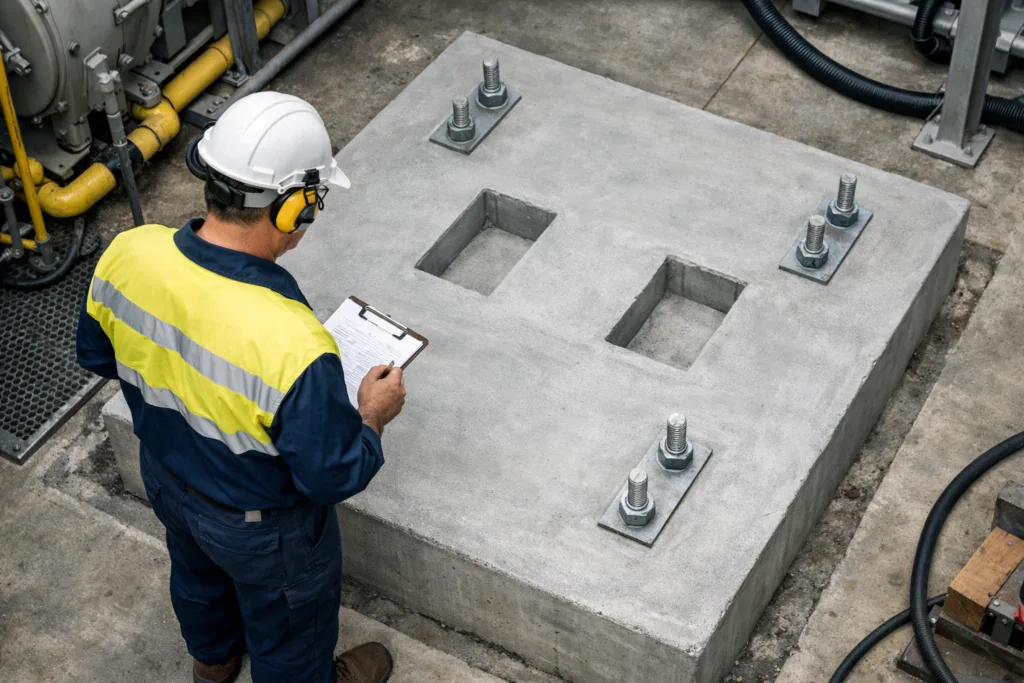
Repairing oil-soaked concrete foundations under compressors is a multi-stage process—far more complex than simple patching. Success relies heavily on diligent surface cleaning, using proven oil-tolerant repair materials, and ensuring uncompromised bond between new patch and old substrate. Each repair is unique: depth of contamination, concrete quality, compressor type, environmental conditions, and planned machine downtime all shape the approach. With discipline, high-performance resin systems, and methodical preparation, even heavily damaged, oil-saturated zones can be brought back to long-term service.
Frequently Asked Questions
How deep does oil contamination typically penetrate into concrete foundations?
Oil can penetrate several millimeters to several centimeters, depending on concrete porosity, contamination duration, and repeated spills. Core sampling is often needed to determine true depth.
Can any repair material bond to oil-soaked concrete?
No. Most standard mortars and coatings will fail to bond. Only specially formulated resin systems and oil-tolerant primers stand a chance—after rigorous surface cleaning and prep.
Is it always necessary to remove all contaminated concrete?
Ideally, yes—but if that’s impractical, thorough degreasing and use of oil-tolerant or encapsulating primers can stabilize the area. Removal is best for severe or deep cases.
How soon can compressors be reinstalled after foundation repairs?
Timing depends on the repair material. Fast-cure epoxy or polyaspartic systems can be loaded within 1–2 days; cementitious mortars may require up to 7 days for full cure.
Are oil-resistant coatings effective for prevention?
Yes. Industrial coatings act as a barrier—making cleanups easier and slowing down or even preventing new oil from soaking into the slab beneath compressors.
What are the signs of failed oil-soaked concrete repair?
Typical signs include new cracks, edge delamination, soft spots, equipment vibration, and visible oil seepage returning to the patched area.
Related Reading
- 2026 Budget and Performance Guide for Industrial Epoxy Flooring
- Solving Reciprocating Compressor Vibration With Reliable Grouting
- Prevent Coating Failures With These 3 Fast Adhesion Tests
- 9 Pro Techniques to Retrofit and Regrout Pump Bases
- Best Practices for Heavy Machinery Foundation Grouting and Vibration Control