
Polyaspartic Curing: The Chemistry Behind Speed
Polyaspartic coatings have become a top choice for flooring and industrial surfaces. People often ask why polyaspartic curing outpaces classic epoxy resin systems. The secret lies in the chemistry, which drives everything from pot life to hardening speed.
Polyaspartic compounds belong to the aliphatic polyurea family. This means their curing process relies on a fast reaction between isocyanate and an amine called polyaspartic ester. Epoxy coatings, in contrast, cure through a slower ring-opening reaction between epoxy resins and amine hardeners. The result: polyaspartic coatings reach handling strength in as little as 30–60 minutes, while epoxies often need 6–24 hours under comparable shop conditions.
Key Reaction Differences
- Polyaspartic: Isocyanate reacts quickly with polyaspartic ester (amine-derived), forming tough urea links.
- Epoxy: Epoxy resin reacts with amine hardener—a slower, heat-dependent process.
This inherent chemistry gives polyaspartic coatings a powerful competitive edge in fast-turnaround jobs.
Industrial Insights
Manufacturers like ZDSpoxy adjust formulas to control open time (working life). For polyaspartics, typical pot life ranges from 10–20 minutes, while epoxies often allow 30–45 minutes. Cure kinetics—how quickly bonds form—depend on temperature, humidity, and mixing ratios. Polyaspartics speed up at standard room temperatures (20–25°C), while many epoxies require warm environments (or heat lamps) to reach optimal hardness.
Understanding Pot Life, Open Time, and Cure Schedule
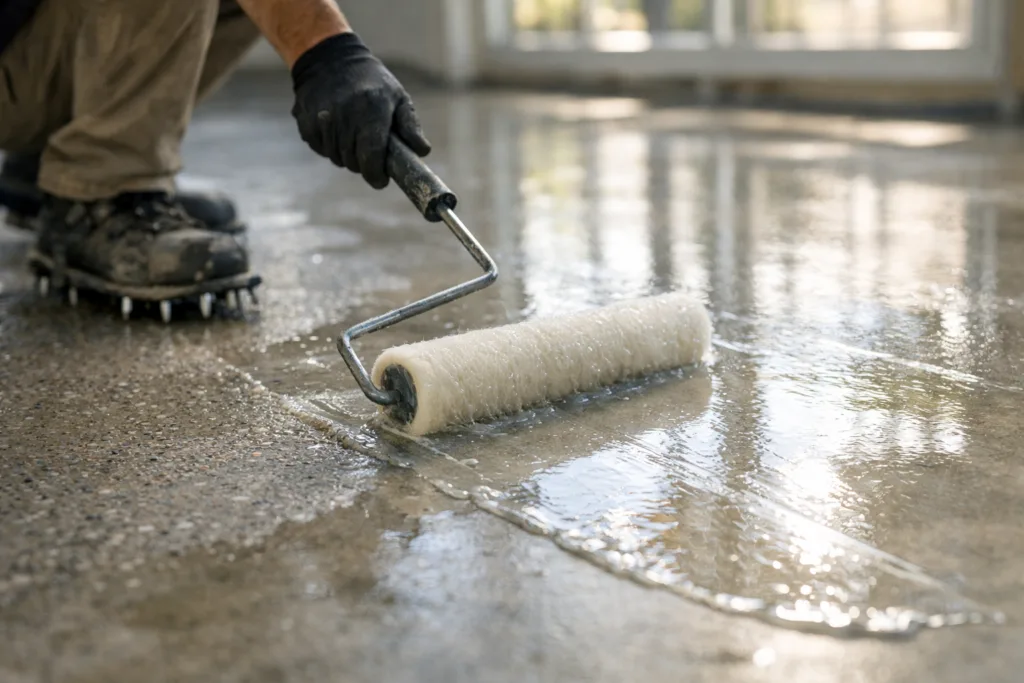
Pot life describes how long the mixed adhesive or coating remains usable. Open time is the window for working and spreading the material before it starts to cure. In field and shop use, these factors spell the difference between a smooth job and frustrating waste.
Pot Life: Fast vs. Slow
- Polyaspartic: Usable for 10–20 minutes after mixing; rapid hardening follows.
- Epoxy: Usable for 30–45 minutes; slower cure lets installers fix errors.
Many contractors favor polyaspartics for back-to-back jobs since the next coat or service is ready within an hour. Epoxy installations, while versatile, demand patience before recoating, grinding, or heavy traffic.
Cure Schedules Table
| Chemistry | Pot Life (min) | Touch Dry (hr) | Full Cure (hr) | Ideal Uses |
|---|---|---|---|---|
| Polyaspartic | 10–20 | 0.5–1 | 2–4 | Fast-turn floors, topcoats, cold weather |
| Epoxy | 30–45 | 4–8 | 24–72 | Base coats, structural bonding, high build |
Expert Takeaway
Polyaspartic coatings win for speed and flexibility. Epoxies excel where maximum mechanical properties or chemical resistance matter most.
Solid-State Curing Kinetics: Polyaspartic vs. Epoxy
Curing kinetics describe the rate of chemical bond formation—and are measured by tests like differential scanning calorimetry (DSC) and gel time observations. In polyaspartic systems, reaction rates can soar to completion within 2–4 hours at 20°C, with exotherm (self-heating) peaking quickly but controllably.
By contrast, epoxy systems often show delayed exotherm, sometimes stretching cure to 24 hours, especially in thick pours. Thermal analysis reveals:
- Polyaspartic coatings reach full crosslink density rapidly (high Tg—glass transition temperature up to 80°C+).
- Epoxy coatings build strength slowly but yield very high modulus and shear values (e.g., lap shear per ASTM D1002).
Influence of Environmental Factors
Humidity and temperature play critical roles. Polyaspartics maintain cure pace down to 0°C and high humidity. Epoxies slow dramatically in cold or damp conditions, sometimes risking incomplete cure without supplemental heat.
Comparing Adhesion and Physical Properties
Rapid curing is a benefit, but it must not come at the cost of substrate adhesion or durability. Both chemistries undergo rigorous tests:
- Lap Shear (ASTM D1002): Polyaspartic 8–12 MPa; Epoxy 12–25 MPa
- Tensile Strength: Polyaspartic 10–20 MPa; Epoxy 20–35 MPa
- Hardness (Shore D): Polyaspartic 60–80; Epoxy 80–90
Polyaspartic coatings may sacrifice a touch of ultimate strength or chemical resistance compared to epoxies—but their speed and flexibility earn favor for fast workflow projects.
Best Substrates and Prep Tips
Polyaspartic coatings bond confidently to concrete, stone, metals, and some plastics (ABS, PC) when surfaces are degreased, abraded, and dust-free. Epoxies require similar prep but often benefit from primer coats and—on “hard” plastics—corona or plasma treatments.
- Concrete: Grit-blast or diamond grind for anchor profile
- Metals: Degrease, abrade, apply adhesion promoter if needed
- Plastics: Flame/corona treat, use plastic-compatible grades
Polyaspartic Curing
Polyaspartic curing offers unmatched speed thanks to its reactive chemistry. Where traditional epoxy delays work, polyaspartics shine in demanding, tight-schedule settings. As a result, industries like automotive shop flooring, food manufacturing, and rapid-retail installations are shifting focus toward polyaspartic systems.

ZDSpoxy supplies custom polyaspartic formulas tuned for pot life and cure speed. Advanced manufacturing controls keep batch variation low; lot traceability and ISO 9001 QA ensure every drum meets spec. Contractor crews benefit from less downtime, and owners get quicker returns on newly completed surfaces.
Installation and Application: The Real-World Impact
Choosing between polyaspartic and epoxy coatings affects much more than technical performance. Workability, finish quality, and floor readiness are daily concerns for applicators.
Workflow Comparison
| Task | Polyaspartic | Epoxy |
|---|---|---|
| Mixing | Fast 1:1 or 2:1 ratios; static mixer or swirl paddle | Variable (2:1 to 4:1), slow blend to avoid bubbles |
| Dispensing | Slot-die, roll, or notched trowel; spray possible | Bead, roll-coat, heavy spatula for thick builds |
| Fixturing | None required—blocks traffic in 1 hour | Clamp fixtures for 4–12 hours, schedule delays |
Challenges in the Field
Polyaspartic coatings demand skilled, quick application. Thick batches set rapidly, so proper mixing, substrate prep, and clean equipment are vital. Installers should batch mix what’s needed per section; unused material in the bucket can flash-melt, risking waste or burns.
Environmental, Safety, and Compliance Insights
Polyaspartic formulas produce lower volatile organic compounds (VOCs) than common epoxies, easing regulatory concerns (see REACH, OSHA HazCom rules). Many suppliers, including ZDSpoxy, ship coatings with clear SDS and full batch traceability.
Safe Handling Tips
- Wear nitrile gloves and organic vapor respirators
- Message crews to vent workspaces for first 2 hours
- Piggyback waste for compliant transport and disposal
Storage and Batch Control
Keep barrels indoors at 5–25°C; moisture and sunlight will degrade reactive isocyanates. Good practice is to rotate stock by lot code to avoid expired batches. Confirm every shipment with ISO 9001 certificates and request technical data sheets (TDS) for cure specs.
Future Trends: Polyaspartic Innovation
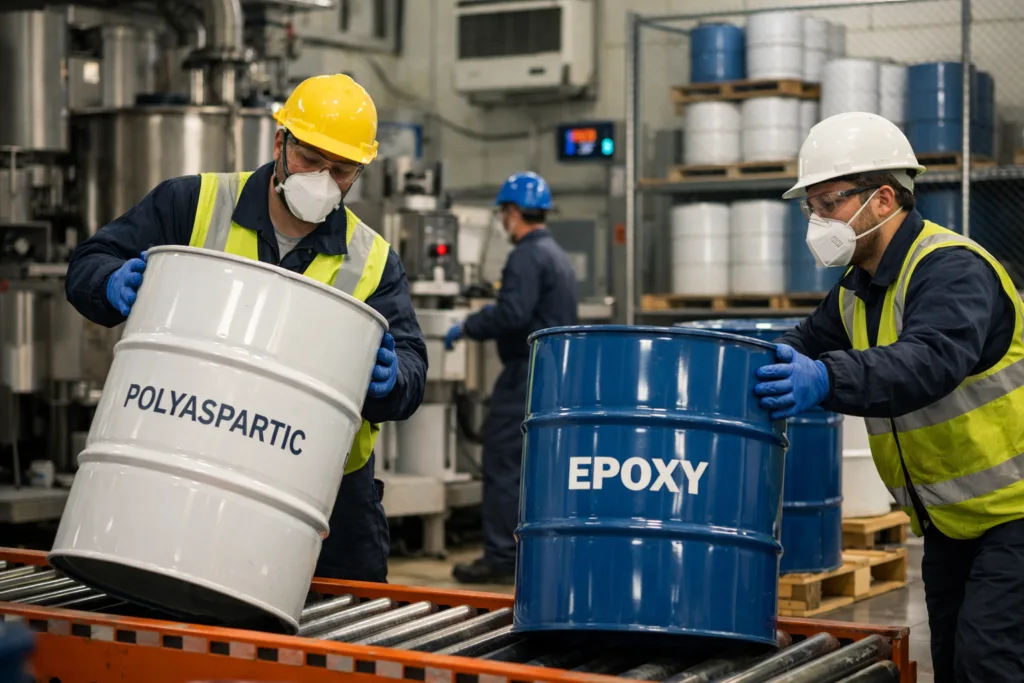
New research focuses on tailored cure times (such as extended pot life formulas), improved flexibility, and enhanced UV resistance. Smart manufacturing lines use automated dispensing and laser-guided mixing to boost consistency and reduce labor. Hybrid chemistries, combining polyaspartic speed and epoxy toughness, are entering the field for highly demanding jobs.
As both home garages and industrial plants seek rapid re-entry and reduced maintenance downtime, polyaspartic curing will continue to grow. Forward-thinking makers like ZDSpoxy offer customizable solutions for tough climates and hectic schedules.
Frequently Asked Questions
Why do polyaspartic coatings cure so much faster than epoxies?
Polyaspartic coatings rely on a quick reaction between isocyanate and polyaspartic ester. This chemistry speeds up hardening, cutting cure time compared to the slower process in epoxy systems.
Can polyaspartic coatings cure in cold or humid environments?
Yes, polyaspartic coatings cure well even down to 0°C and in high humidity, making them practical for varied job sites.
How does substrate preparation differ for polyaspartics and epoxies?
Both require clean, abraded surfaces. However, epoxies sometimes need special primers for plastics; polyaspartics bond well after standard degreasing and grinding.
What are the main advantages of polyaspartic curing for floor contractors?
Fast curing lets crews complete jobs and return spaces to use within hours, increasing profitability and customer satisfaction.
Are polyaspartic coatings as durable as epoxies?
Polyaspartics provide good abrasion and chemical resistance, but epoxies can surpass them for extreme mechanical or chemical loads.
Do polyaspartic systems meet environmental compliance standards?
Most polyaspartic coatings have low VOCs and comply with REACH and OSHA rules, especially when sourced from certified suppliers.