
Understanding Polyaspartic Floor Cost
Polyaspartic floor coatings offer a fast, durable solution for concrete floors. However, their total cost can vary greatly. This breakdown explains the main price factors and helps you compare options with clarity.
What Is Included in Polyaspartic Floor Coating Projects?
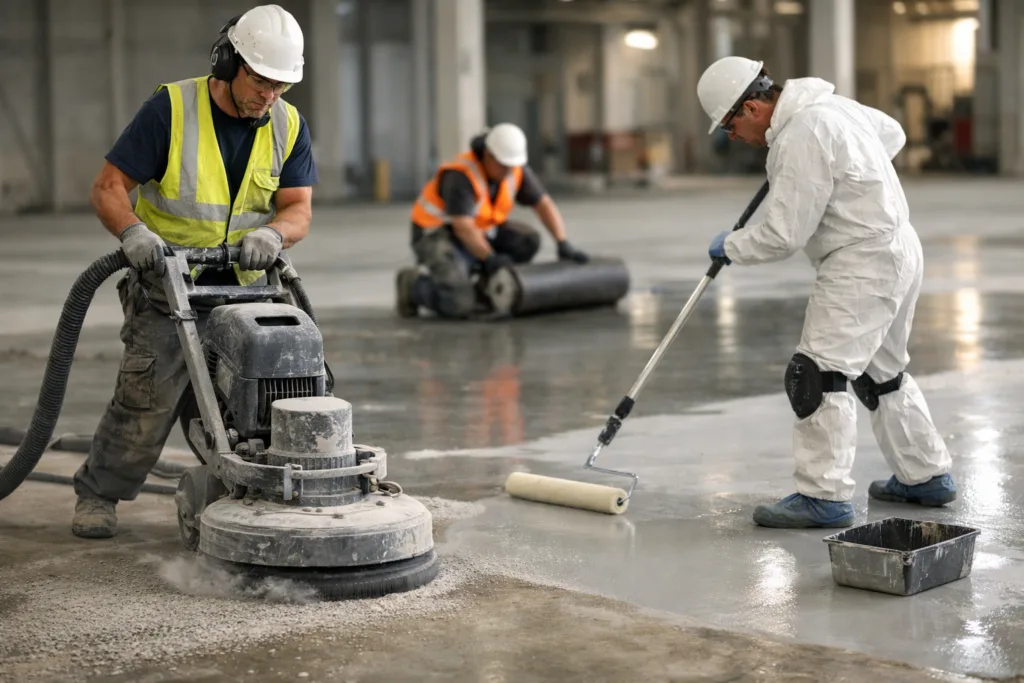
Every polyaspartic floor project includes unique steps. Prices depend on labor, materials, surface prep, and complexity. Understanding these basics helps owners and buyers spot hidden costs and set realistic budgets.
- Prepping the substrate (often concrete)
- Primers, moisture vapor barriers, or repair compounds
- Layered coating—polyaspartic topcoats or multi-coat systems
- Protective sealers and finishing steps
Each step can use different chemistries, methods, and quality standards. For example, ZDSpoxy develops systems tailored for heavy-duty and decorative applications.
Key Factors Influencing Polyaspartic Floor Cost
Several clear factors combine to affect polyaspartic floor costs. These influence pricing for garages, shops, food areas, warehouses, and showrooms.
- Floor size (square meters or feet) – Larger areas often get better unit rates, but material and labor costs still rise overall.
- Surface conditions – Cracked, oily, or damaged concrete can require extra cleaning, patching, or grind-blasting, which adds time and cost.
- Coating thickness and number of layers – Most floors use 2–3 coats. More layers raise material and labor prices, but boost durability.
- Product selection – Premium polyaspartics and specialty primers cost more than standard options. Hybrid systems (with epoxy or polyurethane basecoats) affect price and properties.
- Color choices and finishes – Flake, quartz, metallic, or custom tints add style but may involve extra materials and labor steps.
- Application complexity – Edges, drains, slopes, or verticals raise labor hours and skill requirements. Automated vs. manual systems also change pricing.
- Local labor rates – In urban or high-wage areas, installer costs per hour or square meter will climb.
- Warranty and performance testing – Extra quality control, like salt spray (ASTM B117), adhesion (ASTM D7234), or added paperwork (ISO 9001), raises cost but assures outcome.
Cost Comparison: Polyaspartic vs Other Flooring Solutions
| Type | Typical $/m2 | Cure/Install Speed | Best For |
|---|---|---|---|
| Polyaspartic | 250–500+ | Ultra-fast (1–3 hrs/set walkable) | Shops, garages, show floors, cold cure |
| Epoxy | 150–400 | Medium (6–24 hrs) | Warehouses, parking decks |
| Urethane/Polyurethane | 200–500 | Slow (12–48 hrs) | Food, beverage plants, outdoors |
| Acrylic | 180–430 | Very fast (1–3 hrs) | Walkways, repairs |
Polyaspartic systems cost more upfront but enable overnight turnarounds and resist abrasion and chemicals for years. Epoxy is a common lower-cost option, but lacks the speed and some weathering properties of polyaspartic floors.
Material Choices: How Chemistry Affects Cost
Polyaspartic coatings cure quickly even at low temperatures. Their chemistry gives high hardness, gloss, and UV resistance with low odor. ZDSpoxy formulates both neat and filled polyaspartic blends for different needs.
- 1K (single-component): Easy to apply for repairs, but less durable for full floors
- 2K (two-component): Professional strength; mixes resin and hardener (exothermic cure), pot life as low as 20–40 minutes
- Specialty fillers/additives: Quartz, anti-slip, pigment
Property Benchmarks
- Hardness: 80–90 Shore D
- Lap shear adhesion: 8–15 MPa
- Tensile strength: Up to 30 MPa
- Elongation at break: Up to 70%
- Chemical resistance: Excellent against acids, oils
Installation Process—Time, Crew, and Equipment
A standard polyaspartic coating job uses these steps:
- Degrease and grind surface; repair cracks or damage
- Apply primer or moisture barrier if needed
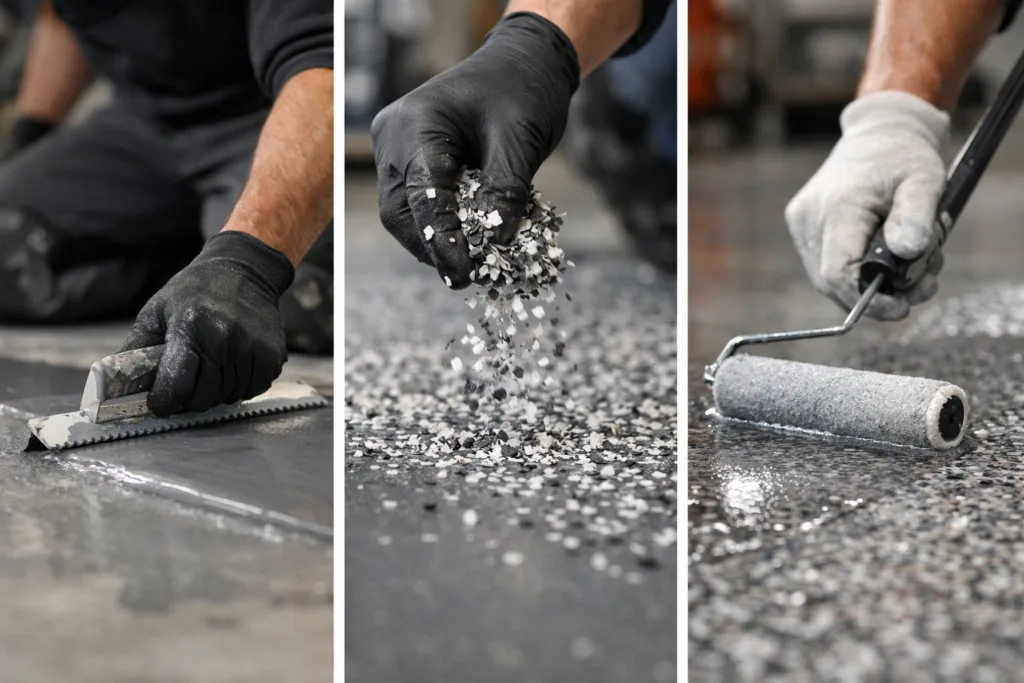
- Roll or squeegee basecoat, then broadcast chips (if using)
- After brief cure, scrape excess, apply topcoat
- Allow several hours for walk-on, up to 24 hours for heavy loads
Typical Crew Size and Tools
- 2–4 installers for < 200 m2; larger jobs may use more for speed and quality
- Mechanical grinders/shot-blasters
- Mixing equipment for 2K polyaspartic systems with precise ratios
- Static mixers, squeegees, rollers, spiked shoes, and PPE
Most residential garage or retail jobs finish in a single day with the right conditions. Larger or industrial projects (with ramps, drains, or barriers) require careful sequencing and can increase overall cost.
How Substrate and Preparation Impact Polyaspartic Floor Cost
Substrate type and prep drive much of the final price. Polyaspartic coatings bond strongly to properly prepared concrete, terrazzo, or cement overlays.
- Good surface: Quick grind, minimal repairs—lowest cost
- Pitted/contaminated concrete: Requires degreasing, patching, more primer
- Moisture-prone slab: Needs specialty primer, vapor barrier
- Temperature: Polyaspartics allow application at 0–35°C, but extreme cold or humidity may extend cure and labor times
Some plastics (ABS, PP, or PC) require adhesion promoters or flame/corona treatment before coating. ZDSpoxy gives detailed surface prep guides for tough projects.
Regional Pricing Trends and Cost Ranges
Polyaspartic floor cost varies by city, region, and demand. Residential garages may range from ¥250–400/m2. Large commercial floors with QC, custom colors or slip resistance can reach ¥500+/m2. Labor rates, local standards, and chemical import costs affect pricing. Buyers in cities like Shanghai or Beijing often pay 15–30% more than those in smaller markets.
Urban vs. Rural Price Comparison
- Urban: More skilled labor, higher rates, more permits—adds 10–20% to total
- Rural: Lower installer rates, but travel and logistics may offset some savings
Warranty, Maintenance, and Long-Term Value
Premium polyaspartic systems may come with 5–15 year warranties if properly installed and maintained. Buyers should ask for documentation on slip resistance, chemical resistance, and cleaning recommendations. Longer life and lower maintenance can make the total lifecycle cost lower than cheaper coatings that need frequent repair or recoating.
Expert Takeaway: “Upfront price matters, but focus on substrate prep and experienced contractors. The right base achieves a 10+ year, worry-free polyaspartic floor.”
Polyaspartic Floor Cost
For most projects, expect a base polyaspartic floor cost of ¥250–500 per square meter installed. DIY kits are possible for small garages but may lack guaranteed adhesion and finish. Always compare quotes line-by-line. Watch for added fees for substrate repair, decorative finishes, or premium topcoats. Request references, quality records (ISO, SDS), and check that your supplier follows standards such as ASTM or REACH/RoHS for safety and durability.
Choosing the Right Partner for Your Polyaspartic Floor
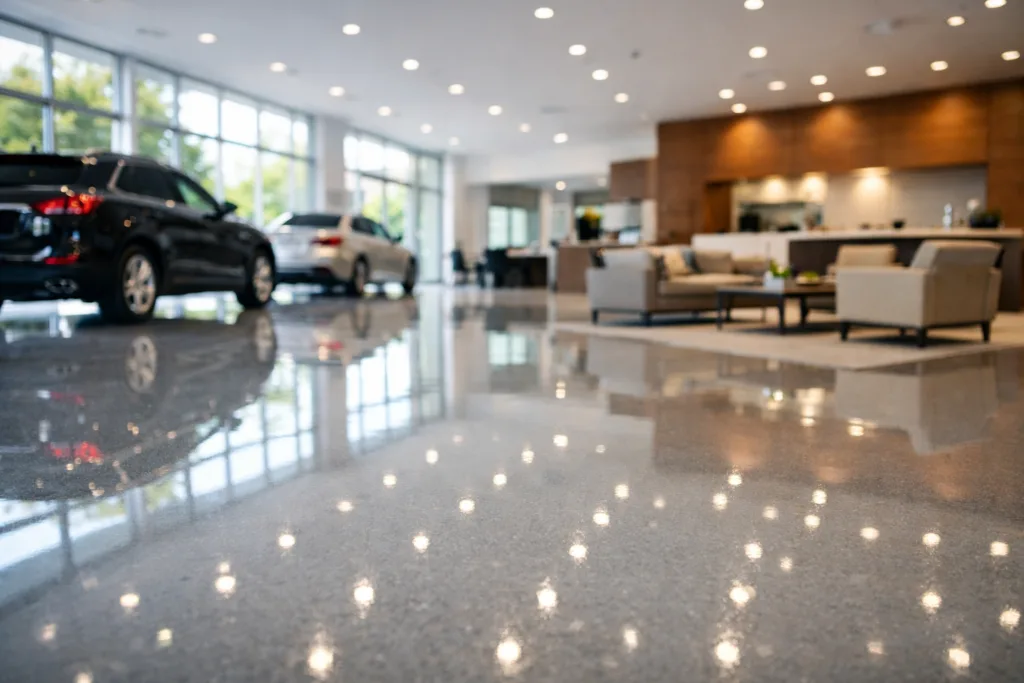
Look beyond price alone. Ask about install crews, QC processes, and chemistry documentation. Large projects may need site-specific samples or test patches. ZDSpoxy offers a full line of polyaspartic floor solutions, with technical support, documentation, and supply chain reliability. Choosing a quality partner delivers longer life and less downtime.
- Always get a detailed quote with all prep and finish options
- Ask for references and actual installed examples
- Verify chemistry, safety, and environmental compliance (SDS, REACH, RoHS, ISO 9001)
- Consider lifecycle cost, not just installation price
Frequently Asked Questions
What is the average polyaspartic floor cost per square meter?
Most polyaspartic floors cost between ¥250 and ¥500 per square meter, depending on area size, prep, and finish.
How does polyaspartic compare with epoxy?
Polyaspartic coatings cost more than standard epoxy, but cure faster and offer higher UV, stain, and abrasion resistance.
Does concrete condition affect final price?
Poor substrate condition can add up to 20–40% to total cost due to extra cleaning, repair, or primer needs.
What is the warranty length for polyaspartic floors?
Most professional installs come with a 5–15 year warranty if you follow manufacturer maintenance guidance.
Do color or decorative options change the price?
Special effects, flakes, quartz, or metallic pigments often raise the cost by ¥50–100 or more per square meter.
Can I install a polyaspartic floor myself?
DIY kits exist for garages, but professional installation ensures proper prep, mixing, and even finish for lasting performance.