
Why Polyaspartic Floors Stand Out in Industrial Facilities
Industrial settings demand floors that handle heavy loads, frequent cleaning, and tough chemicals. Polyaspartic flooring checks each box. Used in factories, warehouses, and production plants, polyaspartics offer a hard-wearing, safety-focused surface. ZDSpoxy provides advanced polyaspartic industrial floor coatings engineered for challenging environments where failure isn’t an option.
Polyaspartic Floor Technology: The Backbone of Industrial Floor Coating
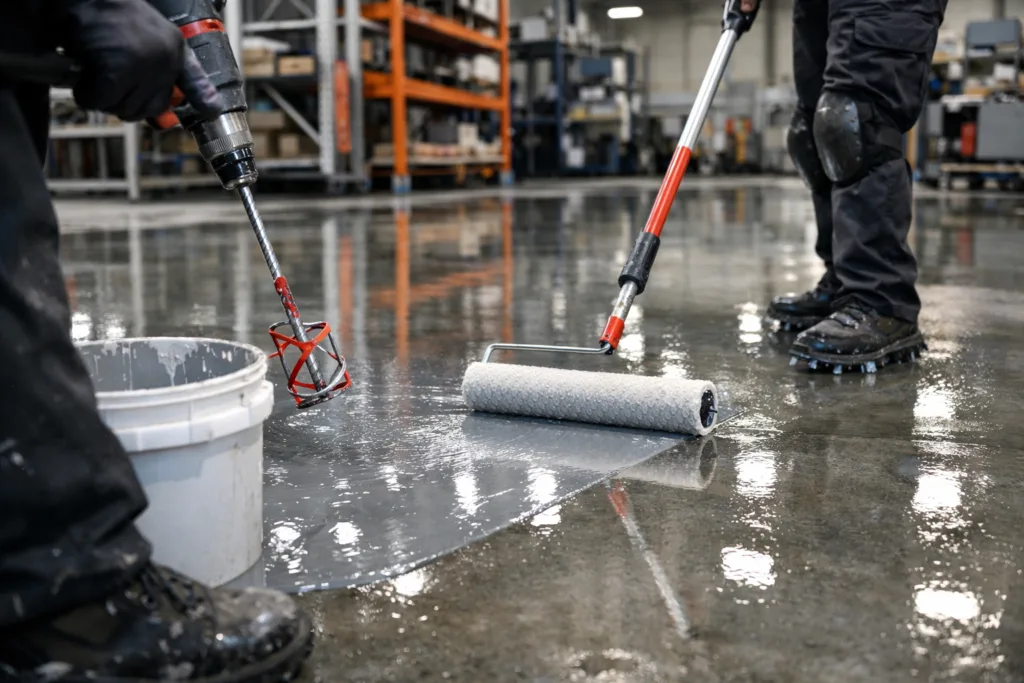
Polyaspartic floors are a subtype of polyurea coatings, but with faster cure speed and superior clarity. These two-component (2K) systems use a resin and a catalyst. When mixed and applied, the reaction creates a dense, cross-linked film in as little as one hour. Unlike traditional epoxy or urethane, polyaspartics offer higher chemical resistance, abrasion tolerance, and can cure in cold or humid conditions.
Technicians often apply polyaspartic at 8–16 mils wet film thickness. Cure times for light foot traffic can be under 2 hours, slashing downtime. Full cure for heavy use is typically within 24 hours. Pot life is brief—usually 15–30 minutes—so preparation is vital. Most products achieve a Shore D hardness of 75–85, indicating excellent durability. Polyaspartic coatings also maintain gloss and clarity, making them ideal for clean zones and high-visibility traffic lines.
Key Performance Metrics
- Abrasion resistance: < 30 mg weight loss (Taber CS-17, 1kg, 1000 cycles)
- Adhesion: >2.5 MPa (ASTM D4541)
- Chemical resistance: Resists oil, acids, solvents, and caustics
- Thermal stability: Tolerates temperature swings from -30°C to +120°C
- UV resistance: No chalking or yellowing under fluorescent/LED lighting
Polyaspartic vs. Other Floor Coatings
| Chemistry | Substrates | Key Properties | Best Uses |
|---|---|---|---|
| Polyaspartic | Concrete, metal, stone | Fast cure, extreme abrasion & chemical resistance | Factories, workshops, cold storage |
| Epoxy | Concrete, primed metals | Cost-effective, good adhesion, moderate cure speed | Warehouses, light industrial |
| Polyurethane | Concrete, flexible substrates | UV resistance, flexible, moderate abrasion | Parking decks, outdoor ramps |
| Acrylic | Various, incl. high-moisture | Fast cure, low thickness, less chemical resistance | Repair, decorative features |
Industrial Floor Coating: Meeting Complex Facility Demands
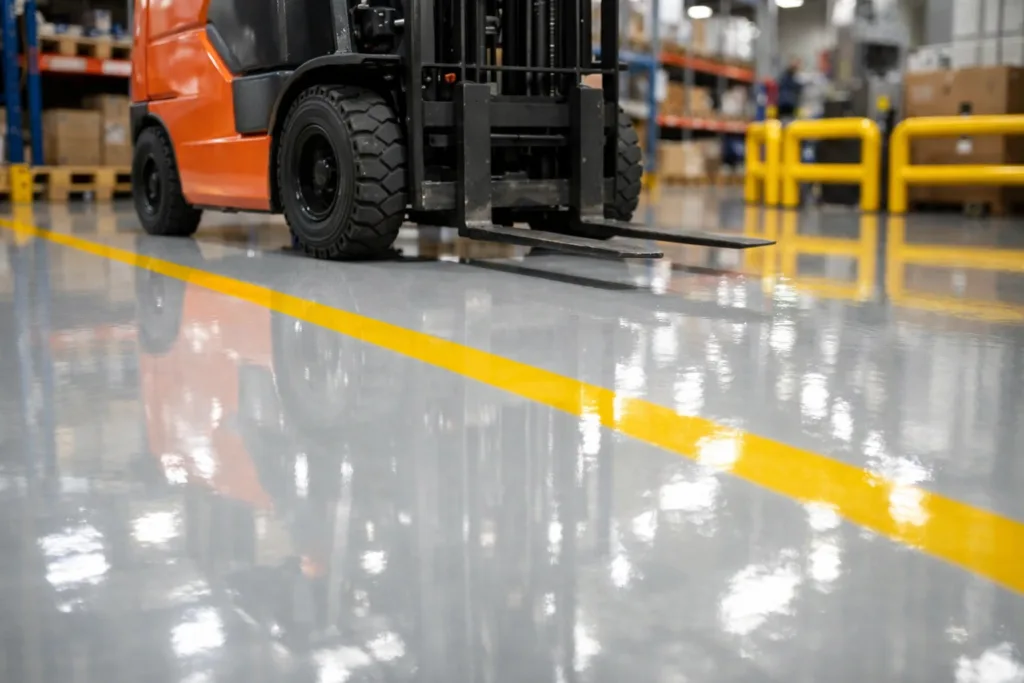
Industrial floor coating choices hinge on real-world stress. Polyaspartic coatings provide unmatched robustness for high-movement zones, fork truck lanes, and chemical loading bays. Heavy machine vibration, thermal shock from steam cleaning, and on-the-spot cleaning agents all batter floors daily. Legacy coatings can peel, chalk, or fail under such tests. Polyaspartic technology excels thanks to:
- Ultra-fast application and return to service, shrinking downtime
- Dense, impermeable surface blocking water, oil, and solvents
- Long-term clarity and color stability, even under harsh lighting
For facilities with strict hygiene codes (such as food, pharma, clean manufacturing), polyaspartic coatings can be finished seamless and cove up walls, eliminating grout lines and cracks where bacteria can hide. With tailored slip-resistant additives, environments prone to oil or water spills maintain worker safety.
Industrial Facility Case Study: Polyaspartic Success
A mid-sized electronics assembly plant faced frequent chemical spills and hard tire traffic on its epoxy floors. After switching to a ZDSpoxy polyaspartic system, they reduced maintenance shutdowns by 75%. The plant achieved certified cleanroom standards, with no floor discoloration after six months under UV inspection lamps.
Surface Preparation: Laying Foundations for Performance
Floor longevity starts with substrate preparation. For polyaspartic floor coatings, proper prep involves degreasing, diamond grinding, and careful patching of cracks or expansion joints. Moisture vapor emission rates (MVER) should be tested to ensure compatibility. For stubborn contaminants or unknown concrete history, a primer or moisture mitigation barrier may be necessary. Edges, drains, and detail work are protected or taped off before pouring or rolling the coating.
In high-traffic facilities, mechanical profiling to CSP 2–3 (per ICRI specs) boosts surface area for better adhesion. For metals or non-concrete substrates, abrasive blasting and then applying a specialty adhesion promoter is standard. ZDSpoxy offers surface kits tailored to local climate and substrate type.
Application Methods for Polyaspartic Industrial Floors
Polyaspartics are versatile. You can apply them by squeegee, roller, airless spray, or notched trowel depending on area size and desired finish. Since pot life is very short, most projects use dual-cartridge static mixers, reducing waste and improving consistency. Experienced crews work in teams to batch mix, lay, and back-roll sections, minimizing joints. Larger jobs benefit from automated dispensing rigs that apply even coats up to 10,000 square feet per day with minimal downtime. Precise mixing ratios (by weight or volume) ensure proper cure; improper proportioning can cause soft spots or discoloration.
After application, temperatures must stay above 0°C for full reaction. Some products cure even at -10°C, making them suitable for cold rooms or freezers. Final inspection involves gloss measurements, adhesion pull-off tests, and visual checks under strong light. Documenting lot numbers and QC results ensures traceability for warranty or audit needs.
Industrial Use Cases: Where Polyaspartic Floors Excel
Facilities rely on polyaspartic floors in:
- Automotive plants: Withstands oil drips, tire abrasion, and quick repairs between shifts
- Food & beverage: Seamless, antimicrobial finish for washdowns and sanitation
- Electronics assembly: Static dissipative options, clear coatings for clean zones
- Pharmaceutical: No dust, cove base, and chemical spill containment
- Cold storage: Fast cure even in low temperatures
Expert Tip
Strong floor prep and material quality are non-negotiable in regulated industries—failures lead to costly downtime and non-compliance. Always confirm documentation such as VOC certificates, REACH/RoHS statements, and lot traceability for industrial orders.
ZDSpoxy: Supporting Industrial Floor Coating from Start to Finish
ZDSpoxy works with manufacturing leaders to specify the right polyaspartic blend for challenging applications. Their portfolio covers structural coatings, rapid-cure toppings, and slip-resistant options. Experts advise on batch size, cure parameters, and quality control best practices. ZDSpoxy’s technical service supports customers from prep to post-install inspection, ensuring compliance with strict industry standards.
For plant managers seeking reliable, high-performance flooring, ZDSpoxy delivers proven chemistry and first-hand insight. Fast quotes, local delivery, and lot-stamped documentation keep projects on track—no matter the facility type.
Polyaspartic Floors for Industrial Facilities
Polyaspartic floors lead the evolution of industrial floor coating. Their rapid installation, extreme durability, and chemical resistance set new standards for uptime and safety. Compared to legacy systems, polyaspartic provides a future-ready solution ideal for volatile, high-volume environments. From process lines to heavy equipment bays, these floors cut downtime and keep operations running smoothly. For plants facing aggressive use and zero-tolerance for downtime, polyaspartic coatings are the proven first choice. Consider partnering with ZDSpoxy to unlock tailored solutions for your facility’s specific needs.
Trends & Regulations Shaping Polyaspartic Floors

New environmental rules and labor shortages are accelerating the adoption of polyaspartic coatings in industrial floor coating. Regulation such as REACH, RoHS, and local VOC controls push manufacturers towards low-emission, fast-cure products. With fewer downtime windows, faster return-to-service is considered essential, not a luxury. Ongoing investment in automation and in-process QC testing (like thermal cycling and salt spray, ASTM B117) raises expectations further.
Frequently Asked Questions
What is the main advantage of polyaspartic floor coatings for industrial use?
Polyaspartic floor coatings cure rapidly, minimizing downtime and offering strong chemical and abrasion resistance, ideal for industrial sites.
How long does it take to install and use polyaspartic flooring in a facility?
Most polyaspartic floors are ready for light foot traffic in under two hours and can support heavy equipment within 24 hours of installation.
Are polyaspartic coatings suitable for areas with frequent chemical spills?
Yes. Polyaspartic coatings resist oils, acids, cleaning agents, and solvents, making them a top choice for chemical handling zones.
Can polyaspartic floor coatings be installed in cold environments?
Many polyaspartic systems cure at low temperatures (down to -10°C), so they are well-suited for freezers and cold storage areas.
What substrate preparations are needed for polyaspartic flooring success?
Substrates must be clean, dry, and mechanically profiled; diamond grinding or shot blasting ensures strong adhesion and prevents future failures.
How do polyaspartic floors comply with industrial flooring regulations?
Quality systems provide traceable documentation. Many polyaspartic coatings meet REACH, RoHS, low-VOC, and ISO 9001 requirements when supplied by reputable manufacturers like ZDSpoxy.