
Introduction to Precision Epoxy Grout: The Engineering Definition & Purpose
Precision epoxy grout plays a pivotal role in modern construction and engineering, offering unmatched bonding, load transfer, and long-term stability wherever machinery, foundations, and structures demand strict alignments and resilient performance. In this article, we’ll uncover the engineering definition of epoxy grout, explore its chemical backbone, review how it outperforms other materials, dissect installation best practices, and clarify why precision epoxy grouting is the preferred choice in challenging or high-value engineering projects.
What Is Precision Epoxy Grout?
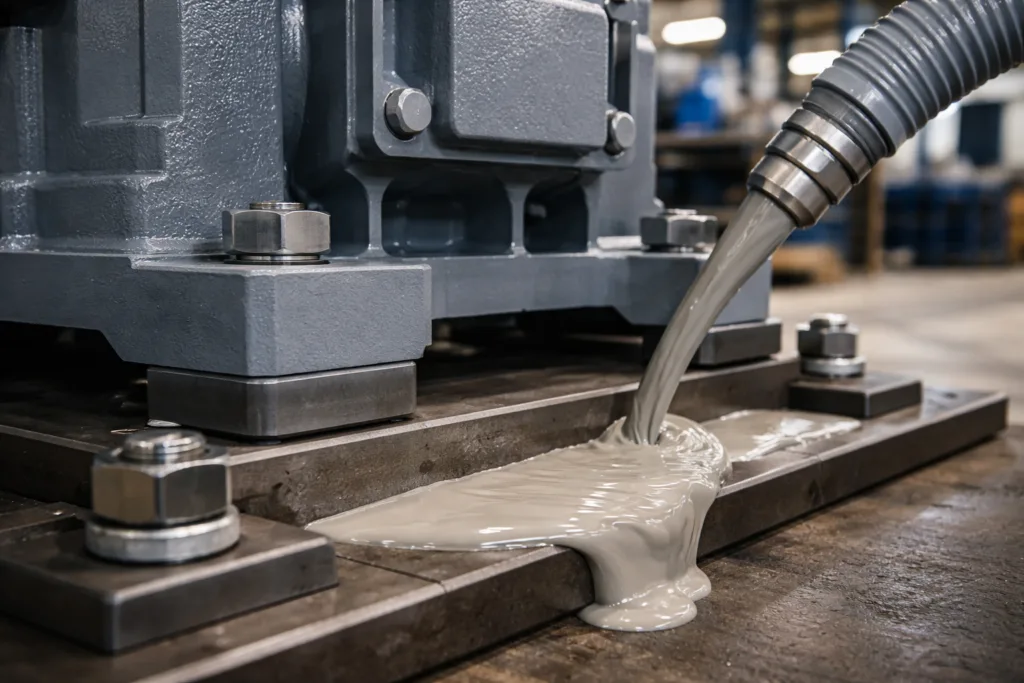
Epoxy grout is a specialized two-part composite, consisting of epoxy resin binder and graded aggregate fillers. Engineered for high strength, low shrinkage, and reliable flow characteristics, it’s designed to fill gaps under heavy equipment, structural bases, or critical supports where plain cementitious grout would fail. Its unique formula delivers both exceptional compressive strength and chemical resistance, distinguishing it from conventional alternatives.
The Engineering Definition of Epoxy Grout
The engineering definition of epoxy grout involves a non-shrink, high-strength polymeric material formulated for void filling beneath structural elements needing precision alignment and permanent load transfer. Unlike hydraulic cement grouts, epoxies cure via a chemical reaction that yields a dense, impermeable matrix—locking baseplates, rails, or anchor bolts in place far beyond the abilities of traditional grout.
The Chemistry Behind Epoxy Grout
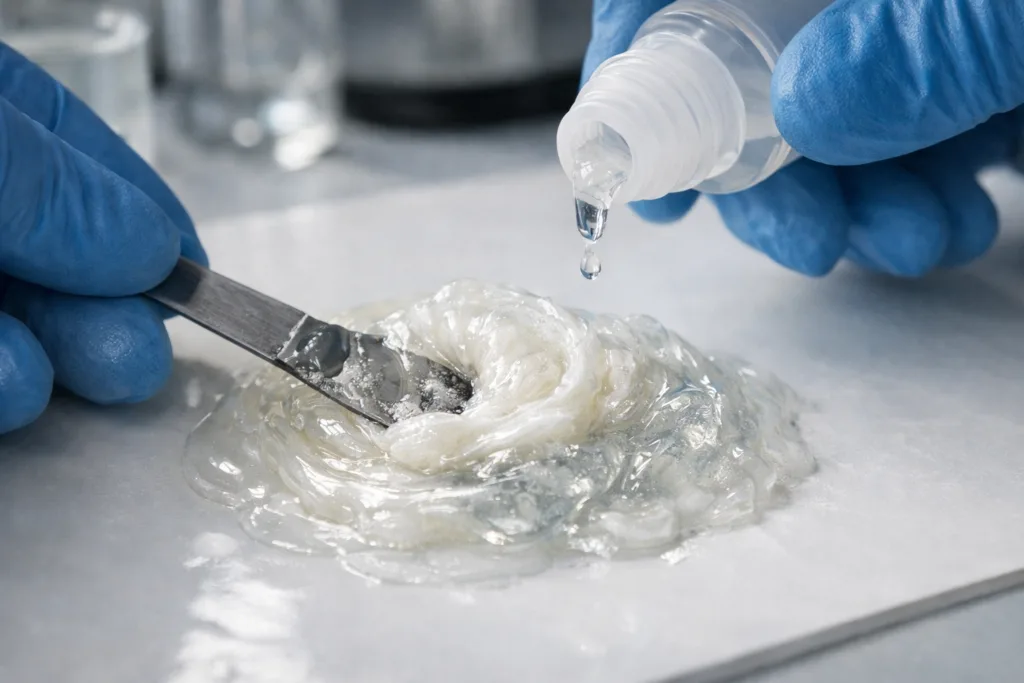
Epoxy grout chemistry starts with combining an epoxy resin and a hardener. Upon mixing, the two react to form a three-dimensional crosslinked network. This process, called polyaddition, is not dependent on water, which largely prevents shrinkage and boosts final mechanical properties. Aggregate fillers enhance dimensional stability and thermal expansion control, while viscosity modifiers allow precise flow and gap-filling—even in tight tolerances. Experienced manufacturers like ZDSpoxy consider heat build-up, gel time, and batch consistency during production to ensure real-world reliability.
Key Properties That Make Epoxy Grout Unique
- High Compressive Strength: Often exceeding 80 MPa, ideal for supporting dynamic and static loads.
- Low Shrinkage: Maintains physical alignment with almost no dimensional change.
- Chemical Resistance: Endures acids, oils, and industrial contaminants.
- Durable Bonding: Bonds to steel, concrete, and stone surfaces without primer in most cases.
- Precise Flow Properties: Can be tailored for deep pours, tight gaps, or complex geometries.
- Rapid Curing: Project scheduling flexibility with cure times from hours to days.
Why Choose Epoxy Grout over Cementitious Grout?
| Property | Epoxy Grout | Cementitious Grout |
|---|---|---|
| Compressive Strength | 80–110 MPa | 30–60 MPa |
| Shrinkage | Minimal | Moderate to High |
| Chemical Resistance | Excellent | Poor to Moderate |
| Bond to Substrate | Superior | Average |
| Working Time | Adjustable | Short/Variable |
Precision Applications: When to Use Epoxy Grout
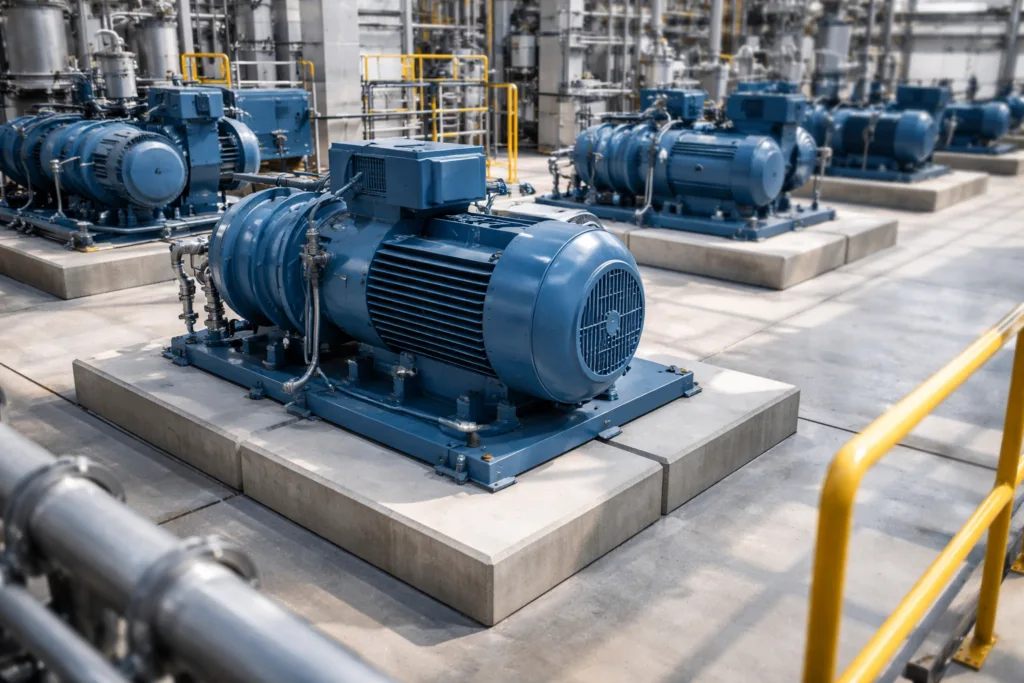
Precision epoxy grout is chosen for demanding scenarios, including heavy machinery support, compressor and crusher bases, bridge bearings, marine piers, and anywhere tolerances and load transfer are mission-critical. For example, when grouting under compressors, high compressive epoxy grout ZDS-1410AB for crushers ensures stable operation and reduces long-term maintenance risks.
The Physics of Grout Load Transfer
Engineering specialists appreciate epoxy grout because it transforms the transfer of dynamic and static forces. The cured grout acts as a buffer, distributing point loads into a larger footprint, reducing concentration on anchor bolts or concrete. Its stiffness and adhesion create a direct path for vibration and shock attenuation—especially vital for machines subject to rapid cycling or impact.
Installation Steps for Optimal Precision
- Surface cleaning: Remove oils, debris, and loose particles from concrete and steel.
- Formwork setup: Seal forms to prevent leaks.
- Mixing: Use precise ratios and mechanical mixers. ZDSpoxy experts emphasize slow mixing to avoid air entrapment and batch temperature rise.
- Placement: Pour continuously, maintaining movement to avoid gaps.
- Finishing: Strike surfaces smooth; allow proper air release.
- Curing: Protect from early loads, chemical spills, and extreme temperature changes until cured.
Common Mistakes in Epoxy Grout Installation
- Improper mixing ratios causing soft or brittle cure.
- Rushing pour, leading to air voids or poor coverage.
- Excessive batch size producing heat buildup.
- Contaminated substrate affecting bond strength.
- Ignoring shelf life or using old materials.
How to Achieve a Perfect Grout Bond
For best results, confirm substrate preparation, monitor batch temperature, and keep batch sizes manageable. Use solutions like epoxy coating systems to pre-seal porous concrete ahead of grouting. Where large volumes are required, the Epoxy Grout Volume Calculator Project Quote can help estimate your required material and avoid costly shortages.
Understanding Environmental Factors
Ambient temperature, moisture, and wind can affect epoxy grout cure and flow. For low-temperature sites, specialty formulations are preferred, and for humid areas, slab moisture testing is imperative. ZDSpoxy’s lab checks for viscosity and gel time to match product selection to real jobsite climates.
Chemical and Thermal Resistance in Harsh Conditions
Epoxy grout thrives in settings exposed to oils, chemical spills, and temperature swings, holding its form and bond where cementitious products degrade. Selection should consider the base’s exposure to acids, alkalis, industrial lubricants, and heating/cooling cycles.
Long-Term Engineering Benefits
- Reduced maintenance due to consistent and stable machinery bases.
- Lower risk of vibration-induced component failures.
- Protects concrete from cracking, oil penetration, and corrosion.
- Supports operational safety with proven stability over decades.
Case Study: Heavy Machinery Foundation Grouting
A large-scale manufacturing plant required grouting for 12 industrial compressors. Traditional cement grout failed to transfer loads evenly, causing misalignment within months. Engineers switched to precision epoxy grout with low shrinkage and rapid cure, reducing installation downtime and maintenance frequency by nearly 70%.
Product Types and Selection Criteria
Epoxy grouts vary by viscosity, aggregate size, cure profile, thermal stability, chemical formula, and intended gap width. Choose high compressive strength for crushers and compressors; select flowable types for tight-gaps and injectables for crack repair.
Volume Estimation & Precise Material Planning
Accurate quantity calculation prevents waste and shortage. Using handy tools like the Epoxy Grout Volume Calculator Project Quote can streamline estimation for your project’s unique geometry.
Best Practices for On-Site Mixing and Application
- Stick to recommended batch sizes (under 20 liters).
- Pre-condition materials to site temperature for consistent curing.
- Use slow mechanical mixing to minimize trapped air.
Continuous Quality Control (QC) in Epoxy Grouting
Routine checks for viscosity, mix ratio, pot life, and placed interface thickness are vital. ZDSpoxy’s QC ensures every lot’s properties align with field needs, especially for high-stakes installations.
Safety Considerations & Handling Procedures
- Wear gloves, goggles, and respirators.
- Provide good ventilation in enclosed spaces.
- Store epoxy components in dry, cool spaces to avoid degradation.
The Role of Primers and Surface Treatments
Sometimes, solvent-free primers or sealers are recommended for very porous or contaminated concrete, helping maximize the bond between substrate and epoxy grout. Refer to Solvent-Free Epoxy Primer for primer choices tailored to wet or oil-soaked surfaces.
Future Directions in Epoxy Grout Engineering
Epoxy technology is evolving with smarter additives for faster cures, sustainable resins, and safer VOC profiles. Nanofillers and advanced polymers are on the horizon, promising even greater mechanical and chemical performance for tomorrow’s critical installations.
Precision Epoxy Grout 101: The Engineering Definition & Purpose
Ultimately, understanding the precise engineering definition and purpose of epoxy grout empowers engineers to make informed choices, prevents costly failures, and ensures the safety and durability of important structures. Whether facing demanding industrial conditions or sensitive alignment challenges, precision epoxy grout remains a cornerstone of reliable engineering.
Frequently Asked Questions
What is precision epoxy grout used for?
Precision epoxy grout is primarily used beneath heavy machinery, structural bases, and in applications needing load transfer and exact alignment, such as compressor bases or bridge bearings.
How does epoxy grout differ from cement grout?
Epoxy grout offers superior compressive strength, lower shrinkage, and excellent chemical resistance, setting it apart from ordinary cementitious grouts.
Can epoxy grout be applied in wet environments?
Special formulations like underwater epoxy grout are designed for wet conditions, providing reliable bonding and curing even below water or in humid environments.
How do I calculate the amount of epoxy grout needed for my project?
Use the Epoxy Grout Volume Calculator Project Quote to estimate the required material based on the gap dimensions and project size for accurate planning.
Is surface preparation important for epoxy grout installation?
Absolutely. Clean and dry surfaces free from oil, dust, or debris are necessary for strong bonding and to avoid future grout failures.
Does epoxy grout require special handling or PPE?
Yes. Gloves, goggles, and adequate ventilation are recommended, and all resin and hardener should be stored securely to maintain product quality.