
Pump Maintenance: Why Grouting Techniques Matter for Industrial Reliability
Industrial plants with large pumps and heavy-duty equipment depend on stable, vibration-free operations. Over time, baseplate grout beneath pumps can deteriorate, crack, or become contaminated, leading to increased vibration, alignment shifts, and extended downtime. Effective pump maintenance using modern grouting techniques restores foundation integrity, extends equipment lifespan, and is far less disruptive than total base replacement.
The Role of Grouting in Pump Foundation Performance
Under every pump, a bed of grout transmits operational loads from the pump base to concrete, anchoring the system and dampening vibration. The right grouting technique ensures pumps remain stable, aligned, and free from destructive movement—even in the face of thermal expansion, impact forces, and years of operation.
Understanding the Basics of Pump Grouting
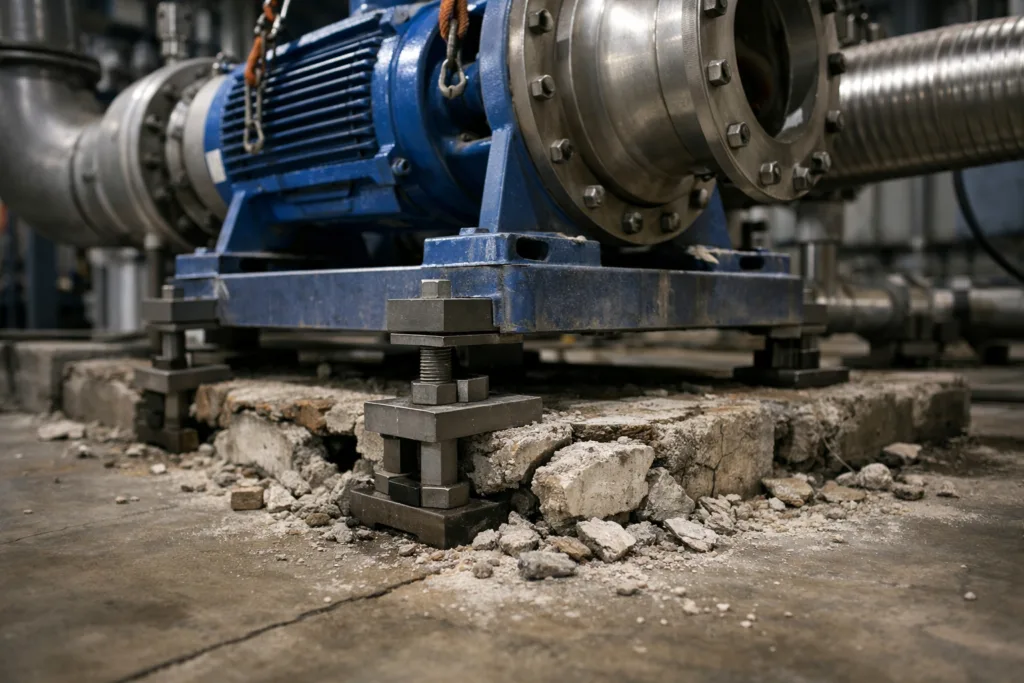
Grouting for pump bases involves more than just pouring material under equipment. It’s a precision activity requiring diligent epoxy grout solutions, calculated mixing, proper formwork, and surface preparation. The quality of the grouting process directly impacts reliability and ease of pump maintenance.
Types of Grout Used for Pump Bases
- Cementitious Grout: Widely used for cast iron or steel baseplates but more prone to shrinkage and oil absorption.
- Epoxy Grout: Popular in retrofit applications for its high compressive strength, chemical resistance, minimal shrinkage, and excellent load transfer.
- Hybrid/Mineral Aggregate Grouts: Combine properties for specialty conditions but less common for retrofits.
Why Retrofit Grouting Procedures Are Essential
Old grout deteriorates due to repeated thermal cycles, oil leaks, mechanical vibration, water ingress, and freeze-thaw exposure. Ignoring foundation issues means mounting bolts can loosen, bases distort, and bearing life shortens—creating unplanned downtime and significant repair costs.
Signs That Re-Grouting Is Required
Don’t wait for catastrophic failure. Key symptoms indicating the need for re-grouting old pump bases include:
- Visible cracks or voids in existing grout
- Pump base no longer level or solidly supported
- Persistent vibration or misalignment after adjustments
- Foundation surfaces soaked with oil or chemicals
- Noisy operation or increased vibration readings
Principles of Effective Grouting Techniques for Pumps
Resilient pump foundations demand more than simply filling gaps. The following grouting principles protect equipment investment and ease future pump maintenance:
- Firm Substrate Contact: Eliminate air pockets under baseplates to maximize contact and load transfer.
- Low Shrinkage: Use grouts engineered for minimal volume change—epoxy grouts are excellent for this purpose.
- Flowability and Viscosity: Grout must flow easily into tight spaces without segregating aggregate. Fine flowable products (see ZDS-3382AB grey low viscosity epoxy grout) simplify complex retrofits.
- Chemical Durability: For oil or chemical-soaked areas, solvent-free and oil-resistant grouts prevent bond failures.
- Adhesion and Bonding: Clean, roughened substrates with the right primer improve adhesion.
API 610 and International Standards for Pump Grouting
API 610 is the global benchmark for the installation of centrifugal pumps in petroleum, petrochemical, and gas industries. It prescribes baseplate design, grout type, alignment tolerances, and curing methods to ensure vibration control and pump reliability. Following these standards ensures compliance, safety, and long-term asset performance.
Step-By-Step: Re-Grouting Old Pump Bases Using Proven Maintenance Procedures
Preparation Stage
- Lock Out & Tag Out (LOTO): Ensure all power and process connections are isolated.
- Remove Old Grout: Chisel out cracked or loose material completely, exposing concrete and baseplate undersides.
- Degreasing & Surface Cleaning: Remove all oil, dust, loose paint, and rust. Epoxy-based repairs may require roughening and a solvent-free primer to maximize adhesion (solvent-free epoxy primer is recommended in contaminated areas).
- Check Leveling: Re-level the pump as needed using precision tools.
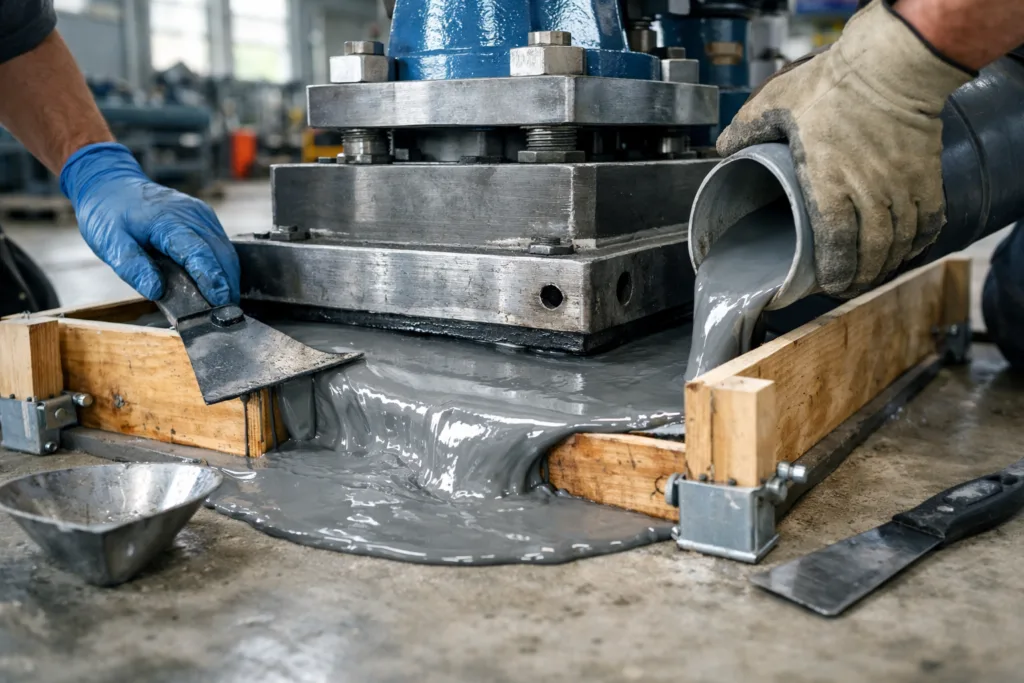
- Formwork & Containment: Build robust, sealed forms that will contain grout and prevent leakage during pour.
Mixing & Placement
- Batching: Mix epoxy grouts in small, controllable batches to prevent premature gelation.
- Pouring: Start from one side and allow grout to flow beneath the base, pushing out air as it fills. Never overwork epoxy to avoid trapped bubbles.
- Flow Monitoring: Use rods or slow vibration to encourage grout movement if needed. Avoid excessive vibration that can cause segregation.
- Pot Life & Working Time: Place grout within the manufacturer’s specified timeframe—especially important at elevated temperatures where epoxy sets faster.
Curing & Quality Checks
- Cured Strength: Allow epoxy grout to reach at least the specified compressive strength before re-torquing anchor bolts or restarting equipment (often after 24–48 hours).
- Final Re-Alignment: After cure, recheck pump alignment and adjust as needed.
- Seal Exposed Edges: For outdoor installations, ensure no groundwater can infiltrate cured grout.
Step-by-Step Checklist for Re-Grouting Old Pump Bases
- Inspect base and existing grout for signs of deterioration or contamination.
- Plan safe isolation, lifting, and access procedures for the work area.
- Remove old grout and clean all surfaces thoroughly.
- Assess anchor bolts and baseplate condition; repair or replace if needed.
- Install and seal new formwork securely.
- Prime concrete and steel if recommended by manufacturer.
- Mix and place epoxy grout per technical guidelines for thickness, flow, and ambient conditions.
- Monitor temperature and working times during placement.
- Strike off surface flush and seal edges after gelation.
- Allow full cure before equipment realignment and tie-down.
Pitfalls of Improper Grouting Techniques in Pump Maintenance
Cutting corners during re-grouting leads to recurring problems. Common pitfalls include:
- Poor formwork causing grout leakage or voids
- Inadequate surface preparation resulting in delamination or oil-contaminated failures
- Mixing errors producing weak or foamy grout
- Ignoring pot life, which yields incomplete curing
- Attempting to regrout over cracked, moving, or corroded surfaces
ZDSpoxy engineers have found these errors most frequently arise from schedule pressures or underestimating the harshness of real-world operation. Diligent quality checks at each stage make a difference that is measurable and lasting.
Case Studies: Real-World Successes in Pump Base Retrofits
Case One — Oil & Gas Pump Retrofit
An aged refinery encountered repeated vibration alarms after a decade of service. Inspection revealed oil-soaked, cracked cement grout beneath vertical inline pumps. After removing the pump and old grout, installers utilized a two-component, oil-tolerant epoxy grout. Within hours, the new base achieved compressive strength exceeding 80 MPa. Vibration dropped by 40%, and alignment stayed within API 610 tolerance for the next two years—without costly shutdowns.
Case Two — Water Treatment Facility Upgrade
At a city water plant, shifting pump bases were causing frequent shaft coupling problems. The team installed low-viscosity, tight-gap epoxy with advanced wetting and minimal shrinkage properties. Precision leveling pads ensured even support. Downtime was limited to 30 hours and post-retrofit monitoring showed zero alignment drift for three years running. The high flowability of the modern grout was critical to success in filling old bolt pockets and voided areas.
Innovations in Pump Grouting: Materials & Methods
Epoxy grout technology has evolved dramatically in response to demands for higher loads, chemical resistance, and rapid turnaround. Key innovations include:
- Mineral-filled Epoxies: Manage heat generation (exotherm) during mass pours, minimizing cracks in thick sections.
- Flow-Enhanced Grouts: Lower viscosity products allow complete filling of tight baseplate clearances and anchor bolt holes.
- High-Adhesion Primers: Enable secure bonding over damp or marginally contaminated surfaces.
Preparation Tips for Successful Pump Maintenance and Grouting Techniques
- Always follow technical datasheets and safety data for material handling.
- Pre-qualify all mixing equipment and have batch controls in place.
- Pre-measure foundation gaps and calculate grout volume accurately. Use an Epoxy Grout Volume Calculator Project Quote for precise planning.
- Avoid contamination with water, oil, or dust at every stage.
- Maintain manufacturer-recommended mixing ratios (by volume or weight) for full performance.
Checklist: API 610 Standards for Pump Base Grouting
- Baseplate must be rigid, level, and fully supported
- Non-shrink, permanent grout material specified (epoxy preferred for retrofits)
- Minimum grout coverage thickness per standard
- Positive flow of grout throughout baseplate, eliminating voids
- Alignment checks before and after grout placement
- Complete cure time elapsed before torqueing foundation bolts
Long-Term Maintenance and Inspection After Re-Grouting
Even after a high-quality installation, ongoing pump maintenance preserves foundation health. Best practices include:
- Routine vibration analysis and monitoring for early warning of base movement
- Visual inspections for cracks, edge delimitation, or water ingress
- Anchor bolt torque checks at prescribed intervals
- Resealing grout edges as needed to prevent fluid intrusion
Benefits of Proper Grouting Techniques in Industrial Pump Maintenance
Correct grouting yields both technical and operational rewards, including:
- Smoother pump operation with reduced noise and vibration
- Extended equipment life and reduced bearing or seal failures
- Compliance with safety standards (e.g., API 610) and audit requirements
- Lower total maintenance and repair costs over time
- Minimized downtime—particularly valuable during planned shutdowns
Final Thoughts on Pump Maintenance, Grouting Techniques, and Retrofit Planning

Industrial facilities depend on dependable pump foundations for critical operations. Applying modern grouting techniques in pump maintenance programs, guided by API 610 and engineering best practices, prevents recurring failures and supports safe, efficient upgrades. Re-grouting is precise work—done right the first time, it delivers returns for decades.
Frequently Asked Questions
How do I know if my pump base needs re-grouting?
Look for cracks, loosening, oil contamination, or ongoing vibration/misalignment after adjustments—any of these signal the need for re-grouting.
Why choose epoxy grout over cementitious grout for pump base retrofits?
Epoxy grout offers higher strength, lower shrinkage, superior chemical resistance, and better long-term support, especially in harsh or contaminated environments.
How long must I wait before restarting the pump after re-grouting?
Most epoxy grouts require 24–48 hours to reach operational strength, but always follow the manufacturer’s cure guidelines for safe restart timing.
What are the key steps to ensure void-free grout under a pump base?
Remove all old grout, clean and roughen contact surfaces, install sealed formwork, pour from one side, and use rod or gentle vibration techniques to fill gaps.
Is surface primer always necessary before applying epoxy grout?
Priming is vital for maximum bond if the surface is damp, contaminated, or extra-high performance is needed—most retrofit guidelines recommend it.
Can pump grouting be done in cold weather?
Yes, but select grouts designed to cure at low temperatures and protect the area to ensure full cure and strength development.
Related Reading
- Critical Lessons Comparing Vertical Inline and Horizontal Split Case Pump Grouting
- API 686 Grouting Standards Explained for Safe Installations
- How to Achieve a Void-Free Centrifugal Pump Skid Grouting
- Solving Heavy Machinery Vibration with Epoxy Grout Solutions
- Upgrade Heavy Machinery Foundations for Safer, Long-Lasting Support