
Understanding Loading Types: The Foundation of Grout Selection
When it comes to static vs. dynamic loading, selecting the right grout series is about more than just filling a gap. The forces acting on a structure’s foundation or base—whether it’s a piece of machinery or a critical infrastructure component—can change everything. Grout selection, static loading, dynamic loading, material properties, performance comparison: these are not just keywords, but core engineering realities that shape project outcomes.
Static loading refers to constant, unchanging forces, like the steady weight of a mounted pump. In contrast, dynamic loading involves varying forces—think vibrations, impacts, or pulsating actions from compressors and turbines. Each exerts different stress types on grout, making material selection both a science and an art.
Static Loading: Basics and Engineering Impact
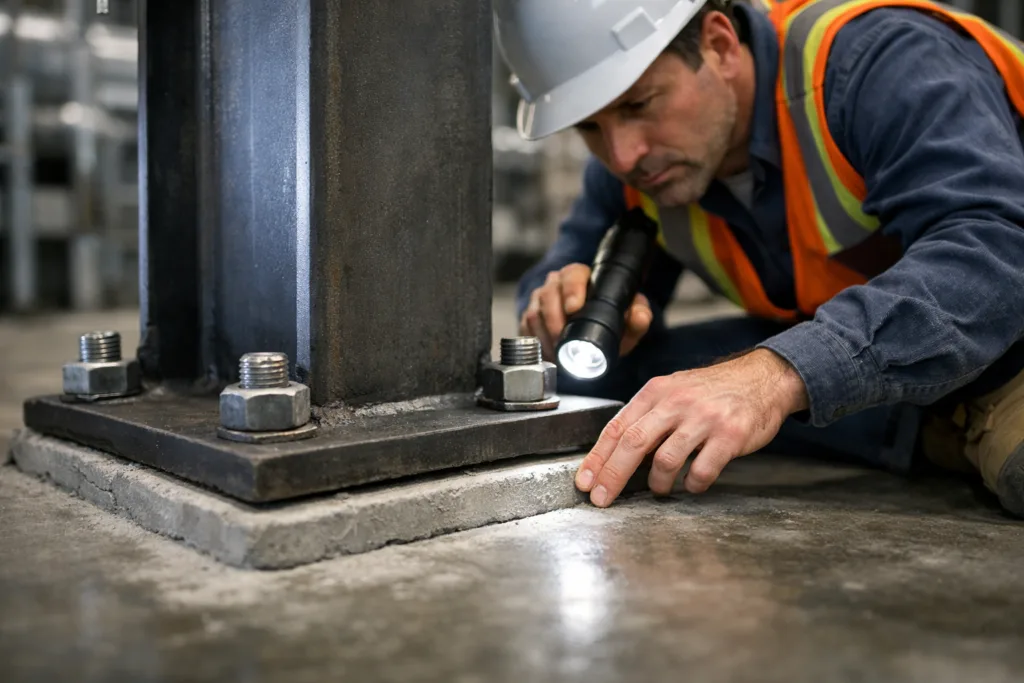
Static loading is the repeated application of non-changing forces. Typical examples include residential columns, industrial tanks, or heavy steel beams that sit motionless. For such applications, grout primarily needs to withstand compression and minor expansion or contraction, without significant concern for vibration or rapid force shifts.
Common Applications Requiring Static Loading Resistance
- Residential and commercial columns
- Base plates for storage tanks
- Support walls and heavy but stationary equipment
Material Properties that Matter Most
For static loading, look for high compressive strength, minimal shrinkage, and ease of placement. Ordinary cementitious grout may suffice if environmental factors are stable, but engineered resin systems improve performance and ease of application in challenging contexts. Accurate computation of grout volume is essential for full base contact; use the Epoxy Grout Volume Calculator Project Quote to avoid material shortages or excessive waste.
Dynamic Loading: Vibration, Impact, and Real-World Performance
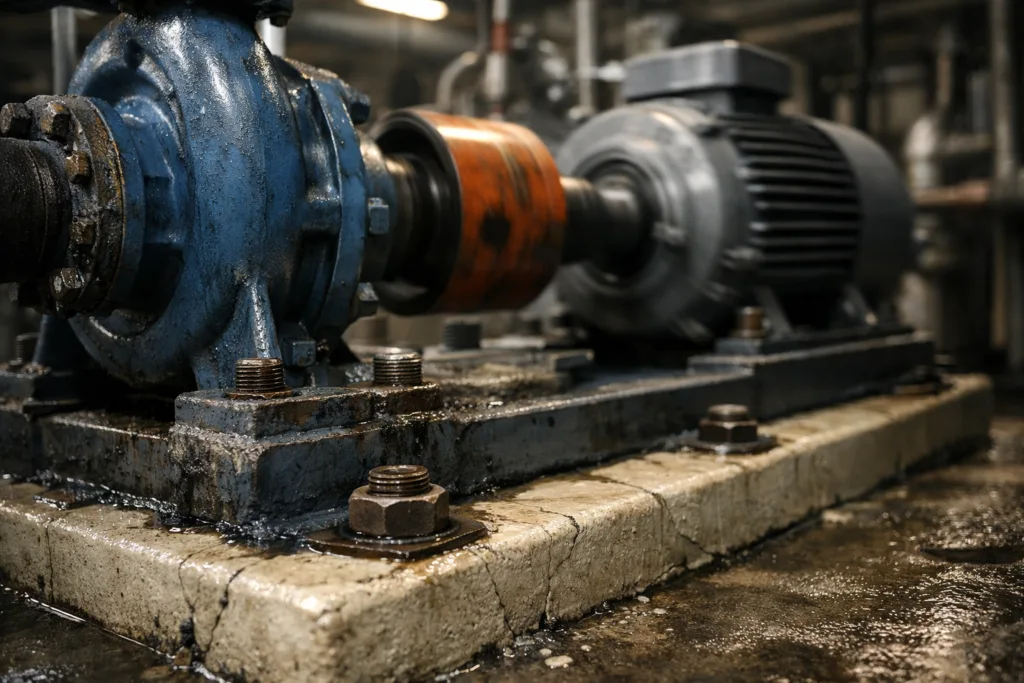
Dynamic loading arises from moving components—motors, pumps, crushers, and compressors. Here, the grout must not only support weight but also absorb and transfer energy from continuous vibration, shocks, or cyclic loads. Material fatigue, microcracking, and performance degradation become the key risks.
Industries Where Dynamic Loading Dominates
- Mining and heavy industrial plants
- Power generation (turbines, generators, engines)
- Petrochemical facilities with cyclic equipment
Essential Material Properties for Dynamic Loads
At a minimum, seek out high compressive and tensile strength, excellent adhesion to steel and concrete, crack resistance, and resilience to repeated stress. The ZDS-1410AB grout formulation exemplifies high-performance options specifically engineered for high dynamic loading conditions. For dynamic industrial machinery, epoxy-based grouts have replaced older cement formulations due to their superior vibration damping and tight bond strength.
Performance Comparison: Static vs. Dynamic Grout Series
| Property | Typical Static Grout | Typical Dynamic Grout |
|---|---|---|
| Compressive Strength (MPa) | 50–70 | 80–120 |
| Tensile Strength | Low to Moderate | High |
| Vibration Damping | Poor | Excellent |
| Shrinkage | Moderate | Very Low |
| Fatigue Resistance | Poor | High |
| Cost | Lower | Higher |
This table summarizes why dynamic grout costs more: the extra performance means more sophisticated chemistry and testing. Static grouts excel in steady, predictable environments. However, once variable or pulsing forces are present, upgraded resin-based grouts are not just an option—they’re a necessity.
Material Properties Explained
Selecting grout isn’t just about compressive strength. Consider:
- Adhesion: Essential to transfer loads fully
- Modulus of Elasticity: Dictates deformation under stress—see Compressive Modulus vs. Strength for Reliable Machinery
- Creep Resistance: Resists long-term movement—covered in 7 Critical Reasons Creep Resistance Determines Long-Term Alignment Success
- Chemical/Water Resistance: Needed in wet or aggressive environments
These factors may not matter for every basic installation, but in challenging scenarios, they’re the difference between lasting performance and early failure.
Choosing the Right Grout Series: Practical Guide
Start by reviewing the project’s loading profile. Is it true static loading, or is there vibration and possible impact? For equipment bases experiencing both, err toward a dynamic series. Don’t forget real-world site conditions: moisture in the substrate, temperature swings, and chemical exposures will shape your final decision. ZDSpoxy engineers routinely balance performance variables like exotherm (heat buildup during cure), flowability for tight gaps, and temperature tolerance—site realities that textbooks rarely cover.
Common Mistakes in Grout Selection
- Underestimating the effects of vibration on “ordinary” cementitious grouts
- Ignoring working time and exotherm for large pours
- Failing to match the grout’s thermal expansion characteristics with steel/concrete interfaces
For specialized requirements (like compressors or underwater installations), advanced grouts like ZDS-1417AB High Strength Underwater Epoxy Grout bring unique chemical and mechanical features for severe conditions.
Installation Impacts: From Mix to Cure
Proper grout performance is rooted in installation discipline. Measure and batch correctly, mix thoroughly, and place without delay. Air entrapment, poor formwork sealing, and improper surface prep are among the prime causes of legacy failures. ZDSpoxy field teams highlight that batch size control and real-world cure curves (not just lab specs) are as consequential as the material selected.
Tips to Prevent Application Failures
- Always follow manufacturer ratios and procedures
- Prepare substrate surfaces by removing oils, dirt, or old coatings
- Confirm all formwork is leak-tight before pouring
- Monitor pot life, especially in high-temperature environments
- Allow enough time for full cure before loading
Case Studies: Grout Selection in High-Stress Environments
In a mining facility, cementitious grout beneath a crusher failed after just six months—massive vibration contributed to crack propagation. Switching to a two-component epoxy grout resulted in a five-year performance streak without alignment drift. The lesson is consistent: dynamic environments demand engineered solutions.
Working with Project Constraints
No two projects are identical. Sometimes the schedule, available manpower, environmental limits, or local building codes may dictate grout options. In these cases, consult recent performance data and seek approvals for substitutes with comparable modulus and fatigue resistance. Always calibrate safety factors for real, not just theoretical, conditions.
Static vs. Dynamic Loading: Selecting the Right Grout Series
This is the core challenge for specifiers: Caught between cost and durability, site teams must balance upfront material expense with long-term maintenance risk. If static forces dominate and no vibration is present, optimized cement grouts may suffice. With dynamic or mixed loading—never compromise; the higher up-front costs pay off in reliability and safety.
Conclusion
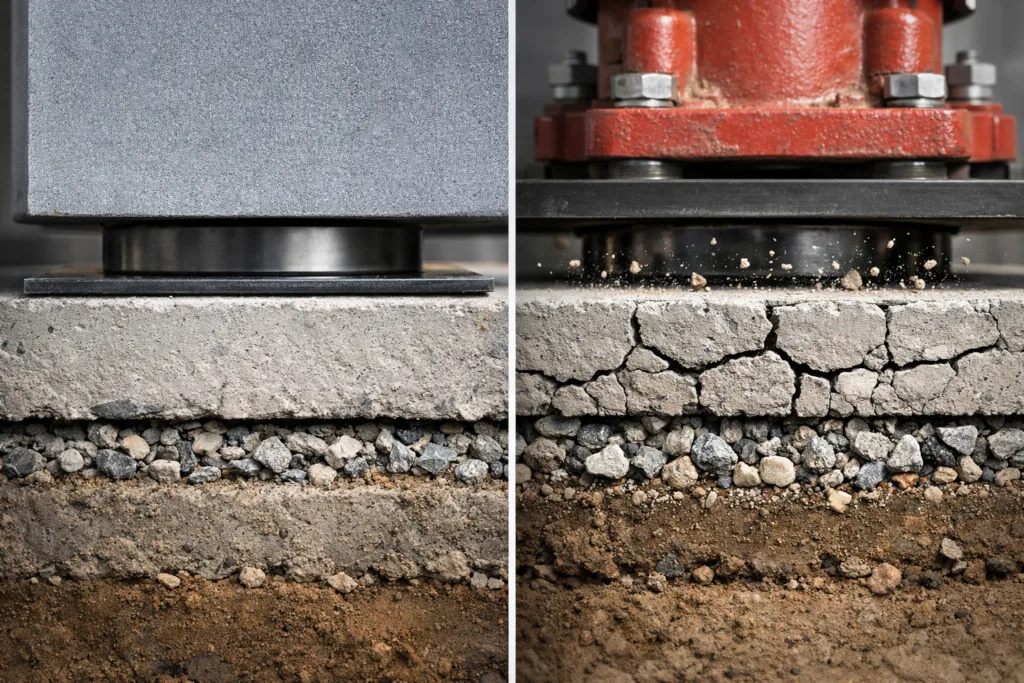
Matching the proper grout to static or dynamic loading is fundamental for lasting project performance. Prioritize key material properties, realistically assess loading types, and factor in actual jobsite risks. Remember, paying for the right grout upfront is an investment in reliability, safety, and reduced downtime—a lesson the ZDSpoxy team has seen proven across real-world installations.
Frequently Asked Questions
What defines static loading in grout applications?
Static loading involves steady, unchanging forces on grout, such as the constant weight of stationary equipment or building columns. It differs from dynamic loading, where forces fluctuate over time.
Why does grout selection differ for dynamic loading?
Dynamic loading introduces vibration and cycling forces, which can fatigue and eventually crack ordinary grouts. Specialized grout series with higher strength and vibration resistance are necessary for dynamic environments.
What properties do dynamic grout series offer?
Dynamic grout series offer higher compressive and tensile strength, improved adhesion, reduced shrinkage, and high vibration absorption. They are also engineered to resist fatigue and microcracking.
Can I use standard cementitious grout for all loading conditions?
No. While cementitious grouts perform well under static load, they often fail in dynamic or impact-prone environments. Epoxy-based formulations are preferred for such situations.
How does temperature affect grout performance?
Temperature can impact cure time, working life, and long-term performance. Some epoxy grouts are designed for high or low-temperature environments to ensure proper cure and lasting strength.
What is the most common cause of grout failure?
Poor installation—such as incorrect mixing, improper surface prep, or failing to match the grout type to the load conditions—is the most common cause of grout failure.