
Thermal Expansion Compatibility: Why It Matters in Epoxy, Steel, and Concrete
Thermal expansion compatibility refers to how materials react to temperature changes, especially when bonded or joined together in construction and engineering projects. Whenever epoxy, steel, and concrete are used side by side, understanding their unique thermal expansion coefficients is vital to prevent cracks, gaps, or mechanical failure. This article explores thermal expansion, epoxy, steel, concrete, compatibility—offering crucial insights that help professionals select the correct material for safe, long-lasting results.
What Is Thermal Expansion?
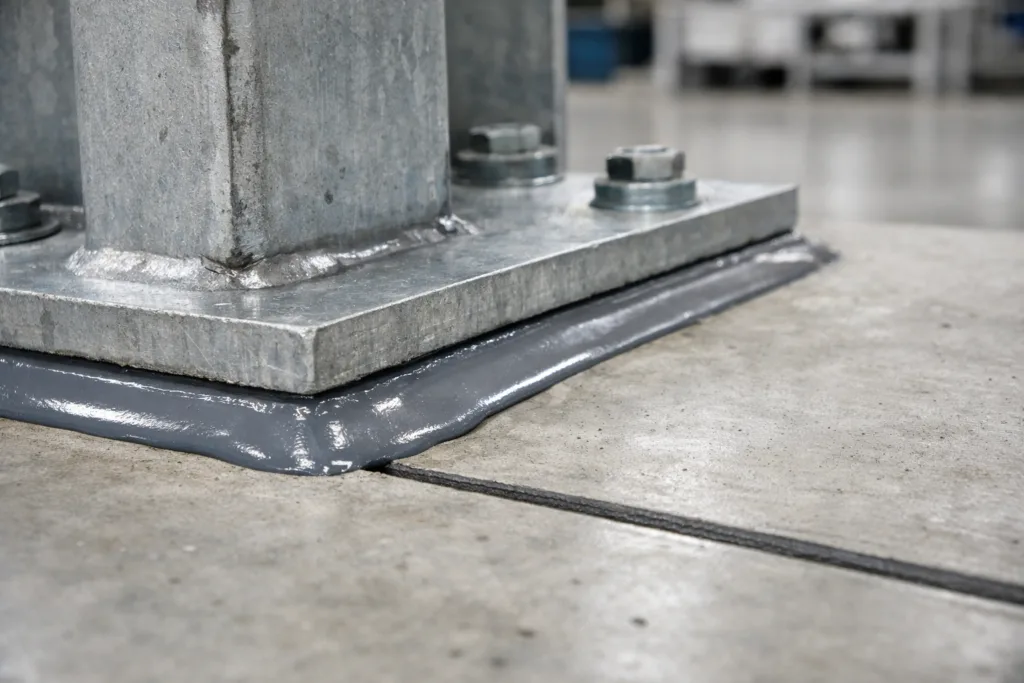
Thermal expansion describes the tendency of a material to change its dimensions—length, volume, or area—when exposed to temperature changes. Most materials expand when heated and contract when cooled. The rate of expansion is measured by the thermal expansion coefficient, which varies between materials. This property is critically important for construction, repair, and joint design.
| Material | Thermal Expansion Coefficient (10-6/°C) |
|---|---|
| Epoxy | ~50–80 |
| Steel | ~11–15 |
| Concrete | ~10–15 |
Why Compatibility Between Epoxy, Steel, and Concrete Is Critical
The biggest challenge? These materials expand and contract at different rates. For instance, epoxy resins typically expand much more than steel or concrete. When used together, such mismatches can result in:
- Cracks or delamination at the joint
- Stress buildup leading to structural weakness
- Long-term durability risks in harsh climates
Choosing grouts, coatings, or adhesives that accommodate these differences helps engineers design safer, more reliable structures.
How Each Material Responds to Temperature Change
Epoxy Resins: Flexible Yet Sensitive
Epoxy resins are prized for bonding and coating because of their flexibility and chemical resistance. However, their high coefficient of thermal expansion means they can move more than concrete or steel during temperature swings. High expansion rates can cause epoxy to separate from substrates unless formulated or applied carefully. For projects that need compressive strength or dynamic load transfer, consider ZDS-1410AB, which is engineered to balance bond strength with expansion control.
Steel: Predictable Expansion, High Strength
Steel is found in nearly every construction project from beams to machinery bases. Its relatively low thermal expansion coefficient means it expands less than epoxy under heat. Steel performs reliably across moderate temperature changes—but once joined with more expansive materials, careful joint design is crucial.
Concrete: Dimensional Stability in Most Conditions
Concrete has a thermal expansion rate similar to steel, making it a popular base for both steel structures and epoxy repairs. While concrete is stable, its porosity and moisture content can further affect expansion. Matching epoxy systems specifically designed for concrete repair, such as Epoxy Concrete Repair, helps avoid joint failures and promotes lasting bond integrity.
Thermal Expansion Compatibility: Epoxy vs. Steel vs. Concrete
Combining these three materials often means dealing with stresses caused by expansion mismatches. Let’s look at the ways professionals can reduce risk:
- Consider the temperature range of the site
- Select materials with compatible expansion rates where possible
- Use flexible formulations or joint designs that absorb movement
- Allow for natural cracks or expansion joints in concrete slabs
How Joint Design Solves Expansion Problems
Joints between epoxy and either steel or concrete need special attention. Techniques like beveled edges, bond breakers, or expansion joints help accommodate movement. ZDSpoxy engineers recommend air release strategies and precise mixing ratios to control exotherm—since excess heat from rapid curing can accelerate expansion, leading to premature failure.
Real-World Example: Crusher Base Grouting
In mining and heavy machinery installations, combining steel bases with concrete flooring using epoxy grout is common. If the grout expands faster than the steel when exposed to heat, cracks may form. Advanced grouting solutions like Heavy Machinery Epoxy Grout are specifically engineered to reduce thermal stresses—adding longevity to demanding equipment foundations.
Comparing Expansion Coefficients: Table Overview
| Material | Coefficient (10-6/°C) | Typical Use | Risk of Expansion Mismatch |
|---|---|---|---|
| Epoxy | 50–80 | Grout, coatings, repair | High risk with steel/concrete |
| Steel | 11–15 | Structural, machinery frames | Low when matched with concrete |
| Concrete | 10–15 | Floors, slabs, repair base | Low risk with steel; moderate with epoxy |
Best Practices for Managing Thermal Expansion Compatibility
- Analyze the operating temperature and climate at the project site.
- Choose repair or coating products with proven compatibility, such as those rated for both steel and concrete (see product technical datasheets).
- In critical areas, calculate material volumes using the Epoxy Grout Volume Calculator Project Quote to reduce waste and risk.
- Apply solvent-free primers to maximize bond strength across moisture-prone substrates.
Material Selection: Factors Beyond Thermal Expansion
Structural Loads
Steel and concrete work together well under heavy static or dynamic loads. Epoxy adds chemical resistance and fills voids—but its higher expansion must be considered where rigor is mandatory.
Durability and Repair Flexibility
Epoxy systems excel where fast repair and versatile bonding are required, especially for patching cracks or reinforcing stressed concrete. Standard practice in the field is to treat surfaces with compatible primers to withstand expansion and contraction due to weather or machinery heat cycles.
Joint Design for Long-Term Success
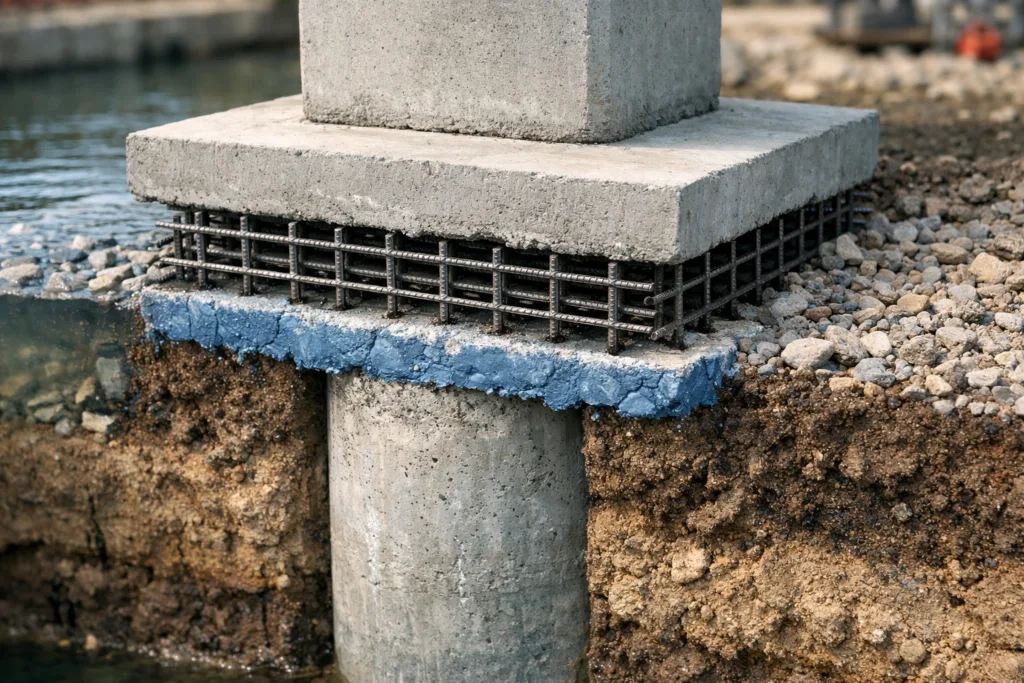
For foundations and heavy machine mounting, the right joint configuration can absorb most expansion stresses. Expansion joints and flexible grout systems minimize pressure on bond lines, reducing the chance of material failure during temperature swings.
Case Study: Bridge Crack Injection Repair
Bridge decks use epoxy injection to fill cracks in concrete, binding the substrate for durability. Epoxy’s expansion rate is higher than concrete, so formulations for bridges need optimized viscosity and flexibility. Details on project requirements can be found in technical guides and solutions like Bridge Crack Injection Repair. Field professionals regularly monitor temperature and humidity to avoid injection at extremes.
The Chemistry Behind Compatibility
Epoxy’s molecular structure allows for some flexibility—making it adaptable for bonding with different substrates. Manufacturers, including ZDSpoxy, test batch consistency and thermal response to ensure reliable long-term performance. For heavy-duty jobs, chemical additives can fine-tune expansion rates and increase resistance to cyclic temperature loads.
Designing for Real-World Conditions
On construction sites, temperature swings are normal. Materials must handle both typical and worst-case scenarios. Site engineers apply practical experience—weatherproof coatings, expansion jointing, and controlled batch mixing prevent expansion-related failures. Field experience shows that proper substrate cleaning and correct working conditions are essential before epoxy application.
Moisture, Shrinkage, and Thermal Stress
Concrete’s moisture levels further affect thermal movement. Epoxy applied to damp concrete may lose adhesion as temperatures change. That’s why solvent-free primers, like those used by ZDSpoxy technicians, help protect the bond. Shrinkage in epoxy can sometimes counteract expansion but must be controlled to stop stress build-up.
Testing and Quality Control: ZDSpoxy Insights
ZDSpoxy maintains strict quality protocols—measuring viscosity, gel time, and bond strength in every production batch. Technicians document expansion rates and recommend jobsite trial mixes under actual temperature conditions. The result? Epoxy systems that maintain compatibility and integrity throughout the life of the installation.
Thermal Expansion, Epoxy, Steel, Concrete, Compatibility—Project Failures & Solutions
Common Failure Modes
- Surface cracks due to expansion mismatch
- Debonding or delamination in high-heat environments
- Unexpected movement causing anchor bolt loosening
Field Fixes and Preventive Steps
- Well-planned expansion joint locations
- Using compatible surface primers and backing rods
- Monitoring temperature during cure and service
Applications Requiring High Compatibility
- Foundation grouting for vibratory and rotary machinery
- Industrial flooring with combined steel/concrete/epoxy interfaces
- Marine repairs and underwater grouting
- Bridges and elevated roadways exposed to freeze/thaw cycles
Design Tips: Achieving Lasting Thermal Compatibility
- Perform a full site assessment of expansion risks
- Consult expert material datasheets (check for expansion values)
- Test mixtures prior to full-scale installation
- Plan for regular inspection and maintenance
Conclusion: Choosing for Compatibility, Longevity & Safety

Understanding thermal expansion, epoxy, steel, concrete, compatibility isn’t just a technical exercise—it’s central to building safe, durable, and resilient structures. By analyzing expansion coefficients, choosing the right formulations, and designing smart joints, professionals can sidestep the most common failure points. Practical experience and real-world solutions, such as those brought forward by manufacturers like ZDSpoxy, bridge the gap between theory and reliable results. Whether it’s a factory floor, a bridge deck, or a machinery base, selecting compatible materials keeps structures performing for decades.
Frequently Asked Questions
What happens if you ignore thermal expansion compatibility?
Ignoring compatibility can lead to cracks, delamination, or even complete failure of bonded joints, reducing structural integrity and lifespan.
Can epoxy be safely used with steel and concrete?
Yes, but it requires choosing the right epoxy formulation and careful joint design to minimize expansion mismatch risks.
How does temperature range affect material selection?
Wider temperature swings increase expansion stress. Materials with similar expansion coefficients, or flexible formulations, should be chosen for such environments.
Should expansion joints be used in concrete and epoxy installations?
Definitely. Expansion joints allow for safe movement and can prevent cracking where different materials interface.
What practical steps help ensure compatibility on site?
Analyze site temperatures, use volume calculators, apply proper primers, and always follow material datasheet recommendations.
Where do compatibility failures most commonly occur?
Failures often happen in high-temperature areas, around machinery bases, or where rigid bonding restricts necessary movement.