
Discovering Polyaspartic Coating
Polyaspartic coating stands out as a modern protective finish for floors, walls, and industrial structures. It’s a fast-curing, highly durable material that shields surfaces from wear, chemicals, and weather damage. Originally developed as part of polyurethane technology, polyaspartic coatings have become a preferred solution for environments that demand strong resilience and a rapid return to service.
The Origin of Polyaspartic Coating
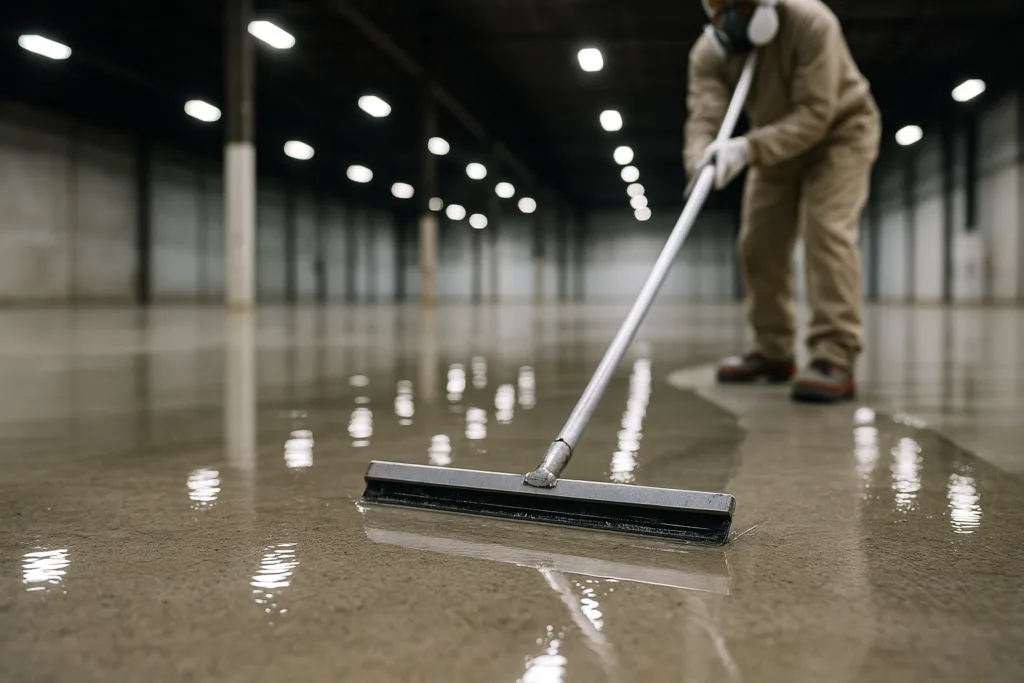
Polyaspartic coatings trace their roots to advances in aliphatic polyurea chemistry during the 1980s and 1990s. Researchers were searching for a way to combine the flexibility and toughness of polyurea with a slower, more manageable cure rate. The result was polyaspartic esters—compounds that allowed high-performance coatings to be applied thicker and to cure within hours instead of days. This breakthrough made them ideal for fast-paced industries and commercial projects where time is money.
Key Development Milestones
- Initial discovery in Europe during polyurethane research
- Commercial launch in the United States in the late 1990s
- Rapid adoption in automotive and flooring sectors
Polyaspartic vs. Traditional Coatings
| Chemistry | Cure Speed | Typical Uses | Key Benefits |
|---|---|---|---|
| Epoxy | 12–48 hours | Concrete floors, tanks | High bond strength, chemical resistance |
| Polyurethane | 8–24 hours | Automotive, wood, decks | UV resistance, flexibility |
| Polyaspartic | 1–2 hours | Industrial, commercial, garages | Very fast cure, UV/chemical resistance, clarity |
Core Advantages of Polyaspartic Coating
Polyaspartic coatings bring a unique set of strengths to industrial and commercial projects. Notably, they enable a quick turnaround without compromising performance. Facility owners, contractors, and maintenance managers rely on these coatings for time-sensitive jobs with challenging specifications.
Key Benefits at a Glance
- Fast Curing: Coatings can return to service in as little as 2 hours, reducing costly downtime.
- Exceptional Durability: Polyaspartic layers resist abrasion, stains, and impacts better than standard epoxies.
- UV Stability: Unlike non-aliphatic polyureas or basic epoxies, polyaspartic coatings stay clear and don’t yellow over time exposed to sunlight.
- Wide Temperature Application: Cure reliably from -20°C to above 30°C, extending the coating season.
- Low VOC Options: Many systems meet strict air quality standards, making them safer for indoor use.
- Chemical & Moisture Resistance: Guard against oils, fuels, salts, and common cleaners.
- Seamless & Customizable: Applied in one or two coats, often without primers. Colors, textures, and anti-slip finishes are easy to achieve.
Real-World Performance Metrics
Polyaspartic coatings often exceed the following benchmarks in controlled tests:
- Hardness (Shore D): 70–85
- Lap Shear Strength (ASTM D1002): > 12 MPa
- Elongation: Up to 70%
- Gloss Retention: Above 90% after 2,000 hours QUV exposure
- Salt Spray (ASTM B117): > 1,000 hours without blistering
“A polyaspartic system can typically be walked on within 2 hours—ideal for commercial floors and loading docks.”
Typical Applications of Polyaspartic Coating
Polyaspartic coatings shine where demanding environments and short project windows intersect. Their use has grown swiftly across industrial, commercial, and even residential markets. ZDSpoxy has supported countless projects in these sectors, advising on best-in-class chemistry and process control.
Commercial and Industrial Flooring
Warehouses, factories, retail spaces, schools, and medical centers benefit from polyaspartic’s fast application and tough finish. These coatings resist stains, fork truck wear, and repeated cleaning. Preparation typically involves degreasing, diamond grinding, and testing for moisture before applying a base and topcoat.
Parking Decks and Garages
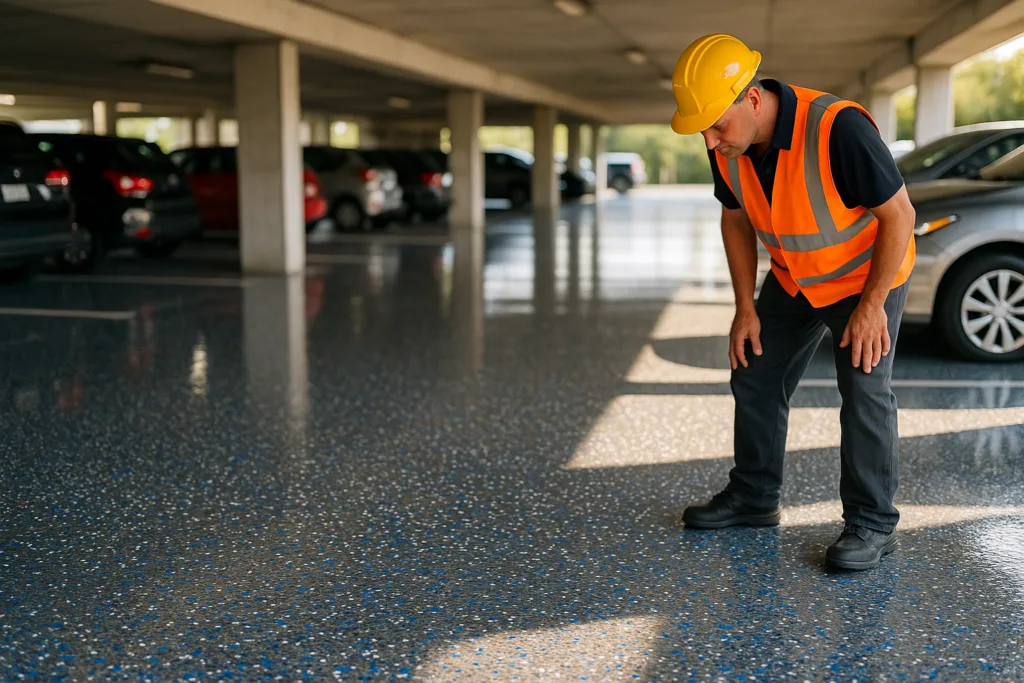
Heavy-traffic areas need rugged coatings. Polyaspartic systems withstand oils, salts, and tire abrasion while maintaining a clean look. Applicators spray, roll, or squeegee the coating in temperatures ranging from subzero to over 35°C without sacrificing cure or gloss.
Decorative Floor Coatings
Showrooms, restaurants, and event venues favor polyaspartic floors thanks to their clarity and custom finish options. Metallic, flake, or quartz blends add slip resistance and style. UV stability preserves the appearance even in direct sun.
Cold Storage & Food Processing Plants
Polyaspartic coatings perform reliably under tough hygiene and cleaning regimens. Their rapid cure suits facilities that can’t shut down for days, and their chemical resistance stands up to food acids and sanitizers.
Waterproofing and Tank Linings
Some polyaspartic blends protect tanks and secondary containment from aggressive chemicals. These systems form seamless, pinhole-free barriers when applied with the right process controls and surface prep.
Understanding Polyaspartic Coating
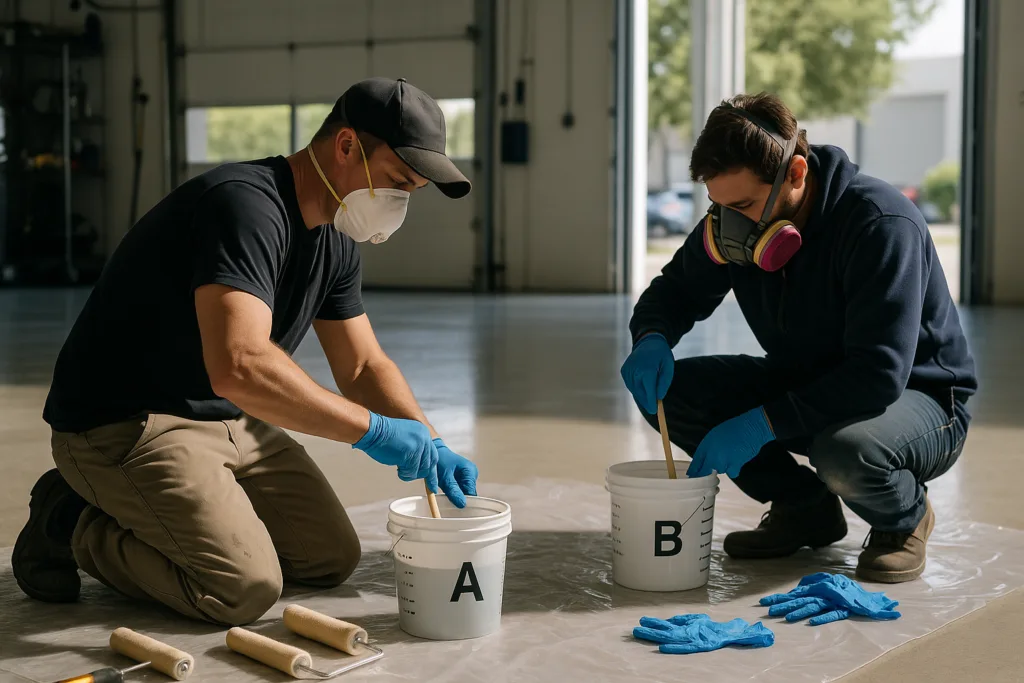
At its core, polyaspartic coating is a two-component (2K) system. It mixes a polyaspartic resin with a hardener, causing a chemical reaction called a cure. This reaction forms a tough film in a fraction of the time needed for standard coatings. The final cure happens at room temperature, but temperature and humidity can influence pot life and cure speed significantly.
Key Chemistry and Handling Details
- Mix Ratio: Typically 1:1 or 2:1 by volume.
- Working (Pot) Life: 15–25 minutes at 21°C/70°F.
- Recoat Time: 30 minutes to 2 hours—depends on film thickness and ambient conditions.
- Viscosity: 300–800 cP for most floor systems. Flow and leveling can be tuned for brush, roller, or spray.
- Full Cure: Ready for light traffic after 1–2 hours, and heavy mechanical loads after 24 hours.
Surface Preparation and Application Process
Proper surface prep is critical. Concrete must be clean, dry, and free from oils or old loose coatings. Profile with shot blasting or diamond grinding to ensure best adhesion. For metals or plastics, a degreasing step and abrasion followed by suitable primers may be required. Mixing is by paddle or static mixer, ensuring even blend with no air bubbles. Apply by squeegee, roller, or spray. Fast set time means work in small, manageable areas.
Comparing Polyaspartic with Other Coatings
Polyaspartic isn’t always the right choice for every scenario. Understanding its strengths and limits helps professionals select the best system for any project. In short, polyaspartics win on speed, UV resistance, and durability. Epoxies may hold an edge for very dense chemical exposure or where cost is paramount. Polyurethanes provide excellent flexibility and are still preferred for some outdoor wood and automotive finishes.
Application Environments and Suitability
| Location | Best Chemistry | Why? |
|---|---|---|
| Indoor Industrial Floors | Epoxy/Polyaspartic | Strength + speed + gloss retention |
| Parking Structures | Polyaspartic | Salt and abrasion resistance |
| Decorative Retail | Polyaspartic | Fast install, customizable finish |
| Outdoor Wood | Polyurethane | Flexibility for thermal cycling |
Limitations to Consider
- Extremely fast cure can be challenging in hot/humid climates—requires careful planning and skilled labor.
- Not every polyaspartic is VOC-free; always check product data sheets.
- Cost per square meter is higher than entry-level epoxy systems.
Environmental and Regulatory Considerations
Polyaspartic systems must meet regional and industry-specific regulations. Many are compliant with REACH (Europe), RoHS (electronics), and low-VOC mandates in the US and Asia. Always request SDS (safety data sheets) and compliance statements from your supplier. Leading polyaspartic coating manufacturers like ZDSpoxy provide full documentation and lot traceability to support project audits and quality control.
Safe Handling and Storage Tips
- Store kits in dry conditions between 5–25°C. Avoid freezing.
- Wear gloves and approved respirators during mixing and application. Good ventilation is essential.
- Use only with correct mixing ratios—off-ratio blends may fail.
For large projects, consider automated mixing/dispensing and onsite QC with simple cure tests or pinhole detection.
Why Choose ZDSpoxy for Polyaspartic Coating?
ZDSpoxy offers a deep bench of polyaspartic and alternative coating systems. Whether you need extreme chemical resistance, low-temperature cure, or a fast decorative finish, their team guides selection from epoxy, polyurethane, acrylic, silicone, and tape/film systems. All products come with tailored advice on substrate prep, cure cycles, and performance QC, supporting industrial, automotive, electronics, and construction sectors.
Support for Every Application
- Custom formulations for unique climate or mechanical demands
- On-site process audits and applicator training
- Testing for ASTM D1002, B117, and QUV durability
- Full documentation for audit and compliance needs
Contact a ZDSpoxy technical representative to discuss your next project and get expert recommendations tailored to your operational priorities.
Frequently Asked Questions
What is a polyaspartic coating?
A polyaspartic coating is a fast-curing, high-performance protective layer often used on industrial floors and concrete surfaces. It provides excellent durability, UV stability, and quick return to service compared to traditional coatings.
How does polyaspartic coating differ from epoxy?
Polyaspartic coating cures much faster than epoxy, offers better UV resistance, and can withstand a broader range of temperatures. Epoxies may be better for certain extreme chemical exposures or budget-sensitive projects.
Where are polyaspartic coatings most commonly used?
Most often, polyaspartic coatings protect commercial and industrial floors, parking garages, warehouses, hospitals, and spaces needing quick turnaround and lasting protection.
What is the typical cure time for polyaspartic coatings?
Most polyaspartic systems cure within 1–2 hours, allowing areas to return to use quickly. Heavy mechanical loads can be supported after about 24 hours.
Are polyaspartic coatings environmentally friendly?
Many polyaspartic systems are low in volatile organic compounds (VOCs) and meet leading environmental and safety regulations. Always check the manufacturer’s datasheet for details.
How should surfaces be prepared before applying polyaspartic coatings?
Surfaces must be clean, dry, and properly profiled, typically using diamond grinding or shot blasting. Proper prep ensures maximum adhesion and coating performance.