
Decorative Flooring Systems (Epoxy, PU & Polyaspartic)
Epoxy Injection Systems That Bond to Oil-Contaminated Surfaces
Decorative Flooring Solutions
- No middlemen
- Fast prototyping
- Private label available
Decorative flooring overview
Decorative flooring systems are designed to deliver:
- High visual impact (color depth, patterns, sparkle, stone-like effects)
- Easy cleaning (seamless surface, fewer joints)
- Durable wear (scratch and abrasion resistance, depending on topcoat)
- Optional safety (anti-slip textures for wet areas)
Common decorative environments:
Showrooms, retail, hotels, lobbies, restaurants, offices, gyms, schools, premium garages, and light-duty industrial areas.
System options

Metallic floors (3D “movement” effects)
Metallic systems create a deep, flowing look—like marble, clouds, or waves.
- Best for: lobbies, restaurants, galleries, boutique retail
- Key needs: clean substrate, controlled application, stable topcoat
- Finish options: high gloss, satin, anti-slip clear topcoat
Typical build-up:
- Primer
- Base coat (colored epoxy)
- Metallic effect layer
- Clear topcoat (UV and scratch protection)
Flake floors (chips broadcast)

Flake systems are one of the most practical decorative floors. They hide minor dust and marks and can improve slip control.
- Best for: garages, corridors, factories with light-to-medium traffic, locker rooms
- Key needs: correct broadcast density + strong clear topcoat
Typical build-up:
- Primer
- Base coat
- Flake broadcast
- Scrape / vacuum
- Clear topcoat (1–2 coats)
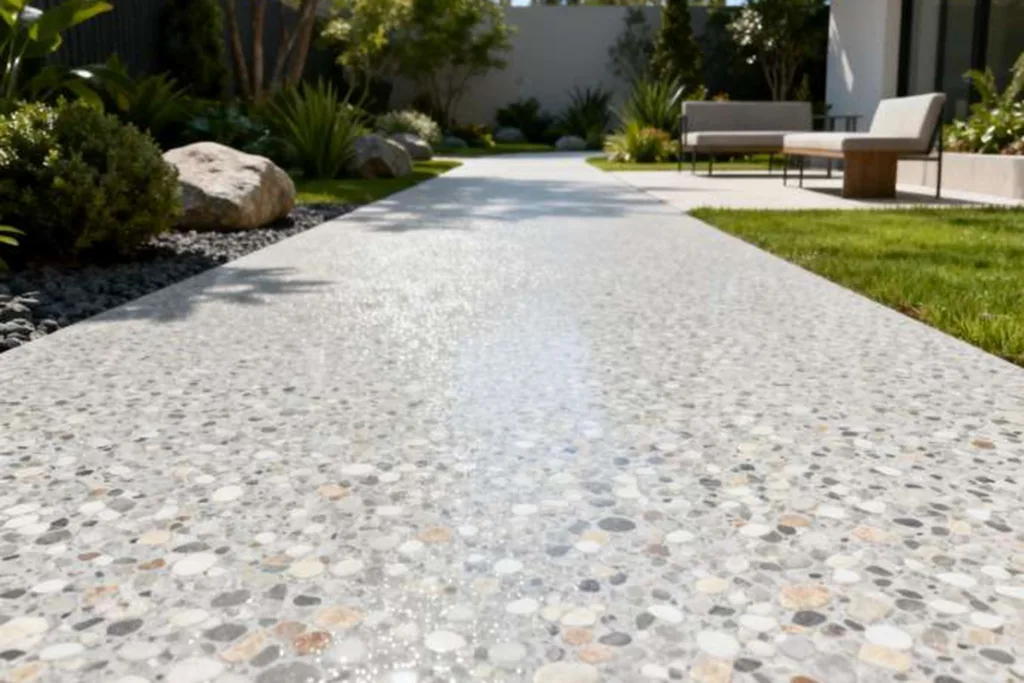
Terrazzo-style epoxy (aggregate + grind)

Terrazzo resin floors combine decorative aggregates with strength. They’re great when you want a premium look with long service life.
- Best for: malls, airports, schools, commercial halls
- Key needs: skilled installation, correct aggregate grading, proper sealing
Typical build-up:
- Primer
- Terrazzo resin matrix + aggregate
- Grind and polish
- Clear sealer / topcoat
Colored sand floors (texture + water resistance)

Colored sand systems add grip and can be built as waterproof decorative surfaces.
- Best for: courtyards, stairs, ramps, public walkways, wet zones
- Key needs: stable binder + proper sealing to lock sand in place
Typical build-up:
- Primer
- Resin binder coat
- Colored sand broadcast
- Sealer / topcoat
Key performance goals
1. Gloss and clarity
For high-gloss looks, you need a clear topcoat that:
- levels well
- cures without haze
- resists scratches from cleaning and foot traffic
2. UV stability (anti-yellowing)
3. Wear resistance
4. Slip resistance
High gloss can be slippery when wet. Add:
- micro-texture clear coat, or
- light broadcast texture in wet zones
5) Stain and chemical tolerance (light exposure)
Recommended product map (system matching)
Clear topcoats (finish + protection)
Epoxy clear topcoat — ZDS400-4AB
Best when you want strong hardness and clear finish for indoor decorative floors.
Suggested use: metallic floors, flake floors, terrazzo sealing (indoor)
PU clear topcoat — ZDS8300AB
Great when you want improved UV stability and surface feel.
Suggested use: decorative floors exposed to sunlight or frequent cleaning
Polyaspartic clear topcoat — ZDS1223AB
Good when you need fast return to service and strong topcoat performance.
Suggested use: fast projects, sunlight exposure zones, premium clear finish needs
Install steps (decorative floors)
Step 1: Substrate check
Step 2: Surface preparation
Step 3: Repair and leveling
Step 4: Prime
Step 5: Build the decorative layer
- Metallic: apply base coat + metallic effect layer
- Flake: broadcast flakes into wet base coat
- Terrazzo: install matrix + aggregate, then grind
- Colored sand: broadcast sand and lock it with sealer
Step 6: Clear topcoat
Step 7: Curing and protection
Common problems (and how to avoid them)
Yellowing near windows
Fix: use a UV-stable topcoat (often PU or polyaspartic) in sun zones.
Bubbles / pinholes
Peeling or delamination
Scratches and dulling too fast
Slippery when wet
FAQs
Which decorative system is most practical?
Can I apply decorative resin over old tiles?
Is metallic epoxy hard to install?
What topcoat should I use for sunlight exposure?
Get a decorative system recommendation
Tell us:
- area size (m²/ft²)
- where it is (indoor/outdoor, sunlight or not)
- traffic level (foot/pallet/forklift)
- finish style (metallic/flake/terrazzo/colored sand)
- timeline (normal vs fast return)
We’ll recommend a build-up route and matching SKUs.