
Resin Bound Stone Systems (Patio, Walkway & Driveway)
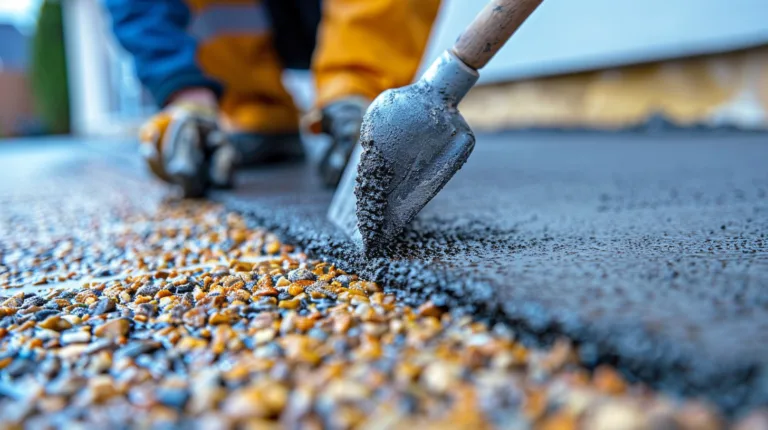
Resin Bound Stone Solutions
A Seamless Stone Surface That Looks Natural and Cleans Easy
- No middlemen
- Fast prototyping
- Private label available
Quick Check: Is Resin Bound Stone Right for Your Project?
Resin bound systems are a great fit when you want:
- A clean, seamless look (no loose stones)
- Better daily maintenance (easy to sweep and wash)
- A natural stone style for outdoor areas
- A system that can be sealed for longer life
It may NOT be the best choice if:
- The base is very weak or moving a lot (base repair is required first)
- Heavy trucks will use the area daily (we need a heavy-duty design)
If you tell us your traffic level and base condition, we’ll recommend the right build-up.
Recommended Resin Bound Stone System (3 Steps)
Step 1 — Primer (Bond the Base)
Goal: improve adhesion and reduce issues like dusting or bubbles.
Primer choice depends on the base: concrete, old tile, old coating, or repaired areas.
Step 2 — Binder + Stone Mix (Build the Surface)
Goal: lock stones together into a single layer.
Binder choice affects UV performance, flexibility, and long-term look.
Step 3 — Sealer / Topcoat (Protect and Finish)
Goal: improve weather resistance, cleanability, and long-term appearance.
You can choose clear sealing or a colored topcoat for a stronger visual refresh.
Where Resin Bound Stone Works Best
- Courtyard patios and garden areas
- Walkways and pathways
- Poolside wet zones (with slip-resistant finish options)
- Light-load driveways and entrances
For heavy-load driveways, tell us vehicle type and frequency. We’ll adjust thickness and system design.
Recommended Products
| Product Model | Key Benefits | Typical Use | View More |
| ZDS1902 | 1K polyurethane stone binder option; designed for outdoor stability and long-term bonding | Binder for resin bound stone surfaces (patio, walkway, light driveway) | View ZDS1902 |
| ZDS1139AB | 2K polyurethane sealer/topcoat option; helps protect the stone surface and improve cleanability | Clear sealing / protective topcoat for resin bound stone | View ZDS1139AB |
| ZDS1100AB (color topcoat option) | 2K polyaspartic colored topcoat option; faster “new floor” look and stronger visual coverage | Colored finish for resin bound stone renovation or new installs | View ZDS1100AB |
How to Choose the Right Finish (Simple Rules)
Choose Clear Sealer
- You want a natural stone look
- Your stones are already the color you like
- You want easier cleaning and added protection
Choose Colored Topcoat
Best when:
- You want a stronger “renovation” look
- The base has stains or patch marks
- You want a uniform color finish
Typical set: ZDS1902 + ZDS1100AB
Need Slip Resistance?
Installation Overview (Easy Checklist)
A clean workflow helps avoid most problems:
- Base check: the base must be solid (repair weak areas first)
- Clean: remove dust, oil, loose layers
- Prime: thin and even coat (match primer to base type)
- Mix: blend stone + binder until evenly wet
- Trowel: spread and level to the target thickness
- Seal/topcoat: apply sealer after the surface is ready
- Cure: protect from rain and traffic until cured
Tip: Most failures come from weak base, poor cleaning, or rushing cure time.

Common Mistakes to Avoid
- Installing on a weak or dusty base (no primer)
- Too much binder (surface can look overly glossy)
- Too little binder (stones can loosen)
- Opening to traffic too early
- No edge detailing (water can enter from sides)
FAQs
Is resin bound stone the same as loose gravel?
Can it be used for a driveway?
Can you supply the full system as a manufacturer?
What info do you need to recommend the exact primer and kit?
Send:
- Base type (concrete / old tile / old coating)
- Area size (sqm or sqft)
- Traffic level (walkway / patio / driveway)
- Location (sunny / shaded / wet area)
Get a Resin Bound System Recommendation
- A complete system (primer + binder + sealer/topcoat)
- A simple installation plan
- Manufacturer-direct pricing with custom and wholesale options