
Understanding Grout Condition and Re-Grouting
Grout plays a vital role in the performance and longevity of tiled surfaces and structural foundations. From supporting floor tiles in homes to securing heavy equipment bases in industrial plants, grout condition directly influences the durability and safety of engineered systems. Monitoring grout condition and knowing when to plan a re-grout is essential for preventing costly failures and ensuring ongoing performance in all environments.
Why Grout Condition Matters for Structural Integrity

The quality and health of grout joints can greatly impact the structural stability and waterproofing of floors, walls, and machinery foundations. Degraded grout allows movement, water ingress, or load shifts, threatening the underlying substrate and causing larger repair needs if left unchecked. Early detection of issues lets facility managers or homeowners intervene before minor problems evolve into significant safety or operational hazards. In mission-critical applications, such as heavy machinery foundation grouting, grout condition directly affects vibration resistance, alignment, and equipment life.
Common Signs Indicating Poor Grout Condition
Monitoring grout condition involves regular inspections for visual and performance indicators. Watch for these common warning signs:
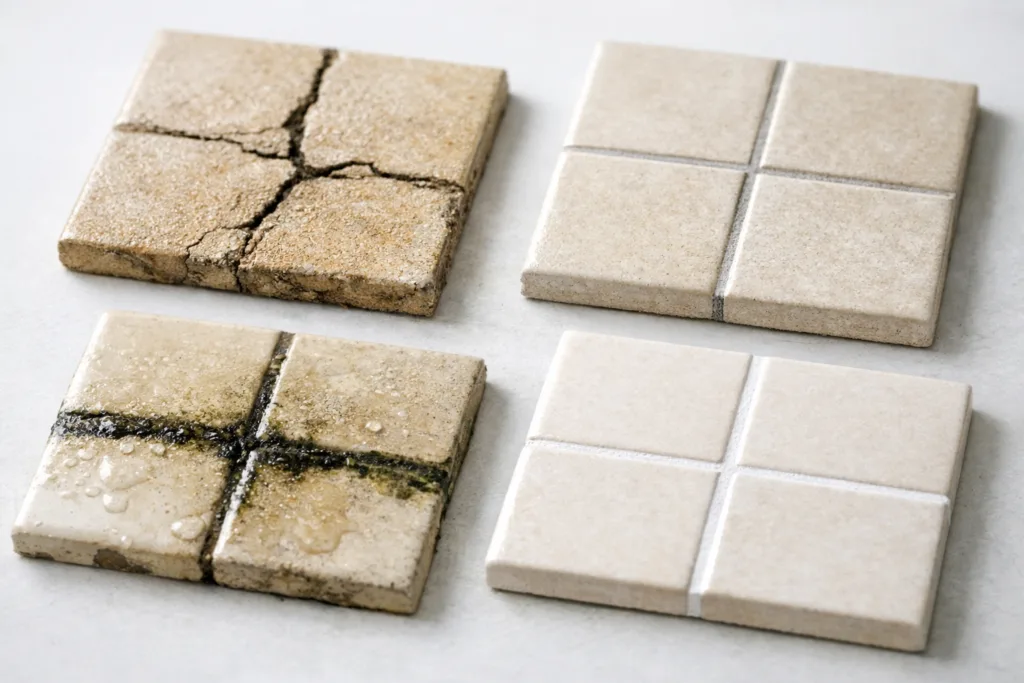
- Cracking: Thin or widening cracks along grout lines signal loss of bonding or flexibility.
- Discoloration: Stains or uneven color changes may indicate moisture intrusion or chemical attack.
- Seepage: Water or oil emerging from grout lines suggests failing waterproofing or isolating capabilities.
- Softening and powdering: Grout that crumbles or feels spongy is losing structural strength.
- Tile or equipment movement: Tiles or machinery bases that wobble or shift may have compromised grout underneath.
Assessing Grout Condition: Methods and Tools
Professional assessment uses a mix of visual checks, mechanical tests, and, where necessary, laboratory analysis. The most effective approaches include:
- Visual inspections: Regularly scheduled walkdowns with proper lighting can reveal most surface-level issues.
- Hardness testing: Scratch or indentation tests help evaluate grout material integrity and curing quality.
- Moisture checks: Surface and in-depth sensors can detect hidden water migration affecting grout lines.
- Bond testing: Targeted chisel or pull-off checks confirm adhesion between grout, tile, and substrate.
Using ZDSpoxy’s Experience
ZDpoxy’s field engineers have observed that uneven cure, fast-set mixes, or insufficient mixing often lead to hidden voids. This can be revealed by gentle tapping (hollow sound = void) and, for high-value infrastructure, ultrasonic or thermal imaging for deeper defect mapping. Always log inspection dates, locations, and findings to track trends over time.
The Grout Condition, Re-Grouting Decision Point
Once poor grout condition is observed, how do you decide if immediate re-grouting is necessary? Consider:
- Extent of damage: Isolated hairline cracks are less urgent than widespread crumbling or tile detachment.
- Rate of change: Is the issue stable, or worsening between inspections?
- Criticality of the area: Industrial and wet areas justify faster intervention than low-use corridors.
- Underlying cause: Did failure result from improper original application, environmental stress, or ongoing substrate movement?
Planning a Re-Grouting Project: Key Considerations
When grout failure is clear, a well-planned approach delivers reliable long-term repairs. A successful re-grouting project requires assessment and preparation in several areas:
Timing and Access
Time re-grouting for the least operational disruption. Industrial sites may coordinate with planned downtime. Residential buildings might re-grout during off-peak hours. Key questions include how long the area must stay out of use and how quickly repairs can be done safely.
Material Selection for Durable Re-Grouting
Material choice depends on environmental exposure, expected loads, chemical resistance needs, and substrate compatibility. Common options include:
- Cementitious grout: Lower cost, suitable for many standard tiles but limited in chemical resistance and flexibility.
- Epoxy grout: High chemical, abrasion, and water resistance, ideal for industrial use, food plants, or heavy traffic areas.
- Hybrid or specialty grouts: Silicone-modified, polyurethane, or other advanced blends may be required where movement, thermal shock, or extreme environments are factors.
For sensitive environments, such as underwater or oil-soaked applications, explore specialized solutions like underwater epoxy grout or oil-soaked concrete repair systems.
Preparation: Old Grout Removal and Surface Cleanup
To enable proper bonding of new grout, completely remove loose, soft, or contaminated material. Possible steps include mechanical scraping, precision grinding, or chemical softening (for epoxy). Surfaces must be cleaned of oils, debris, and old films—sometimes verified with a bond test patch. For machinery bases, confirm surfaces are dry and dust-free; some advanced epoxies can bond to damp, but always verify with the technical datasheet or a pilot project first.
Mixing and Application Guidelines
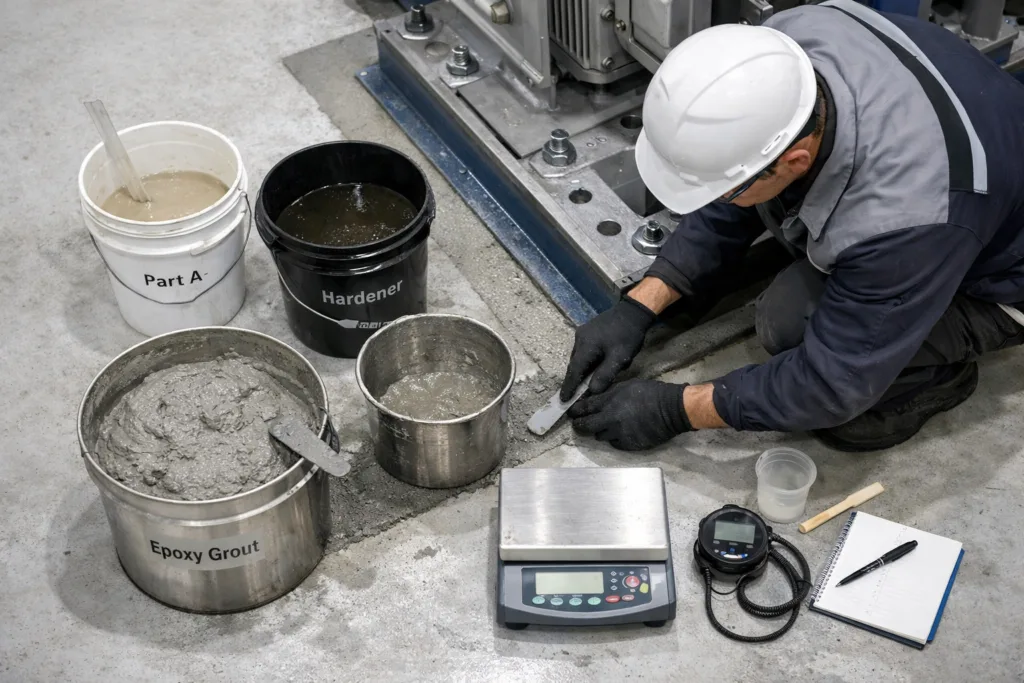
Follow manufacturer’s specifications on mixing ratios, pot life, application temperature, and allowable working time. Prepare tools and materials in advance, and batch mixes to avoid product waste or rushed application. For example, ZDSpoxy emphasizes batch size control, slow-speed mixing to prevent air entrapment, and strict pot life monitoring for consistent mechanical performance.
Testing and Inspection After Re-Grouting
After re-grouting, let the area cure as recommended, then re-inspect for full joint coverage, even color, and visual bond to tiles or machinery base. Hardness or bond tests may be necessary before heavy use resumes.
Common Grout Condition Failures and What They Reveal
| Grout Condition | Typical Cause | Recommended Action |
|---|---|---|
| Cracking | Movement, shrinkage, low flexibility | Consider flexible or higher-bond grout, monitor substrate |
| Staining/Discoloration | Moisture intrusion, chemicals | Use high chemical and water-resistant grout |
| Powdering/Dusting | Poor cure, abrasive cleaning, weak mix | Switch to quality-controlled grout, check mixing |
| Detachment | Poor preparation or movement | Improve surface prep, use primer if necessary |
Special Requirements: Waterproofing, Chemicals, and Load Transfer
Wet Areas and Chemical Resistance
Shower floors, swimming pool decks, and food processing environments need grouts that resist constant water and aggressive cleaning chemicals. Epoxy grouts excel in these areas, as they’re non-porous and resist staining, but require careful surface preparation and mixing to avoid voids.
Structural and Machinery Grouting
In high-load or vibration-prone settings (such as pump skids, bridge seats, or compressors), grout condition inspection can uncover loose areas that threaten alignment or even machine safety. Conduct resonance or stiffness checks as routine for critical installations. Epoxy-based solutions provide superior load transfer and long-term dimensional stability compared to cementitious products.
Timing and Environmental Factors in Grout Decisions
Temperature, humidity, and substrate moisture can all affect grout application and performance. Choose products matched for operating conditions—such as low-viscosity epoxy grouting for very tight seams. If curing must happen under 10°C, look for special cold-cure epoxies. Always monitor real site conditions, not just the calendar or schedule.
Grout Condition, Re-Grouting Checklist for Success
- Assess the full scope of deterioration (visual + physical checks)
- Diagnose root causes, not just symptoms (substrate, structure, moisture, vibration)
- Plan for safe access, efficient old grout removal, and clean work zones
- Select grout type based on exposure, movement, and expected loads
- Mix and apply using disciplined batches, accurate measuring, and proper tools
- Allow proper cure time—don’t rush the return to service
- Conduct post-repair testing and document quality for future reference
Innovations in Grout Monitoring and Predictive Maintenance
New technologies like embedded sensors, smart coatings, or wireless crack monitors are emerging for critical environments. These enable predictive maintenance, giving real-time warnings before visible grout failures occur. While not necessary for all sites, high-value industries (energy, pharma, food) are adopting these tools for asset lifecycle management.
Conclusion: Maintain Grout Condition for Long-Term Reliability
Careful, routine monitoring of grout condition and timely re-grouting decisions are essential for maintaining the safety, performance, and longevity of both tiled and industrial surfaces. Understanding the warning signs, choosing the right materials, and following disciplined repair protocols ensures your infrastructure remains trouble-free and cost-effective over its service life. As engineering standards rise, investing in robust grout inspection and modern repair solutions is simply good practice. Confidence in your grout systems means peace of mind for every project.
Frequently Asked Questions
How often should grout condition be inspected?
For homes, check every 6–12 months; for critical industrial sites, consider quarterly walkdowns or inspections after heavy use or major events.
What are the first signs of grout failure?
Hairline cracks, discoloration, water seepage, or softening are common early indicators. Do not wait until tiles or machinery shift.
Is re-grouting possible without removing old grout?
Thin re-grouting over old grout may be possible if the bottom layer is fully intact and bonding, but for best long-term results, always remove loose or weak material.
Which grout is best for wet or chemical-prone areas?
Epoxy grout offers top resistance to water, chemicals, and stains—ideal for showers, pools, or food plants. Proper surface prep is crucial for lasting adhesion.
How soon can an area be used after re-grouting?
This depends on material and environment. Cementitious grouts may allow light use within 24 hours, while epoxy may require 48–72 hours for full cure.
Can poor mixing or application cause premature grout failure?
Yes, inaccurate mixing or rushed application frequently lead to air bubbles, weak joints, or uncured patches, all of which reduce grout service life.