
Understanding Epoxy Exotherm: The Essential Guide for Thick Marine Pours
If you’ve ever tackled a thick marine epoxy pour—like a transom repair or major wood rebuild—you’ve probably noticed one thing: epoxy can get hot. This reaction, known as epoxy exotherm, doesn’t just speed up the cure—it can lead to heat buildup, cracking, or even dangerous situations if not controlled. This article breaks down what exotherm is, why it’s more intense in thick pours, and how to reliably prevent issues using science-backed practices.
What Causes Exotherm in Epoxy Resin?
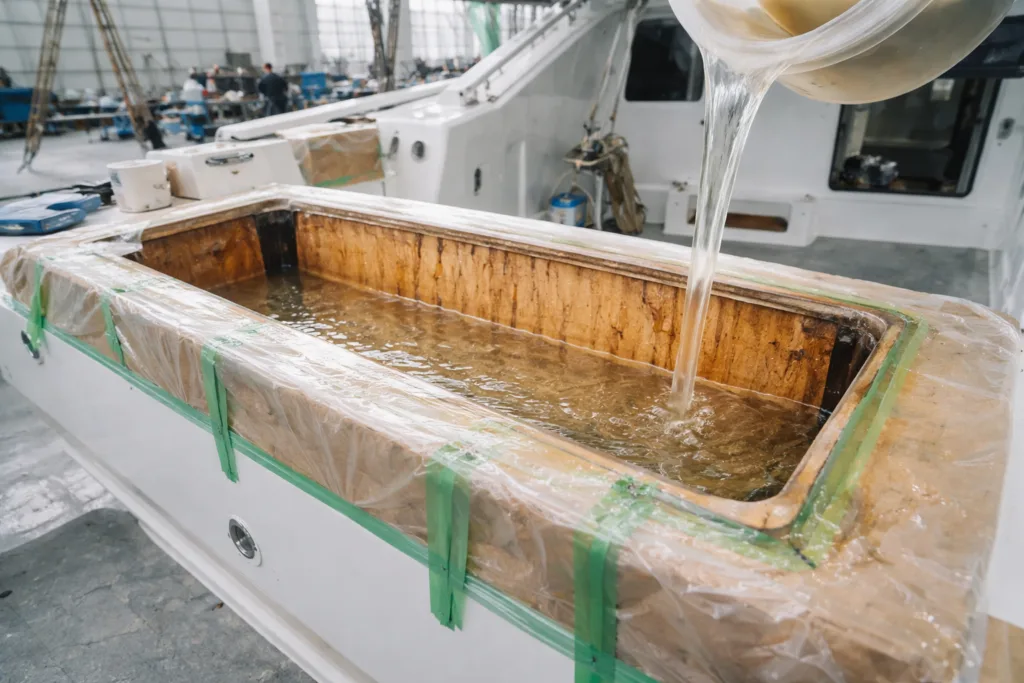
Exotherm refers to the heat released during the curing (hardening) process of epoxy resins. When epoxy and hardener combine, a chemical reaction (polymerization) bonds the molecules, releasing energy as heat. Every resin system—whether for marine, construction, or art—goes through exotherm.
- Thicker pours create more heat per volume
- Heat speeds up curing, making the reaction self-accelerating
- Unmanaged exotherm can trigger bubbling, foaming, or cracking
Why Exotherm Is More Intense in Thick Marine Pours
In thin coats, heat escapes easily. But a thick pour, like rebuilding a transom (which can be 50+ mm thick), traps the heat, making it much harder to shed energy. That’s why massive pours almost always risk overheating if you use standard epoxy systems or pour too much at once.
Common Project Examples Where Exotherm Matters
- Marine transom core replacements
- Large casting jobs (rudders, stringers, bulkheads)
- Epoxy slab repairs where high volumes are poured simultaneously
Exotherm Cycle: From Start to Finish
Here’s what typically happens during an epoxy exotherm cycle in thick pours:
- Mixing: Begins at room temperature; little heat
- Induction phase: Slight warmth; reaction starts slowly
- Exotherm peak: Resin temperature shoots up—in the core, this can reach 80–150°C depending on the system
- Post-exotherm cooling: The resin cools, but this may be too late for damage control
Visual Guide: Temperature Rise in Different Pour Depths
| Pour Thickness | Peak Temperature Range | Common Risks |
|---|---|---|
| 2–5 mm | 40–60°C | Slower cure; few problems |
| 15–25 mm | 60–90°C | Shrinkage, mild cracks |
| 40–60 mm | 90–140°C+ | Severe cracking, foaming, fire |
Key Factors That Drive Epoxy Exotherm
- Resin chemistry: Some systems (e.g., casting) are formulated for low-exotherm, others are not
- Batch size: Larger batches build heat faster
- Ambient temperature: Warm shop or weather speeds exotherm
- Poured thickness: The thicker, the hotter—danger can escalate exponentially
- Hardener speed: Fast (quick-cure) hardeners accelerate exotherm
Industry Tip: Batch Size and Container Shape
Mixing 2 liters in a deep round bucket will create more heat—and set off-gassing or foaming—much faster than spreading 2 liters in a paint tray. Surface area and thickness combine to affect heat buildup.
How Heat Buildup Leads to Cracks and Failure
When exotherm runs uncontrolled, several issues threaten the finished repair or pour:
- Thermal cracking: Sudden temperature change stresses the surrounding substrate and the resin itself
- Void formation: Boiling creates bubbles or foam, especially in wood or closed molds
- Yellowing and charring: Overheating can discolor or partially burn the cured epoxy
- Degraded strength: Rushed cure weakens bond strength and flex properties
Safe Exotherm Control Methods: Field-Proven Practices
To safely manage exotherm during thick marine pours, professional teams and manufacturers stick to several core principles:
1. Thin Lifts Beat Thick Pours
Avoid pouring 40–80 mm all at once. For transom repairs, split the job into multiple thin lifts (usually 10–15 mm/lift). Allow each lift to cool and partially cure before pouring the next:
- Makes temperature rise gradual and manageable
- Ensures bubble escape and better bond between layers
2. Small Batches Mean Cooler Mixes
Mix resin in batches no larger than what you can pour and work in less than the product’s pot life. If the label says 25 minutes at 100 g, stick to 100–250 g (or 2–4 oz) at a time. This dramatically reduces peak temperature and makes control easier.
ZDSpoxy technicians always recommend small, frequent mixes during thick marine pours for maximum safety and cure quality.
3. Slow Hardeners = Gentle Cures
Always select a slow or extra-slow hardener when available. These are engineered with longer open times and lower rate of heat buildup. Standard fast hardeners are not safe for thick sections.
To learn more about matching resin cure profiles to project needs, see our Marine Epoxy Resin Manufacturer guide on choosing the right hardener and resin system.
4. Ambient Temperature Management
Work when ambient temperatures are low (15–20°C / 59–68°F is ideal for thick pours). Even a 5°C difference can shift peak exotherm from safe to hazardous. Never pour in direct sun or on recently sun-exposed surfaces.
5. Never Use Unsafe Cooling Hacks
Methods like adding ice, refrigerating resin, or pouring on cold slabs can cause condensation, moisture blush, or surface contamination—and often make things worse. Stick with approved temperature control methods for safety and quality.
Choosing the Right Epoxy for Thick Pours
Not all marine epoxies are suitable for deep repairs. Look for formulations with these properties:
- Designed for casting or thick applications
- Low exotherm profile (ask for technical data)
- High tolerance for delayed recoat
- Slow or extra-slow cure
ZDSpoxy formulates specialized slow systems that address these needs. When in doubt, check product specs or consult with a resin engineer before pouring.
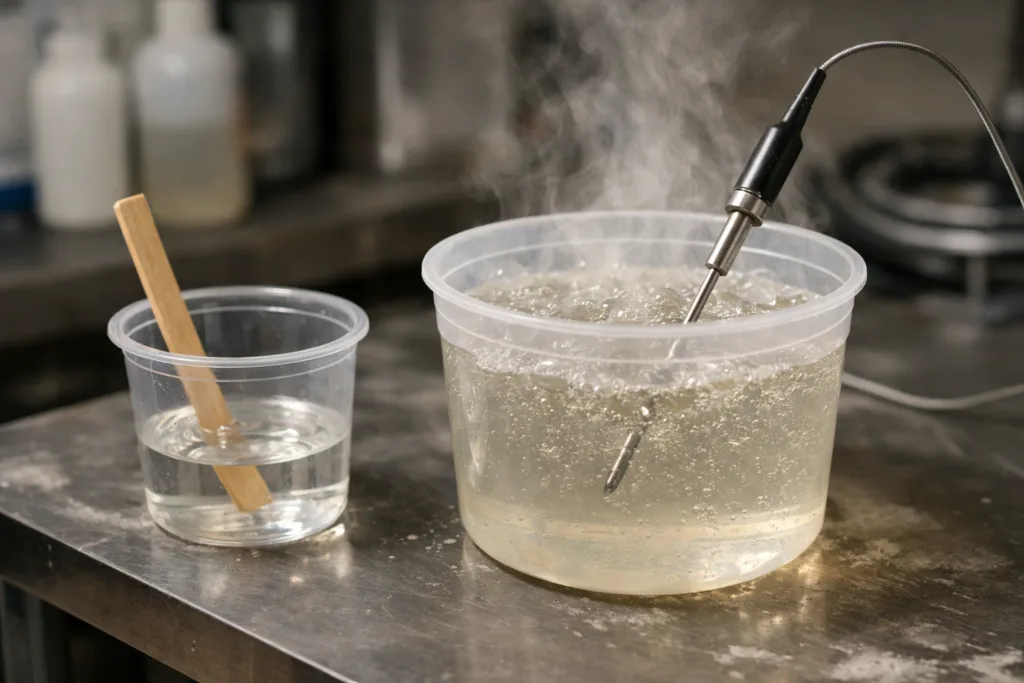
Mixing Discipline: Field Realities and Critical Steps
Pouring tremendous quantities of epoxy in marine repair is never just a “bucket and dump” process. Success depends on maintaining proper ratios, mixing thoroughly, and tracking batch sizes per area. Consistent mixing prevents hot spots, streaks, and unpredictable exotherm peaks.
For challenging transom or deck applications, maintain a mix log—recording pot size, cure time, and temperature readings for each batch—to avoid project-ending errors.
For rapid crack repairs, check the ZDS-1010AB rapid epoxy technical bulletin for proper batch sizing and mixing technique.
Pitfalls to Avoid in Controlling Exotherm
- Pouring too thick without staged lifts
- Using leftover “fast” hardener for a deep repair job
- Ignoring surface temperature—always measure substrate as well as air
- Scaling up untested mixes from a small test batch to a large pour too quickly
Lessons from Marine Professionals: Real-World Stories
In major shipyard projects, when a transom is re-cored, strict batch and pour discipline is enforced. Failing to wait between lifts, or hurrying the process due to weather, has led to cures that reached over 120°C—damaging nearby laminates and causing catastrophic cracking. These missteps lead to days of rework, wasted resin, and compromised repairs.
Field experience from ZDSpoxy’s marine partners shows that following a strict thin-pour, controlled-temperature approach is the only repeatable way to success.
Smart Tools for Predicting Exotherm
Want to estimate how hot your batch might get? Use temperature probes in the mix or a digital thermal camera for large pours. Some sites utilize online calculators or predictive tables, but always check with your resin supplier for accurate guidance.
Comparison Table: Standard Marine vs. Slow Cure Epoxy
| Property | Standard Marine Epoxy | Slow Cure, Low Exotherm Epoxy |
|---|---|---|
| Recommended Max Pour (mm) | 3–8 | 30–60 |
| Typical Pot Life (100g, 20°C) | 15–25 min | 120–300 min |
| Peak Exotherm Temp | 80–150°C | 40–60°C |
| Field Risk | High in thick pours | Low risk if protocol followed |
Best Practices for Bonding and Layer Success
After a thin lift cures (usually “tack-free but not fully hard”), pour the next level. This ensures strong bonding between layers and traps no heat-generated bubbles. If more than 24 hours pass, sand lightly to ensure mechanical adhesion.
For details on primers prior to thick pours, refer to the technical specs for ZDS-2060AB rot repair wood primer and correct application protocols.
Epoxy Exotherm Control; Thick Pour, Batch Size, Heat Buildup, Cracking, Cure Speed, Temperature
Controlling exotherm during thick marine epoxy pours requires mastering the interplay of chemistry (resin/hardener ratios), physics (batch size and shape), and environment (ambient and substrate temperature). Batch size and cure speed are the levers you can pull to avoid costly failures. Always follow established practices—thin lifts, small batches, slow hardeners, and working at lower temperatures—for consistent performance and dependable repairs.
Conclusion: Field-Proven, Safe, and Repeatable Epoxy Pours
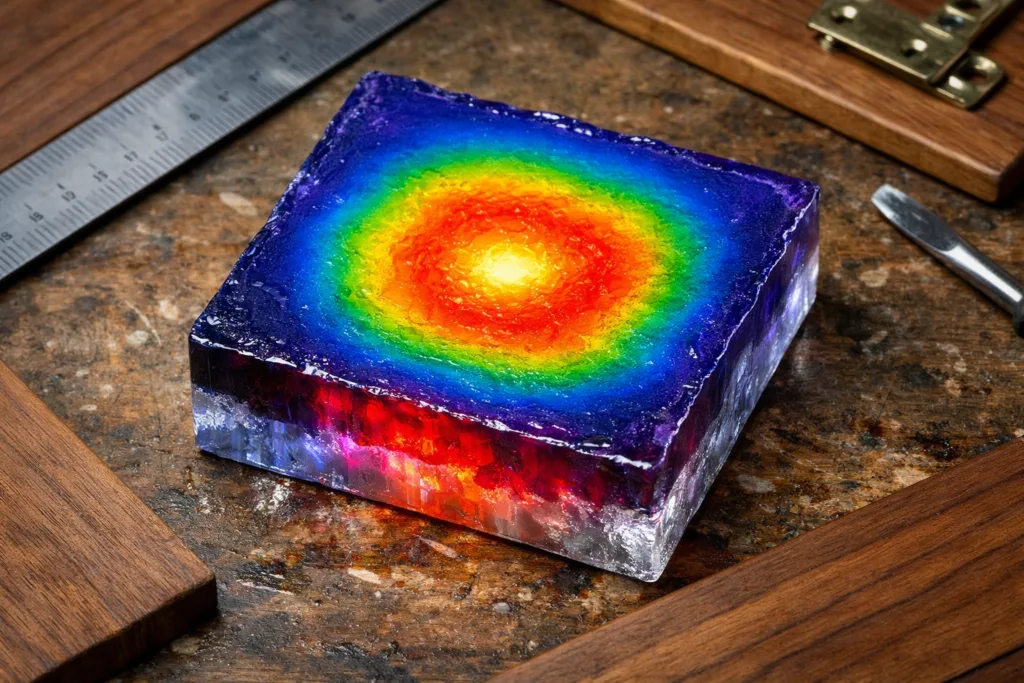
Exotherm in thick marine epoxy pours isn’t just an inconvenience—it’s the biggest threat to repair success. The secret isn’t hacks or shortcuts: it’s careful planning, disciplined execution, and using the right materials for the job. Following thin-lift and batch-control strategies will help you finish repairs that last—and avoid structural or aesthetic disasters. Keep your procedures tight, check your cure profiles, and always prioritize safety and quality.
Frequently Asked Questions
What is exotherm in epoxy resins?
Exotherm is the heat released during the chemical reaction between epoxy resin and hardener. This heat is a natural part of the curing process but must be managed, especially in thick pours.
Why should thick epoxy pours be done in multiple layers?
Pouring in thin layers allows exotherm to dissipate safely, preventing overheating, cracks, voids, and potential structural failure.
How does batch size affect epoxy curing?
Larger batch sizes create higher peak temperatures, accelerating cure speed and raising risk of boiling or cracking. Smaller batches are safer, especially for deep pours.
Is it a good idea to cool epoxy resin with ice?
No, adding ice or refrigerating resin introduces moisture, which can cause blush, weak bonds, or surface defects. Use only approved temperature management strategies.
What is the safest hardener for thick epoxy repairs?
Slow or extra-slow hardeners are safest for thick pours. Fast-cure hardeners should be reserved for thin applications or warm environments only.
How can I monitor exotherm during curing?
Use contact thermometers or digital thermal cameras placed in the center of the pour to track temperature. Always monitor and record batch details.
Related Reading
- Master the Variables: Complete Curing Dynamics in Epoxy Flooring
- How to Solve Bubbling and Outgassing in Epoxy Coatings
- Update Your Surfaces: A Stepwise Guide to Resin over Ceramic Tile
- Prevent Floor Cracks: Expansion Joint Knowhow for Epoxy Applications
- Seamless Wood Repairs: See the Versatile ZDS-1240 Epoxy Wood Gap Filler in Action