
Introduction: Why Cleanroom Anti-Static Floor, Copper Foil Grid, Conductive Primer Matter
In the world of semiconductor manufacturing, electronics assembly, and pharmaceuticals, cleanroom environments are essential for controlling contaminants and preserving sensitive operations. One of the most critical aspects of this control is managing static electricity. The cleanroom anti-static floor, copper foil grid, conductive primer system is a three-tier structure engineered to provide optimal static dissipation and ensure compliance with global standards for cleanroom safety. This article explores the design, science, and application of such flooring systems, providing practical insights that will empower facility managers, contractors, and engineers to make well-informed choices in their projects.
The Three-Tier Structure of Cleanroom Anti-Static Flooring Systems

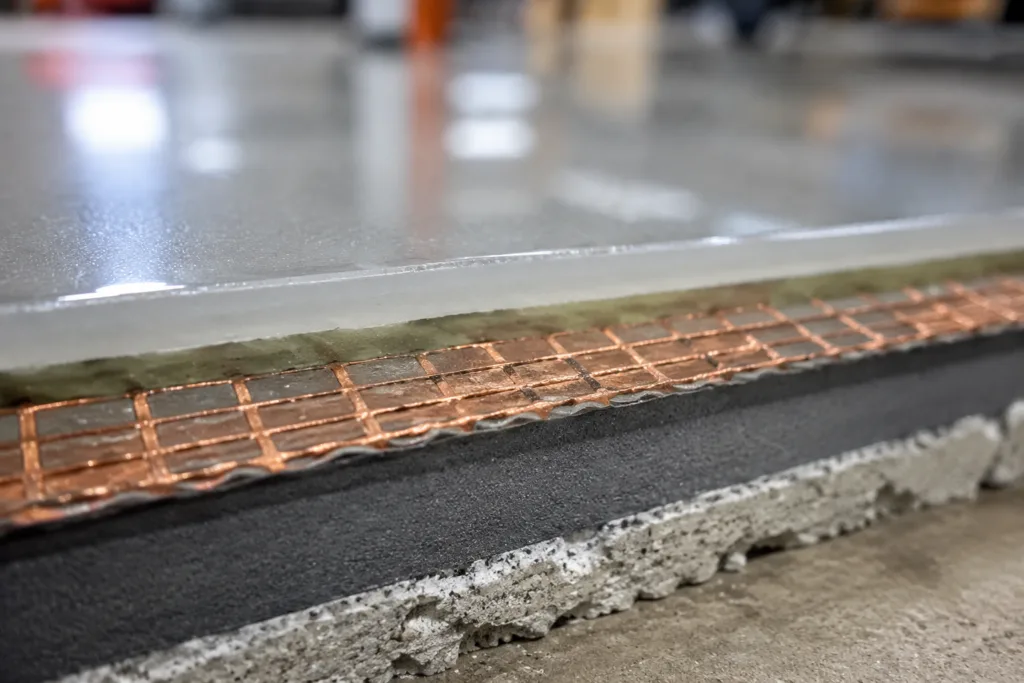
A high-performance cleanroom anti-static floor system relies on three distinct yet interlinked layers: the conductive primer, the copper foil grid-reinforced conductive layer, and the topcoat. Each serves a specific function, working together to ensure static charges are safely directed away from sensitive equipment and personnel. Below, we break down these layers and their unique contributions.
Conductive Primer: The Foundation for Static Control
The conductive primer is the first layer applied directly onto the concrete substrate. Its job is to:
- Bond tightly to the substrate and seal microscopic pores.
- Provide a uniform base of conductivity for the total system.
- Enhance adhesion between subsequent layers, preventing delamination and reducing future maintenance.
When choosing a primer, manufacturers like ZDSpoxy pay special attention to factors such as substrate moisture, cure timing, and application method. For example, ensuring that the primer is compatible with both old and new concrete is vital, particularly in environments where humidity varies and unexpected contaminants may be present. Products such as ZDS-2103ab are specifically formulated to offer reliable conductivity, even under demanding conditions.
Copper Foil Grid: Reinforced Static Dissipation Pathways
The copper foil grid is strategically embedded within the conductive layer. Its purpose is to:
- Create highly efficient pathways for rapid static charge dissipation.
- Ensure consistent conductivity across the entire floor—even in areas subject to heavy traffic or localized wear.
- Allow for easy testing and verification during commissioning and routine maintenance.
Grid design usually involves evenly spaced copper strips, carefully placed to avoid gaps and dead zones. This meticulous layout is crucial for maintaining uniform resistance and ensuring absolute control over static discharge. Copper is chosen for its excellent conductivity, durability, and compatibility with epoxy matrixes.
Conductive Layer with Reinforcement: The Middle Guard
After the copper grid is set, a conductive epoxy or polyurethane mid-layer is applied, sometimes mixed with carbon fibers or other conductive additives. This layer:
- Builds upon the primer’s conductivity, linking seamlessly with the copper grid beneath.
- Acts as an additional shield against static accumulation.
- Offers mechanical strength and flexibility, accommodating the stresses of daily cleanroom use.
ZDSpoxy engineers often refer to this layer as the “middle guard,” responsible for balancing conductive performance with physical resilience.
Topcoat: Protection and Performance
The final layer—a high-performance topcoat—serves dual purposes:
- Protects the conductive layers from abrasion, chemicals, and impacts.
- Maintains cleanroom aesthetics and simplifies cleaning protocols.
Topcoat options (both epoxy and polyurethane) are selected for their ability to withstand daily cleaning, harsh disinfectants, and aggressive foot traffic. For instance, solutions such as ZDS-5503ab feature anti-static finishes that keep conductivity stable over time.
Science Behind Static Dissipation in Cleanroom Floors
Static electricity, though invisible, can wreak havoc in cleanrooms. Even tiny charges can disrupt microchips and sensitive sensors. The three-tier anti-static floor system is engineered to funnel these charges safely into the ground, preventing costly failures and contamination. The conductive primer, copper grid, and reinforced conductive layer collectively create a continuous, low-resistance path. Proper installation and verified conductivity are crucial to meeting international standards such as ANSI/ESD S20.20 and IEC 61340.
Understanding Common Pain Points in Cleanroom Flooring
Facility managers often struggle with the following challenges:
- Ensuring stable conductivity amid changing environmental conditions (temperature, humidity).
- Avoiding delamination and premature wear.
- Meeting or exceeding rigorous global static control standards.
- Maintaining a contaminant-free environment despite frequent cleaning.
The three-tier structure is specifically designed to address these issues. Its layered approach isolates potential points of failure and allows each part to serve a focused role.
How Does a Conductive Primer Work?
Conductive primers function as the anchor of the flooring system. By infusing the primer with special additives, such as carbon black or metallic particles, manufacturers achieve a base layer with measurable, stable electrical conductivity. The primer’s performance is verified by on-site resistance measurements using standard test methods. Proper surface preparation—free from dust, oil, moisture, or alkali—is a must to guarantee optimal performance.
Installing the Copper Foil Grid: Steps and Best Practices
Installation begins with mapping out the grid pattern. Copper foil strips are laid out according to engineered drawings, often spaced at intervals determined by the facility’s static control requirements. Care is taken to ensure strips are flush, properly joined at intersections, and fully encapsulated by the conductive layer above. Test points are marked for easy maintenance access. Installation teams use multi-meter verification after each step.
Comparing Conductive Primers Versus Standard Primers
| Property | Standard Primer | Conductive Primer |
|---|---|---|
| Electrical Conductivity | None | High |
| Bond Strength | High | High |
| Static Dissipation | No | Yes |
| Cleanroom Suitability | Limited | Excellent |
| Cost | Lower | Higher |
Why Is the Copper Foil Grid Essential?
While conductive additives alone can disperse static, the copper foil grid guarantees uniform dissipation—even in the presence of imperfections in the substrate or wear in the surface layer. Without this grid, floors may exhibit “dead spots” or inconsistent static discharge, exposing equipment to potential failures. Grid layouts must comply with facility-specific ESD requirements.
Electrical Testing and Verification of Cleanroom Flooring Systems
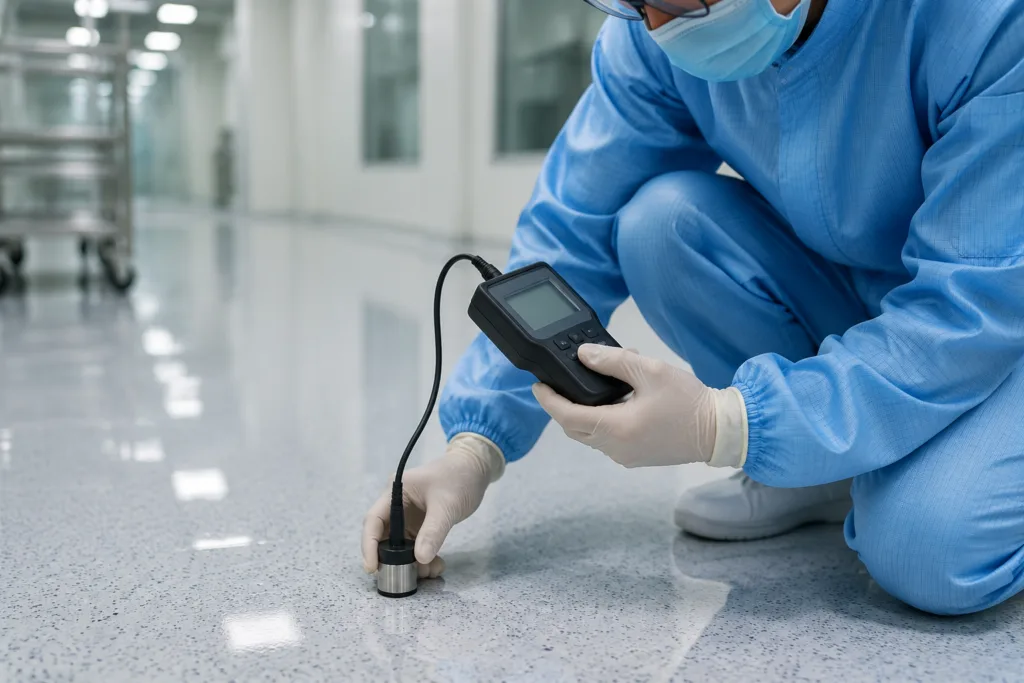
After installation, each layer—from primer to topcoat—is tested for surface and point-to-point resistance. Key readings from the copper grid and test points confirm that the floor meets predefined conductivity levels. These tests are usually performed with resistance meters and logged for compliance certification. ZDSpoxy emphasizes maintaining detailed QC records, including batch numbers and installation dates, to streamline re-testing and troubleshooting in the future.
Optimizing Cleanroom Anti-Static Floor Durability and Maintenance
Durability is non-negotiable for cleanroom flooring. Using topcoats such as ZDS-8300AB, facility managers can expect improved resistance to cleaning chemicals and day-to-day abrasion. Maintenance protocols typically involve regular cleaning with non-abrasive mop systems and routine monitoring of conductivity.
Compliance with Industry Standards: What You Need to Know
The three-tier system is designed to meet national and international standards for ESD protection. Common standards include:
- ANSI/ESD S20.20 (North America)
- IEC 61340-5-1 (International)
- GB/T 1768 (China)
Meeting these standards is verified during commissioning and routine audits. Choosing materials and installation teams that understand these benchmarks is critical for compliance.
Cleanroom Environmental Control: Beyond Static Dissipation
Aside from static control, cleanroom flooring must resist dust, microbial growth, and physical wear. The multi-layer structure supports air cleanliness, prevents particle shedding, and ensures long-term performance. Topcoats are often antimicrobial, and primers seal off potential moisture migration.
Material Selection: Epoxy vs Polyurethane Systems
Cleanroom anti-static floors can utilize both epoxy and polyurethane chemistries, each with unique strengths:
- Epoxy: Superior bond strength, chemical resistance, stable conductivity.
- Polyurethane: Enhanced flexibility, impact absorption, UV resistance.
In practice, the choice depends on site-specific factors such as temperature swings, cleanliness requirements, and maintenance routines.
Common Installation Challenges and Solutions
Even experienced contractors face hurdles such as substrate moisture, uneven surfaces, and tight installation timelines. ZDSpoxy engineers emphasize controlling ambient temperature and humidity, using precise mixing ratios, and maintaining clean tools to avoid contamination. Sealing joints and expansion areas with compatible fillers prevents cracking and ensures continuous conductivity.
Cleanroom Anti-Static Floor, Copper Foil Grid, Conductive Primer: In Application
When deployed in semiconductor cleanrooms, this three-tier system offers a host of advantages:
- Minimizes ESD-related equipment failures.
- Improves compliance and audit scores.
- Reduces long-term maintenance costs.
- Maintains pristine conditions for sensitive operations.
Strategically integrating the copper grid and conductive primer guarantees that static charges are neutralized at every point.
Real-World Insights: ZDSpoxy’s Manufacturing Perspective
From a manufacturing floor perspective, the ZDSpoxy team recognizes the importance of precise batch mixing and disciplined application methods. Conductive primers and grid layers must be mixed and applied within strict pot-life periods, and batch record checks ensure viscosity and gel time are consistent for every job site. The team also stresses ventilation and PPE during installation, especially when working with high-resin content materials.
Cleaning and Maintenance Protocols for Anti-Static Floors
Regular cleaning preserves both conductivity and appearance. Use neutral-pH cleaners and avoid abrasive tools. Routine testing of floor resistance is vital to ensure performance remains within specification. Spills should be addressed promptly to prevent chemical damage to the conductive layer.
Comparison Table: Three-Tier Structure vs Single-Layer Systems
| Property | Three-Tier Structure | Single-Layer System |
|---|---|---|
| Static Control | Excellent | Moderate |
| Durability | High | Lower |
| Compliance | Global | Partial |
| Maintenance | Easy | Challenging |
| Installation Complexity | Moderate | Simple |
Floor System Selection Logic: Key Factors
When selecting a cleanroom anti-static floor, consider:
- Required conductivity level and verification procedures.
- Chemical and abrasion resistance needs.
- Installation schedule and environmental conditions.
- Compliance with standards and client expectations.
Visual Inspection and Ongoing Quality Control
Routine visual inspections spot early signs of wear or damage to the topcoat. Any failure or bubbling should be addressed immediately to prevent loss of conductivity. Conductivity should be checked periodically, with logbooks kept for maintenance records.
Case Studies: Successful Cleanroom Flooring Installations
Throughout the industry, major facilities report reduced equipment failures and improved worker safety after upgrading to three-tier anti-static floors. One semiconductor production site noted a 40% decrease in ESD incidents within six months, validating the system’s effectiveness.
Summary Table: Key Benefits and Challenges
| Benefit | Challenge |
|---|---|
| Superior static charge control | Installation complexity |
| Enhanced durability | Material compatibility |
| Global standards compliance | Cure time management |
| Contaminant-free maintenance | Moisture sensitivity |
Conclusion: Moving Forward with Cleanroom Anti-Static Floor, Copper Foil Grid, Conductive Primer
Cleanroom anti-static flooring systems featuring conductive primers, copper foil grids, and reinforced conductive layers are the gold standard for environmental control in advanced manufacturing settings. Their multi-layer design delivers lasting static dissipation, durability, and compliance. By following strict installation and maintenance protocols—and leveraging proven products like those from ZDSpoxy—facility managers can ensure long-term performance, minimal downtime, and improved audit outcomes. As cleanroom technology advances, the importance of choosing the right floor system only grows. Investing in a three-tier approach provides confidence, safety, and measurable results where details matter.
Frequently Asked Questions
How does a cleanroom anti-static floor, copper foil grid, conductive primer system prevent static buildup?
By creating a continuous conductive pathway from the surface to ground, this system rapidly dissipates static charges accumulated from people and equipment, thus preventing ESD events.
What is the typical lifespan of this three-tier anti-static flooring system?
When properly installed and maintained, these floors typically last 8–15 years, providing stable conductivity and protection throughout their service life.
Which standards should cleanroom anti-static floors comply with?
ANSI/ESD S20.20, IEC 61340, and GB/T1768 are the primary standards governing static control and floor performance in cleanrooms worldwide.
Can the copper foil grid be repaired if damaged?
Yes, damaged sections can be located via test points and replaced without full floor removal, but this requires careful coordination with specialists.
What common mistakes should be avoided during installation?
Poor substrate preparation, improper batching, and inadequate testing are common errors that can compromise conductivity and lead to costly failures.
Are anti-static floors suitable for all types of cleanrooms?
Yes, as long as conductivity requirements match the facility’s needs. Customization is available for electronics, pharma, and other sectors requiring advanced static control.
Related Reading
- Smart Floors for AGV Robots: Superior Flatness & Static Control
- Pro Tactics for Epoxy Flooring in Cold Weather Site Conditions
- Mastering Resin Catalog Navigation for Cleanroom Projects
- Preventing Floor Cracks: Expansion Joint Insights for Cleanrooms
- Explore Advanced Flooring Resin Systems for Industrial Cleanrooms