
Introduction: The High-Stakes Demands of Gas Turbine Exhaust Areas
Gas turbine exhaust areas are some of the harshest environments in industrial operations. These zones must handle searing temperatures, chemical attack, vibrations, and constant thermal cycling. Because failure can lead to costly downtime, fire risk, and severe structural damage, the right materials are critical. One standout solution is high-temp epoxy for gas turbine exhaust—purpose-engineered to handle relentless heat and preserve reliability where it matters most.
Traditional repair materials, like cementitious mortars or standard grouts, simply don’t have the strength or longevity for this job. That’s why high-performance epoxy systems—like those from ZDSpoxy—are increasingly used to grout exhaust casings, anchor support hardware, and seal expansion joints around turbine outlets. But what truly sets these systems apart? And how do they outperform traditional approaches in real-world turbine projects? This in-depth guide answers those questions and more.
Understanding High-Temp Epoxy: What Sets It Apart?
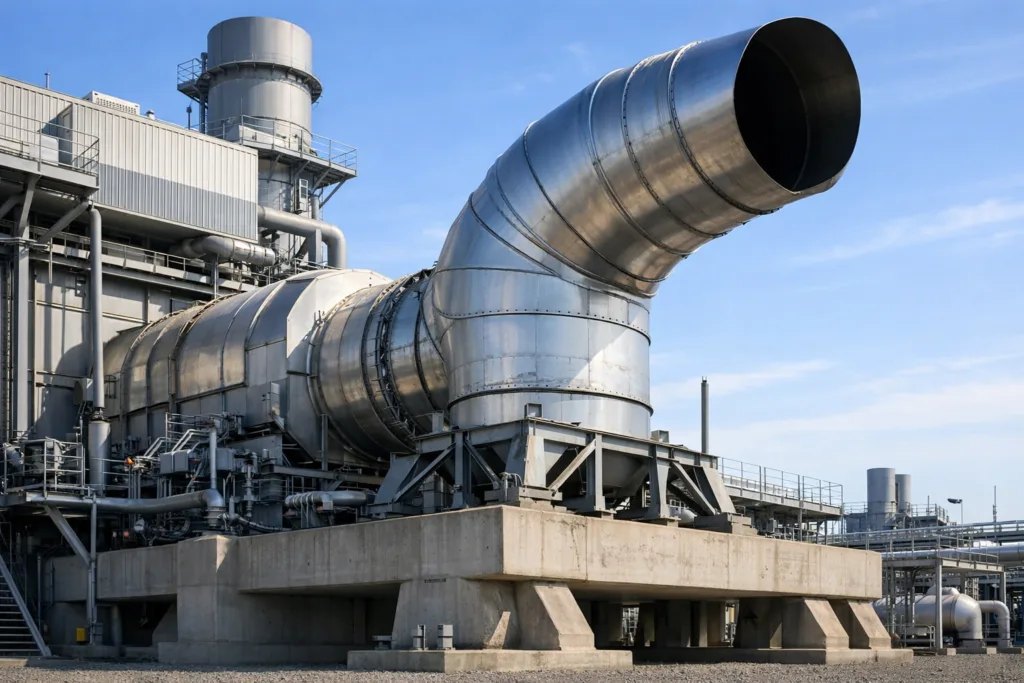
High-temp epoxy for gas turbine exhaust is engineered to endure service temperatures exceeding 150°C (and sometimes up to 250°C), while maintaining excellent bond strength and dimensional stability. These epoxies are derived from specialty resin systems, often reinforced with high-temperature additives and robust fillers. This combination gives them the crucial characteristics needed in turbine exhaust environments:
- Thermal resistance: Continuous exposure to high exhaust temps without softening, charring, or loss of adhesion
- Chemical durability: Resisting corrosive agents, combustion byproducts, and moisture
- Mechanical strength: Withstanding vibration, expansion/contraction, and heavy mechanical loads
- Minimal shrinkage or creep: Maintaining fit and alignment even under cycling conditions
The Unique Challenges of Gas Turbine Exhaust Environments
Installing materials in a turbine exhaust zone brings together a variety of engineering challenges:
- Extreme and fluctuating temperatures— Thermal cycling can exceed 100°C shifts in a single day
- Dynamic stresses—Vibration and resonance are continuous due to high-velocity gas flows
- Chemical attack—Hot acidic gases, condensation, and trace solvents are common
- Structural movement—Expansion and contraction of steel housings and foundations
Standard materials often develop micro-cracks, spall, or debond within months. This is where high-temp epoxy provides a higher margin of safety and extended service life.
Technical Specifications: What Makes an Epoxy System Truly ‘High-Temp’?
Industrial standards for high-temp epoxy specify several core properties:
| Performance Characteristic | Typical High-Temp Epoxy Value | Why It Matters for Gas Turbine Exhaust |
|---|---|---|
| Service Temperature Range | 150–250°C continuous | Prevents softening in exhaust zones |
| Compressive Strength | 70–120 MPa | Handles turbine/foundation loads |
| Bond/Adhesion Strength | >15 MPa on steel/concrete | Prevents delamination under stress |
| Chemical Resistance | Excellent to acids, water, oils | Survives combustion byproducts |
| Thermal Cycling Tolerance | Maintains properties after 100+ cycles | Limits cracking and creep |
| Shrinkage | <0.2% | Maintains alignment and fit |
One such material is the ZDS-4120AB high-temperature epoxy grout, which is specifically formulated for use in turbine and high-thermal-load environments. Its technical datasheet reveals capabilities that match, and often exceed, industry demands.
How High-Temp Epoxy Systems Deliver Superior Durability and Safety
When installed correctly, these epoxies can extend the lifespan of exhaust supports, foundation chocks, pipe stands, and expansion joints. The benefits include:
- Minimal maintenance: Epoxy resins don’t shrink or creep, preserving tight fits
- Enhanced safety: By resisting fire, cracking, and chemical attack, the risk of catastrophic failure drops
- Operational uptime: Less downtime for repairs due to long-lasting performance
Unlike cement-based solutions, epoxy coating systems for exhaust environments bond strongly even to damp or oily substrates, making them more versatile during critical maintenance shutdowns.
[PROMPT]: High-Temp Epoxy Solutions for Gas Turbine Exhaust Areas
Modern gas turbine operators increasingly rely on high-temp epoxy solutions for exhaust zones due to their proven performance in demanding conditions. By providing a barrier against heat, vibration, and chemical exposure, these systems solve issues that plague traditional methods:
- Crack prevention: Epoxies flex and absorb impact without losing bond
- Seamless integration: Fill odd shapes, gaps, and tight corners that mortars cannot
- Speed of application: Rapid-cure formulas reduce crucial downtime
- Compatibility: Bond to both old and new concrete, steel, or fiber-reinforced materials
These solutions are at the heart of turbine reliability improvements across modern industrial facilities.
Comparing High-Temp Epoxy to Traditional Methods
To highlight the advantages, consider this comparison:
| Criterion | High-Temp Epoxy | Cementitious Mortal/Traditional Repair |
|---|---|---|
| Temperature Resistance | Up to 250°C, no softening | <100°C before thermal degradation |
| Shrinkage/Creep | <0.2% | 1–3%, leads to gaps & misalignment |
| Bond Strength | High (steel/concrete/FRP) | Moderate, easily cracks from movement |
| Chemical Resistance | Excellent | Poor, especially to acids/oil |
| Cure Time | 1–3 hours (fast-cure) or 24 hours | 1–7 days |
| Installation Complexity | Simple, pour-and-level systems | Labor-intensive, formwork needed |
| Long-Term Durability | 10+ years with minimal intervention | 3–5 years, prone to failure |
This is why power plants and OEMs are now standardizing high-temp epoxy for all exhaust-related grouting and support repairs.
Case Studies: Real-World Successes with High-Temp Epoxy
Case Study 1: Power Plant Turbine Exhaust Alignment Repair
At a Southeast Asian power plant, routine thermal cycling caused repeated cracking and misalignment in turbine exhaust supports. Switching from cement grout to a high-temp epoxy restored alignment and eliminated failures over a five-year review. The plant cited a reduction in downtime and unplanned maintenance, translating directly to improved efficiency.
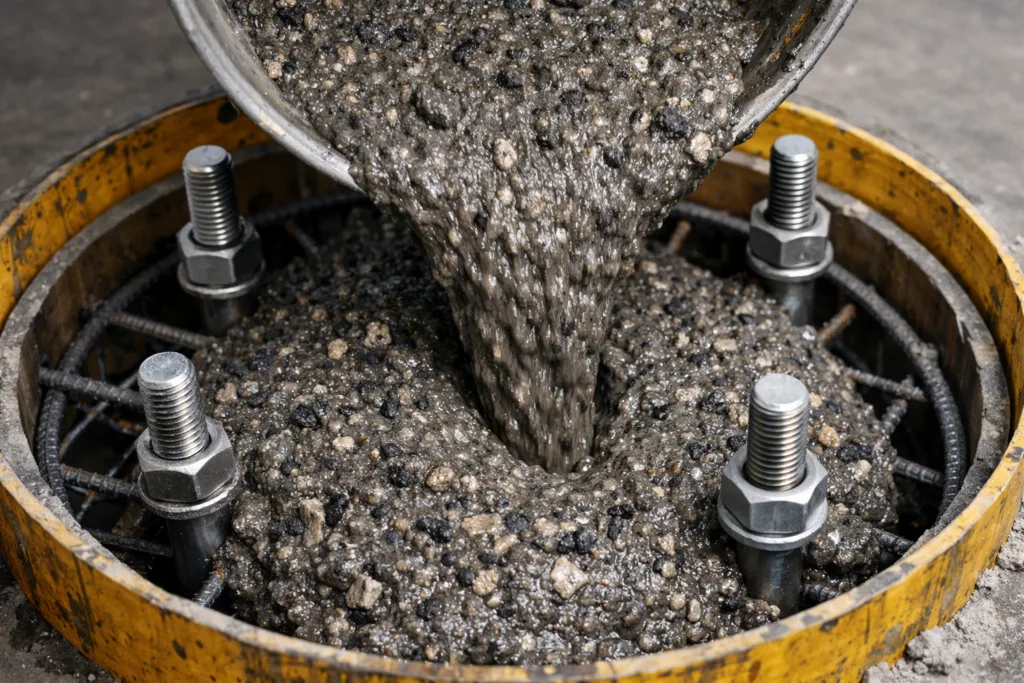
Case Study 2: Gas Compressor Baseplate Grouting
Substituting the original cementitious grout with ZDS-4120AB high-temp epoxy grout allowed a Middle East refinery to avoid grout failure from both high exhaust temperatures and chemical exposure. After three years, visual and non-destructive testing confirmed a stable, uncracked foundation.
Installation Process: Step-by-Step Best Practices
Applying high-temp epoxy grout is a systematic process:
- Surface Preparation: Clean and dry substrate; repair oil-contaminated concrete if necessary (Oil-Soaked Concrete Crack Repair is a typical precursor step).
- Mixing: Use calibrated ratios and mix in batches to control exotherm and pot-life. Employ low-speed drills and avoid air entrainment.
- Application: Pour or trowel the mixed grout into voids, runner systems, and under baseplates. Formwork must be leakproof and temperature stable.
- Curing: Allow for full cure as per specification before stress is applied—many epoxies achieve functional cure in 12–24 hours.
- Quality Checks: Inspect for air pockets, proper fill, and bond line integrity before energizing the equipment.
ZDSpoxy’s jobsite experience confirms that careful control of environmental temperature and batch size are key in ensuring uniform cure and avoiding hot spots that can cause premature aging.
Maintenance and Inspection Guidelines
While high-temp epoxy systems are known for their longevity, periodic inspections are essential:
- Check for visible cracking, debonding, or color changes—early signs of thermal fatigue
- Use non-destructive test methods (like ultrasonic pulse velocity) for hidden voids
- Reapply surface sealants or coatings if original protection is worn
Unlike traditional grout, repairs with high-temp epoxy are often local and do not require full replacement—saving time and cost throughout the asset’s lifecycle.
Common Missteps and How to Avoid Them
- Ignoring substrate moisture or contamination: Always use prep systems designed for concrete contaminated by oils or prior failures
- Improper mixing ratio: Following the manufacturer’s detailed instructions is non-negotiable for full cure and performance
- Oversized batches: Large mixes can exotherm and shorten working time—mix in small batches when ambient temperatures are high
- Inadequate vibration: Use physical vibration or tamping to ensure full flow and fill of baseplate and bolt cavities
How ZDSpoxy Approaches High-Temp Epoxy Challenges (Brand Perspective)
At ZDSpoxy, field experience has shown that real-world jobsite conditions often differ from lab predictions. Factors like substrate temperature, residual oil contamination, and mixing technique can drastically impact performance. That’s why ZDSpoxy recommends verifying surface prep with adhesion tests, and always using a Epoxy Grout Volume Calculator to size batches correctly—thus avoiding waste and ensuring thermal performance. This hands-on, engineering-first mindset ensures fewer reworks and greater reliability under actual turbine loadings.
Future Developments: Innovations in High-Temp Epoxy Chemistry
As turbine temperatures increase and environmental standards tighten, manufacturers are developing resins with higher glass transition temperatures, lower exotherm, and fast-cure chemistry. These innovations promise even shorter turnaround times and better long-term chemical resistance. In the coming years, expect epoxy formulations that are easier to apply in wider temperature windows and with built-in crack-mitigating additives.
Conclusion: Building Reliability Through Material Choice
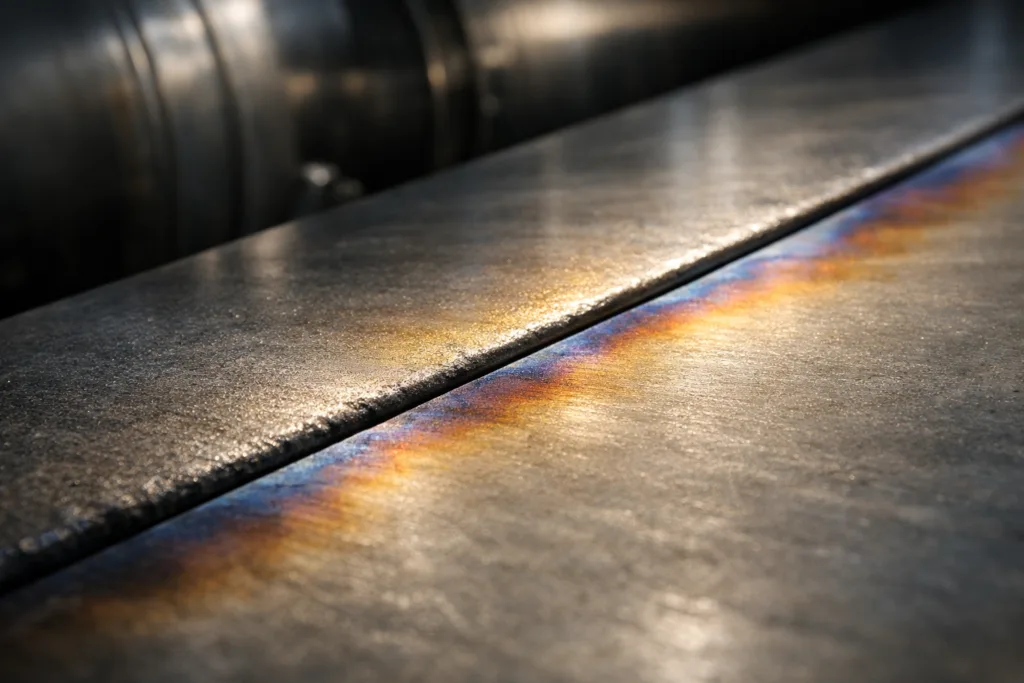
High-temp epoxy for gas turbine exhaust delivers proven longevity, mechanical safety, and simplified maintenance where other materials fail. By understanding the unique technical requirements, following best installation practices, and embracing next-generation chemistry, operators minimize downtime and extend asset life. And as case studies show, these systems pay back their investment many times over by preventing outages and failures.
Frequently Asked Questions
What minimum temperature can high-temp epoxy withstand in gas turbine exhaust areas?
Most high-temp epoxies are formulated for continuous use from -20°C up to 150°C, with select systems like ZDS-4120AB performing up to 250°C. Always check your datasheet for specific limits.
Can high-temp epoxy be applied to oily or damp concrete?
Some advanced systems are designed to tolerate a degree of surface moisture or oil contamination, but proper surface preparation is vital for long-term adhesion. Use specialized prep products for best results.
How long does high-temp epoxy take to cure before equipment can be restarted?
Cure times vary by formulation; fast-cure types may be ready in 4–6 hours at 25°C, while standard grades usually require 12–24 hours. Always follow the manufacturer’s recommendations for both initial and final cure.
What regular maintenance is needed for epoxy-repaired exhaust supports?
Scheduled inspections for cracking, debonding, and chemical attack are recommended. Most repairs only require reapplication of surface sealers or minor spot patches, not full replacement.
How does high-temp epoxy perform against chemical exposure from turbine exhaust?
Leading high-temp epoxies are engineered for exceptional resistance to acids, water, and hydrocarbon vapors, significantly outlasting traditional cementitious repairs in corrosive environments.
Is it safe to use high-temp epoxy near live turbine exhausts?
Never apply epoxy to hot or operating surfaces. Surfaces must cool to safe levels (generally below 40°C) before preparation and installation. Additionally, ensure proper ventilation, PPE, and curing protocols are followed.
Related Reading
- 7 Proven Strategies for Thermal Expansion and Grouting of Steam Turbines
- Essential Steps for Emergency Grouting of Compressors During Shut Down
- How to Boost Reliability with Grout Stiffness and Resonance Solutions
- Field-Tested Approaches to Professional Epoxy Concrete Repair
- Eliminating Vibration in Industrial Pumps: Proven Methods for Reliability