
Introduction: Why Wear Resistance and Taber Abrasion Test Matter
In industrial flooring, the search for surfaces that remain robust under heavy traffic, rolling loads, or chemical exposure is unending. A critical hallmark of any high-performance floor coating—especially a polyurethane topcoat—is its wear resistance. But how do decision makers and contractors actually quantify a coating’s resistance to abrasion over time? The answer lies in standardized testing, with the Taber abrasion test serving as the global benchmark. This article promises a thorough look at the Taber abrasion test, how quality loss is evaluated, and why these results matter when choosing polyurethane topcoats for demanding commercial, industrial, or public settings.
What is the Taber Abrasion Test?
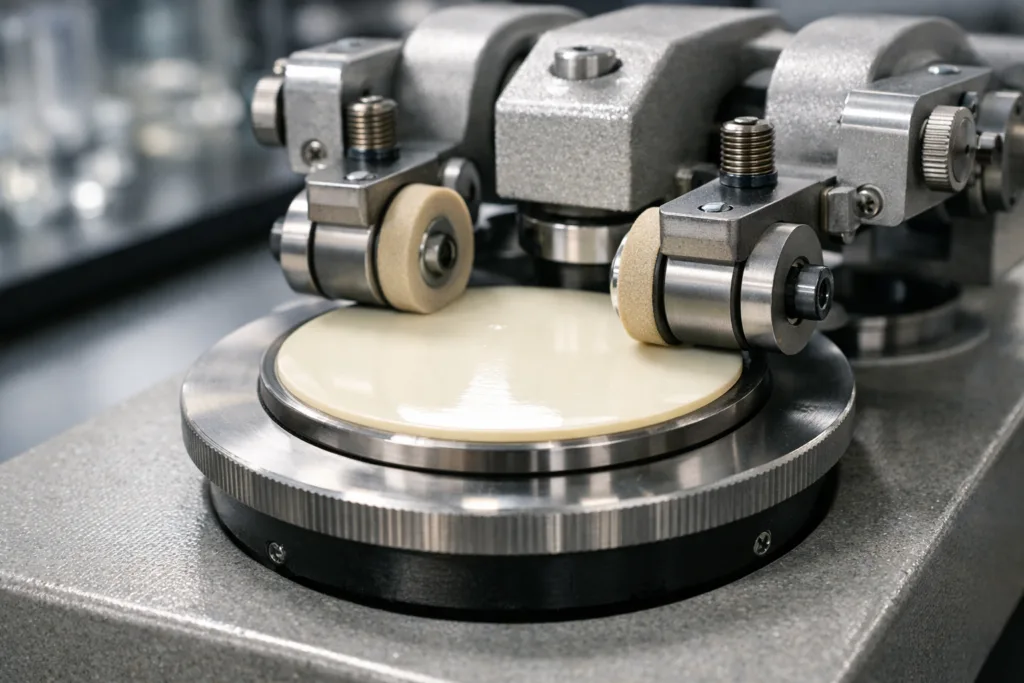
The Taber abrasion test is a controlled, laboratory-based method for measuring a material’s resistance to surface wear caused by friction. In this test, a rotating disk fitted with abrasive wheels grinds against the surface of a coated sample under standardized conditions. The resulting mass loss, typically measured in milligrams, provides a direct metric for the material’s durability. This data is fundamental for both product development and performance certification.
The Science Behind Wear Resistance in Polyurethane Topcoats
At its core, wear resistance refers to a floor coating’s ability to withstand gradual material removal from surfaces due to foot traffic, machinery, cleaning, or other types of contact. Polyurethane’s unique chemical structure—composed of flexible soft segments and rigid hard segments—enables a careful balance between toughness and flexibility, giving rise to remarkable wear resistance compared to traditional coatings. For flooring designers, this means longer service life and lower long-term maintenance.
Key Factors Influencing Abrasion Resistance
- Crosslink density
- Hardness of the cured film
- Filler and pigment type & loading
- Coating thickness
- Cure schedule and conditions
Understanding the Taber Abrasion Procedure
Let’s walk through the typical Taber abrasion test as performed in independent or manufacturer laboratories.
Sample Preparation
Test specimens are coated according to manufacturer recommendations, then conditioned to cure fully. Consistent film thickness and defect-free surfaces are crucial for accurate comparison.
Test Method
- Sample disks are mounted on a rotating platform.
- The Taber Abraser’s chosen abrasive wheels (e.g., CS-17) make contact with the coating, generally under a specified load (like 1000g).
- The platform spins for a set number of cycles—commonly 1000, but values may differ based on standards (ASTM D4060, ISO 7784).
- After testing, the sample is cleaned and re-weighed. The difference in sample mass before and after gives the wear or “quality loss.”
How to Interpret Taber Abrasion Results
Taber quality loss is typically reported in mg/1000 cycles. Interpreting this data for polyurethane topcoats hinges on context:
- Low values (e.g., <40 mg/1000 cycles) indicate superior wear resistance suitable for high-traffic shopping malls, transit terminals, or industrial floors.
- Intermediate values (40-80 mg/1000 cycles) suit moderate-use offices or commercial kitchens.
- High values (>80 mg/1000 cycles) may be acceptable for decorative or light-use spaces.
It’s vital to compare products tested under identical conditions, since wheel types, weights, and cycle counts impact results. Quality loss is not the sole metric, but it’s a trusted industry reference for durability.
Wear Resistance of Polyurethane Topcoats—Real-World Performance
Why are polyurethane topcoats the material of choice when it comes to wear resistance? Consider their composite chemistry: high crosslinking, customizable hardness, and robust binder-pigment interfaces. For instance, wear-resistant polyurethane resin flooring systems are engineered specifically for environments where heavy loads and mechanical scrubbing are frequent. Understanding how Taber test findings translate to field performance can guide architects and asset owners toward coatings that truly add value over time.
Comparing Polyurethane to Other Topcoat Materials
| Coating Type | Typical Taber Loss (mg/1000 cycles) |
Visual Wear Rate | Field Longevity |
|---|---|---|---|
| Polyurethane Topcoat | 18–60 | Very Slow | 10–12 years |
| Epoxy Coating | 45–115 | Moderate | 6–10 years |
| Acrylic Urethane | 55–130 | Moderate to Fast | 4–7 years |
| Vinyl Ester | 80–140 | Fast | 3–6 years |
This table highlights why polyurethane dominates where performance and low lifecycle costs are a priority.
How the Taber Abrasion Test Impacts Floor Coating Selection
When reviewing technical data sheets or tender specifications, always focus on Taber abrasion numbers and test methods. For lab facilities, airports, or automated logistics centers, the selection of polyurethane systems is often based on confirmed Taber loss within strict limits. Some modern ZDS-8300AB polyurethane clear topcoats can deliver industry-leading resistance and double the service life compared to basic epoxy or acrylic finishes.
Understanding Quality Loss Data in Testing Reports
Nothing stalls project planning quite like a vague or misleading abrasion result. Here’s what a technical reviewer should check:
- Was the Taber test performed according to a standard (ASTM D4060, ISO 7784)?
- What wheels, weights, and cycles were used?
- What is the sample thickness, and is it consistent with application?
- Does the test report include before/after photos and weight tracking logs?
- How do the results compare to historic performance benchmarks or field experience?
From Lab to Reality: The Influence of Environmental Stressors
While laboratory Taber testing simulates wear under controlled conditions, real floors face grit, movement, cleaning agents, and temperature fluctuation. ZDSpoxy’s engineers have found that site trials and post-installation inspections often reveal factors impacting actual wear—like localized high-traffic paths, cleaning pad abrasiveness, or improper curing. Site-specific quality management (pot life, cleanliness, batch tracking) ensures Taber numbers in the lab translate to floor health in the field.
Advanced Polyurethane Topcoat Formulations
What sets modern polyurethane topcoats apart is the customization possible. Addition of nano-clays, reinforced fillers, or enhanced isocyanate crosslinkers can push typical Taber loss numbers even lower. When reviewing technical proposals, check for transparent reporting on raw material choices and data from multiple independent test runs. Real-world floors benefit from products that balance ultra-high wear resistance with application practicality—like ZDS-1184AB wear-resistant polyurethane topcoat.
Alternative and Complementary Tests to Taber Abrasion
Though the Taber abrasion test is globally trusted, advanced industries sometimes request additional tests to predict service life or compliance:
- Sand/Slurry Abrasion (ASTM D968): Simulates erosion by sand or cleaning slurries.
- Falling Weight Abrasion: Measures resistance to localized impact and gouging.
- Real-World Walkway Mapping: Modern sites sometimes use robotic testers that simulate specific traffic paths on finished floors.
These tests support, but rarely replace, the Taber test for initial product selection.
Best Practices: Selecting and Specifying Floor Coatings Using Taber Data
- Always insist on independently verified Taber test results matching your project’s traffic expectations.
- Don’t compare apples to oranges; be sure all test variables are aligned across bidding products.
- Consider total cost of ownership—lower Taber loss generally means longer intervals between re-coating or repair.
- Request field samples in pilot locations for additional peace of mind.
Common Pitfalls When Interpreting Wear Resistance Data
The practical details matter. Here are frequent mistakes:
- Overlooking curing or environmental conditions when reading test values
- Ignoring film thickness differences
- Assuming single-lab test results cover all batch variation
- Failing to consider chemical or UV degradation that can accelerate real-world wear
Risk is minimized by combining Taber analysis with site-aware quality control steps.
The Role of Application and Maintenance in Wear Performance
Even the highest-rated polyurethane topcoat needs proper application to reach its tested durability. Modern systems like ZDS-8300AB call for controlled mixing, environmental checks, and skillful spreading. End-users must also match maintenance regimes (i.e., cleaning pad selection, chemical compatibility) to material specifications to preserve low Taber loss performance across years.
Real-World Case Studies and Observation
Consider a major logistics warehouse where polyurethane topcoats with a Taber loss under 30 mg/1000 cycles doubled the time between full refurbishments compared to epoxy-based alternatives. Periodic in-situ testing proved Taber predictions and empowered rational budgeting for floor lifecycle costs.
Key Standards for Taber Abrasion Testing
- ASTM D4060 – Standard Test Method for Abrasion Resistance of Organic Coatings by the Taber Abraser
- ISO 7784 – Paints and Varnishes – Determination of Resistance to Abrasion
Specifying these standards in your request documents ensures test data is comparable and internationally recognized.
Signs You Need a High-Performance Polyurethane Topcoat
- Your site has visible wear paths after less than three years of operation
- Mechanical cleaning or scraping tools are required
- Heavy rolling loads or harsh chemicals are present
- Downtime for re-coating is expensive or logistically awkward
Polyurethane’s superior wear resistance frequently pays off within the first maintenance cycle.
Future Trends in Abrasion-Resistant Floor Coatings
Next-generation polyurethane formulas focus on self-healing surfaces, antimicrobial additives, and improved sustainability alongside ultra-low Taber loss results. These advances promise to redefine performance for healthcare, transit, and industrial clients globally.
Conclusion: Making Informed, Durable Choices with Taber Abrasion Data
Wear resistance in flooring can no longer be a guessing game. The Taber abrasion test offers scientific evidence for specifying coatings that endure. Polyurethane topcoats, with robust chemistry and outstanding test results, have become the go-to answer for environments where long-term performance equals cost savings and safety. Industry professionals equipped with an understanding of test methods, comparative data, and real-world translation will select floor finishes that keep working for years—just as their clients expect.
Frequently Asked Questions
What is the Taber abrasion test and why is it important?
The Taber abrasion test measures how much material a coating loses when exposed to controlled rotational abrasion, providing direct evidence of its wear resistance for real-world floors.
How does polyurethane topcoat compare to epoxy in wear resistance?
Polyurethane topcoats generally show lower Taber abrasion loss values than epoxy coatings, which means they last longer under heavy traffic and mechanical cleaning conditions.
What does a Taber quality loss value mean for my floor?
Lower Taber loss (e.g., below 40 mg/1000 cycles) signals very high resistance to surface wear, meaning fewer repairs and better appearance retention for your site.
Why do some test reports give different Taber numbers for similar products?
Variation often arises from different test methods, wheel types, loads, cycle counts, or sample thicknesses. Always check that you’re comparing data from standardized conditions.
Can Taber results predict actual floor lifespan?
Taber results are a strong indicator, but real-life factors like cleaning method, traffic, and installation quality also play significant roles in how long your floor lasts.
Are there coatings with even better wear resistance than polyurethane?
Advanced custom formulations—sometimes using nano-fillers or highly crosslinked polymers—can lower wear rates, but polyurethane remains the most widely specified for durability and value.