
Understanding Cold Weather Epoxy Application, Accelerator, Induction Heating
Applying epoxy flooring in environments below 5°C is a test of skill, timing, and product knowledge. In this article, we’ll break down the science and practical strategies behind cold weather epoxy application, accelerator use, and the benefits of induction heating. Whether you’re a site supervisor or a hands-on contractor, mastering these winter construction secrets can ensure performance and timely project completion—even under the most challenging conditions.
Why Cold Weather Creates Epoxy Flooring Challenges
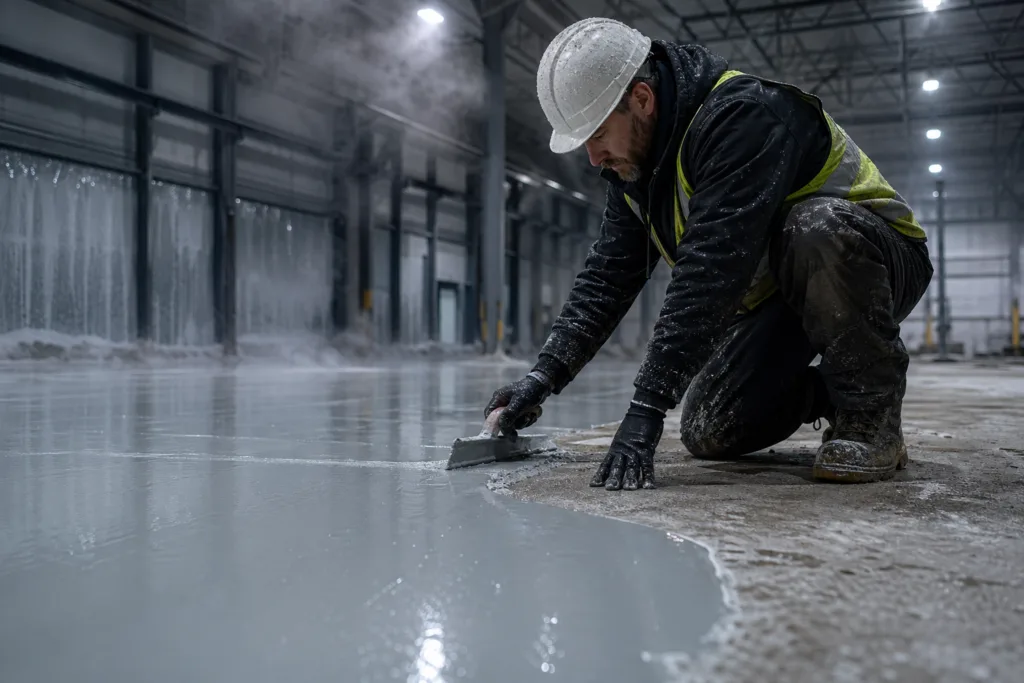
Epoxy and resin flooring systems are formulated with precise chemical reactions that depend on environmental conditions. Low temperatures below 5°C can slow cure rates, impact adhesion, increase viscosity, and lead to surface defects. Contractors must anticipate these issues to prevent costly reworks and maintain safety standards on site.
The Science: How Temperature Affects Epoxy Curing
All epoxy reactions are exothermic, meaning they generate heat during curing. In colder temperatures, the reaction proceeds more slowly. This results in longer pot life but delayed full cure. If the substrate or ambient air is below 5°C, both the initial tack-free time and final cure can double or even triple compared to room temperature conditions.
Risks of Improper Winter Application
Attempting to install epoxy flooring in very cold conditions without adaptation can result in weak bonds, cloudy finishes, incomplete curing, or even floor failure. Moisture condensation on cold surfaces can create invisible barriers to adhesion—a frequent cause of delamination.
Cold Weather Epoxy Application: Contractor Pain Points
Common frustrations include extended shutdowns waiting for resin to cure, concerns about coating failures, and complications around moisture exposure. For many, the winter season signals lost productivity and headaches meeting project timelines. Proactive solutions are essential.
How Accelerators Help Epoxy Cure in Low Temperatures
Accelerators are additives formulated to boost the cross-linking reaction even at temperatures as low as -5°C. Properly dosed, an accelerator can bring cure times back to manageable levels, allowing fast return-to-service and tight project control.
ZDSpoxy’s Winter Accelerator: Site-Tested Performance
ZDSpoxy’s winter accelerator is a specialized additive developed for field use in sub-5°C projects. Its chemistry is tailored for controlled strength development, reduced yellowing, and minimal impact on resin workability. Field trials have demonstrated that, with the winter accelerator, typical overnight cures are achievable even in unheated job sites, supporting critical project schedules. This specialty product pairs seamlessly with ZDSpoxy’s ZDS-1012ab Epoxy Primer for Concrete & Ceramic Floors systems for maximum cold weather reliability.
Dos and Don’ts: Adding an Accelerator to Epoxy Mixes
- DO read and follow manufacturer instructions for dose rates: overdosing can create exothermic spikes and surface defects.
- DO precondition your resin and hardener—store them at room temperature before use if possible.
- DON’T add water, solvents, or unapproved additives; these can destroy cure chemistry.
- DO check working times; accelerator may slightly reduce pot life, especially at higher loadings.
Induction Heating: Professional Method for Cold Slabs and Spaces
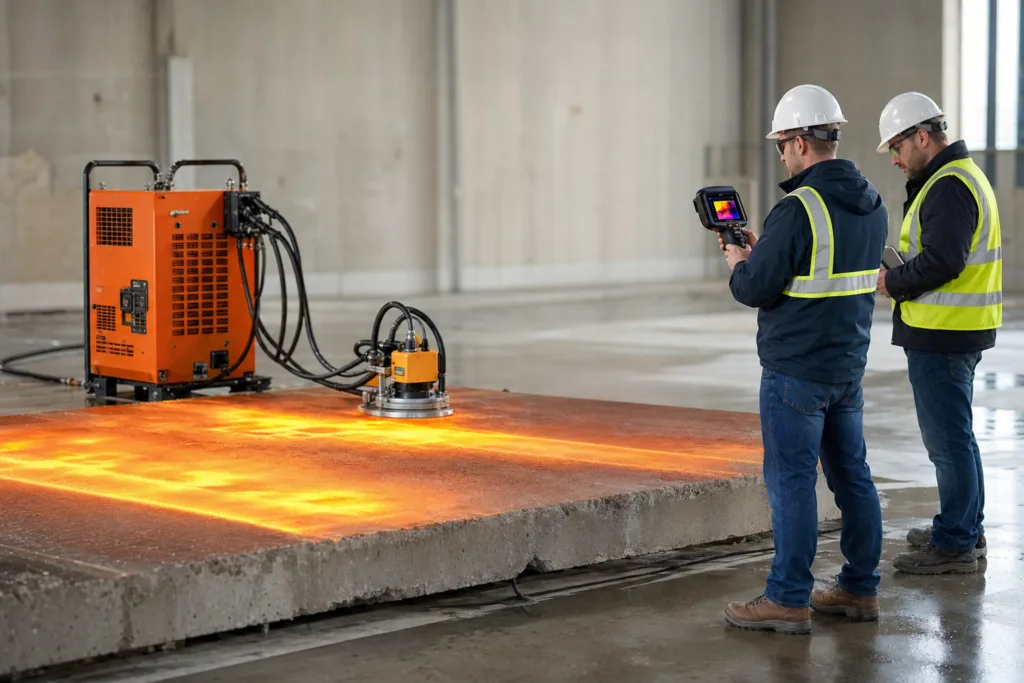
Induction heating is an advanced, site-friendly technique for pre-warming concrete slabs or metal surfaces before epoxy application. Portable induction systems use electromagnetic fields to raise surface temperatures rapidly and precisely—eliminating open flames and uneven hot air currents, which can cause localized overheating or drying. This technology is a game-changer for industrial and commercial flooring where low ambient temperatures would normally halt work.
Benefits of Induction Heating Versus Conventional Means
- Even, controlled substrate heating with accurate temperature feedback
- Rapid set-up—work can typically resume within an hour
- No fossil fuel odor or combustion risk, keeping VOC and safety compliance in check
- Reduction of condensation risk on cold substrates
Equipment and Safety: Induction Heating in Construction
Induction units require operators with basic training. Always verify slab temperature with a calibrated infrared thermometer after pre-heating and before resin placement. Induction units must be kept dry and regularly inspected for cable integrity to avoid electrical hazards.
Best Practices for Substrate Preparation in Winter
Experienced resin engineers will tell you: winter installations demand flawless, dry, texture-resistant substrates. Key steps include:
- Thorough cleaning to remove ice, snow, salts, dust, or oil
- Ensuring all surfaces are above dew point to avoid condensation
- Priming with a low-viscosity system like ZDS-105 Water-Based Acrylic Epoxy Primer for concrete and ceramic floors in damp/cold applications
- Moisture tests using calcium chloride or relative humidity probes
Mixing and Handling: Batch Size, Pot Life, and Cure Monitoring
Colder temperatures translate to slower resin mixing, increased viscosity, and the need for more thorough mechanical agitation. Always:
- Mix smaller batches to avoid incomplete cure at bottom of containers
- Stir for longer (at least 2–3 minutes) at low speed
- Monitor pot life—a sign of proper accelerator performance is a gentle but noticeable warming in the batch after mixing
Troubleshooting: Tackiness, Inhibited Cures, Surface Defects
Signs of trouble include surfaces that remain sticky past expected working time, uneven gloss, or amine blush (waxy residue). Solutions often involve raising ambient temperature post-application with induction heating or carefully increasing accelerator dose per technical recommendations.
Common Myths About Cold Weather Epoxy Use
- MYTH: “Just add more hardener to make it cure faster.”
FACT: This will cause soft, uncured resin and can ruin the floor. - MYTH: “Epoxy will cure if you wait long enough, regardless of temperature.”
FACT: Below 5°C, cure often becomes incomplete or highly delayed without intervention. - MYTH: “Resin is ruined if exposed to cold in storage.”
FACT: It often regains normal properties once returned to proper temperature, but always consult supplier for quality testing if in doubt.
Quality Control: Cure Testing and Documentation
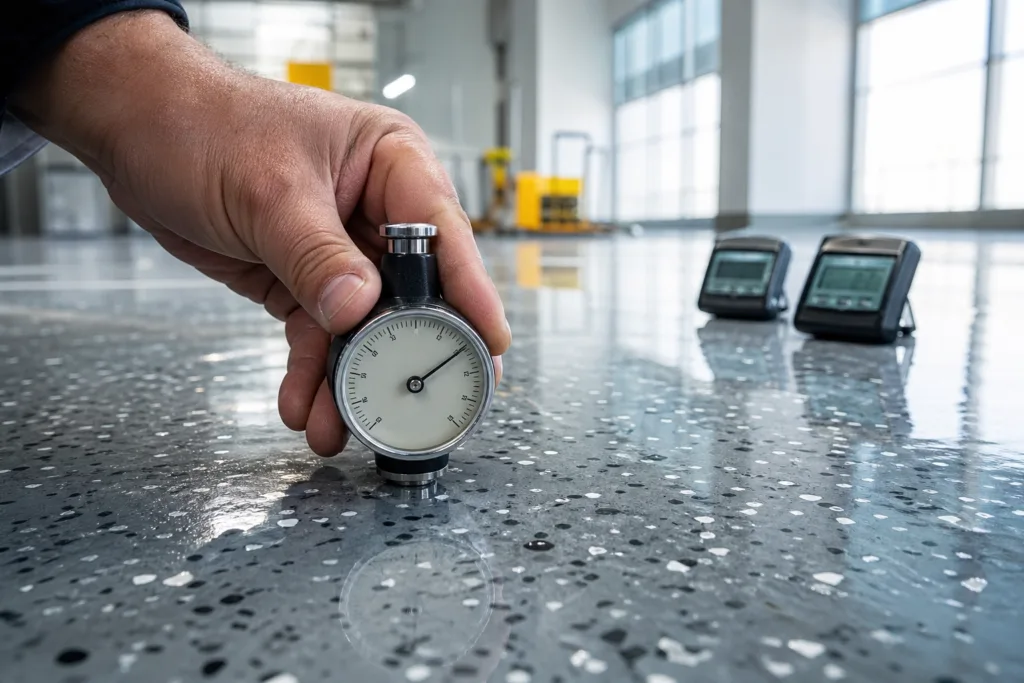
Cure testing is essential. Use a blunt probe or durometer to check surface hardness versus standard. Document all mix ratios, accelerator batch numbers, and application temperatures for traceability. This is a critical part of responsible site supervision.
Application Methods: Roller, Trowel, Squeegee in the Cold
Tools may drag or create surface marks in cold weather. Pre-warm trowels and rollers by storing them in a heated area. Use resin-friendly solvents for thin film leveling if recommended in the technical datasheet.
System Selection: Adapting Floor Coating Choices for Low Temperatures
Choose resin systems with a proven track record below 5°C. High-solids, low-viscosity formulations, and winter-grade accelerators increase success rates. Discuss with suppliers (such as ZDSpoxy) about topcoats or primers specifically developed for winter work, like the ZDS-3136AB-90 Epoxy Mid Coat for concrete and ceramic floors.
Comparing Curing Strategies: Accelerator vs. Induction Heating vs. Waiting for Warmth
| Method | Use Case | Pros | Cons |
|---|---|---|---|
| Accelerator | Additive in mix | Fast, effective at site temp | May shorten pot life; formula-specific |
| Induction Heating | Pre-heat surface | Non-chemical, reusable, even heat | Equipment cost; training required |
| Waiting for Warmth | Ambient rise over time | No extra cost | Project delays, potential for condensation |
Field Reality: When to Use Each Strategy
In steady, moderately cold conditions (0–5°C), accelerators suffice. For large slabs or sub-zero overnight shocks, induction heating ensures reliable bond strength and uniform cure. Remember, “waiting for warmth” often means downtime and increased risk, unless projects are highly flexible.
Moisture Management in Cold Weather Applications
Cold air holds less moisture, but temperature swings can create surface dew and trapped vapor. Always allow substrates and the workspace to reach equilibrium before application. If in doubt, use vapor barrier primers or systems designated for green/damp concrete by the manufacturer.
Case Study: Industrial Floor Installation at -2°C
An equipment manufacturer in central Europe documented a successful epoxy floor cast at -2°C: Induction heating brought the slab to 10°C, and a winter accelerator achieved overnight cure. Surface bond exceeded standard tests, and interior work resumed with zero project delays.
Monitor, Control, Record: Data-Driven Project Success
Modern flooring teams use wireless temperature/humidity loggers, time-stamped records, and photographic documentation at each stage—proving compliance and preventing disputes over eventual defects.
Safety and VOC Management in Winter
Ventilation may be limited in cold conditions. Always select low-VOC or water-based systems where feasible. Ensure all PPE standards are observed, as potentially hazardous fumes can concentrate indoors when air exchange is low.
Project Planning: Lead Time, Contingency, and Communication
Owners and contractors benefit from honest, upfront conversations about contingency plans for unexpected cold snaps, equipment access, and batch scheduling. Accurate communication can turn winter from a threat into a performer’s season.
Cold Storage, Delivery, and On-Site Resin Handling
Keep all resin/hardener containers indoors or in a heated containment before use. Never apply icy or separated fluids—let them warm, ensure full rehomogenization, and when in doubt, consult technical support for quality assurance guidance.
Cold Weather Epoxy Application, Accelerator, Induction Heating
Applying epoxy flooring in temperatures below 5°C is more than a technical challenge—it’s an opportunity for industry leadership. With the right combination of accelerators, site-friendly induction heating, and high-responsibility procedures, superb results are entirely within reach even in the depths of winter. The ZDSpoxy approach is always tailored to measurable performance and repeatable quality, no matter the climate.
Conclusion: Cold Weather Success Is No Accident
Efficient, reliable epoxy floor installation below 5°C comes down to understanding your tools, your chemistry, and your substrate. With the insights shared here, every contractor, owner, or engineer can meet winter’s challenges with confidence—maintaining timelines, budgets, and performance standards. Adaptive strategies, from specialty accelerators to the smart use of induction heating, make success not just possible, but expected.
Frequently Asked Questions
Why does epoxy cure slowly in cold weather?
Cold temperatures slow down the chemical reaction between resin and hardener, leading to longer curing times and reduced early strength in the coating.
Can I apply epoxy flooring below freezing?
Yes, with proper accelerators and pre-heating methods like induction heating, professional results are possible even in conditions below 0°C, provided all substrate and environmental factors are managed.
How does an accelerator work with epoxy?
An accelerator speeds up the cross-linking reaction within the epoxy system, allowing for faster curing even at lower ambient temperatures, ensuring timely project completion.
What are the risks of applying epoxy without adaptations in winter?
Poor curing, weak adhesion, surface defects, and risk of delamination are major risks if you do not modify your technique or materials for cold weather installations.
Is induction heating safe to use on concrete slabs?
Yes, when handled by trained operators with routine equipment checks, induction heating provides even warming and reduces the risk of overshooting temperatures or condensation.
How do I know if my winter floor project cured properly?
Test surface hardness with a probe or durometer, confirm no tackiness remains, and always keep application records, including environmental and cure data for accountability.